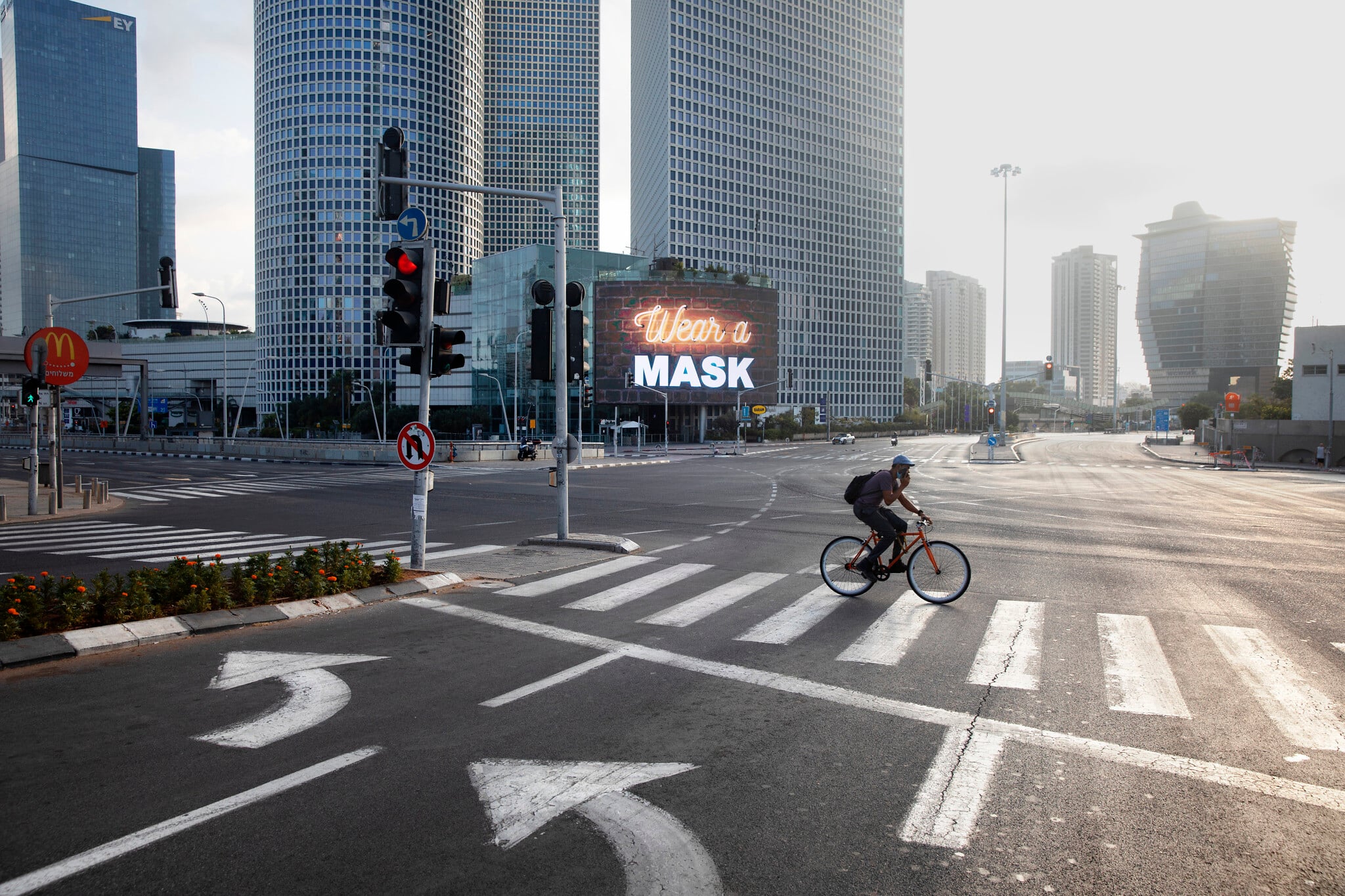
A man rides a bicycle next to a billboard calling people to wear masks, on empty road following new restrictions in the three-week nationwide lockdown, in Tel Aviv, Israel, Sept. 26, 2020. (AP Photo/Oded Balilty)
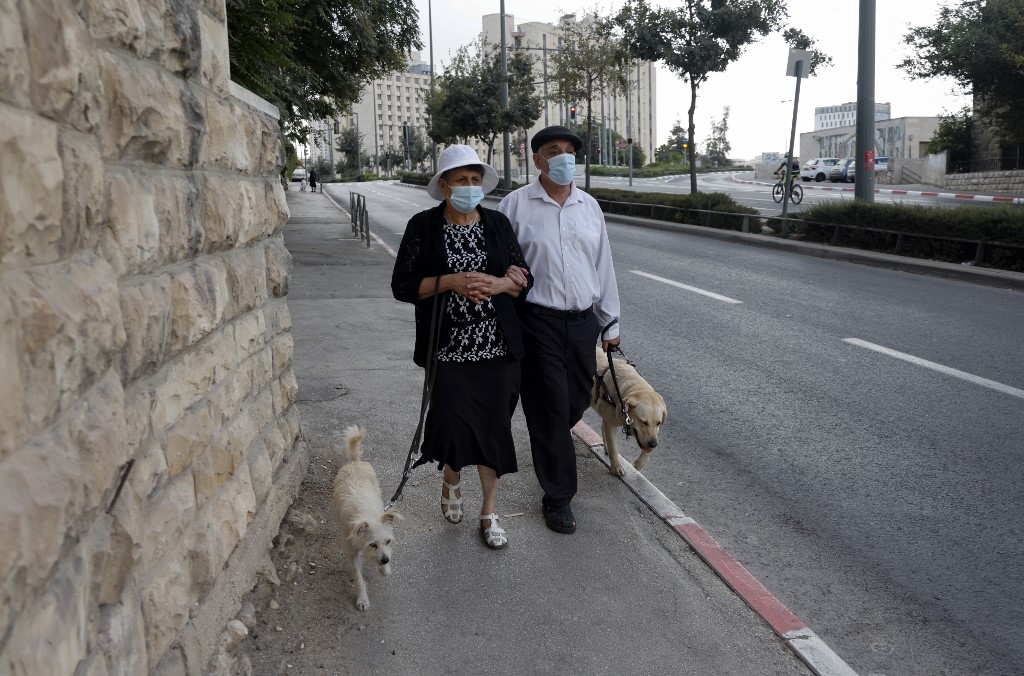
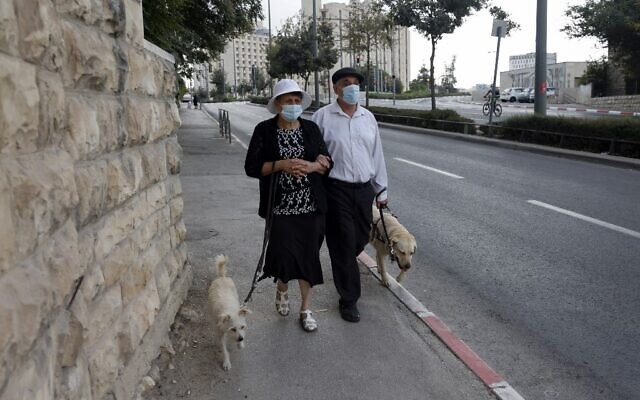
A mask-clad couple walk along a street in Jerusalem during the second nationwide lockdown imposed by the government in a bid to stem the spread of the coronavirus COVID-19, on September 26, 2020. (MENAHEM KAHANA / AFP)
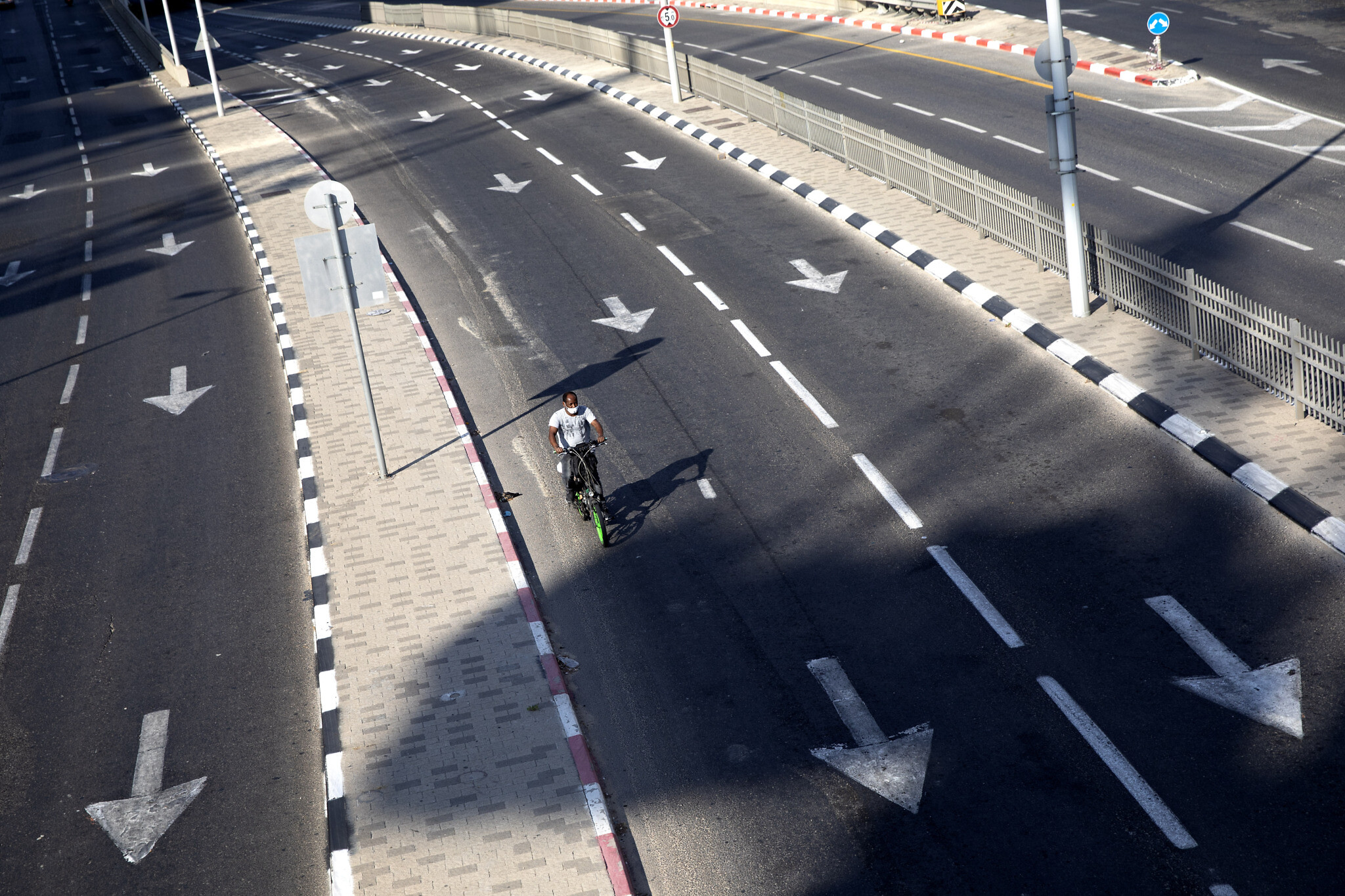
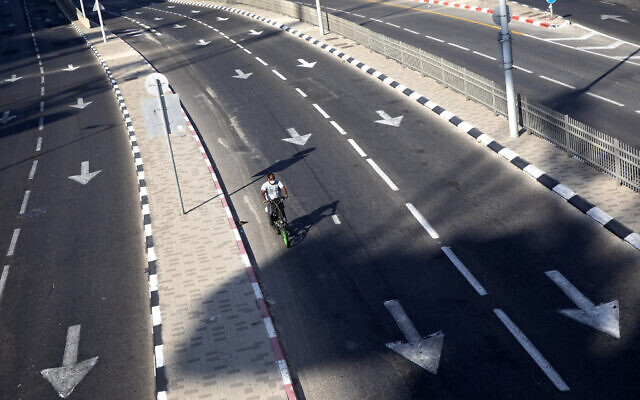
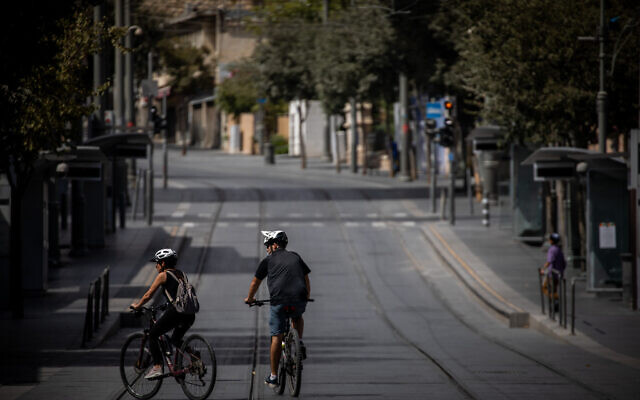
A man rides his bicycle on a slow traffic road following restrictions in the nationwide lockdown, in Tel Aviv, Israel, Sept 25, 2020. (AP Photo/Oded Balilty)
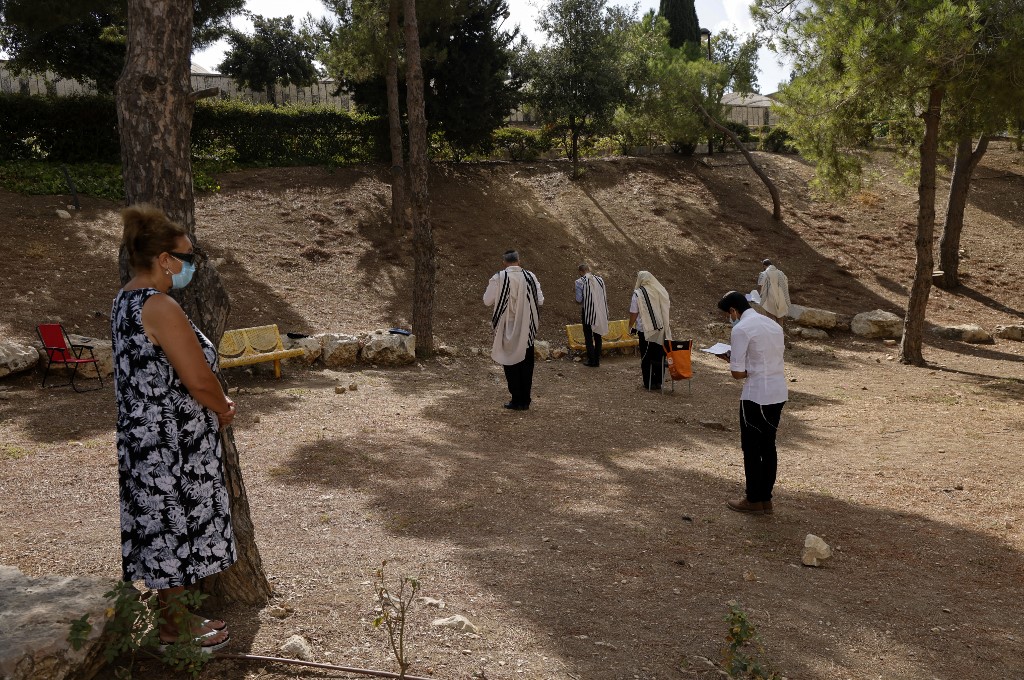
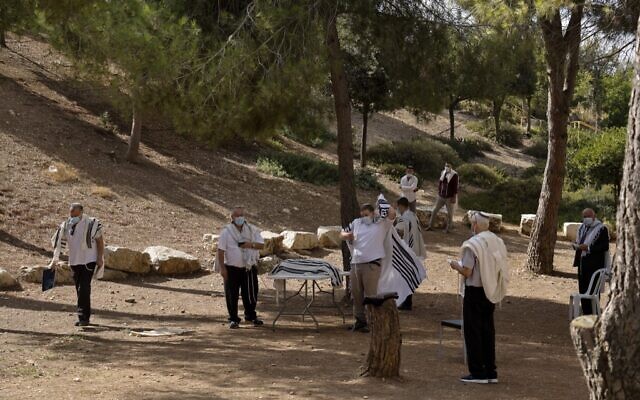
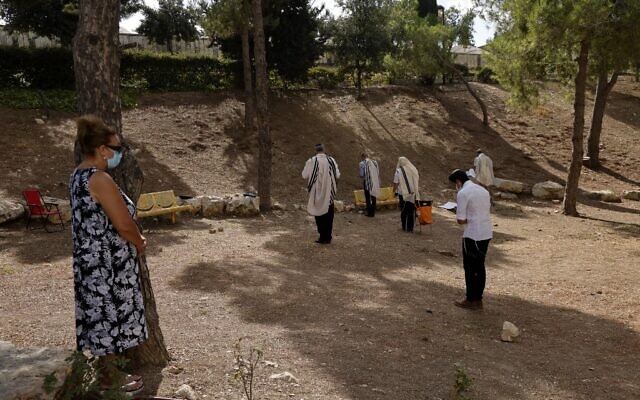
A woman looks on as Jewish men hold the Shabbat prayer outdoors in Jerusalem, during the second nationwide lockdown imposed by the government in a bid to stem the spread of the coronavirus COVID-19, on September 26, 2020. (MENAHEM KAHANA / AFP)
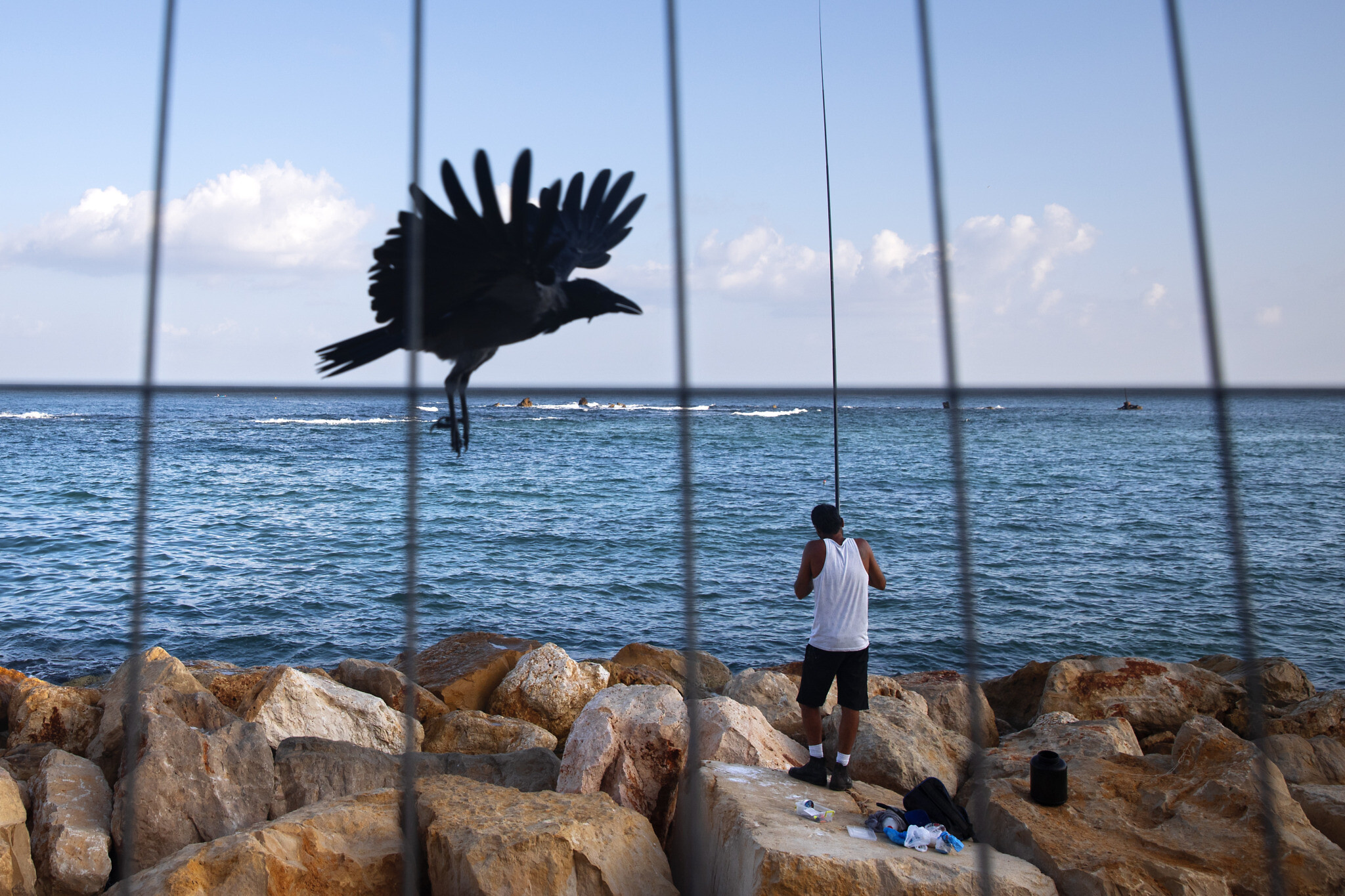
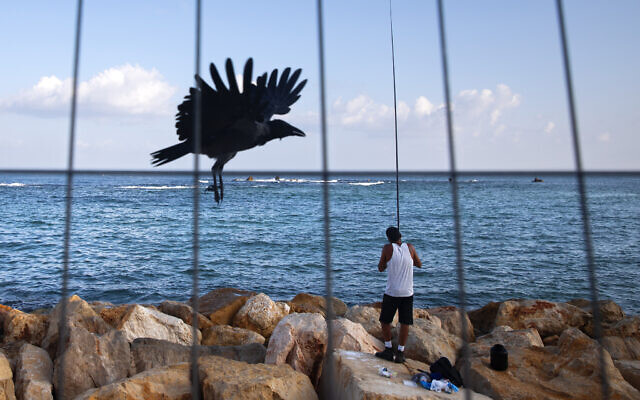
A fisherman casts his rod at the Mediterranean Sea shore during a three-week nationwide lockdown, in Tel Aviv, Sept. 26, 2020. (AP Photo/Oded Balilty)
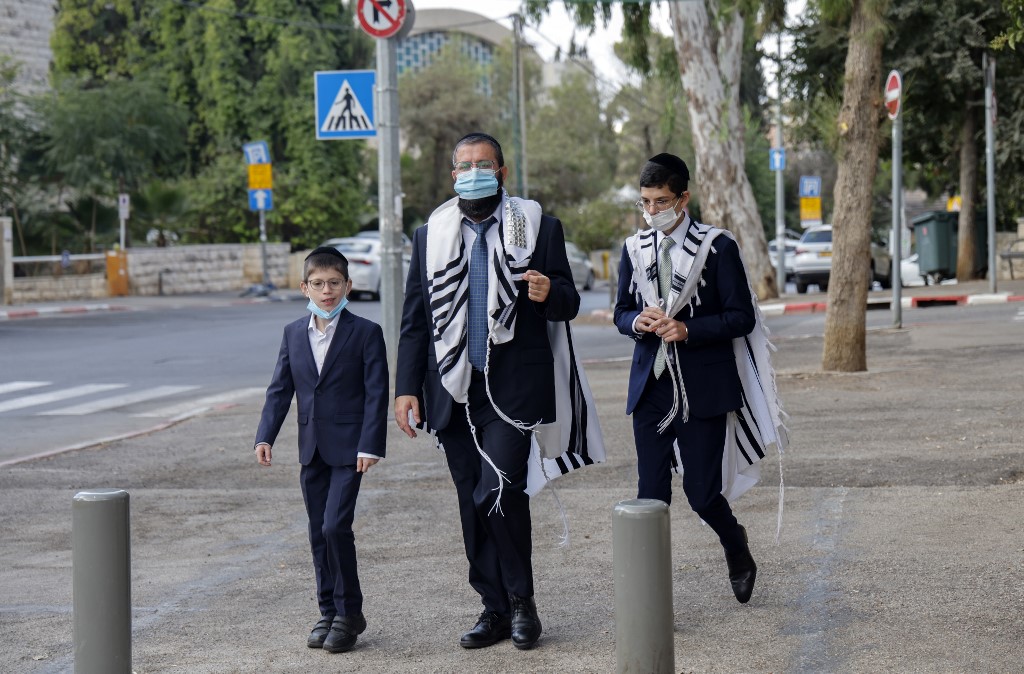
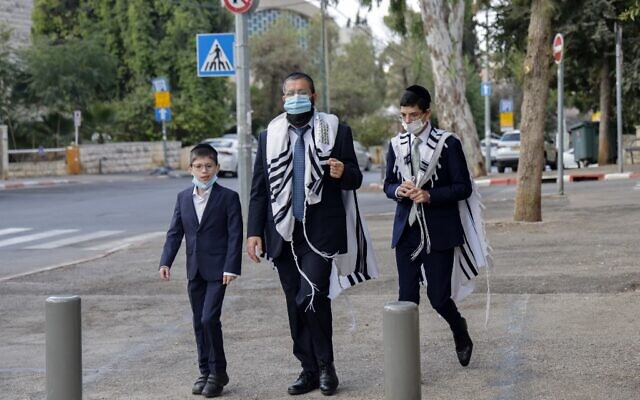
A mask-clad ultra-Orthodox Jewish man and youngsters walk along a street in Jerusalem during the second nationwide lockdown imposed by the government in a bid to stem the spread of the coronavirus COVID-19, on September 26, 2020. (MENAHEM KAHANA / AFP)
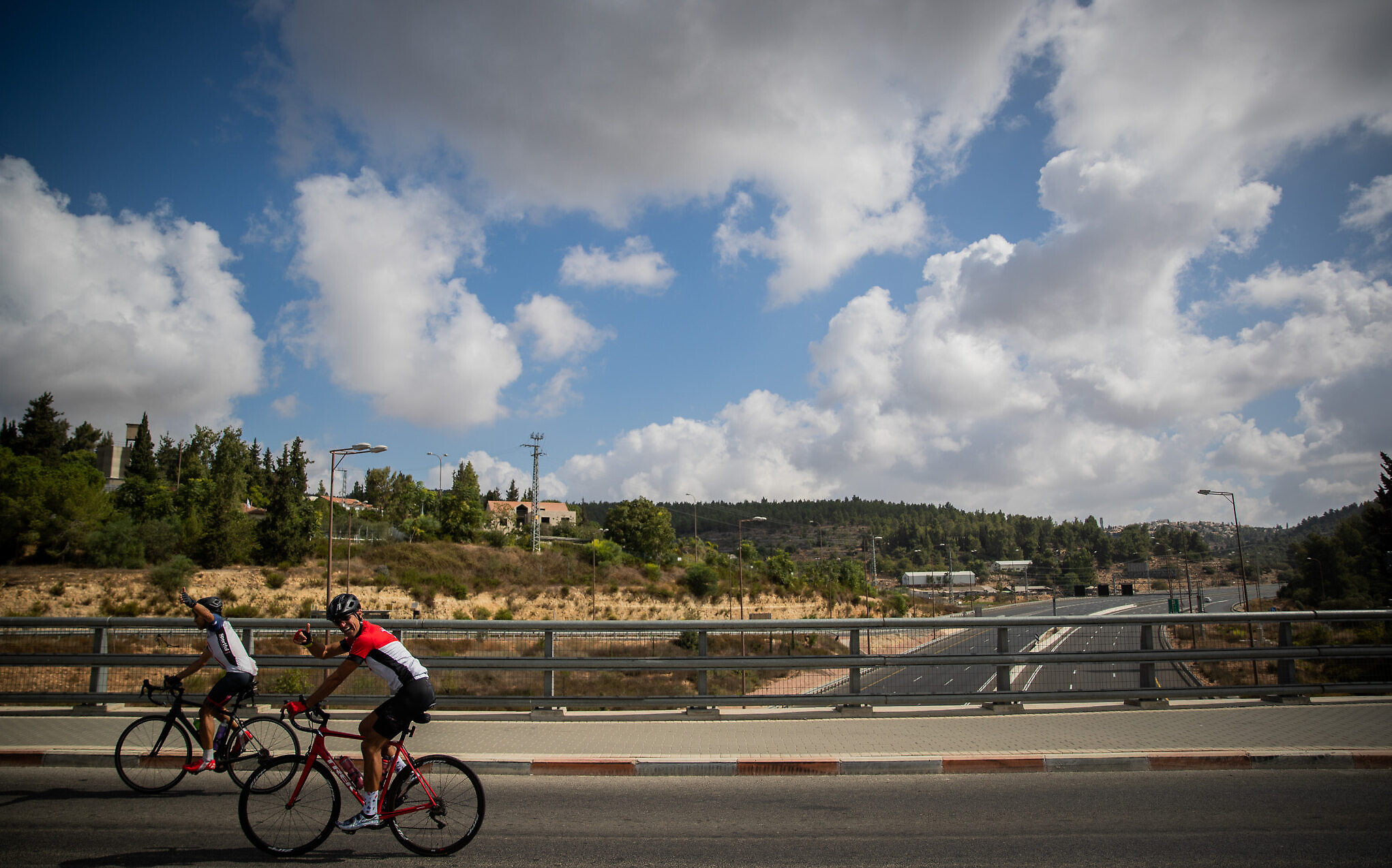
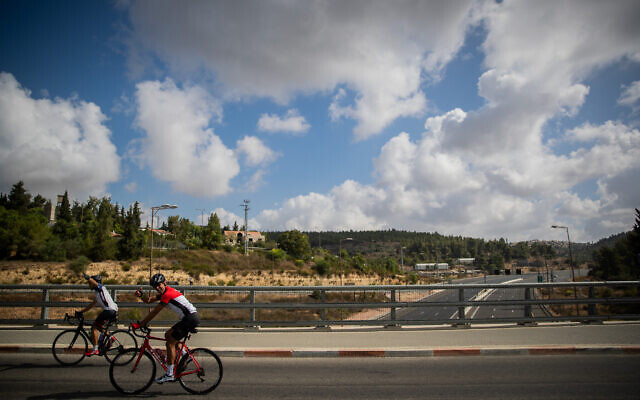
Israelis ride their bicycles outside Jerusalem on September 26, 2020 (Yonatan Sindel/Flash90)
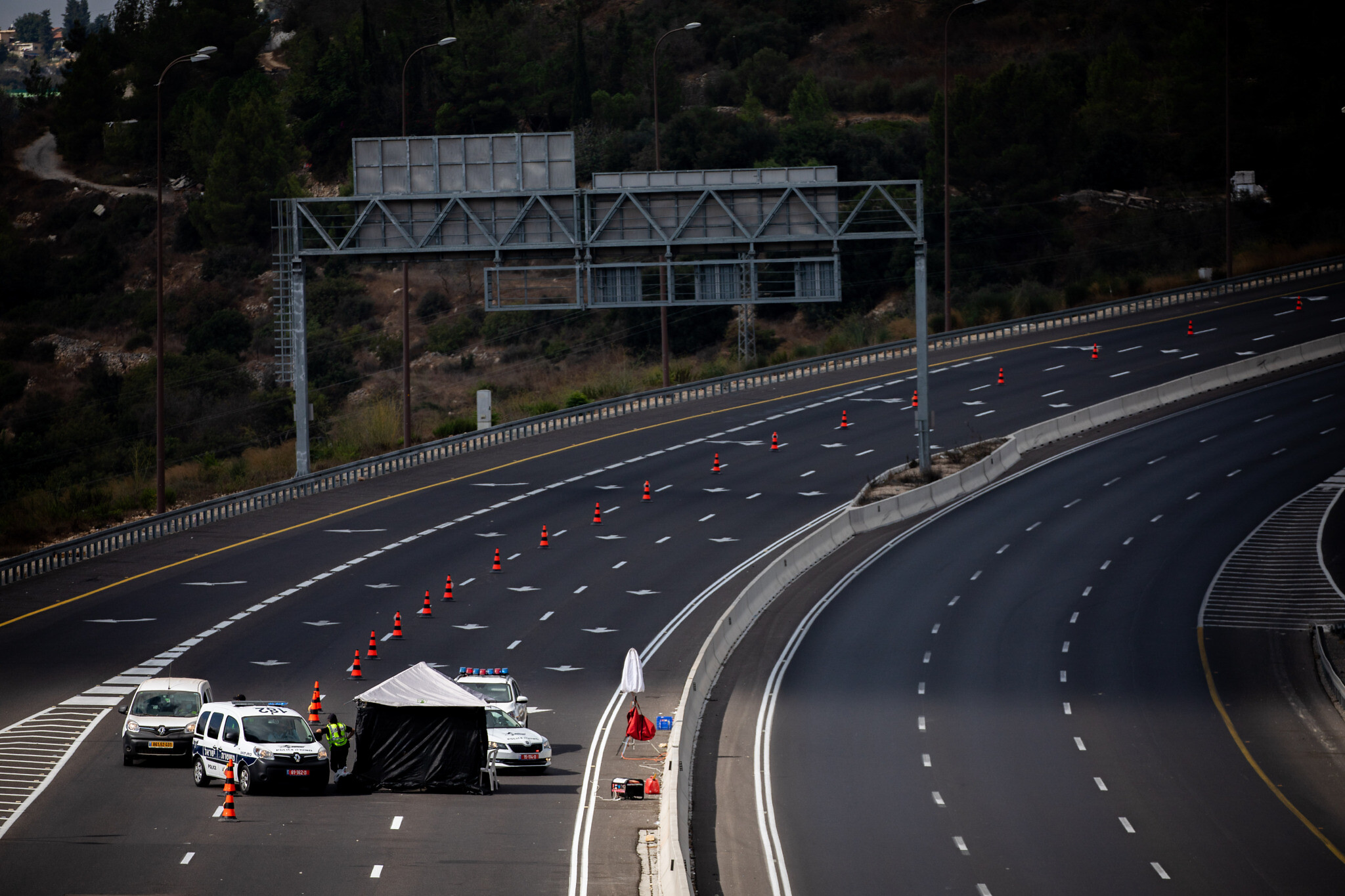
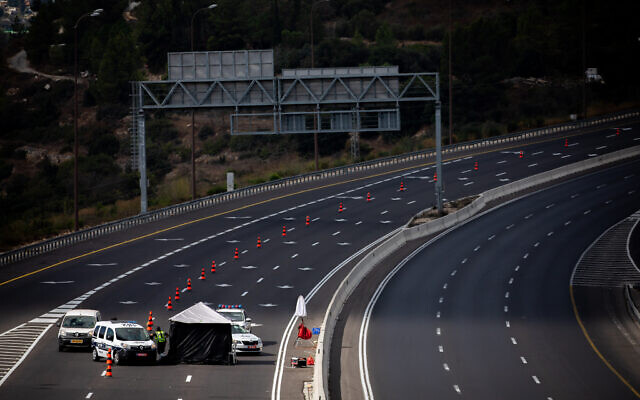
Police at a temporary roadblock outside Jerusalem on September 26, 2020, during a nationwide lockdown. (Yonatan Sindel/Flash90)
Pedestrians and cyclists took advantage of Israel’s renewed lockdown on Saturday, utilizing the quiet to stroll and bike along usually-busy thoroughfares.
With synagogues shuttered, Sabbath prayers were held in outdoor groups.
Under the new rules, nearly all businesses are closed, with the exception of specific companies and factories designated as “essential” by the Defense Ministry’s National Emergency Authority. Restaurants are permitted to operate on a home-delivery basis only.
Israelis aren’t allowed to travel more than a kilometer (0.6 miles) from their homes, with the exception of specific activities that are exempted.
Police were deployed on highways and at the entrances to cities and towns to ensure Israelis don’t attempt to travel during the lockdown.
Get The Times of Israel's Daily Editionby email and never miss our top stories
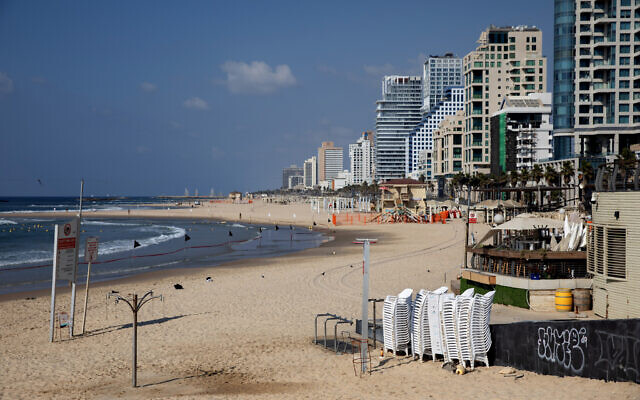
Tel Aviv beach seen mostly empty following government’s new restrictions in the three-week nationwide lockdown to protect the spread of COVID-19, , in Tel Aviv, Sept 25, 2020. (AP Photo/Oded Balilty)
Most of the proposed measures went into effect at 2 p.m. on Friday, but plans to limit demonstrations and prayers were not included after lawmakers were unable to reach an agreement on the restrictions that fell outside the cabinet’s authority and required Knesset approval.
In an interview Friday with Channel 13 news, Health Minister Yuli Edelstein signaled the lockdown measures would likely be extended beyond the end of Sukkot on October 9.
“The public needs to be told the truth: We’re headed for a few weeks of lockdown, but in different conditions. Following the first two weeks of a ‘hard’ lockdown, in the hope that the numbers go down, slowly we’ll begin to loosen up,” he said.
Advertisement
“We won’t repeat the mistakes we made of immediately opening everything,” Edelstein added, referring to the easing of restrictions after the initial lockdown earlier this year.
The network meanwhile quoted an unnamed source saying the lockdown measures could remain in place for two months.
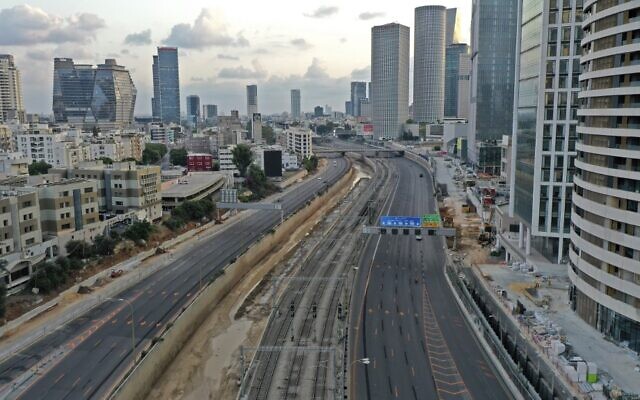
A fisherman casts his rod at the Mediterranean Sea shore during a three-week nationwide lockdown, in Tel Aviv, September 26, 2020. (AP Photo/Oded Balilty)A man rides his bicycle on a slow traffic road following new restrictions in the three-week nationwide lockdown, in Tel Aviv, Israel, September 25, 2020. (AP Photo/Oded Balilty)A mask-clad couple walk along a street in Jerusalem during the second nationwide lockdown imposed by the government in a bid to stem the spread of the coronavirus COVID-19, on September 26, 2020. (MENAHEM KAHANA / AFP)Jewish men hold the Shabbat prayer outdoors in Jerusalem, during the second nationwide lockdown imposed by the government in a bid to stem the spread of the coronavirus COVID-19, on September 26, 2020. (MENAHEM KAHANA / AFP)Police at a temporary roadblock outside Jerusalem on September 26, 2020, during a nationwide lockdown. (Yonatan Sindel/Flash90)Israelis ride their bicycles outside Jerusalem on September 26, 2020 (Yonatan Sindel/Flash90)A mask-clad ultra-Orthodox Jewish man and youngsters walk along a street in Jerusalem during the second nationwide lockdown imposed by the government in a bid to stem the spread of the coronavirus COVID-19, on September 26, 2020. (MENAHEM KAHANA / AFP)View of Jaffa street in downtown Jerusalem on September 26, 2020 (Yonatan Sindel/Flash90)A woman looks on as Jewish men hold the Shabbat prayer outdoors in Jerusalem, during the second nationwide lockdown imposed by the government in a bid to stem the spread of the coronavirus COVID-19, on September 26, 2020. (MENAHEM KAHANA / AFP)A picture on September 25, 2020 shows a deserted highway in the Israeli city of Tel Aviv amid a nationwide lockdown to contain a surge in coronavirus infections. (MENAHEM KAHANA / AFP)
Help us report truthfully on social media
As a multimedia journalist, my job is to take the quality, fact-based journalism produced by The Times of Israel newsroom and make it accessible across every platform — from Instagram posts to podcasts to short-form videos.
This is how many, especially young people, consume news these days. But misinformation is rampant on social media. Our team at ToI produces accurate, responsible short-form reporting on Israel and the Jewish world.
If you believe in the importance of factual social media journalism, please consider joining our reader support group, The Times of Israel Community. Your financial support is essential to sustain responsible multimedia reporting.
We’re really pleased that you’ve read X Times of Israel articles in the past month.
That’s why we started the Times of Israel - to provide discerning readers like you with must-read coverage of Israel and the Jewish world.
So now we have a request. Unlike other news outlets, we haven’t put up a paywall. But as the journalism we do is costly, we invite readers for whom The Times of Israel has become important to help support our work by joining The Times of Israel Community.
For as little as $6 a month you can help support our quality journalism while enjoying The Times of Israel AD-FREE, as well as accessing exclusive content available only to Times of Israel Community members.
Thank you, David Horovitz, Founding Editor of The Times of Israel


 Add ToI as a Preferred Source on Google