

The Knesset’s newest member raises some eyebrows
Shakib Shanan brings the number of non-Jewish MKs to 15. But is he bringing anything else to the table?
 Add ToI as a Preferred Source on Google
Raphael Ahren is a former diplomatic correspondent at The Times of Israel.
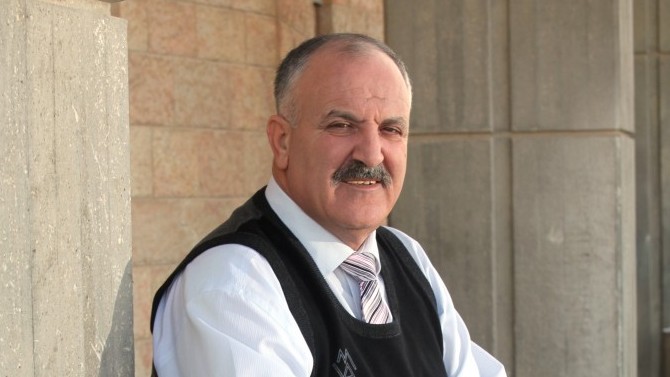
Many people celebrated the fact that Shakib Shanan, who was sworn in to the Knesset on Wednesday, will bring the number of non-Jewish lawmakers up to a record 15. The Jewish state once again proves its diversity and openness, they cheered.
“He’s the fifth Druze in the current Knesset; this is a wonderful news for the Druze community, which is known for contributing so much to the state,” said MK Einat Wilf, who chairs the Independence party’s Knesset faction that Shanan is about to join. “He seems every eager to join the hard work in the Knesset.”
Shanan, 51, replaces Home Front Defense Minister Matan Vilnai, who handed in his resignation this week to become Israel’s next ambassador to China.
But in some parts of Israel’s political establishment, Shanan’s appointment raised eyebrows. Firstly, people were surprised at his decision to join the Independence, or Atzmaut, party, which Defense Minister Ehud Barak founded after breaking away from Labor. Shanan enters the Knesset because he was the next in line on the Labor list – but a relatively new Knesset regulation stipulates that if a faction splits, an incoming lawmaker may choose which of the groups he or she wants to join.
“He’s a longtime loyalist of Ehud Barak so it’s just natural he joined us,” Wilf said.
A native of Hurfeish, a Druze village in the North, and an active Histadrut labor union member, Shanan already served in the Knesset once before, from May 2008 to February 2009. At that time he was replacing Efraim Sneh, who left the Knesset to found his own party. Before Shanan, a father of five, entered the Knesset, he served as adviser to several top officials, including the interior minister and the minister of minorities.
Some pundits see Shanan’s choice to join Independence as political suicide, given that the party is expected to be wiped out by the next elections, while Labor is slated to grow stronger. Others have said that Prime Minister Netanyahu only agreed to send Vilnai to Beijing after making sure that Shanan would join Independence, so that his coalition doesn’t lose a crucial vote (Independence remained in the government while Labor joined the opposition).
‘The way that he joined the Knesset is a new low point in the cynicism of how you can exploit politics by means of political bribery’
Knesset insiders say that Barak had already promised Shanan a spot a year ago in case MK Benjamin Ben-Eliezer, known as Fouad, was forced to resign due to illness. Last year, Ben-Eliezer suffered a serious case of pneumonia and was hospitalized.
It is possible that Shanan chose Independence over Labor because Netanyahu assured him that elections are far off, thus giving the new faction some time to improve in the polls.
Rabbi Michael Melchior, who served together with Shanan as a Labor MK, slammed his former colleague’s choice to join Independence despite having run on a Labor ticket: “The way that he joined the Knesset is a new low point in the cynicism of how you can exploit politics by means of political bribery,” he told The Times of Israel on Wednesday. “It’s one of many reasons why more and more decent people in this country are losing trust in the political establishment. It’s very sad.”
Haaretz’s Yossi Verter called Shanan a “political hack,” and others agree that we’re unlikely to hear much from him after he’s sworn in.
“He probably won’t do anything in the Knesset; he might even become a minister, who knows,” Melchior scoffed. Indeed, a Knesset consultant said Wednesday that some veteran lawmakers don’t even remember Shanan from his previous stint, although it ended just three years ago. “He didn’t do anything interesting while he was here; he has zero accomplishments,” the consultant said, adding that official Knesset statistics show Shanan didn’t show up to many committee meetings and plenary sessions.
Who gets the money — Labor or Independence?
Current Labor faction chairman Isaac Herzog — also a former colleague — asked Knesset chairman Reuven Rivlin not to give funding earmarked for Shanan to Independence but rather to his party. For every MK, a party receives about NIS 6 million from public coffers. Since Shanan entered the Knesset now because he was 16th on the Labor list, the money he is bringing in should benefit Labor, Herzog argued. “It is inconceivable that an MK who was elected based on the votes for a certain party take the financial benefits he is granted to a different party,” Herzog wrote in a letter to Rivlin.
Party politics asides, Shanan’s second Knesset tenure was also debated from a legal standpoint.
After he left the Knesset in 2009, Shanan got a job in the Social Welfare Ministry’s northern district, which raised the question of whether he should have resigned that post before running for the Knesset to avoid any conflict of interest. But the Knesset’s legal adviser decided this week that Shanan’s position wasn’t at a high enough level to pose any legal problems.




The Times of Israel Community.