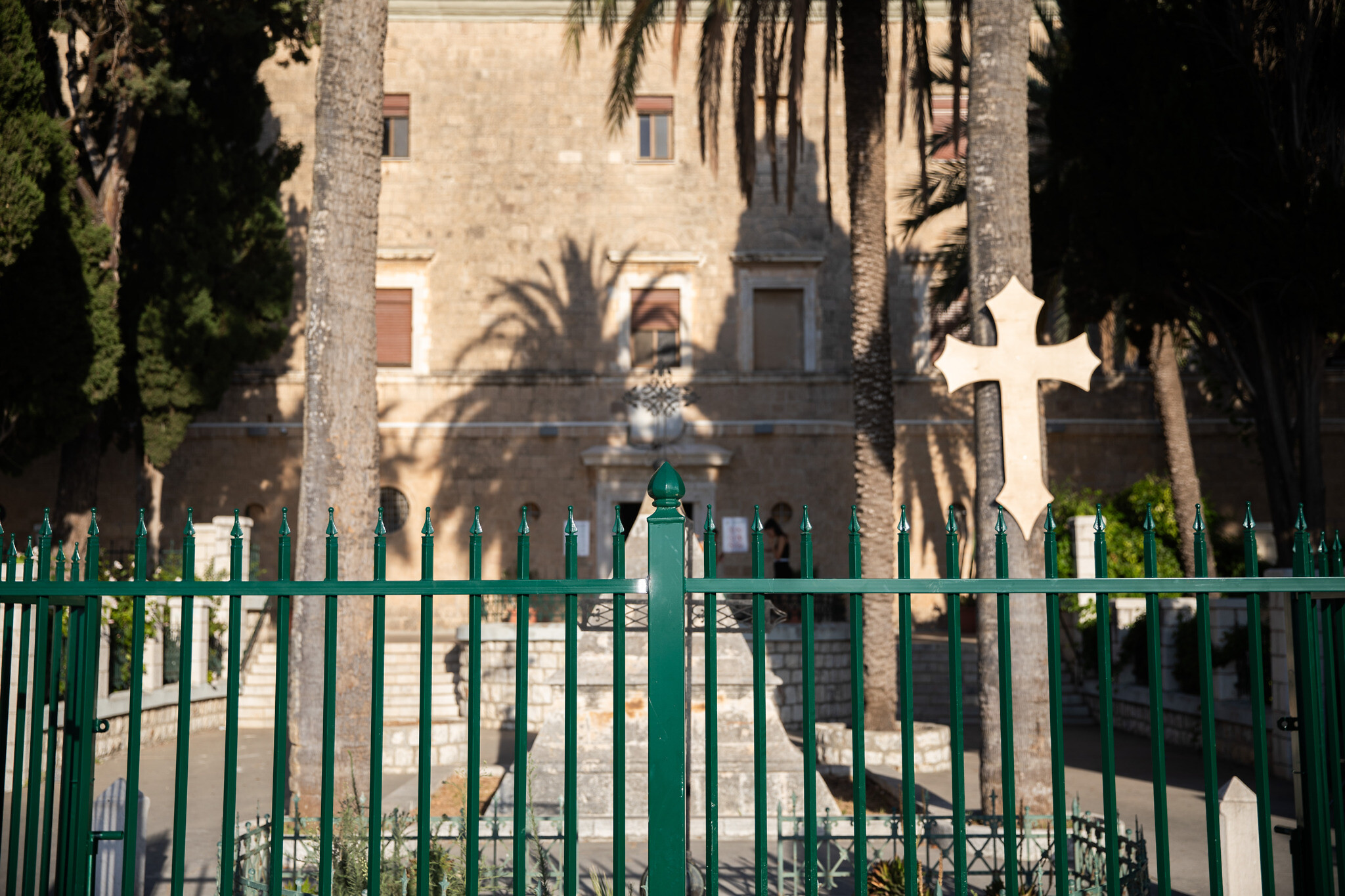
The management of the Stella Maris church in Haifa installs fences around the house of worship to keep out Jewish pilgrims who believe it’s the resting place of a biblical prophet.
The fences, whose installation this week follows months of tension around the recent arrival of Jewish pilgrims, cordon off the front yard of the 19th-century church, which is perhaps the most prominent Christian house of worship in Haifa.
The pilgrims, belonging to the Breslov Hassidic movement, say that documentation from several centuries ago indicates that the place where the church was built contains the grave of the Prophet Elisha, the successor of Prophet Elijah.
Several participants of these pilgrimages say they wish to pray outside the building.
Members of the local Christian community object to the pilgrimages, which they dismiss as attempts at intimidation by ultra-nationalists.
Contacted by The Times of Israel, Breslov followers who had participated in pilgrimages to the church area are not immediately saying whether and how the fence will impact future visits.
The arrival of pilgrims, which many Christians view as an attack on Stella Maris, has resulted several times in shoving and physical clashes between the local Arabs, Christians and the Jewish pilgrims. Police have detained several people in recent weeks from both groups.
Ibrahim Ghattas, a local community activist, in an interview with the Arabs48 website, calls this a “trap set by the far right” for Arabs, who would be accused of violence in connection with the clashes.
The fence, he says, “limits the freedom of movement” of parishes, but is necessary “to protect them from being drawn into” the alleged trap.


 Add ToI as a Preferred Source on Google