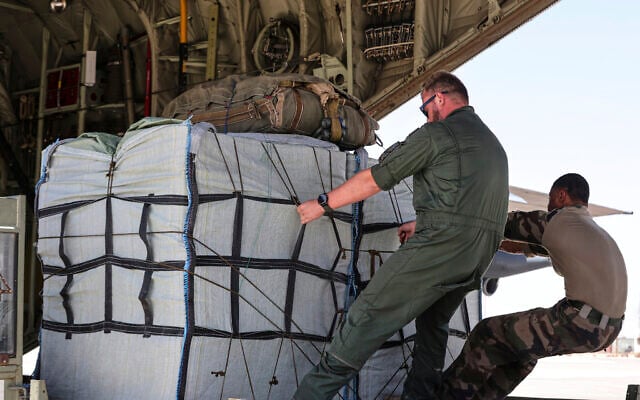
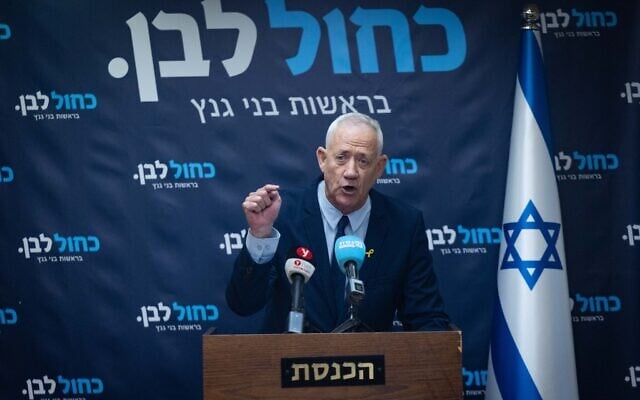
US Ambassador to Israel Mike Huckabee demands “accountability” for the United Nations and its “massive funding,” which he declares is “either incompetent or corrupt,” after a new research paper finds that aid diversion is a recurring problem in war zones across the world.
The paper, titled “Aiding Who? Humanitarian Aid and the Continuation of War by Other Means,” by Netta Barak Corren and Jonathan Boxman, was published on August 5 on the Social Science Research Network (SSRN).
Barak Corren is the Haim H. Cohn Chair in Human Rights at the Hebrew University of Jerusalem’s Faculty of Law, and Boxman is a health sciences and quantitative science independent researcher.
The paper examines records and documents kept by humanitarian groups across eight different prolonged conflicts — Somalia, Afghanistan, Syria, Iraq, Yemen, Sudan, Ethiopia and the Gaza Strip — to examine the impact of the “humanity-first” aid model, which the authors argue leads to aid diversion not as a “deviation from normative humanitarian practices,” but as an issue “deeply embedded” in all stages of the process.
The humanitarian groups examined by the authors include UNRWA, USAID and Human Rights Watch, among others.
The report highlights what it says are issues in the aid distribution practices across all eight conflict zones.
In Somalia, it says the World Food Programme entrusted aid transport, storage and security to three clans, which use the proceeds from their tenders to fund armed militias and which have previously been estimated to divert some 30% of aid away from its intended recipients.
In Afghanistan, the authors write that the Taliban imposes a 10-15% tax rate on humanitarian groups and also regularly physically diverts aid through a variety of tactics, including by securing jobs for its own people within various aid groups.
The researchers find that during the 2011-2024 Syrian civil war, aid would regularly be diverted to then-president Bashar al-Assad’s loyalist strongholds and withheld from rebel-controlled areas, as the aid groups allowed the Syrian regime to determine which areas were safe to deliver to and which were not. The paper reports on similar practices, which it describes as “denial of aid through bureaucratization” during the ongoing Sudanese civil war.
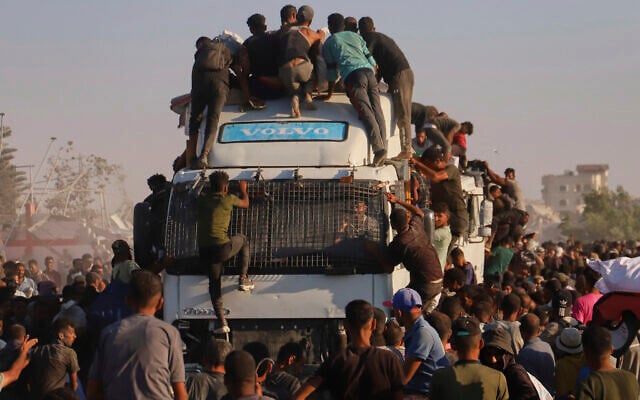
Finally, in the Gaza Strip, the paper’s authors say that in all its years of operations, from 1949 until now, UNRWA, the UN agency for Palestinian refugees, has never acknowledged any aid diversion in Gaza, nor any preventative methods to prevent aid diversion.
However, the paper says there is “an abundance of evidence” pointing to frequent aid diversion.
It cites an old internal Hamas document calling to appropriate 25% of all aid delivered to the Strip for redistribution and sale, as well as a failure to exempt humanitarian aid from a 20% tax that, as of 2016, was imposed on all goods entering the Gaza Strip.
The authors point to other instances, including the participation of some UNRWA employees in the October 7, 2023, Hamas assault in southern Israel, as proof that the agency “has been intertwined with Hamas to a degree that allowed Hamas to use its resources as it pleases.”
The paper concludes that the current prevailing method of aid distribution is no longer effective, and that, as such, a new model “which seeks to truly alleviate human suffering” must be introduced, with strong anti-diversion safeguards in place.
Notably, the authors chose to focus their research on the Middle East and Africa, and did not examine past or present wars in other areas of the world, such as the ongoing war in Ukraine or any other conflicts in Europe in the late 20th and early 21st century.