

Live updates (closed)
 Add ToI as a Preferred Source on Google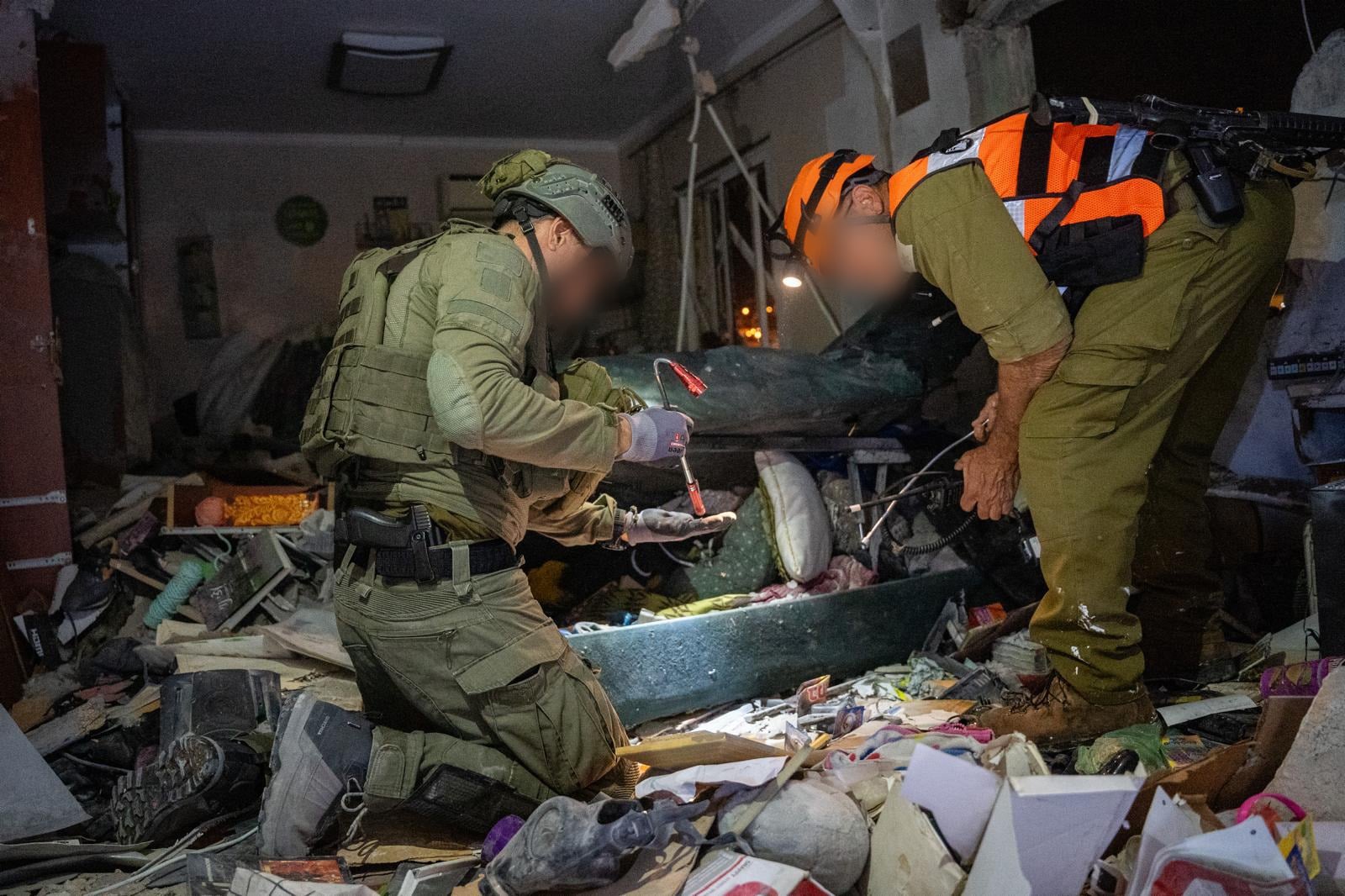
The Times of Israel liveblogged Thursday’s events as they unfolded.
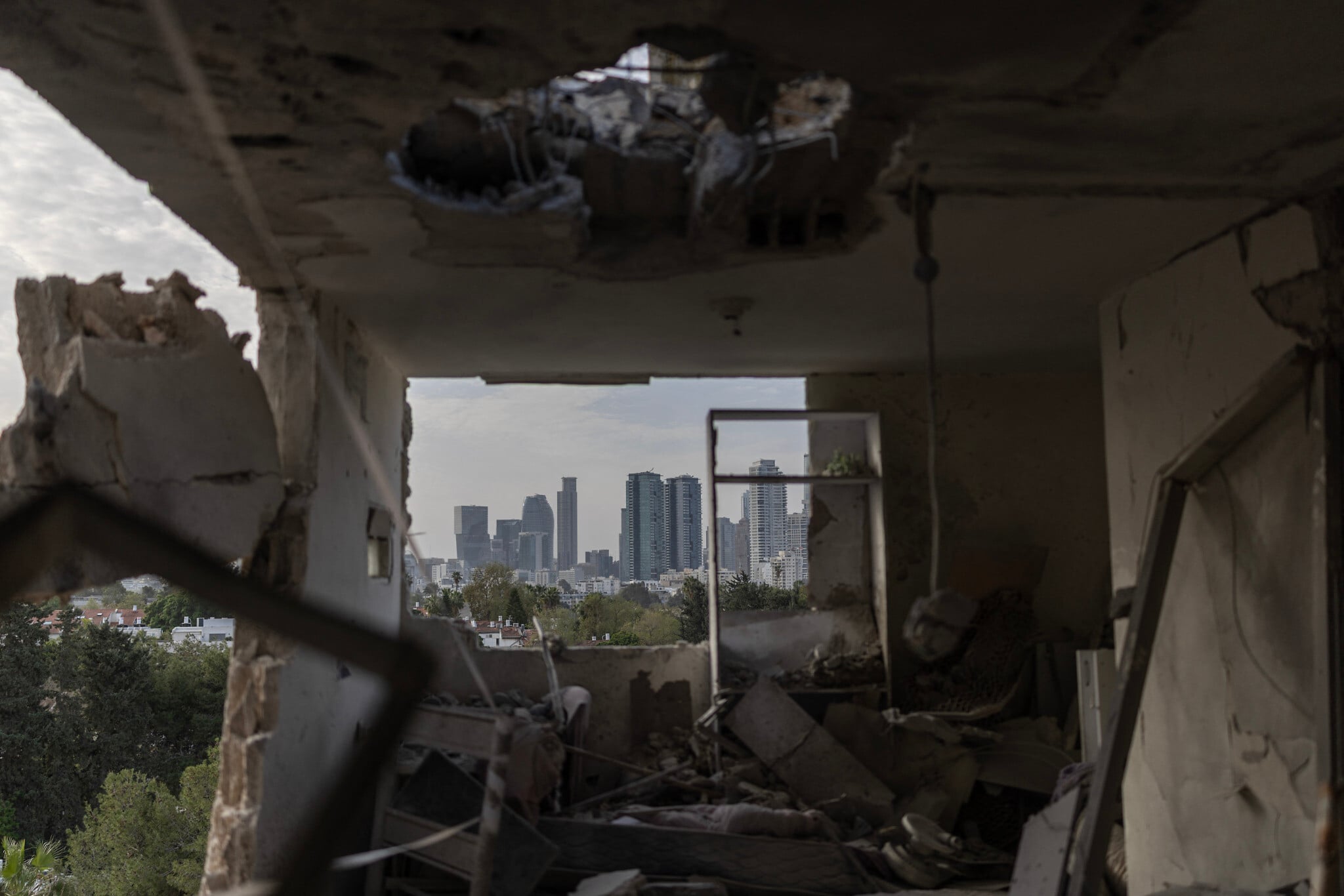
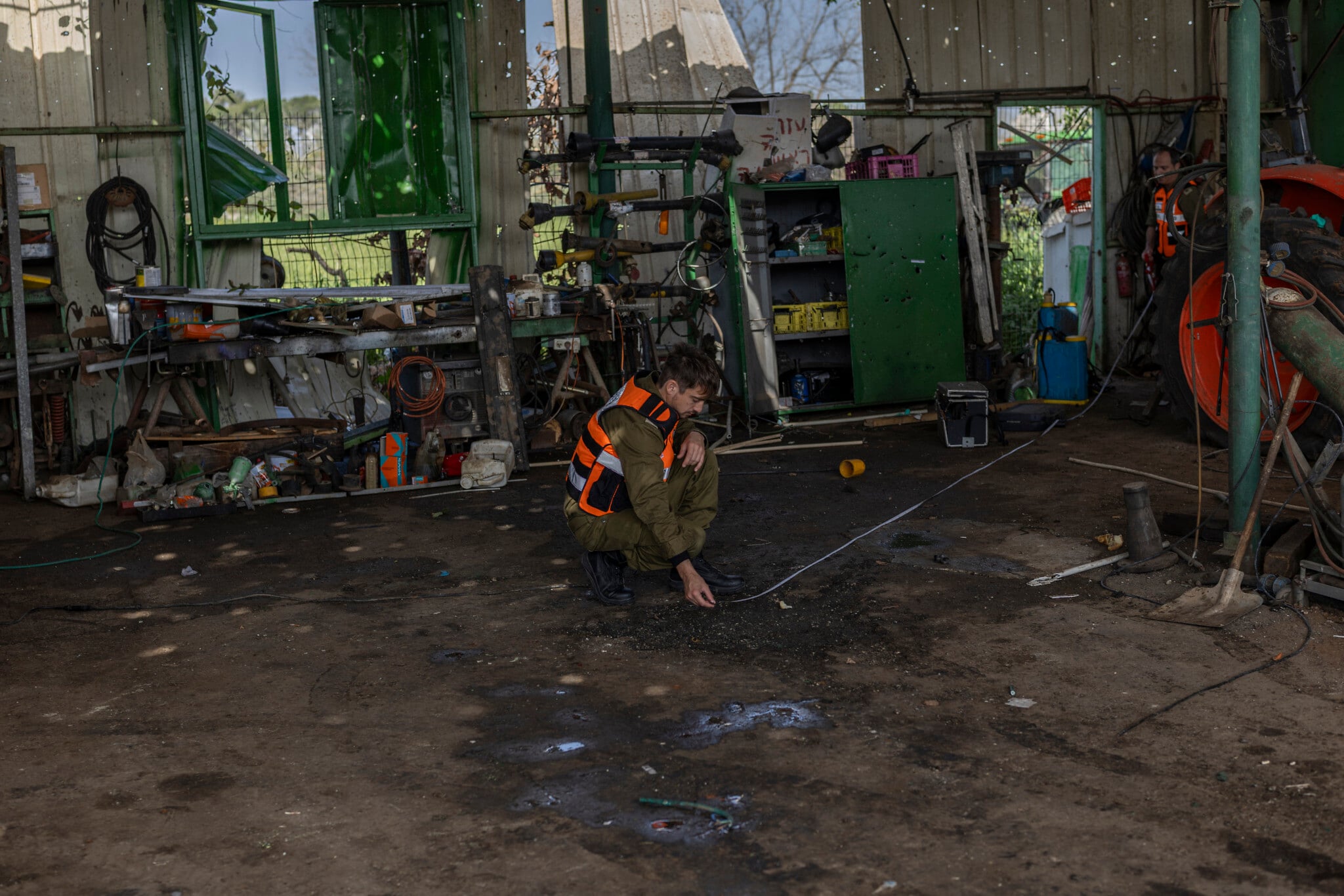
Foreign worker killed in central Israel by shrapnel from Iranian cluster missile

Emergency responders are seen at Moshav Adanim in central Israel, where a foreign worker was killed by shrapnel from an Iranian cluster missile, early March 19, 2026. (Magen David Adom)
A man was killed by an apparent cluster bomb impact at Moshav Adanim in central Israel following Iran’s latest ballistic missile attack, first responders say.
Magen David Adom says it had treated the man, who it identified as a 30-year-old foreign worker, after he sustained critical injuries from shrapnel. His death was declared a short while later, medics say.
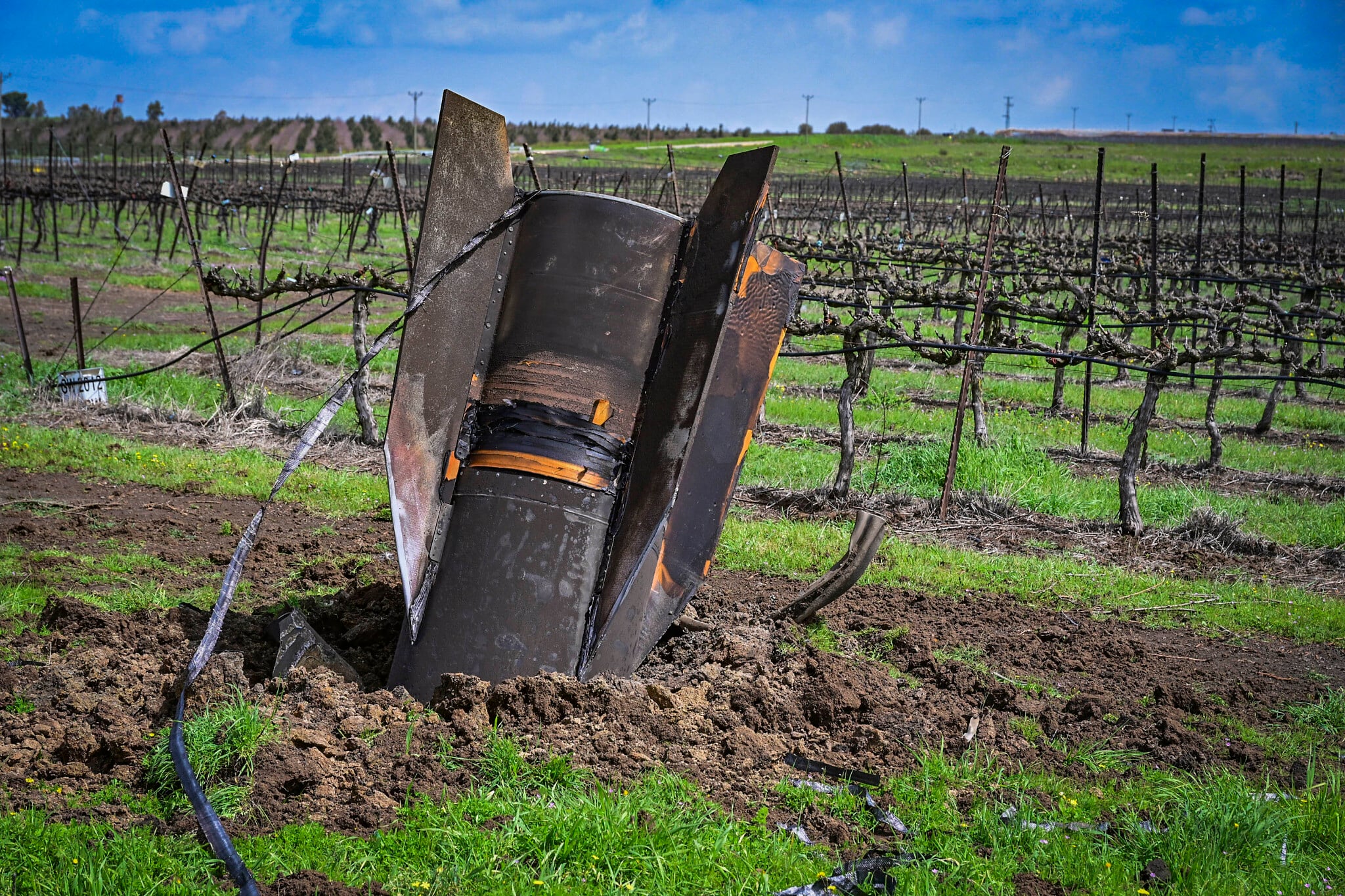
Several apparent cluster munition impacts were reported across central Israel.
UAE suspends operations at gas facility after missile interception
Operations have been suspended at the United Arab Emirates’ Habshan gas facility as authorities respond to two incidents of fallen debris after the successful interception of a missile, Abu Dhabi’s media office says early Thursday.
Bab oil field was also targeted, the office adds. No injuries are reported.
Iran issued an evacuation warning for several oil facilities across Saudi Arabia, the UAE, and Qatar, saying they would be targeted by strikes “in the coming hours,” Iranian state media reported on Wednesday.
French FM to visit Lebanon on Thursday in show of ‘support and solidarity with the Lebanese people’
France’s foreign minister will visit Lebanon on Thursday, the ministry tellls AFP, after the EU called on Israel to stop its military strikes on the country.
The visit by Jean-Noel Barrot “underlines France’s support and solidarity with the Lebanese people, dragged into a war they didn’t choose,” the foreign ministry says.
Lebanon was drawn into the Middle East war on March 2 when Hezbollah terrorists launched rockets at Israel after the killing of Iran’s supreme leader Ayatollah Ali Khamenei. Israel retaliated with strikes that have killed at least 968 people and displaced over a million, according to local authorities, whose figures don’t differentiate between civilians and combatants.
Kuwait announces arrest of 10 Hezbollah operatives for alleged plot to attack ‘vital installations’
Kuwait has arrested 10 militants affiliated with the Iran-backed Lebanese Hezbollah terror group, who are accused of plotting “terrorist” actions against vital infrastructure, the interior ministry says.
This is the second Hezbollah-affiliated cell to be arrested in Kuwait this week, as the Gulf faces daily Iranian attacks during the Middle East war, which has seen Tehran-backed groups including Hezbollah join the conflict.
“The State Security Agency has successfully thwarted a plot for a terrorist operation targeting vital installations,” the interior ministry says.
“Ten citizens, members of a terrorist group affiliated with the banned Hezbollah terrorist organization were apprehended,” it adds.
The ministry shares a video of seized items including Hezbollah flags, small drones and pictures of Iran’s slain Ayatollah Ali Khamenei and Hezbollah’s former leader Hassan Nasrallah, killed in an Israeli attack.
On Monday, Kuwait’s interior ministry said it arrested 16 people — 14 Kuwaitis and two Lebanese nationals — affiliated with Hezbollah who had planned a “sabotage plot”.
The ministry said the group had sought to recruit individuals and that it seized a number of weapons, camera drones and morse code communication devices.
Hezbollah denied that any of its members were among the 16 arrested.
Palestinian Red Crescent lowers death toll to 3 in Iranian missile attack
Medics and doctors are still assessing victims early Thursday morning as the Palestinian Red Crescent adjusts their toll to at least three killed and at least 13 injured. It earlier reported four deaths.
Those injured were taken to hospitals in nearby cities, Dura and Hebron.
The group calls the count preliminary and says the deaths resulted from a direct strike and “falling missile fragments.”
Pentagon said seeking over $200 billion in funds for the Iran war
WASHINGTON — The Pentagon has asked the White House to approve a more than $200 billion request to the US Congress to fund the war in Iran, the Washington Post reports, citing a senior administration official.
Saudi Arabia says it has right to take military action against Iran ‘if deemed necessary’
Saudi Arabia reserves the right to take military actions “if deemed necessary” following Iranian attacks on Gulf countries, the kingdom’s Foreign Minister Prince Faisal bin Farhan says.
He also says that he doesn’t know when the war will end.
“What little trust there was before has completely been shattered,” the Saudi diplomat says after a meeting between foreign ministers of the Gulf Arab states and others over the Iranian attacks tearing at the wider Middle East.
“The attacks on my country and on my neighboring countries that are not involved in this conflict — that’s all I’m interested in,” Prince Faisal continues. “We’re going to use every lever we have — political, economic, diplomatic and otherwise — to get these attacks to stop.”
He criticizes Iran’s attacks on Riyadh, the capital hosting the meeting.
“I cannot see it as coincidental,” he says. “That’s the clearest signal of how Iran feels about diplomacy. … It tries to pressure its neighbors, and that’s not going to work.”
IDF detects Iranian ballistic missile fire, setting off sirens in central Israel
The Israel Defense Forces has detected another Iranian ballistic missile attack from Iran, with warning sirens going off across the center of the country.
Qatar reports Iranian missile attack damaged its main gas facility
An Iranian missile attack caused damage at Qatar’s main gas facility on its north coast, the Qatari defense ministry says early Thursday.
The “State of Qatar was attacked (by) ballistic missiles, from Iran, which targeted Ras Laffan Industrial City and caused damages,” the Qatari defense ministry posts on X.
Qatar said overnight that attacks on the gas facility were a “direct threat” to its national security.
No injuries or impacts reported after latest Iranian missile attack
Medics say they have received no reports of injuries or impacts following the latest Iranian ballistic missile attack targeting Israel.
Ship ablaze off UAE coast after being struck by projectile
An attack set a ship ablaze early Thursday off the coast of the United Arab Emirates, authorities say.
The British military’s United Kingdom Maritime Trade Operations center says “a vessel has been hit by an unknown projectile, which has resulted in a fire onboard.”
It says the vessel is just off the coast of Khor Fakkan in the UAE, near the mouth of the Strait of Hormuz, the narrow mouth of the Persian Gulf through which 20% of the world’s oil and natural gas typically flows.
Over 20 vessels have been attacked during the Iran war so far as Tehran tries to squeeze shippers as part of its pressure campaign over the conflict.
Rocket warning sirens sound in Kiryat Shmona and neighboring towns
Rocket warning sirens are activated in the northern city of Kiryat Shmona and several neighboring communities, amid an apparent Hezbollah rocket attack from next-door Lebanon.
Trump: Israel won’t again strike Iran gas field but US will if Qatar energy sites attacked
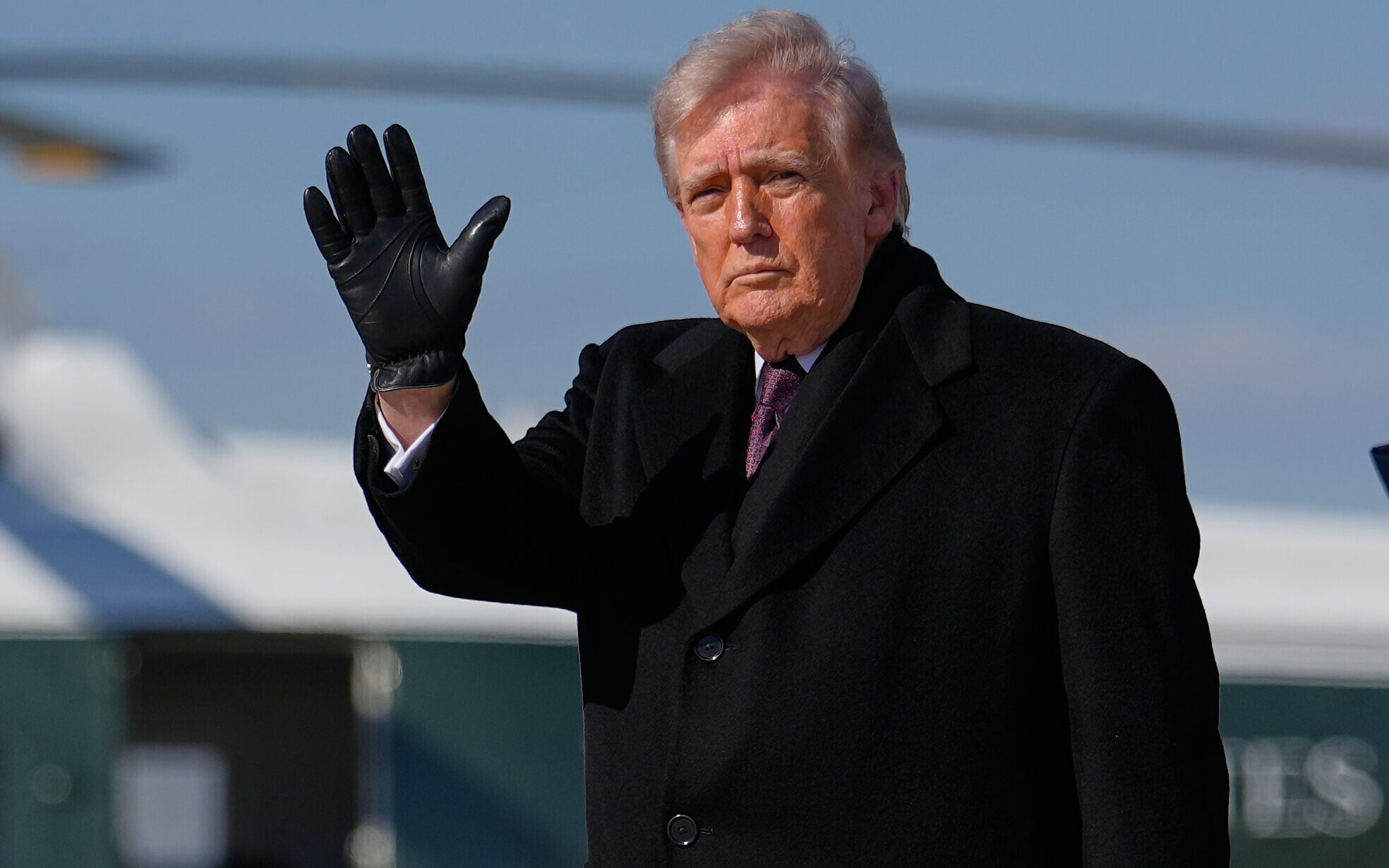
US President Donald Trump waves after arriving on Air Force One, March 18, 2026, at Joint Base Andrews, Maryland, after attending the casualty return at Dover Air Force Base, Delaware, for the six crew members of an Air Force refueling aircraft who died when their plane crashed in western Iraq while supporting operations against Iran. (AP/Julia Demaree Nikhinson)
US President Donald Trump says he will not allow another Israeli attack on Iran’s South Pars natural gas field, after the IDF struck the key energy site on Wednesday.
Trump writes on Truth Social that Israel “violently lashed out” at South Pars “out of anger for what has taken place in the Middle East,” while insisting that only “a relatively small section” of the oil field has been hit.
The US president claims that the US “knew nothing about this particular attack.”
However, US and Israeli officials briefing reporters earlier Wednesday said that Jerusalem did in fact coordinate the strike with Washington, after the latter fumed over an uncoordinated IDF strike on a Tehran fuel facility earlier in the war.
Trump notes that while Qatar was also not involved in the Israeli attack, Iran “unjustifiably and unfairly attacked a portion” of Qatar’s Ras Laffan liquified natural gas production facility.
“NO MORE ATTACKS WILL BE MADE BY ISRAEL pertaining to this extremely important and valuable South Pars Field unless Iran unwisely decides to attack a very innocent — in this case — Qatar,” Trump writes.
If such an Iranian attack takes place, the US — “with or without the help or consent of Israel, will massively blow up the entirety of the South Pars gas field at an amount of strength and power that Iran has never seen or witnessed before,” Trump adds.
“I do not want to authorize this level of violence and destruction because of the long term implications that it will have on the future of Iran, but if Qatar’s LNG is again attacked, I will not hesitate to do so,” he says.
Sirens sound in Nahariya, numerous other northern communities amid Iran missile attack
After the IDF detects another Iranian ballistic missile attack, warning sirens are activated in the coastal city of Nahariya and numerous other northern communities.
Qatar’s state energy firm reports ‘extensive’ damage at main LNG hub after latest strikes
Qatar’s state-run energy firm says new strikes on the Gulf nation’s main gas hub caused “extensive” damage.
QatarEnergy says in a statement that early Thursday “several of its liquefied natural gas facilities were the subject of missile attacks, causing sizable fires and extensive further damage” after a previous attack.
The company notes that the earlier attack on the Ras Laffan Industrial City on Wednesday had already caused extensive damage to a gas-to-liquids facility.
FBI investigating if top counterterrorism official who resigned leaked classified info
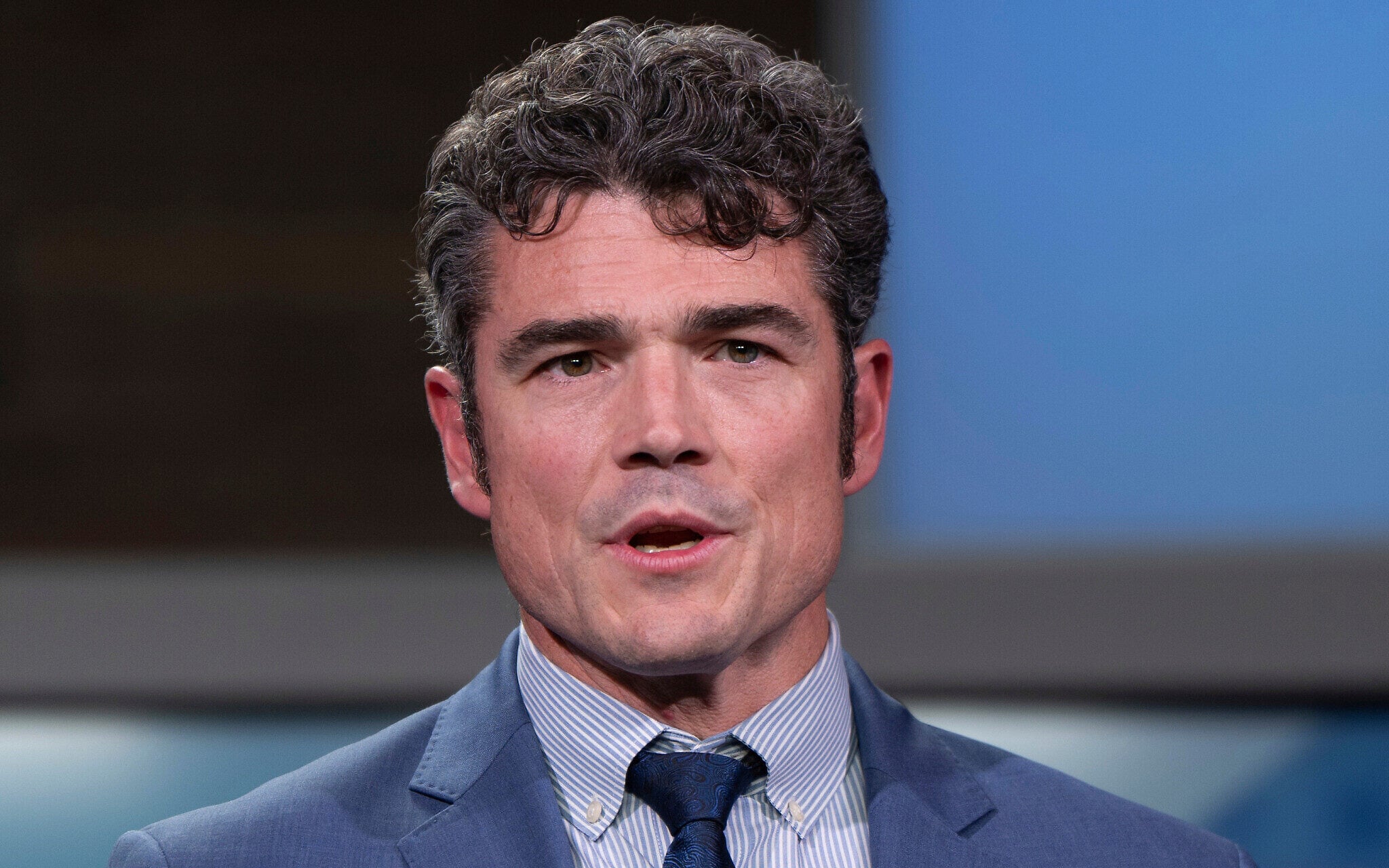
FILE - Joe Kent, then-director of the US National Counterterrorism Center, speaks during a congressional debate at KATU studios, October 7, 2024, in Portland, Oregon. (AP Photo/Jenny Kane, File)
WASHINGTON — The FBI is investigating whether Joe Kent, who resigned his position as a top counterterrorism official this week in protest of the Iran war, improperly shared classified information, a person familiar with the matter says.
The investigation precedes Kent’s resignation Tuesday from his role as director of the US government’s National Counterterrorism Center, says the person, who speaks on condition of anonymity to discuss an ongoing FBI inquiry.
But it comes as the Justice Department has undertaken multiple investigations over the last year into political foes of US President Donald Trump, including former FBI Director James Comey and New York Attorney General Letitia James. Prosecutors have repeatedly struggled to make charges stick amid rejections from judges or to secure indictments in the first place.
Additional details about what the investigation, which was first reported by Semafor, is examining aren’t immediately available.
Kent disclosed his departure from the administration in a statement on X in which he cited his concerns about the justification for military strikes in Iran and said he “cannot in good conscience” back the war against Iran.
“Iran posed no imminent threat to our nation, and it is clear that we started this war due to pressure from Israel and its powerful American lobby,” Kent wrote.
Trump later told reporters that he always thought Kent was “weak on security” and if someone in his administration did not believe Iran was a threat, “we don’t want those people.” Other Trump administration officials, including CIA Director John Ratcliffe, have since sought to distance themselves from Kent and his assessment.
Sirens again activated in north as Iran launches another missile attack
Alerts are activated in communities across northern Israel as Iran fires another ballistic missile salvo toward the country.
No injuries reported after most recent Iranian ballistic missile attacks
No injuries are reported in the most recent Iranian ballistic missile attacks on northern Israel, with the projectiles apparently impacting in open areas.
Third Iranian ballistic missile volley in past hour fired at northern Israel
The IDF says Iran has again fired ballistic missiles at northern Israel, the third time in the past hour, with sirens sounding in a number of communities.
Iran hangs three people for allegedly killing cops in recent unrest
Iran has executed three people on Thursday convicted of killing police officers and carrying out operations in favor of the United States and Israel during unrest earlier this year, the judiciary says.
“Three individuals convicted in the Dey (January) unrest, on charges of murder and operational actions in favor of the Zionist regime and the United States, were hanged this morning,” the judiciary’s Mizan Online website says.
It adds that those executed were involved in the killing of two law enforcement personnel.
Sirens blare in central Israel as another Iranian missile attack detected
The IDF announces the detection of another Iranian ballistic missile launch, with sirens sounding shortly across central Israel and parts of the West Bank.
No injuries reported after latest Iranian missile attack, the 5th since midnight
No injuries or impacts are reported following Iran’s latest ballistic missile attack on Israel, the fifth since midnight.
The missile, which is assessed to have carried a cluster bomb warhead, apparently hit open areas.
Sirens had sounded across central Israel and parts of the West Bank.
IDF detects 6th missile salvo from Iran since midnight; sirens expected in north
The IDF has detected a new ballistic missile attack from Iran, the sixth since midnight.
Sirens are expected to sound in northern Israel shortly.
No injuries reported in latest Iranian missile attack
No injuries or impacts are reported following Iran’s latest ballistic missile attack on Israel, the sixth since midnight.
The missile triggered sirens across northern Israel.
Qatar says fires under control at major gas facility Ras Laffan after latest Iranian attack
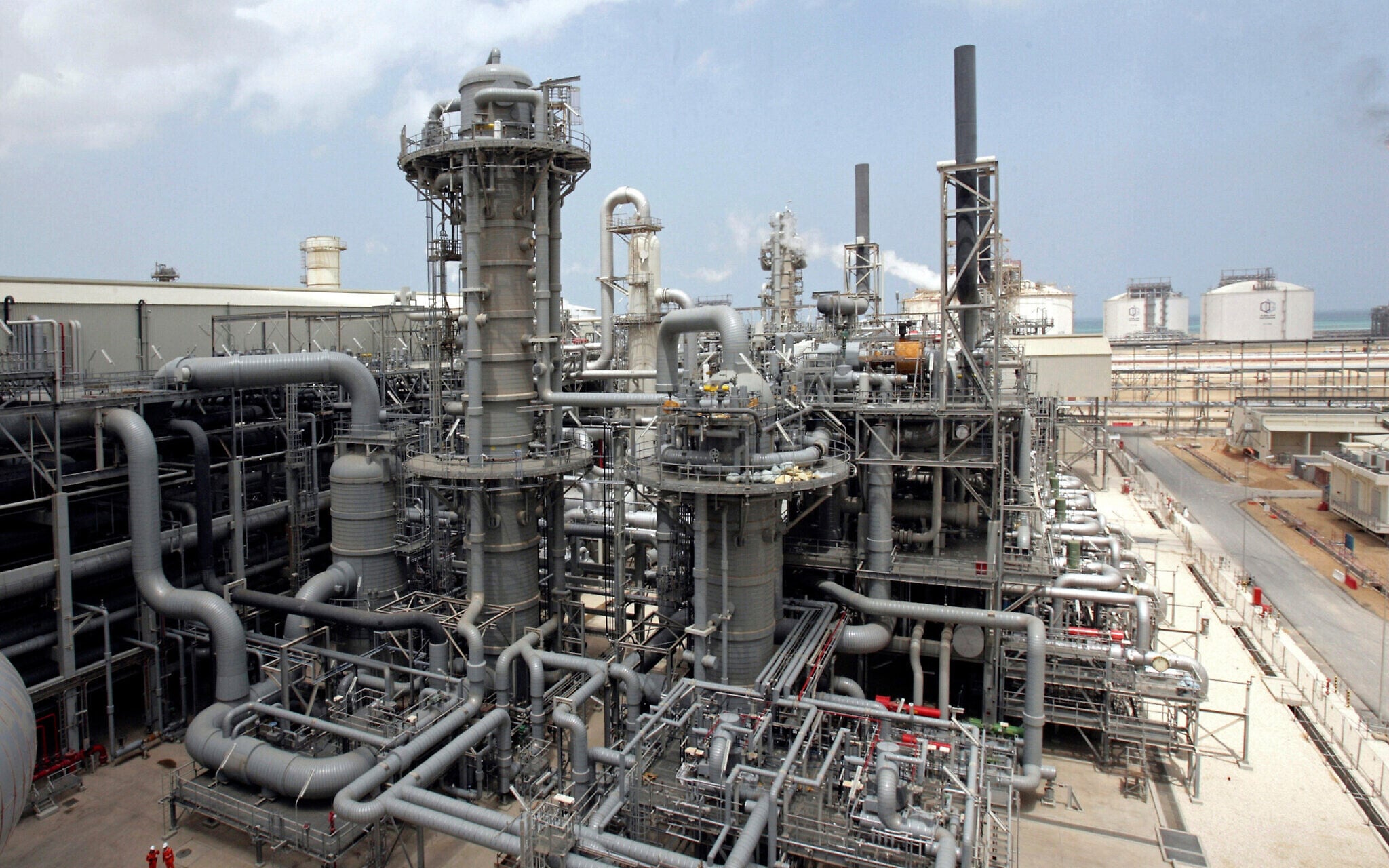
This April 4, 2009, file photo, shows a gas production facility at Ras Laffan, Qatar. (AP/Maneesh Bakshi)
Qatari civil defense teams have contained fires that erupted at a major gas facility following an Iranian attack, the interior ministry says.
“Civil Defence has fully brought all fires under control in the Ras Laffan Industrial Area without any reported injuries. Cooling and sites-securing operations are still ongoing,” it says.
Earlier, Iranian state television said that a missile had struck the gas plant, hours after it was hit in a destructive strike.
Qatar’s state-run energy firm said the strikes hit several of its Liquefied Natural Gas (LNG) facilities and caused “extensive” damage.
Saudi Aramco-Exxon refinery in Yanbu targeted by Iran in aerial attack; source says impact minimal
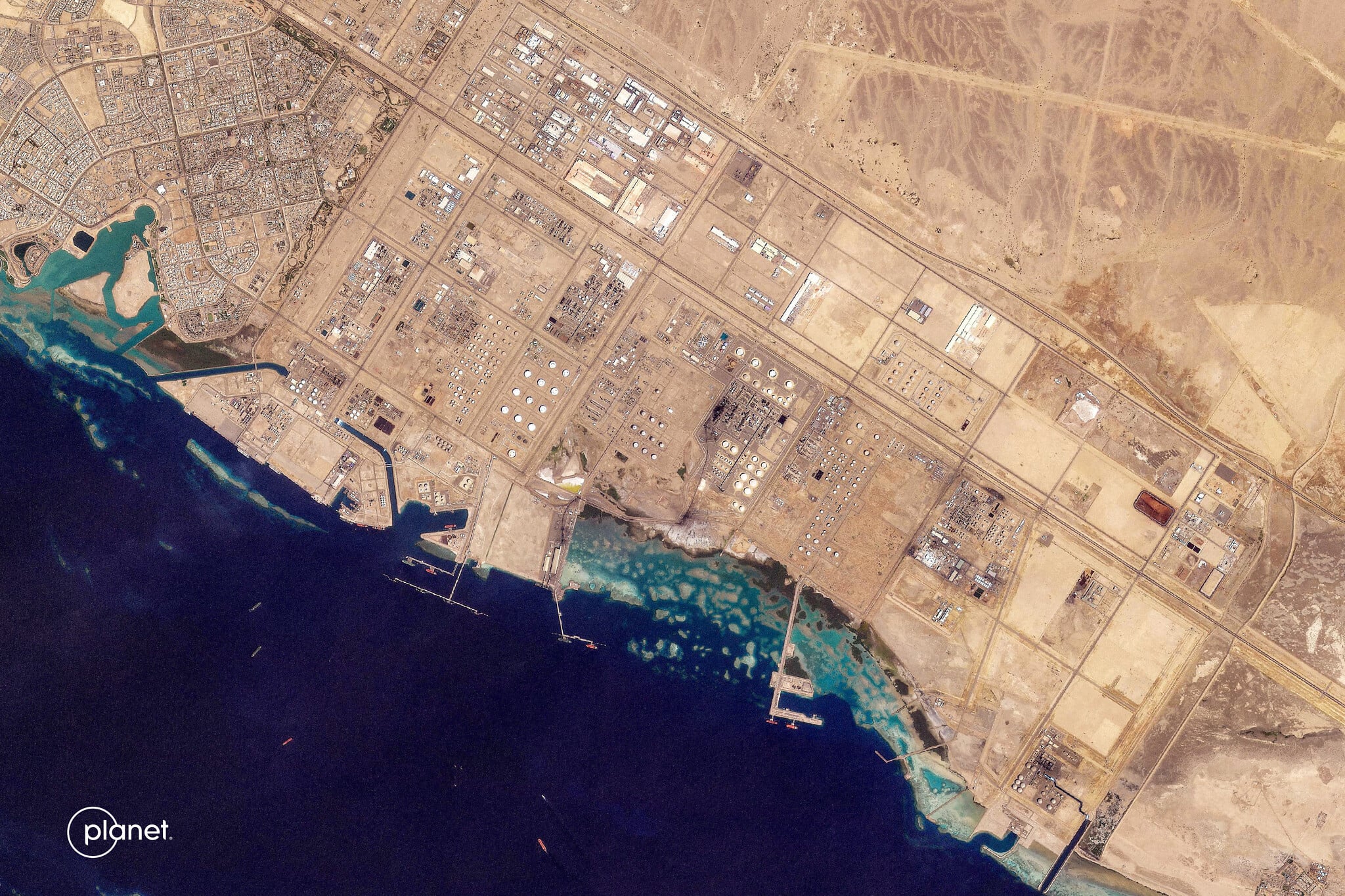
This handout satellite image taken by 2026 Planet Labs PBC shows the oil infrastructure at Saudi Arabia's western Red Sea port of Yanbu on March 4, 2026 (2026 Planet Labs PBC / AFP)
Oil giant Saudi Aramco’s SAMREF refinery in the Red Sea port of Yanbu was targeted in an aerial attack, an industry source says, adding there was minimal impact.
Earlier, Iran’s Islamic Revolutionary Guard Corps issued an evacuation warning to several oil facilities across Saudi Arabia, the UAE and Qatar, including SAMREF, which is a joint venture between Saudi Aramco and Exxon Mobil.
Yanbu is currently the only export outlet for any crude oil out of Gulf Arab countries as Iran has effectively shut the Strait of Hormuz, the narrow waterway it shares with Oman, through which a fifth of the world’s oil supply normally flows.
Saudi Aramco did not immediately respond to an emailed request for comment.
Over 20 Hezbollah operatives killed in south Lebanon ground operations yesterday, IDF says
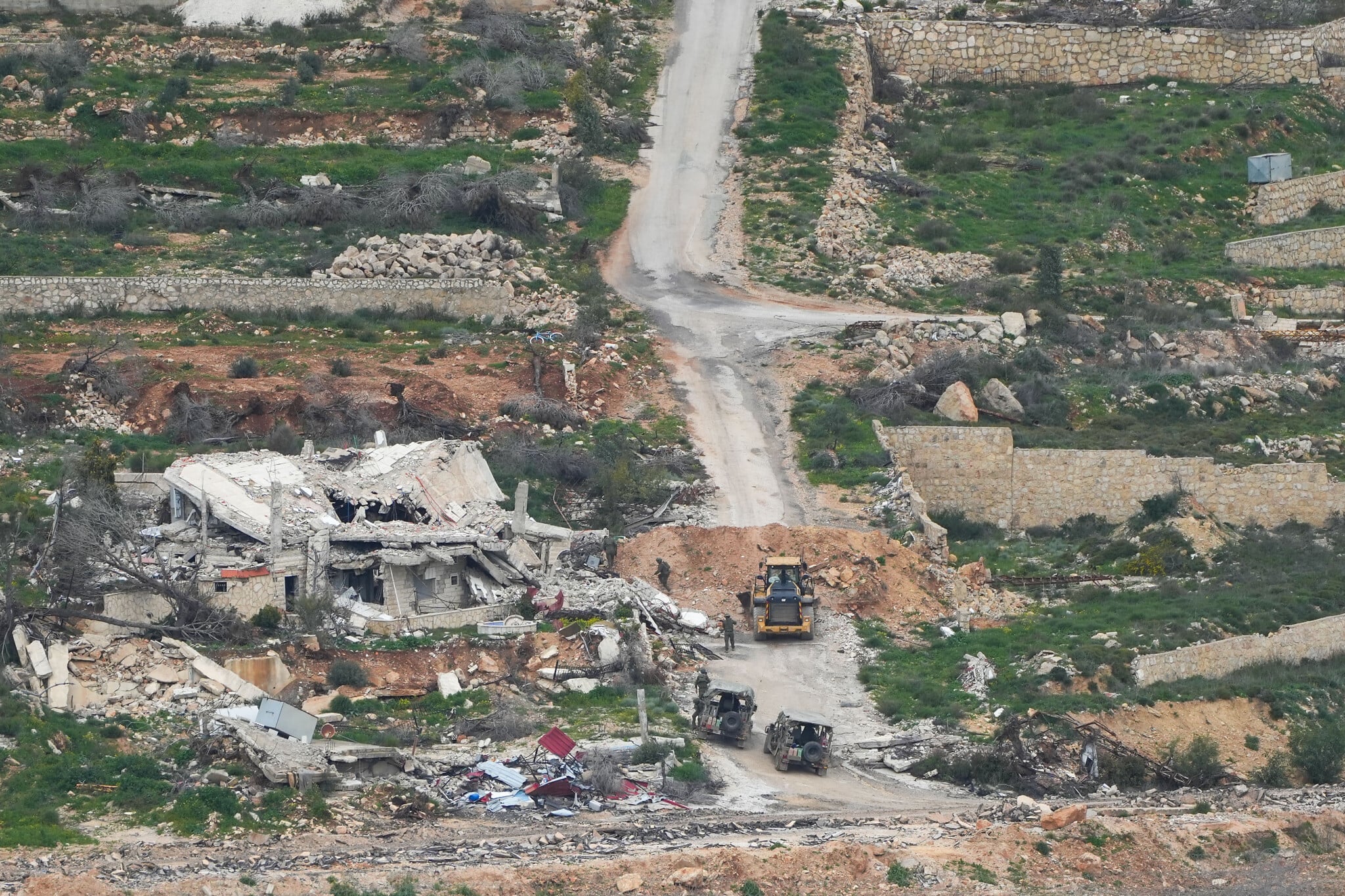
IDF troops operate in southern Lebanon near the Israeli border, March 18, 2026 (Ayal Margolin/Flash90)
More than 20 Hezbollah operatives were killed amid ground operations in southern Lebanon yesterday, the military says.
According to the IDF, the operatives were killed by troops of the 36th Division and in strikes carried out by the Israeli Air Force.
In one incident, soldiers of the Golani Brigade identified a cell of Hezbollah operatives attempting to fire anti-tank missiles on the forces. The IDF says the troops killed five operatives in that incident.
The military says the ground troops also located numerous weapons, including RPGs and anti-tank missiles.
The 36th Division is one of four IDF divisions carrying out ground operations in southern Lebanon since Hezbollah began attacking Israel amid the war in Iran.
The IDF has been preparing to deploy even more forces in southern Lebanon and further expand its buffer zone to push away the threat of Hezbollah from the border.
חיסולים מהאוויר והתקלויות פנים מול פנים: כוחות אוגדה 36 וחיל האוויר חיסלו יותר מ-20 מחבלים ביממה האחרונה בדרום לבנון
כוחות אוגדה 36 ממשיכים בפעילות הקרקעית הממוקדת בדרום לבנון.
אתמול, כוחות צוות הקרב של חטיבת גולני, זיהו בשני אירועים שונים חוליות מחבלים חמושים מארגון הטרור… pic.twitter.com/U8d1eEnRhU
— צבא ההגנה לישראל (@idfonline) March 19, 2026
177 people taken to hospital in past 24 hours as result of Iran war, Health Ministry says
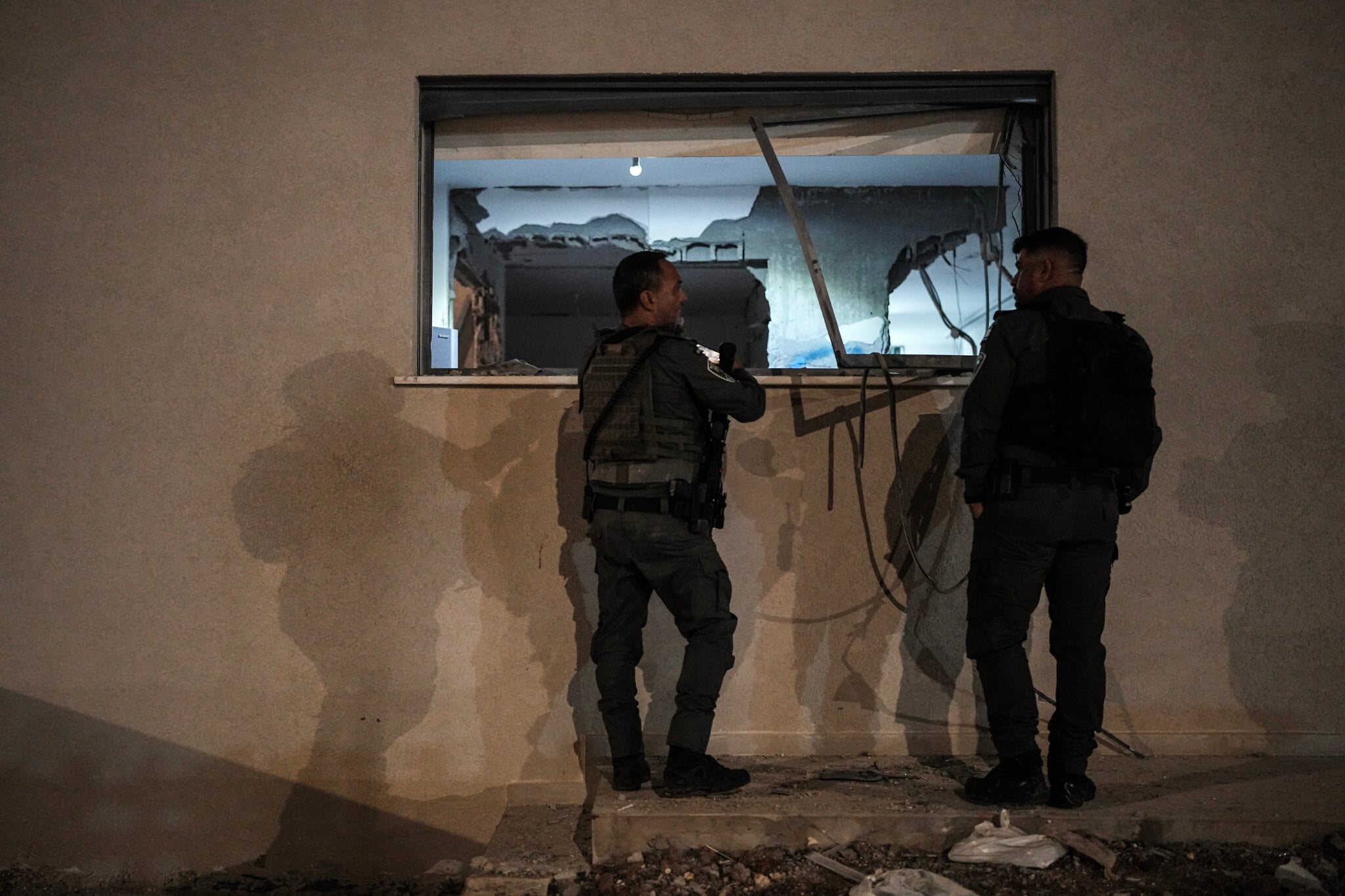
Israeli security forces at the scene where a missile fired from Iran damaged a house in Neta in south-central Israel, March 18, 2026 (Tsafrir Abayov/Flash90)
The Health Ministry reports that in the past 24 hours, 177 injured people have been taken to hospitals as a result of the conflict with Iran.
Among those treated in hospitals, one is in critical condition, two are in moderate condition, and 167 are in good condition.
One person has been treated for anxiety.
The ministry does not give a breakdown of the causes of injuries, and some might be sustained by people trying to reach shelter rather than as a direct result of missile fire from Iran or rocket fire from Lebanon.
The ministry also says that since the beginning of the war with Iran on February 28, 3,924 people have been admitted to hospitals, 74 of whom are currently hospitalized.
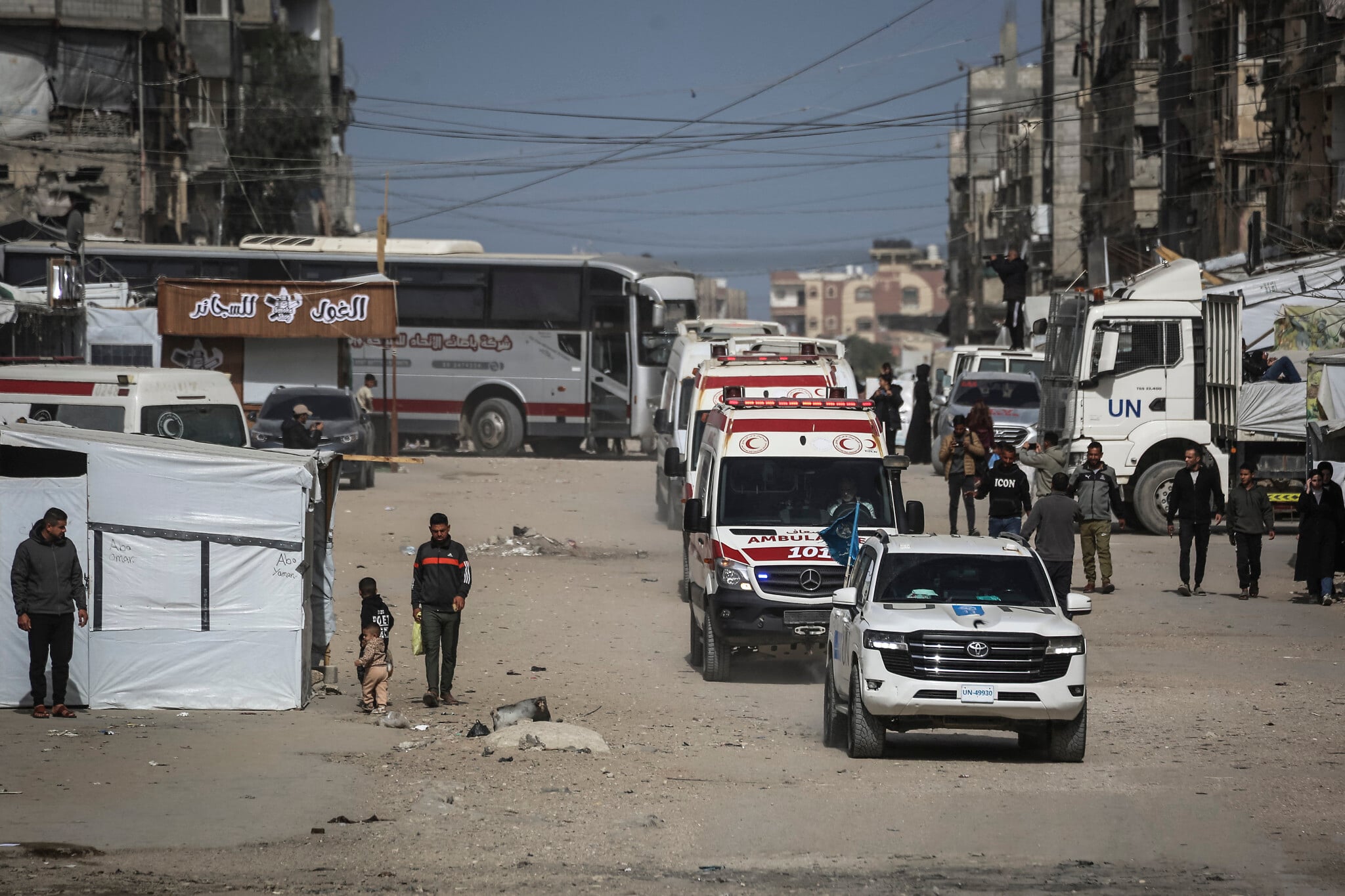
Rafah Crossing between Gaza and Egypt open for first time since start of Iran war
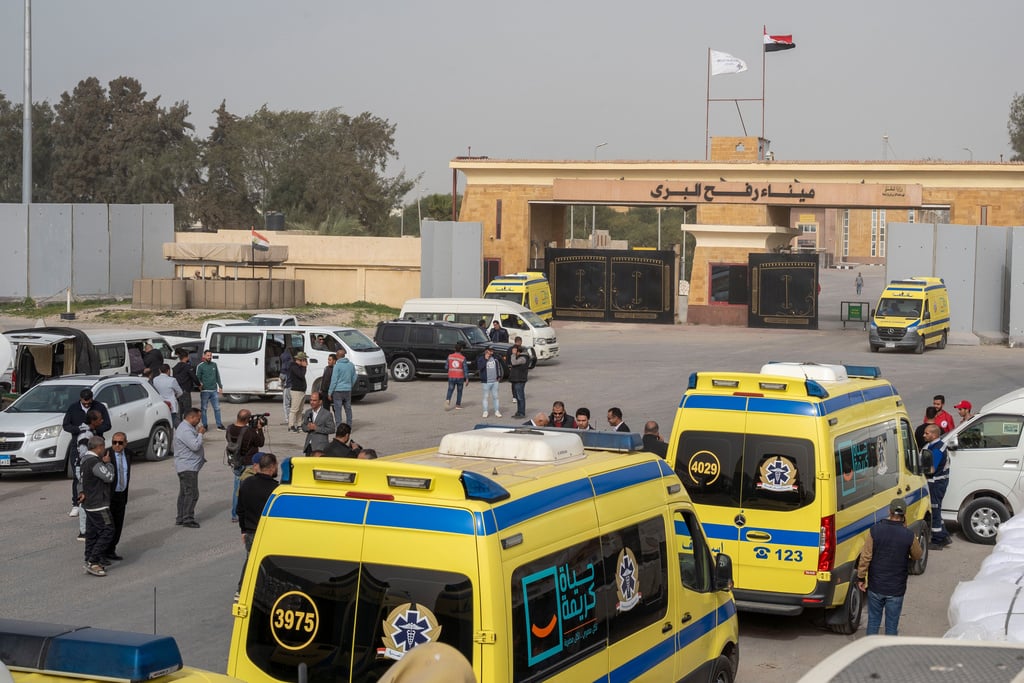
Ambulances line up to enter the Egyptian gate of the Rafah crossing into the Gaza Strip, in Rafah, Egypt, Feb. 2, 2026. (AP/Mohamed Arafat)
Gaza’s Rafah crossing with Egypt has reopened, Egyptian state-linked media reports, for the first time since Israel closed it on February 28 when it launched strikes on the Iranian regime alongside the United States.
Al-Qahera News, which is close to Egypt’s intelligence services, says the crossing reopened “in both directions” and aired footage showing a small number of Palestinians — including those who had been receiving medical treatment in Egypt — preparing to cross from the Egyptian side back into Gaza.
The footage also showed several ambulances waiting to receive Palestinian patients coming out of the Strip.
Israel’s Coordinator of Government Activities in the Territories said this week that the decision to reopen the crossing was made following a fresh assessment and “an examination of the conditions enabling the resumption of operations at the crossing, while maintaining the necessary security restrictions in light of the security situation and the threats in the area.”
The crossing had been expected to reopen yesterday, and it was unclear why it didn’t.
China blasts ‘unacceptable’ killing of Iran’s Larijani by Israel

Iranian Secretary of Supreme National Security Council Ali Larijani in Beirut, Lebanon, August 13, 2025. (Lebanese Parliament / AFP)
China condemns the killing of Iranian national security chief Ali Larijani by an Israeli airstrike, calling it “unacceptable.”
“We have always opposed the use of force in international relations. The acts of killing Iranian state leaders and attacking civilian targets are even more unacceptable,” China’s foreign ministry spokesman Lin Jian tells a press conference, when asked about Larijani’s death.
Woman shot dead in Lod in so-called honor killing; East Jerusalem man shot and killed in Holon
A woman was shot and killed overnight in Lod, just hours after a bus driver from East Jerusalem was gunned down while driving home from Holon in apparently unrelated incidents.
The victim from Lod is Anwaar al-Baz, a woman in her 40s. Paramedics found her in her home at around 1 a.m. She was pronounced dead at the scene.
The Kan public broadcaster reports that she was shot in a suspected so-called honor killing, but police have not elaborated on the circumstances. There have been no reports of arrests.
A few hours earlier, a bus driver from East Jerusalem was gunned down in Holon, south of Tel Aviv, just as Iran launched a volley of missiles toward central Israel.
According to Hebrew outlets, 36-year-old Murad Shweiki finished his shift at the city’s bus terminal and began driving home, only to be shot at an intersection as air raid sirens went off in the city.
Police reportedly believe the man was deliberately targeted in an ambush. He had no criminal record, according to Kan. No arrests have been reported.
Iranian drone attack on Kuwait oil refinery sparks fire; no injuries reported
A drone attack on a refinery owned by Kuwait’s national oil company sparked a fire at one of the units, state media says.
“Kuwait Petroleum Corporation announced that one of the operational units of the Mina Al-Ahmadi refinery… was the target of a drone attack, triggering a limited fire,” the Kuwait News Agency says, adding that no one was injured.
Rocket sirens in northern towns amid Hezbollah rocket attack from Lebanon
Rocket sirens are activated in the northern town of Karmiel and several neighboring communities, amid an apparent Hezbollah rocket attack from Lebanon.
Iranian military helicopter destroyed in strike on airport, IDF says
A Mi-17 helicopter was destroyed in a strike at Sanandaj Airport in Iran’s Hamedan, the Israel Defense Forces says.
“The IDF continues to deepen the damage to the military capabilities of the Revolutionary Guards’ air force and expand air superiority in western Iran,” the military says of the strike carried out yesterday, adding that it came as a result of “real-time intelligence.”
Report: Palestinian killed in IDF strike in Gaza City
Gaza media outlets affiliated with Hamas report that one Palestinian was killed and another wounded in an IDF strike in the al-Tuffah neighborhood in eastern Gaza City.
There is no immediate comment from the Israel Defense Forces.
No reports of injuries in latest Hezbollah rocket attack
There are no injuries reported in the latest rocket barrage fired by Hezbollah at northern towns, emergency services say.
New missile launch from Iran detected
The IDF has detected a new ballistic missile attack from Iran.
Sirens are set to sound in central Israel and coastal areas.
Saudi Arabia says Red Sea refinery hit by drone
Saudi Arabia says a drone hit the country’s SAMREF refinery in the port city of Yanbu on the Red Sea.
The Saudi Defense Ministry says a damage assessment is underway, without elaborating.
The strike comes after drones hit two oil refineries in Kuwait. Overnight, Iranian attacks also hit natural gas sites in Qatar and the United Arab Emirates, spiking global prices.
Iran is retaliating over an Israeli strike Wednesday on its South Pars natural gas field in the Persian Gulf that it shares with Qatar.
No injuries reported in recent missile attack from Iran
There are no injuries reported in the missile attack from Iran.
Initial reports had suggested that a building in the Tel Aviv area suffered damage.
Senior Hamas intelligence commander killed in Gaza strike yesterday, IDF says
A senior Hamas intelligence commander was killed in an Israeli strike in the Gaza Strip yesterday, the IDF says.
The military says the strike killed Muhammed Abu Shaleh, the intelligence officer of Hamas’s Khan Younis Brigade.
Shaleh was involved in planning the October 7, 2023, onslaught, and more recently “operated in violation of the ceasefire agreement to rehabilitate the organization’s capabilities in the Gaza Strip and planned to carry out terror attacks against IDF troops and the State of Israel,” the IDF says in a statement.
“The terrorist was targeted in a precise strike in order to remove an immediate threat to IDF troops,” the military adds.
צה"ל ושב"כ חיסלו את מפקד המודיעין הצבאי של חטיבת חאן יונס בארגון הטרור חמאס
כוחות צה"ל ושב"כ תקפו וחיסלו אתמול (ד') את מחמד אבו שהלה, מפקד המודיעין הצבאי של ארגון הטרור חמאס בחטיבת חאן יונס.
שהלה שימש במהלך המלחמה כקצין המודיעין של בכירי החטיבה ולקח חלק בתכנון טבח ה-7 באוקטובר… pic.twitter.com/n4ktflu20B
— Israeli Air Force (@IAFsite) March 19, 2026
IDF warns of fresh missile attack from Iran
The IDF has detected another ballistic missile attack from Iran.
Sirens are expected to sound in central Israel shortly.
No injuries in missile attack after sirens in Jerusalem, center
No injuries are reported following Iran’s latest ballistic missile attack on Israel, the eighth since midnight.
The missile, which triggered sirens in the Jerusalem area and parts of central Israel, was likely intercepted according to preliminary military assessments.
Rocket sirens in north warn of rocket fire from Lebanon
Rocket sirens are activated in a number of communities close to the border with Lebanon amid an apparent Hezbollah rocket attack.
Oil, natural gas prices soar after Iranian attack on Qatar facility that can supply one-fifth of world’s gas
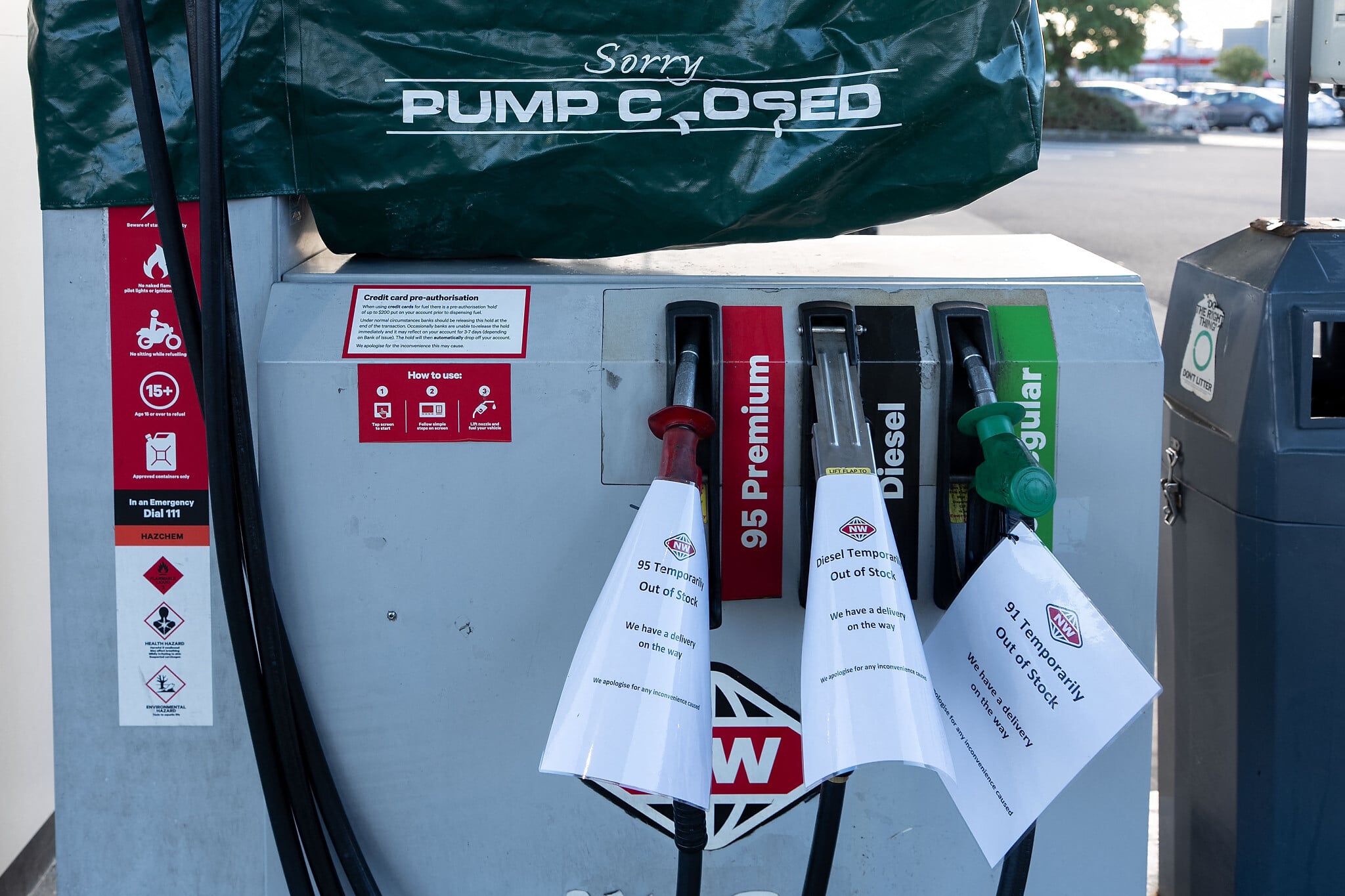
Notes read 'Out of Stock' at the New World Fuel station in Levin, New Zealand on March 19, 2026 (Marty MELVILLE / AFP)
Global oil and natural gas prices soar after Iran attacked a key natural gas facility in Qatar that can supply one-fifth of the world’s gas as well as two oil refineries in Kuwait.
The attacks added to fears the energy crisis triggered by the closure of the Strait of Hormuz to tanker traffic may be longer and more extensive than feared, with lasting damage to oil and gas production.
Brent crude, the international benchmark, rose to $116.38 per barrel, up from under $73 per barrel on the eve of the war.
The European TTF benchmark for natural gas prices traded 24% higher.
The Iranian attack hit the Ras Laffan terminal for shipping out liquefied natural gas in Qatar. Qatar normally supplies some 20% of the world’s consumption of LNG, which can be carried by ship. The facility shut down after a drone attack. The closure of the Strait of Hormuz to most tanker traffic also left the gas with nowhere to go.
If the disruptions from Iran’s attacks on its Gulf Arab neighbors’ energy infrastructure keep oil and gas prices high for long, they could create a debilitating wave of inflation for the global economy.
US benchmark crude oil gained 1.1% to $96.45 a barrel, while the Henry Hub future contract, the benchmark for US natural gas, gained 5.1%.
As oil and gas prices spiked, world shares retreated and US futures edged 0.2% lower.
Germany’s DAX lost 2.1% to 23,015.40 and the CAC 40 in Paris fell 1.5% to 7,848.88. Britain’s FTSE 100 shed 1.7% to 10,134.02.
In Asian share trading, Tokyo’s Nikkei 225 fell 3.4% to 53,372.53 as the Bank of Japan opted to keep its benchmark interest rate on hold at 0.75%, citing the war with Iran as one factor.
In blow to Passover travel, Israir nixes regularly scheduled flights through March 31

An Israir flight takes off from Ben Gurion International Airport, outside of Tel Aviv, August 25, 2024. (Yossi Aloni/ Flash90/ File)
Israeli carrier Israir cancels its regular scheduled flights planned through the end of March, citing wartime airspace restrictions and limited operations at Tel Aviv’s Ben Gurion Airport.
Due to the security situation and Home Front Command guidelines, scheduled flights planned to depart through March 31 are canceled, the airline says.
The announcement is a blow to travelers ahead of the Passover holiday.
Israir notes that cancellations apply only to regularly scheduled flights and do not include repatriation flights that are currently continuing to operate to and from Ben Gurion Airport, according to the outline determined by the Transportation Ministry.
“In line with the Transportation Ministry’s outline which restricts the number of seats on each flight, Israir will do its best to accommodate some of the passengers whose flights were canceled on flights operating during the current period,” the airline says. “The supply of seats is significantly lower than the demand and number of planned flights before the start of the war, and it may not be possible to accommodate all requests.”
Customers whose flights were canceled will also be offered a full cash refund or a future credit voucher worth 130 percent of the cost of the original reservation made via the airline’s website or through the service center. Those who made their reservation through a travel agent are asked to contact the agent directly.
In addition, ticket sales for regular scheduled Israir flights are halted through April 30, unless the security situation changes. Once Israel’s airspace will be fully reopened and air operations will be expanded, Israir will be ready to reopen flight ticket sales, the airline says.
Israel’s airspace has been shut to most commercial traffic since February 28, when joint attacks with the US on the Iranian regime began.
Earlier this month, Ben Gurion Airport gradually reopened for limited inbound and outbound flights operated by Israeli airlines El Al, Arkia, Israir and Air Haifa to repatriate Israelis stuck abroad and help travelers inside the country leave.
Iran urges coordination with Turkey, Egypt and Pakistan against US-Israeli ‘destabilization’

Iranian Foreign Minister Abbas Araghchi speaks during an interview on CBS on March 15, 2026. (Screenshot/CBS)
Iran’s Foreign Minister Abbas Araghchi calls for vigilance and coordination among regional countries to counter what he described as “destabilizing and escalatory actions” by the United States and Israel, Iranian state media reports.
Araghchi made the remarks in separate phone calls with his counterparts in Turkey, Egypt and Pakistan.
He said recent US and Israeli attacks on Iranian infrastructure were aimed at escalating tensions and added that Iran would spare no effort in defending its sovereignty and security.
UAE intercepts 7 ballistic missiles, 15 drones
The United Arab Emirates intercepted 7 ballistic missiles and 15 drones fired by Iran today, says the Emirati defense ministry.
Since the start of the US-Israel campaign against Iran on February 28, the UAE has been the most targeted country by Iran, facing 334 ballistic missiles, 15 cruise missiles, and 1,714 drones. The daily attacks have been steadily dropping throughout the war.
Cyber Directorate warns of fake Home Front message that links to app in phishing attempt
The National Cyber Directorate says that some Israelis received messages this morning purporting to be from the Home Front Command but that are in fact a phishing attempt.
Phishing is the use of ads, emails or text messages that trick a person into clicking a link to websites that look legitimate.
The directorate says the SMS contains a link to download an app that could be used to steal personal information.
מערך הסייבר הלאומי @Israel_Cyber מתריע כי בשעות האחרונות מופצות הודעות SMS המתחזות להודעות רשמיות של פיקוד העורף.
בהודעות מופיעים קישורים מזיקים להורדת אפליקציה “לשהייה במקלטים”.
במערך מדגישים כי אין ללחוץ על הקישור וכי קישורים מסוג זה עלולים לשמש לגניבת מידע אישי, פרטי… pic.twitter.com/oQidAuhvUd
— National Public Diplomacy Directorate (@NationalHasbara) March 19, 2026
Arab League chief condemns ‘flagrant’ Iranian attack on major gas facility in Qatar
Arab League Secretary-General Ahmed Aboul Gheit condemns what he described as a “flagrant” Iranian attack on a major gas facility in Ras Laffan Industrial City in Qatar.
He also condemns Iran’s attacks on Saudi Arabia and United Arab Emirates, and warns against the “dangerous escalation” caused by targeting oil and gas facilities in the Gulf, according to a statement.
The Arab League chief reiterates full support to Gulf nations in “all measures they undertake to confront these malicious Iranian attacks, and their right to safeguard the security of their citizens and the integrity of their facilities.”
Iran arrests 97 people accused of working with Israel, state media reports
Iran’s intelligence ministry has arrested 97 people for being “soldiers of Israel,” state media reports, in the latest round of a security sweep that has seen hundreds detained over alleged links to Israel and the US since the start of the war.
Earlier, state media quoted the police commander of Alborz province as saying that 41 people were arrested for sending videos to foreign-based opposition media channels.
Pregnant Palestinian woman dies of wounds from yesterday’s Iranian missile strike in West Bank, taking toll to 4
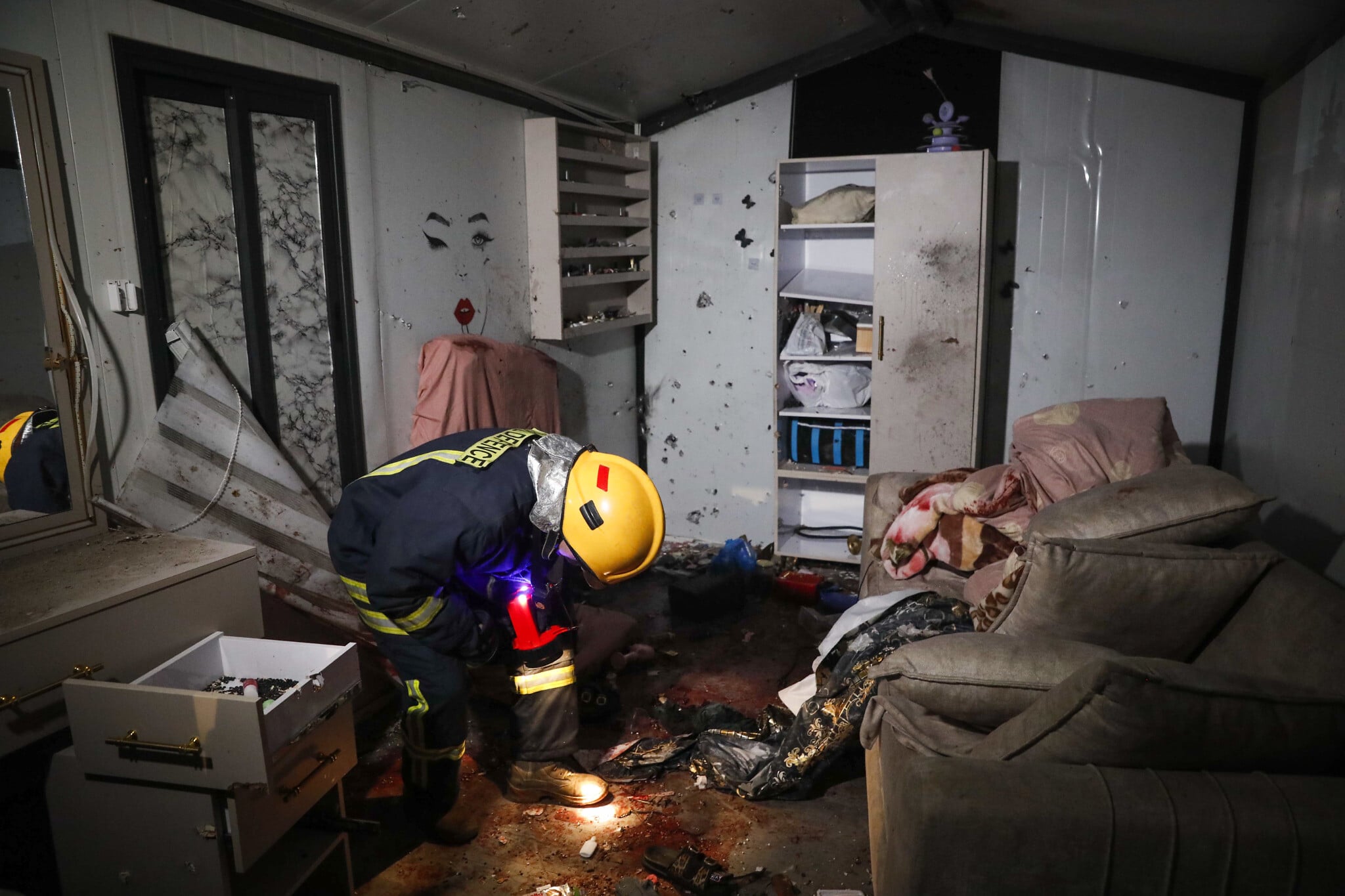
Palestinian security and rescue forces at the scene where a missile fired from Iran struck and killed several people in the town of Beit Awa, near the West Bank city of Hebron, March 19, 2026 (Wisam Hashlamoun/Flash90)
A Palestinian woman succumbs to wounds sustained in an Iranian missile attack last night, taking the death toll in the West Bank strike to four.
Aseel Masalma, 32, was critically wounded and was pronounced dead today, the Palestinian Authority health ministry says. According to Palestinian reports, she was six months pregnant.
The four victims — a teenage girl and three women — had been at a salon in Beit Awa, near Hebron, using the space to prepare food for a meal to break the Ramadan fast, Palestinian media reports.
The first three victims were named as Mais Razi Masalma, 17; Sahra Razek Masalma, 50; and Amal Matawa, 46.
A photo of the victims of the Iranian missile that struck a women’s salon in the town of Bayt Awa in the West Bank, including a pregnant woman and a minor:
– Sahera Masalma (salon owner)
– Amal Masalma (six months pregnant)
– Mais Masalma (minor) pic.twitter.com/AIM2VpmkNS— Ihab Hassan (@IhabHassane) March 19, 2026
At least three of the women were related.
Nine other Palestinians were injured when the apparent cluster munition hit the salon. The wounded included a four-year-old girl.
The funerals of three of the victims were held in Beit Awa today.
A Beit Awa resident who spoke with The Times of Israel and asked not to be named said the salon was a mobile home structure made of aluminum.
Also yesterday evening, a man was killed in an Iranian missile strike in central Israel’s Moshav Adanim.
تشييع 3 فلسطينيات قضين في سقوط شظايا صورايخ على بلدة بيت عوا في الخليل بالضفة الغربية pic.twitter.com/wlCzGOClE1
— ????????????????منير الجاغوب ???????????????? (@MonirAljaghoub) March 19, 2026
WATCH: Pentagon holds briefing on progress of Iran war
The US Department of Defense is holding a briefing on the progress of the Iran war.
Watch it live here:
2 men in UK court accused of spying on Israeli embassy, London’s Bevis Marks Synagogue for Iran

The interior of Bevis Marks Synagogue in the City of London, pictured as restoration works nears completion, October 27, 2021 (DH/Times of Israel)
Two men appear in a London court accused of being tasked by Iran to carry out hostile surveillance on the Israeli Embassy, Britain’s oldest synagogue and other Jewish targets.
Nematollah Shahsavani, 40, a dual Iranian-British national, and Alireza Farasati, an Iranian national, 22, are accused of being involved in gathering information and undertaking reconnaissance of targets given to them by Iranian spy services over five weeks last summer.
Prosecutor Louise Attrill tells London’s Westminster Magistrates Court that devices seized from the two men had contained a list of targets.
These included the Israeli Embassy, the Israeli Consulate, London’s Bevis Marks Synagogue, a Jewish community center, and the Community Security Trust, a group that provides security advice for the country’s Jews.
Attrill says the evidence suggested Shahsavani, who had traveled to Iran last April and was stopped under counter-terrorism powers when he returned to Britain in August, had been given instructions by Iranian intelligence services, and he had tasked Farasati to carry out the surveillance.
The men did not enter a plea and were remanded in custody until their next hearing at London’s Old Bailey Court on April 17.
Hegseth: US to launch ‘largest strike package yet’ on Iran today
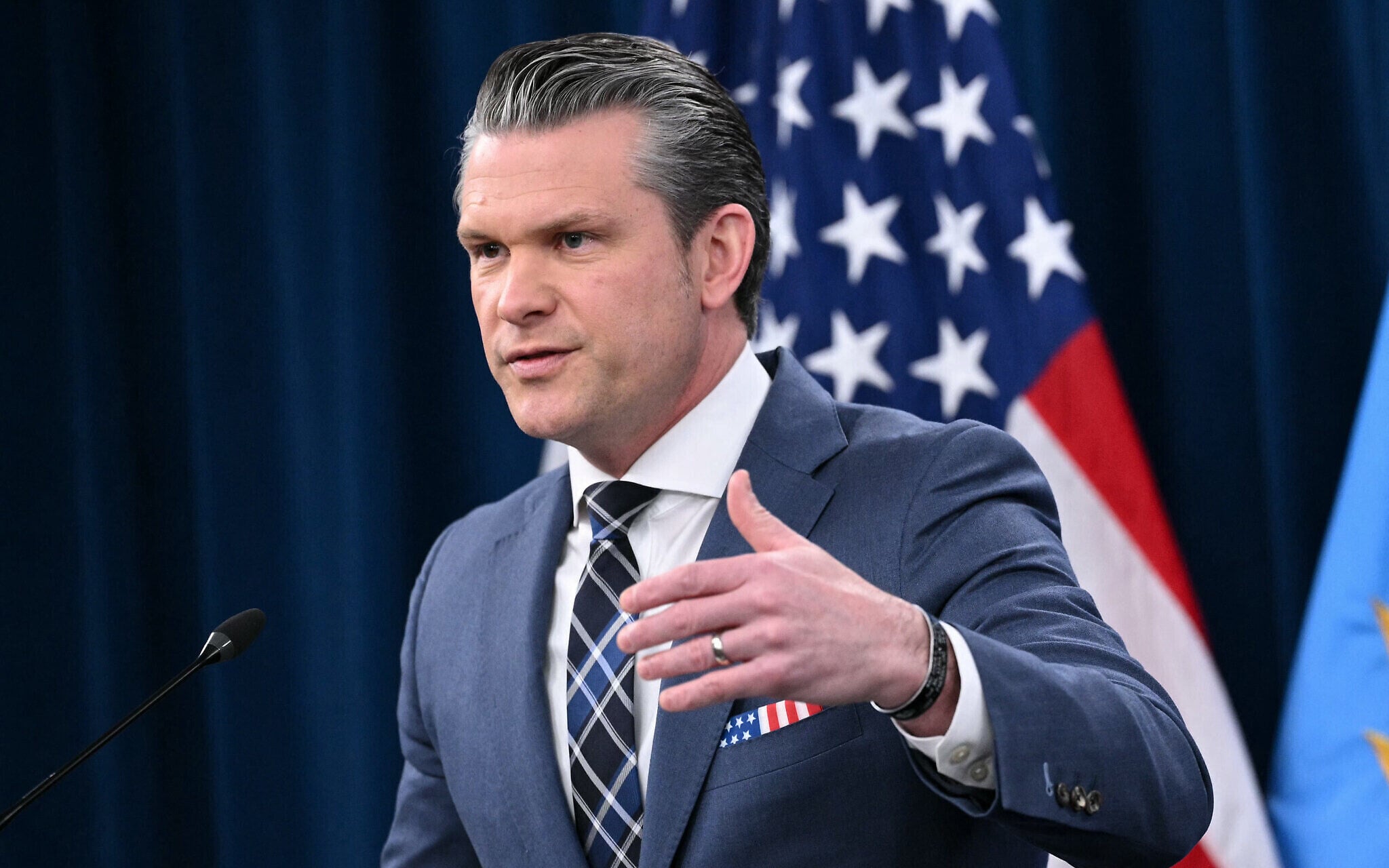
US Secretary of Defense Pete Hegseth speaks during a news conference at the Pentagon in Washington, DC, on March 19, 2026 (Mandel NGAN / AFP)
United States Defense Secretary Pete Hegseth says that the US will today carry out “the largest strike package yet” in the ongoing US-Israeli aerial assault against Iran, during opening remarks in a Pentagon briefing.
“To date, we’ve struck over 7,000 targets across Iran and its military infrastructure. That is not incremental. That is overwhelming force applied with precision. And again, today will be the largest strike package yet, just like yesterday was,” Hesgeth says on the 19th day of the operation.
“We’re winning decisively and on our terms,” Hesgseth says, hitting back at concerns in US media that the conflict could turn into a “forever war,” saying that “nothing could be further from the truth,” and calling the operation “laser-focused.”
He warns that “the last job anyone in the world wants right now” are the positions of “senior leader for the IRGC, or Basij,” calling them “temp jobs.”
The war objectives remain to “destroy missiles, launchers, and Iran’s defense industrial base so they cannot rebuild. Destroy their navy, and [ensure] Iran never gets a nuclear weapon,” Hegseth says.
Hegseth hails US partnership with Israel and several Gulf states against Iran
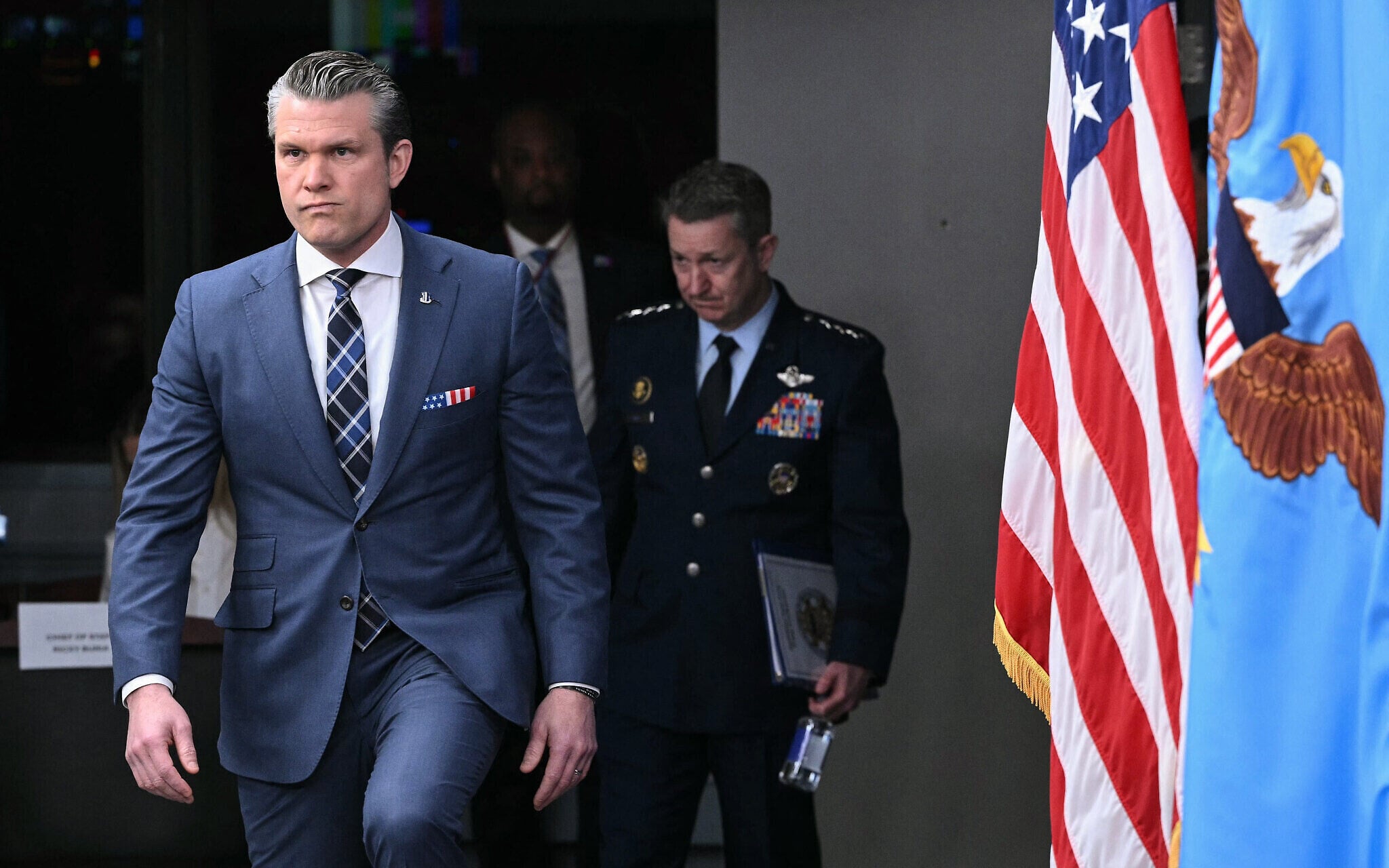
(L) US Secretary of Defense Pete Hegseth and (R) Chairman of the Joint Chiefs of Staff General Dan Caine arrive for a news conference at the Pentagon in Washington, DC, on March 19, 2026 (Mandel NGAN / AFP)
United States Defense Secretary Pete Hegseth hails partnership with Israel and several Gulf states in the US-Israeli campaign against Iran.
Speaking at a Pentagon briefing, Hegseth describes Israel as “an incredible and capable partner” from the outset of the conflict, and adds that Gulf countries — including the UAE, Qatar, Bahrain, Kuwait, Saudi Arabia “and others” — have “stepped up incredibly.”
“Iran’s sort of reckless attempt to strike civilian infrastructure and other things has brought countries who maybe would have not been as all-in as they are today squarely into our orbit,” he says.
US detects unidentified drones over Washington base where Rubio, Hegseth live – report
US officials detected unidentified drones above an army base in Washington where Secretary of State Marco Rubio and Pentagon chief Pete Hegseth live, the Washington Post reports, citing three people briefed on the situation.
The officials have not determined where the drones came from, the report says, citing two of the people.
The drones over Fort McNair prompted officials to weigh relocating Rubio and Hegseth, the report says.
However, the secretaries have not moved, the report adds, citing a senior administration official.
The newspaper says the US military is monitoring potential threats more closely because of the heightened alert level over the US and Israeli war against Iran.
Reuters could not independently verify the report immediately.
The Pentagon and the US State Department did not respond to requests for comment.
Chief Pentagon spokesperson Sean Parnell declines to discuss the drones with the Washington Post.
“The department cannot comment on the secretary’s (Hegseth’s) movements for security reasons, and reporting on such movements is grossly irresponsible,” he tells the Post.
Hegseth: US taking ‘countermeasures’ to communicate with Iranians during internet blackout

US Secretary of Defense Pete Hegseth speaks during a news conference at the Pentagon in Washington, DC, on March 19, 2026 (Mandel NGAN / AFP)
United States Defense Secretary Pete Hegseth says Washington is “taking countermeasures” amid internet blackouts in Iran in order to communicate with the Iranian people and “certain audiences” during the campaign against the country.
“As far as the internet, we’re watching the regime try to tighten its grip as much as possible,” Hegseth says during a Pentagon briefing.
“We’re obviously taking countermeasures, many of which we can’t talk about here, to ensure that messaging is delivered, not just to the Iranian people at large, but to the right audiences, certain audiences that need to hear certain things about what their fate might look like or what their choices are,” he says, without elaborating further.
He also criticizes “AI images… fake reports, fake images,” that he says are being dispersed by the regime in an effort to “make it look like something’s happening when the exact opposite is.”
AI images and videos alleging false developments such as the death of Prime Minister Benjamin Netanyahu and extreme damage from Iranian strikes in Israel have been widely circulated online since the conflict began.
Footage shows Israeli strike meters from TV correspondent in south Lebanon

Screenshot from a video showing an Israeli strike meters from a television correspondent on March 19, 2026 (RT)
Footage shows the moment an English-language correspondent for the Russian channel RT was reporting from southern Lebanon when an Israeli strike hit just meters away from him.
The reporter moves slightly away from the scene as he hears a loud buzzing noise, just seconds before the strike.
The camera appears to be knocked to the ground by the force of the blast.
RT later said that Lebanon bureau chief Steve Sweeney and the camera operator were lightly wounded in the strike.
“Guys, we are fine. Turns out you can hear the missile when it’s flying at you,” said cameraman Ali Rida, according to TASS.
Earlier, the IDF warned it was expected to strike bridges over the Litani River due to “Hezbollah movements under civilian cover.” It is unclear if the men are filming on a bridge.
There was no immediate comment from the IDF.
Warning, the clip features profanity:
WATCH: Israeli airstrike near RT reporter. RT reports its correspondent Steve Sweeney and a cameraman were wounded in an Israeli strike in southern Lebanon today.
Lebanon’s state news agency says two journalists were lightly injured during an IDF strike on the al-Qasmiya bridge. pic.twitter.com/6Wn9M3tpcI— Faytuks Network (@FaytuksNetwork) March 19, 2026
Hegseth: Israel’s strike on South Pars gas field yesterday ‘a warning’ to Iran
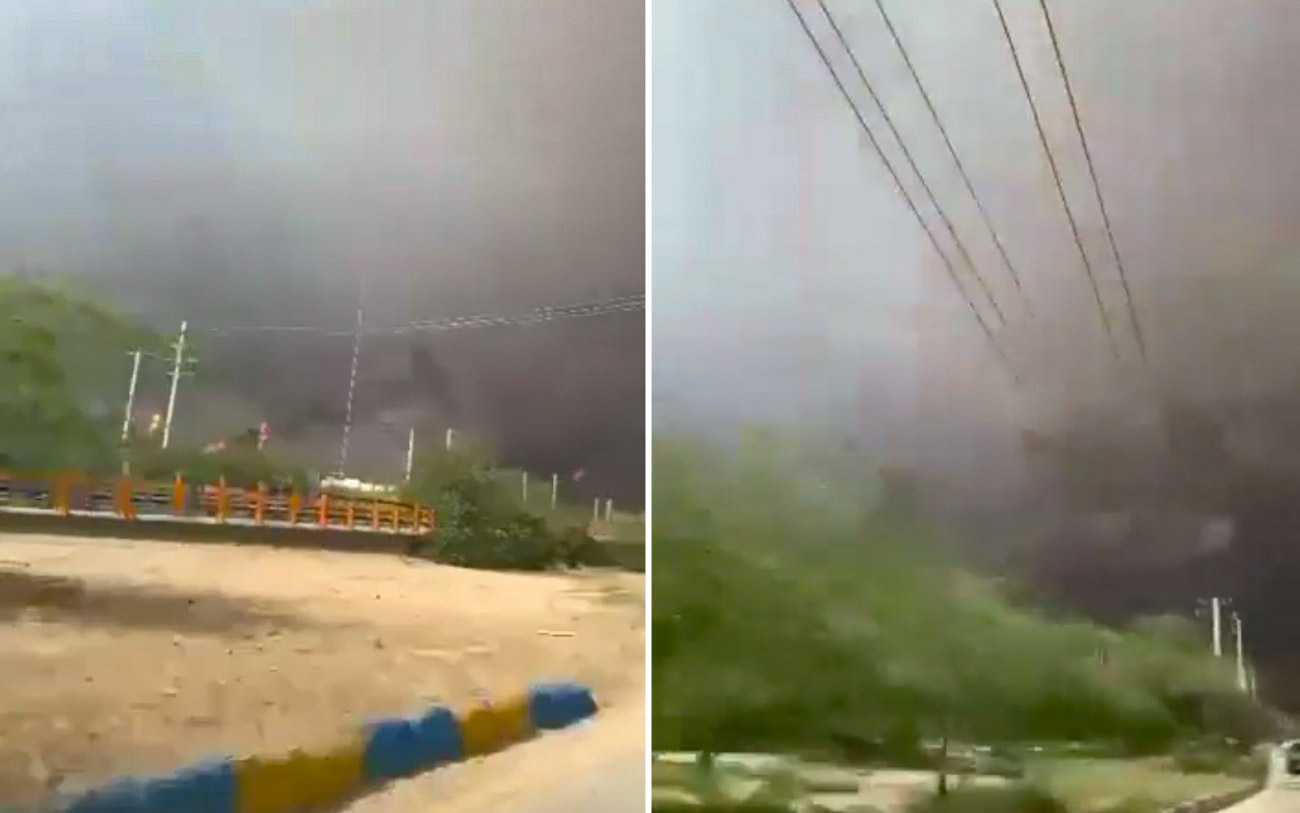
Footage shows the aftermath of an IDF strike on the South Pars gas field on the northern coast of the Persian Gulf, in Asaluyeh, Iran, on March 18, 2026. (Social media, used in accordance with Clause 27a of the Copyright Law)
US Defense Secretary Pete Hegseth calls Israel’s strike on Iran’s South Pars gas field yesterday “a warning,” urging Iran against continuing its retaliatory strikes on energy sites across the Gulf.
“Iran has weaponized energy for decades. Israel clearly sent a warning, and [Trump] has made it clear, very clear. Iran knows when you hit Kharg Island and you hit military capabilities on Karg Island — which is the only thing we hit — we can hold anything at issue,” Hegseth says.
The US struck Tehran’s oil export hub on Kharg Island over the weekend.
“The United States military controls the fate of that country. Iran has the ability to make the right choices. It should not, going forward, target Arab allies, Arab countries, trying to create pain,” Hegseth continues.
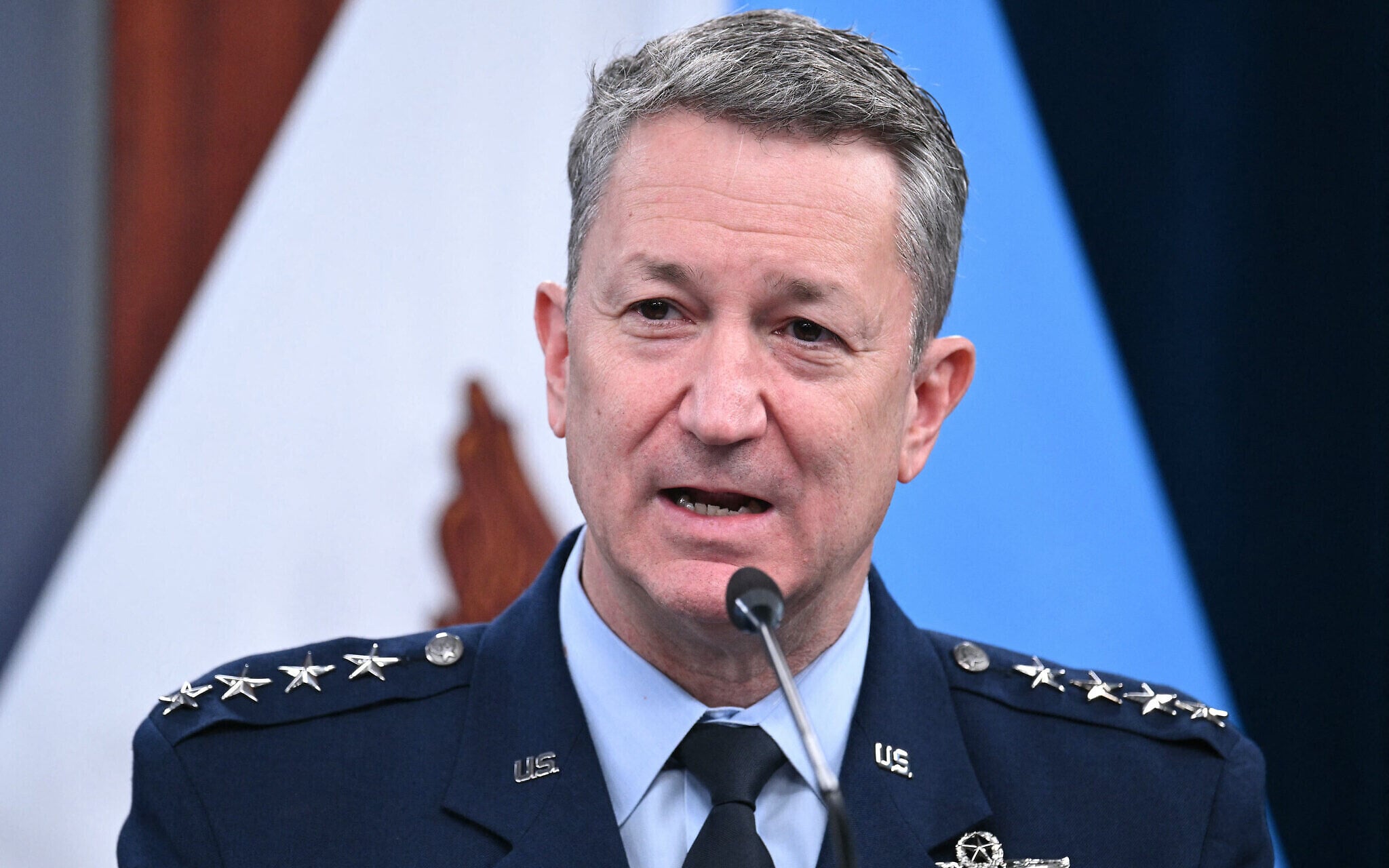
Alongside Hegseth, US Chairman of the Joint Chiefs of Staff Gen. Dan Caine says that the US is continuing to be “aggressive and assertive” in its efforts to diminish Iran’s missile capabilities amid its attacks on energy infrastructure in the Gulf.
Neither Caine nor Hegseth repeats US President Donald Trump’s claim that Washington was not informed about Israel’s strike, which has sparked international concern about regional escalation. US sources told The Times of Israel and other media outlets that Washington approved the strike.
“[Iran] came into this fight with a lot of weapons,” Caine says in response to a question about the significance of Iran’s attacks over the past day, which included a gas hub in Qatar and oil and gas facilities in Saudi Arabia, the United Arab Emirates and Kuwait.
“This is why we continue to be as aggressive and assertive as we can against their ballistic missile capability, both their medium-range ballistic missile capability and their short-range missile capability. So we are continuing to hunt and find them and kill them. And we will continue to do so,” Caine says.
IDF: Four Iranian Navy missile boats, a corvette, and naval infrastructure destroyed in north Iran strikes last night
The Israeli strikes at the Iranian port city of Bandar Anzal and in the Caspian Sea last night destroyed several vessels of the Iranian Navy, as well as naval infrastructure, the military says, publishing footage of the attacks.
According to the IDF, the strikes destroyed an Iranian Navy corvette, four missile boats, and several auxiliary ships and guard boats, along with a command center and a shipyard.
Some of the vessels were located at the port, while others were out at sea.
Israeli airstrikes hit Iranian Navy vessels and infrastructure at the Iranian port city of Bandar Anzal and in the Caspian Sea, March 18, 2026. (Israel Defense Forces)
The military says that the missile boats were targeted to cause a blow to the Iranian military, despite the fact that they do not pose a direct threat to Israel from the Caspian Sea.
Still, the IDF adds that the missile boats have anti-aircraft capabilities and could pose a threat to Israeli aircraft operating over Iran, as well as anti-submarine capabilities.
Preparations for the strike only began days ago, and it was not among the military’s initial bank of targets in Iran. Researchers at the Naval Intelligence Division located the ships and worked with the Military Intelligence Directorate and the Israeli Air Force to plan the strike.
It marks the first time that the IDF had struck in this area of Iran, both in this war and the previous rounds of conflict, according to the military.
Drone infiltration of DC army base’s airspace exemplifies threat of readily available UAVs — expert
A drone infiltration of an army base’s airspace in Washington, DC, exemplifies the potential threat from readily available, non-military drones, an expert says.
US officials earlier today detected unidentified drones above the army base where Secretary of State Marco Rubio and Pentagon chief Pete Hegseth live, according to The Washington Post.
Details about the incident are still scant, including whether the drones were nefarious or linked to any foreign actors.
Kateryna Bondar, a fellow at the Center for Strategic and International Studies, a Washington, DC, research institute, warned about potential threats from off-the-shelf drones in an interview with The Times of Israel yesterday.
Bondar is a former adviser to the Ukrainian government who has studied drone warfare in Ukraine and written about Iranian drone warfare.
She said yesterday that Iran probably cannot attack the US homeland with its military drones, but that bad actors could utilize commercially available drones from within the US.
“A threat that everyone here is underestimating is bringing a striking capability here,” she said. “Not only Iran, but anyone can do that, especially taking into account that the US doesn’t have any internal countermeasures.”
Assailants could bring a drone to within a couple of kilometers from a target, so the short, speedy flight would evade air defenses, she said.
“It will take a minute, and no air defense will be able to react. Even if they want to strike a military facility, nothing can react and intercept that,” she said. “It’s small. Radars are not adapted to this kind of identification. They look like birds.”
After today’s drone scare over the military base, Bondar says, “This is what I mean when thinking of a realistic scenario of a drone threat.”
Palestinian dies after being filmed collapsing from heart attack during settler raid
Palestinian media outlets report that Iyad Arar, 60, from the village of Qarawat Bani Zeid, died of a heart attack during a settler raid of a park where he worked as a guard in the Salfit area of the West Bank.
Footage circulated on social media appears to show him attempting to speak with several settlers who arrived at the site. One of the settlers is then seen climbing a wall to enter the park’s parking lot. Arar tries to chase after the settler but collapses in front of the wall.
He was pronounced dead shortly thereafter.
لحظة ارتقاء الشهيد عائد عرار على يد المستوطنين في بلدة قراوة بني زيد شمال رام الله حيث يعمل حارس في قاعة صوفيا بارك pic.twitter.com/d8un2zQFNr
— ????????????????منير الجاغوب ???????????????? (@MonirAljaghoub) March 19, 2026
Reports: Settlers set vehicle on fire in the West Bank, no casualties reported
Palestinian media outlets report that settlers set a vehicle ablaze near the village of Khirbet Abu Falah in the central West Bank.
No casualties or arrests have been reported.
????عاجل | مستوطنون يحرقون مركبة في قرية أبو فلاح، شمال شرق رام الله pic.twitter.com/qbwWnmTbgi
— شبكة يافا الإخبارية (@yaffa_ps) March 19, 2026
5 European powers and Japan condemn Iran’s closure of Hormuz
The leaders of six democratic countries — United Kingdom, France, Germany, Italy, the Netherlands and Japan — release a joint statement condemning Iran’s closure of the Strait of Hormuz.
“We condemn in the strongest terms recent attacks by Iran on unarmed commercial vessels in the Gulf, attacks on civilian infrastructure, including oil and gas installations, and the de facto closure of the Strait of Hormuz by Iranian forces,” say the world leaders.
They call on Iran “to cease immediately its threats, laying of mines, drone and missile attacks and other attempts to block the Strait to commercial shipping.”
Without mentioning Israel — which has attacked major Iranian oil and gas installations— they also call for an immediate end to “attacks on civilian infrastructure, including oil and gas installations.”
They do not commit to sending military forces, but do “express our readiness to contribute to appropriate efforts to ensure safe passage through the Strait.”
IDF detects incoming Iran missile attack targeting central Israel, Jerusalem
The IDF has detected a new ballistic missile attack from Iran.
Sirens are expected to sound in the Jerusalem area and central Israel shortly.
Sirens triggered across Jerusalem, central Israel amid day’s 9th Iran missile salvo
Sirens are sounding across northern Israel, the Jerusalem area, and central Israel, amid an Iranian ballistic missile attack.
It marks the ninth missile salvo on Israel today.
Synagogue targeted in Michigan attack releases photos of interior devastation
Temple Israel, outside Detroit, releases photos showing the severe damage to the building after an attempted attack last week.
An armed attacker rammed a truck into the building, was fired on by synagogue security guards, and then died by suicide.
The truck struck a security guard, injuring him, and dozens of first responders were hospitalized for smoke inhalation.
During the attack, his truck ignited, sparking a fire in the synagogue hallway.
The photos show scorched floors and walls, burned photos of congregants, wires hanging from ceilings, smashed windows and debris littered on the ground.
Temple Israel released photos of the devastation from last week’s attack. It’s hard to look at these photos and not feel like it could have easily been my synagogue instead — an attack on any Jewish community is an attack on all of us.
Support rebuilding: https://t.co/aUhOOcEFsO pic.twitter.com/uLsCgArc7X
— Amy Spitalnick (@amyspitalnick) March 19, 2026
Another photo shows a children’s classroom, students’ snacks still arrayed on knee-high tables. Around 140 children were in the synagogue during the attack.
The synagogue says in a statement that it had not made photos public, but that some images had been published by media, causing “considerable harm to the survivors.”
“Today, we are sharing some images taken by our friend, Emily Elconin, to take back control of our narrative,” the synagogue says.
“We share these images because our community deserves to see our building through eyes of love, not through the lens of spectacle. This is our sacred space, and we will be the ones to tell its story,” the statement says, along with a link to contribute to rebuilding efforts.
El Al announces war-restricted flight schedule to 12 major cities ahead of Passover
Ahead of the Passover holiday, Israel flag carrier El Al says it will operate a war-restricted flight schedule to 12 major cities in the US, Europe, and Asia next week, subject to Home Front Command restrictions.
Between March 21 and 28, El Al will operate flights to New York, Miami, and Los Angeles, Bangkok, Phuket, Tokyo, Paris, London, Milan, Madrid, Munich, and Athens. Outbound flights will be limited to 130 passengers per aircraft, according to restrictions by the Transportation Ministry.
“The flights will operate to 12 selected destinations, to allow as many passengers as possible to depart Israel, in accordance with demand and operational capacity under the restrictions,” says El Al. “If Home Front Command restrictions for flight operations at Ben Gurion Airport will be eased, allowing for an expansion of the scope of air operations, El Al will add additional flights already during the coming week, so that more customers can leave Israel.”
Passengers who have already booked tickets to one of the 12 destinations selected for next week will be assigned to these flights. The assignment will be done automatically and there is no need to contact the service center, El Al says.
Meanwhile, flights to Rome, Amsterdam, Lisbon, Geneva and Warsaw are canceled next week due to current government restrictions, El Al says.
Israel’s airspace has been shut to most commercial traffic since February 28, when joint attacks with the US on the Iranian regime began.
Earlier this month, Ben Gurion Airport gradually reopened for limited inbound and outbound flights operated solely by Israeli airlines El Al, Arkia, Israir and Air Haifa.
No injuries reported after day’s 9th Iran missile salvo; impacts, falling fragments spotted in Haifa area
No injuries are reported following Iran’s latest ballistic missile salvo on Israel, which set off sirens across northern Israel, central Israel, and the Jerusalem area.
Missile impacts or sites of falling fragments are reported in the Haifa area, and rescue forces are heading to the scenes.
There are also reports of power outages in the Krayot suburbs of Haifa following the missile attack.
Sirens triggered in Karmiel, surrounding northern towns due to Hezbollah rocket fire
Sirens sound in the northern city of Karmiel and nearby towns following rocket fire from Lebanon.
Hezbollah has fired dozens of rockets at Israel today, with no reports of injuries or major damage.
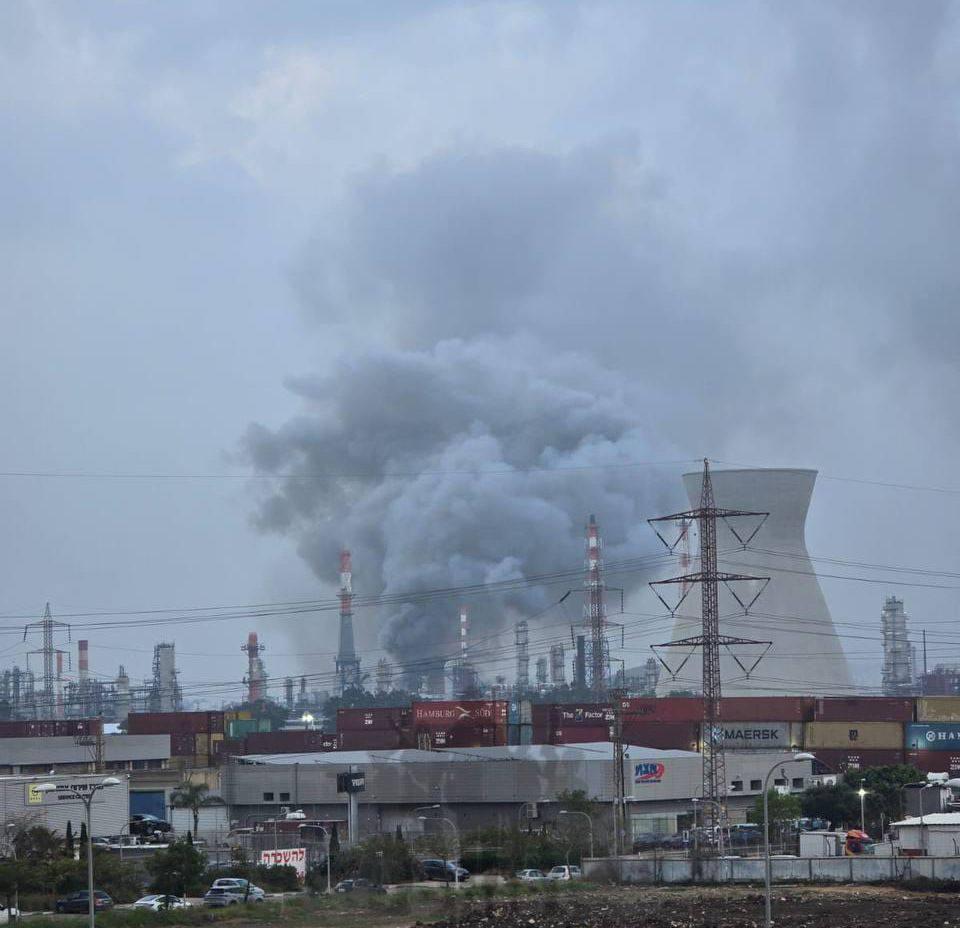
Iran missile impacts at Haifa oil refinery; no reports of injuries
During the latest Iranian missile salvo on Israel, an impact occurred at the oil refineries in Haifa.
Rescue services say there have been no reports of injuries.
המטח האחרון מאיראן: פגיעה בבתי הזיקוק באזור חיפהhttps://t.co/TRI8NEmG6P pic.twitter.com/XGGRcWyiII
— החדשות – N12 (@N12News) March 19, 2026
Footage shows smoke rising from the oil refineries in Haifa following Iran's latest ballistic missile attack. https://t.co/O4XmZ8FwmY pic.twitter.com/O4SYZV7Kej
— Emanuel (Mannie) Fabian (@manniefabian) March 19, 2026
US and Israeli war aims in Iran are not the same, US spy chief says
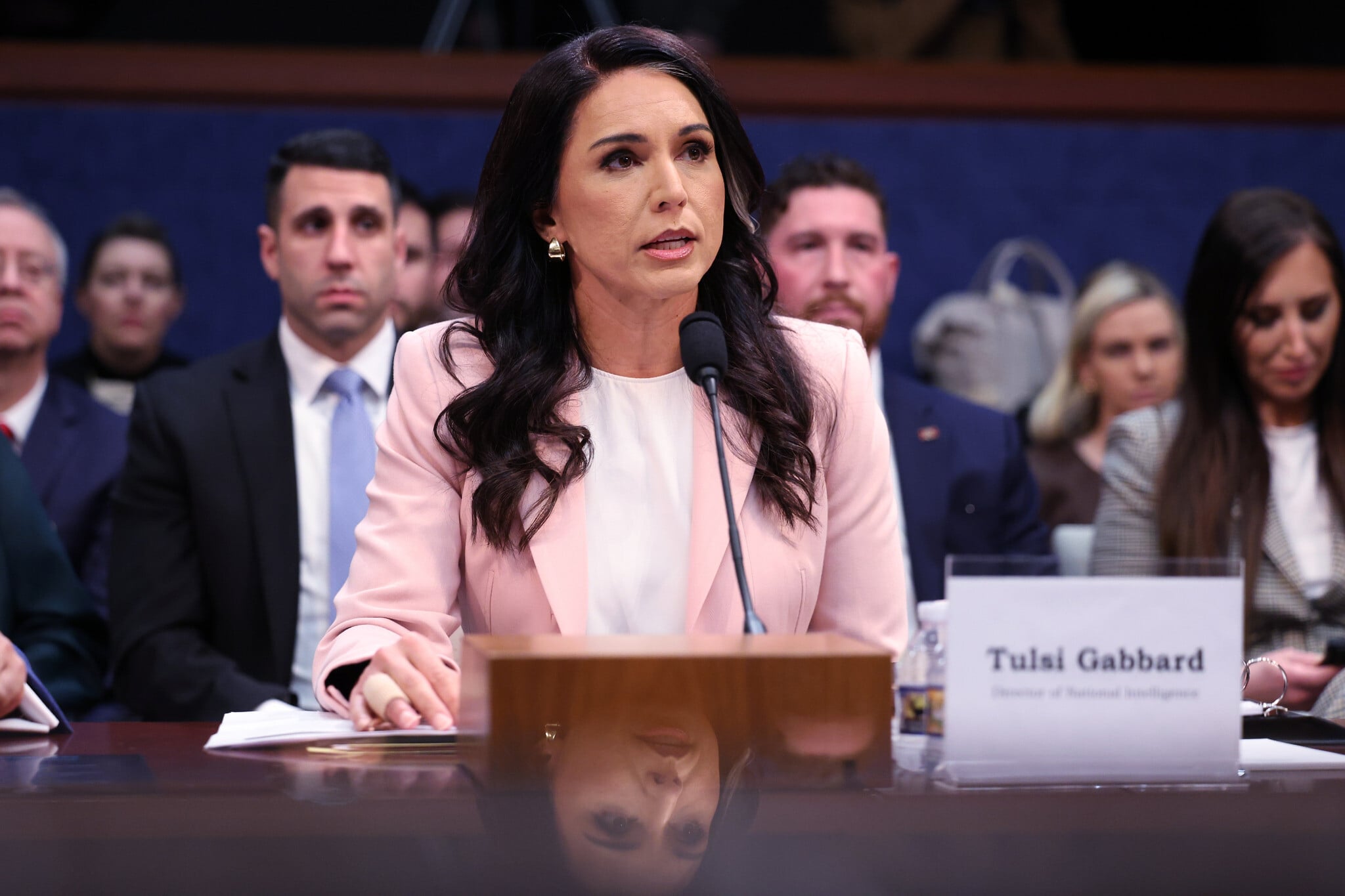
US Director of National Intelligence Tulsi Gabbard, speaks during a House Permanent Select Committee on Intelligence hearing to examine worldwide threats, March 19, 2026, on Capitol Hill in Washington. (AP Photo/Tom Brenner)
American and Israeli objectives for the war on Iran are not the same, US Director of National Intelligence Tulsi Gabbard says, with Israel focused on disabling Iran’s leadership and US President Donald Trump focused on destroying Iran’s ballistic missile program and navy.
“The objectives that have been laid out by the president are different from the objectives that have been laid out by the Israeli government,” Gabbard tells the House intelligence committee’s annual hearing on worldwide threats to the United States.
“We can see through the operations that the Israeli government has been focused on disabling the Iranian leadership. The president has stated that his objectives are to destroy Iran’s ballistic missiles launching capability, their ballistic missile production capability, and their navy,” she says.
For their part, Israeli leaders have said that destroying Iran’s missile capabilities is, in fact, among their war aims, which are degrading the Iranian regime’s military capabilities, distancing threats posed by Iran and to “create the conditions” for the Iranian people to topple the regime.
Meanwhile, US officials have given varying answers regarding the war’s aims. They almost always list the destruction of Iran’s missile program, while often also including the destruction of its navy. Ceasing Iran’s support for armed proxies and preventing Iran from ever obtaining a nuclear weapon have also been listed as war aims.
As for regime change, while US officials have indeed generally left it off their lists of war aims, they have also said it would be a welcome byproduct of the joint strikes with Israel, while President Donald Trump has also said he wants to help select Iran’s next leader.
Knesset panel reinstates oversight mechanism over $1.8 billion in emergency funds pushed by coalition
The Knesset Finance Committee says that a clear oversight mechanism has been added to govern how a NIS 5.8 billion ($1.8 billion) “civilian emergency reserve” in the government’s proposed 2026 budget is used, following demands from opposition lawmakers on the committee.
In a statement, the committee says that a clause will be added to the bill stipulating that funds will be used “solely for expenses directly stemming from Operation Lion’s Roar,” and that “the allocation of the funds will no longer be alterable by government decision, unlike the previous situation.”
The move comes after it emerged during a committee discussion on Tuesday that the funds were not anchored in legislation with a defined oversight mechanism, against the advice of Finance Ministry officials, as part of proposed amendments to the as-yet-unpassed budget amid the ongoing war with Iran and Hezbollah.
The revelation prompted outrage from opposition lawmakers who warned that the lack of safeguards meant the funds could be diverted toward political or coalition spending, particularly in an election year.
Committee members and Yesh Atid MKs Vladimir Beliak and Naor Shiri, along with Yesh Atid chair Yair Lapid sent a letter to the Finance Ministry, Knesset legal advisor, and attorney general, demanding the cancellation of the funds, which they described as an unlawful “blank check” for the coalition to use for political purposes.
Lapid celebrates the decision, saying in a post on X that, “This means that this multibillion-shekel sum was prevented from being diverted for political purposes and benefits to the ultra-Orthodox.”
“This is an enormous sum of money that we succeeded in saving for the Israeli taxpayer,” he adds.
IDF says Haifa refinery impact caused by falling fragments; minister: no major damage caused
The impacts at the oil refineries in Haifa were caused by falling fragments following the interception of an Iranian ballistic missile, according to the IDF.
The military stresses that there were no direct missile impacts at the facilities in the northern coastal city.
Energy Minister Eli Cohen says that “no significant damage to infrastructure sites” was caused in the attack.
Haredi protester bit officer’s leg during rally against Jerusalem light rail construction — police

A police officer's leg after he was bitten by a demonstrator during the dispersal of an ultra-Orthodox protest on March 19, 2026. (Israel Police)
A Haredi protester bit an officer in the leg during a stormy demonstration against light rail construction in Jerusalem, police say.
In footage from the protest, officers were seen using batons and stun grenades to disperse hundreds of demonstrators as they attempted to break into a construction site in the capital’s ultra-Orthodox Mea Shearim neighborhood.
Some of the protesters brought their young children with them in strollers, leading police to accuse them of “cynically and dangerously exploiting toddlers.”
According to police, the demonstrators sought to use them as a “human shield” against security forces.
After police’s commander at the scene declared the demonstration unlawful, officers began to use force against protesters, hitting their arms and legs with batons and chucking stun grenades despite the presence of young children.
One officer was seen kneeling on a demonstrator’s head, while others were filmed trying to separate the children in the strollers from adult protesters by force.
תיעוד חריג ומטריד מהפגנה בירושלים מעורר סערה בחברה החרדית, שוטרים הופכים עגלה עם תינוק ומכים מי שמנסה לחלץ מהם את העגלה. pic.twitter.com/iRDNFTKqES
— שילה פריד???????? (@shilofreid) March 19, 2026
After footage spread online showing police beating on a man who had been gripping one of the strollers, Jerusalem District commander Avshalom Peled ordered the officers ejected from the scene, bringing them in for questioning about the incident.
During the dispersal, one protester bit a policeman’s leg, causing him injury. Two other officers were hurt and required medical treatment, but none were known to be hospitalized as a result of their injuries.
Argentina begins presidency of International Holocaust Remembrance Alliance
Argentina has officially assumed the presidency of the International Holocaust Remembrance Alliance (IHRA), taking the mantle from Israel to become the first South American country to lead the intergovernmental body.
The presidency rotates every year. Israel took the position in March 2025, with Yad Vashem chairman Dani Dayan serving as chair, after the United Kingdom held it prior to that.
At a handover ceremony in Buenos Aires yesterday, Dayan warned that preserving Holocaust memory remains a challenge worldwide.
“As the voices of survivors grow fewer and distortion forces loom larger, our collective responsibility grows greater,” he said.
IHRA Secretary General Michaela Küchler called Argentina’s leadership a “geographic milestone.” During the year, there will be more focus on bringing the IHRA closer to Latin America and facilitating greater access to Holocaust archives, IHRA says.
Argentina is home to one of Latin America’s largest Holocaust survivor communities. Business leader Marcelo Mindlin will serve as IHRA chair, with support from Argentina’s Foreign Ministry.
Two plenary meetings are scheduled in Buenos Aires in June and November, each preceded by conferences on antisemitism and regional Holocaust education.
Netanyahu to take questions from foreign press tonight
Prime Minister Benjamin Netanyahu will give a televised statement tonight at 8:30, followed by a virtual press conference with foreign reporters, his office says.
This will be the second virtual press conference Netanyahu has given since the war began 20 days ago.
Environment ministry says staff en route to Haifa refinery hit by missile fragment
The Environmental Protection Ministry says its staff along with emergency responders fare on their way to the Bazan oil refinery after it was hit by Iranian missile fragments.
“At this stage, the circumstances of the incident are under investigation,” says a statement.
“The ministry is in continuous contact with all relevant agencies, is monitoring developments and will update details as necessary. The public is asked to refrain from spreading unfounded information and to rely only on official publications.”
Two injured — one seriously — by Hezbollah rocket impact in northern town of Kiryat Shmona

The scene of a rocket impact in Kiryat Shmona on March 19, 2026. (Magen David Adom)
Two people are injured, including one seriously, by a rocket impact in the northern city of Kiryat Shmona, medics say.
Magen David Adom says it is treating a man in his 60s in serious condition and a woman in her 70s in moderate condition.
Hezbollah fired several rockets at the city from Lebanon in the attack.
Poll: In first, Eisenkot overtakes Bennett, emerges as Netanyahu’s top challenger
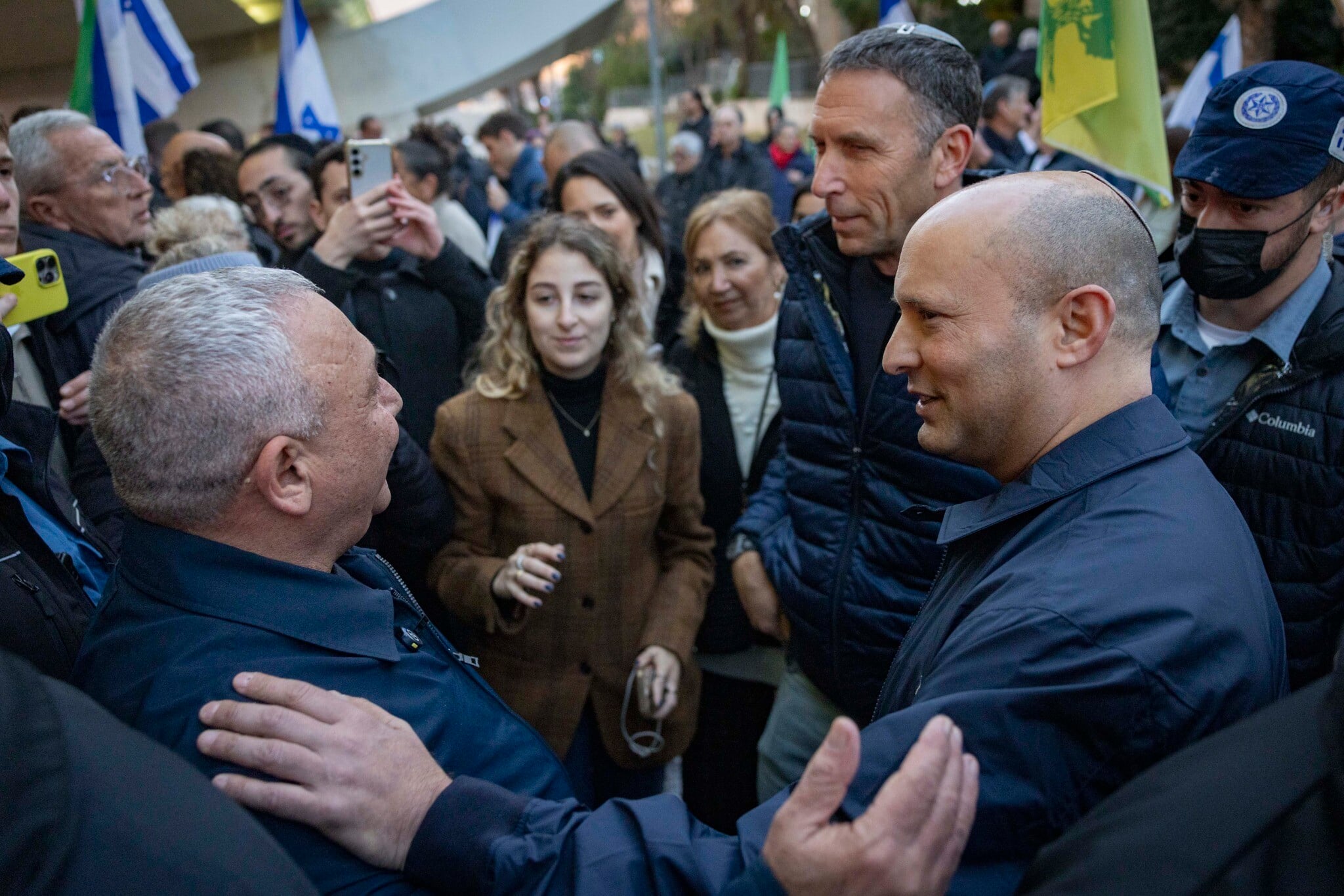
Former prime minister Naftali Bennett, right, and Yashar party leader Gadi Eisenkot attend a march in support of the conscription of ultra-Orthodox men into the IDF, from the entrance to Jerusalem to the Knesset, January 15, 2026. (Yonatan Sindel/Flash90)
Former IDF Chief of Staff Gadi Eisenkot’s Yashar party emerges as the second-largest for the first time, overtaking Naftali Bennett’s party and trailing only Prime Minister Benjamin Netanyahu’s Likud, according to a new poll by The Times of Israel’s Hebrew-language sister site, Zman Yisrael.
The survey gives Eisenkot 16 seats, up from 15 last week and 12 three weeks ago, in what has been a steady and consistent rise for more than a month.
Bennett, who has been seen as the leading challenger to Netanyahu and whose party has consistently ranked as the largest in the opposition and second-largest overall, fell from 17 seats last week to 15 this week.
The results also show Yair Lapid’s Yesh Atid collapsing to just five seats, falling by one seat since last week, in its lowest showing Zman Yisrael polls have yet to record.
As for the remaining anti-Netanyahu parties, Avigdor Liberman’s Yisrael Beytenu remains at 10 seats and Yair Golan’s left-wing Democrats would win nine seats.
The opposition bloc sees an increase from 56 seats last week to 59 in its closest yet to reaching the 61-seat majority, since Benny Gantz’s Blue and White manages to cross the electoral threshold with four seats, which it failed to do last week.
The bloc does not include the four Arab parties that signed an agreement in January to work toward running together on a joint list and remain projected to win 10 seats if they end up running separately.
Meanwhile, the coalition appears to have weakened, dropping from 54 seats last week to 51, in part because Religious Zionism resumes falling below the electoral threshold.
The survey also polled Israelis regarding the impact of the war on routines and mood, finding that 44% have altered their work or study routine, including 14% who say they have temporarily stopped working altogether and another 14% who say they have shifted to working or studying from home, while roughly half report no change.
The toll on mental health is also evident, with 41% of respondents saying they are experiencing increased anxiety, depression, and/or irritability, while 45% say that their moods have remained the same, and eight percent who say their mood has improved.
Israelis appear glued to the news, with nearly half of the country at 48% watching at least two to three hours or more a day, a third saying they tune in for an hour a day, and only 16% saying they don’t watch at all.
The poll was conducted on March 18-19, 2026, among 500 respondents, controlled by age, religion, gender, and place of residence. The margin of error is 4.4%.
IAF says it dropped 12K bombs in Iran amid war: ‘In 18 days, we flew as much as we would in a year’
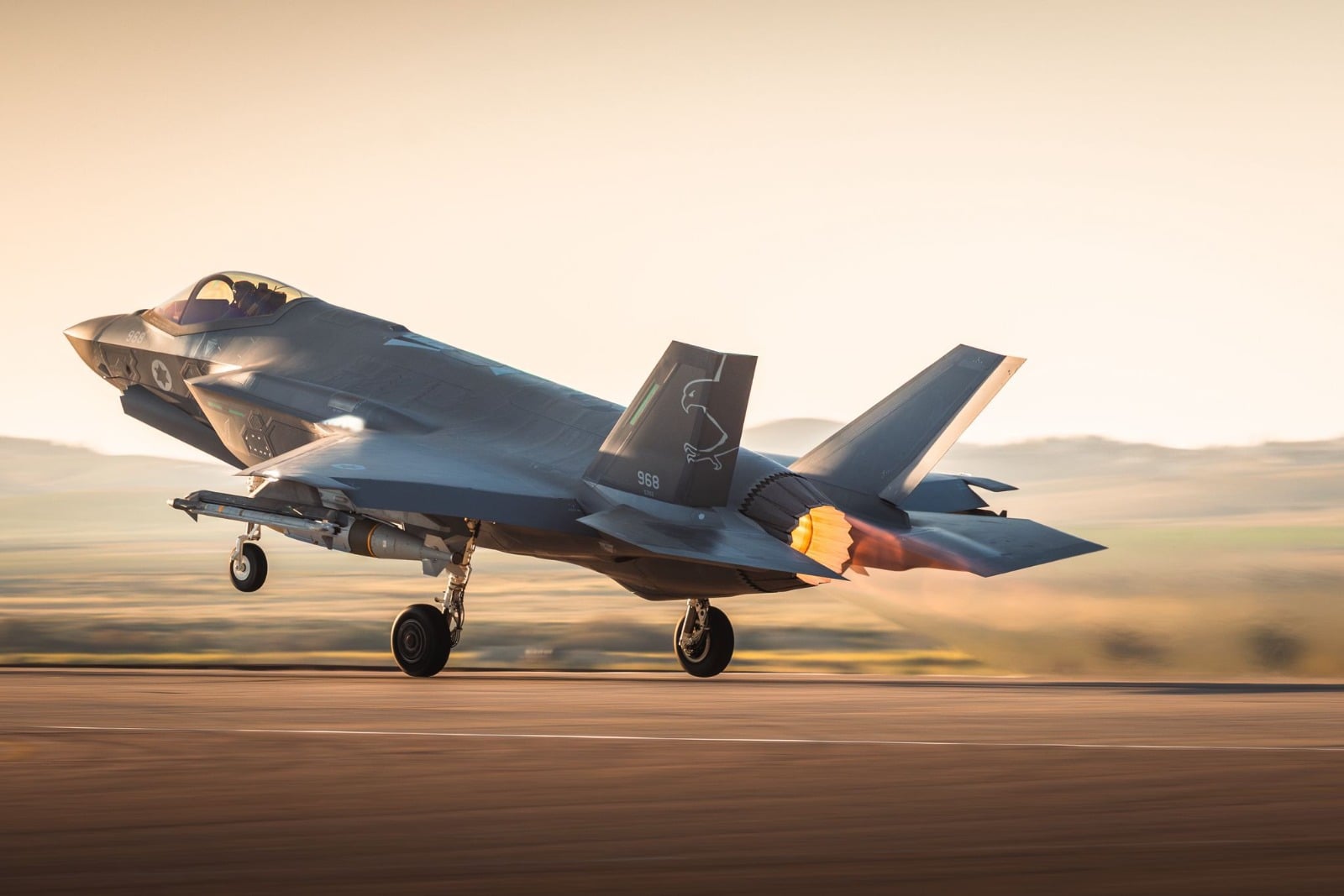
Illustrative: An Israeli Air Force F-35I fighter jet prepares to take off for strikes in Iran, in a handout photo published on March 19, 2026. (Israel Defense Forces)
The Israeli Air Force has dropped over 12,000 bombs in Iran since the start of the war, in over 8,500 separate strikes on Iranian regime targets, the military says.
A senior IAF official says that “in 18 days, we flew as much as we would in a year.”
Of the 12,000 munitions, 3,600 alone were used in strikes in Tehran, according to the IDF.
IAF fighter jets have carried out 5,700 separate sorties. A total of 540 waves of strikes have been carried out in central and western Iran, and 50 waves deeper east in the country.
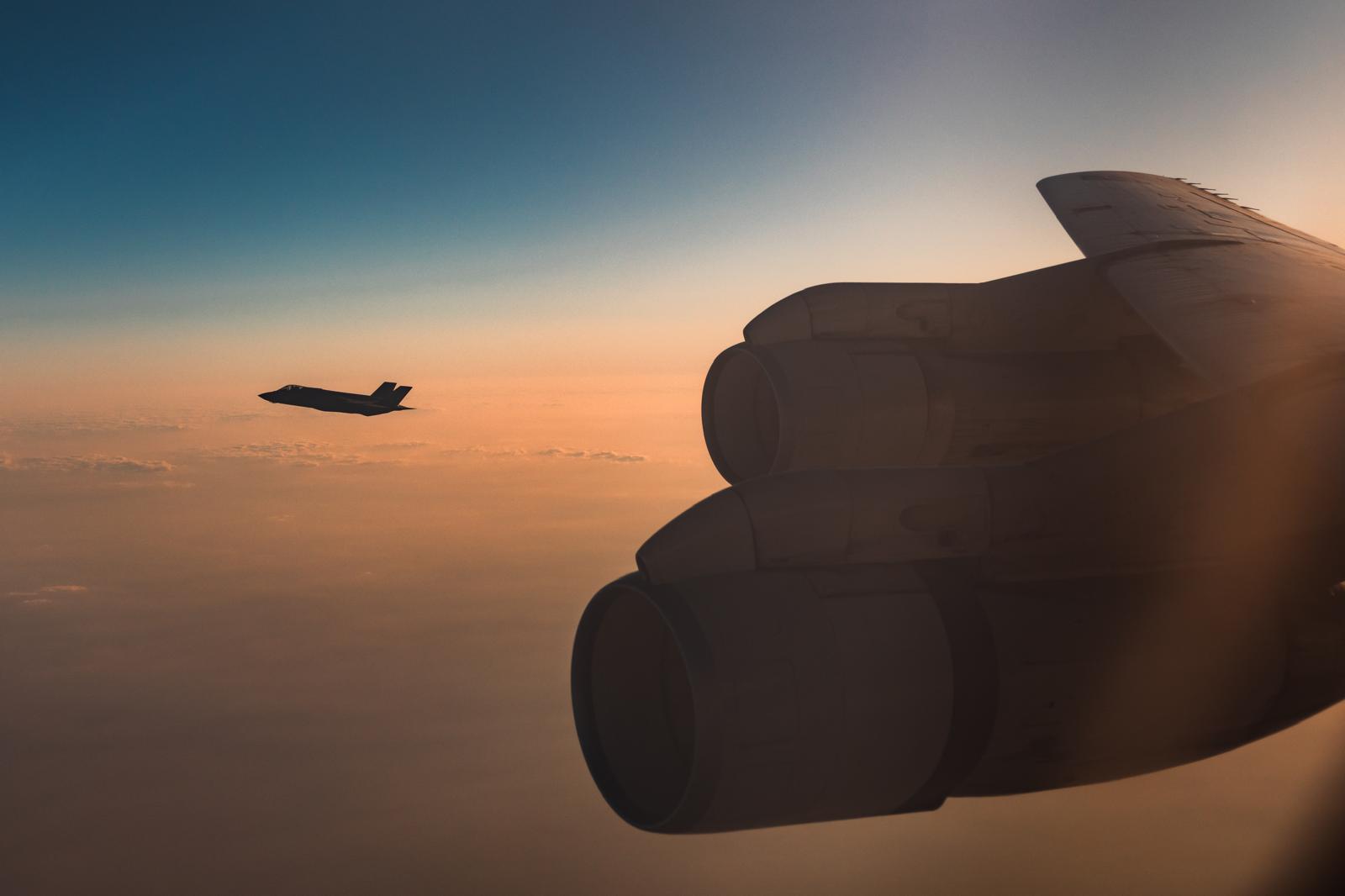
Military officials say that the IAF is carrying out constant air operations over Iran to thwart ballistic missile fire on Israel, using new techniques that allow for longer operations without the need for refueling.
In this formation, dubbed “metro sorties” by the IAF, drones and fighter jets loiter before carrying out strikes on ballistic missile launchers, Iranian soldiers, and other targets, based on “real-time information.”
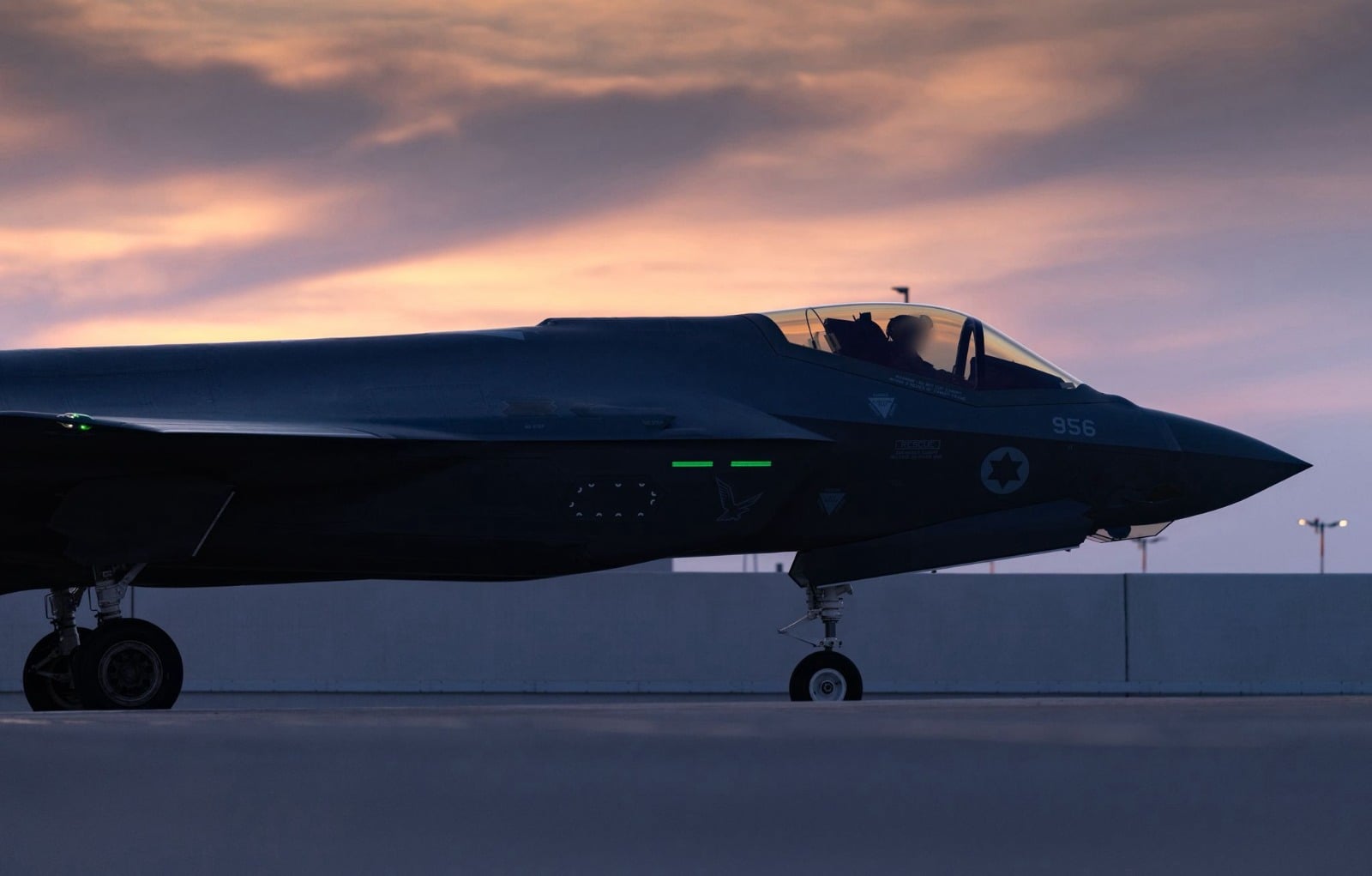
When a new target is identified, IAF aircraft can be quickly dispatched to strike it. This was the case for the killing of Iran’s intelligence minister, Esmaeil Khatib, in Tehran yesterday, according to the IDF.
Officials say this effort relies on maintaining air superiority over Iran.
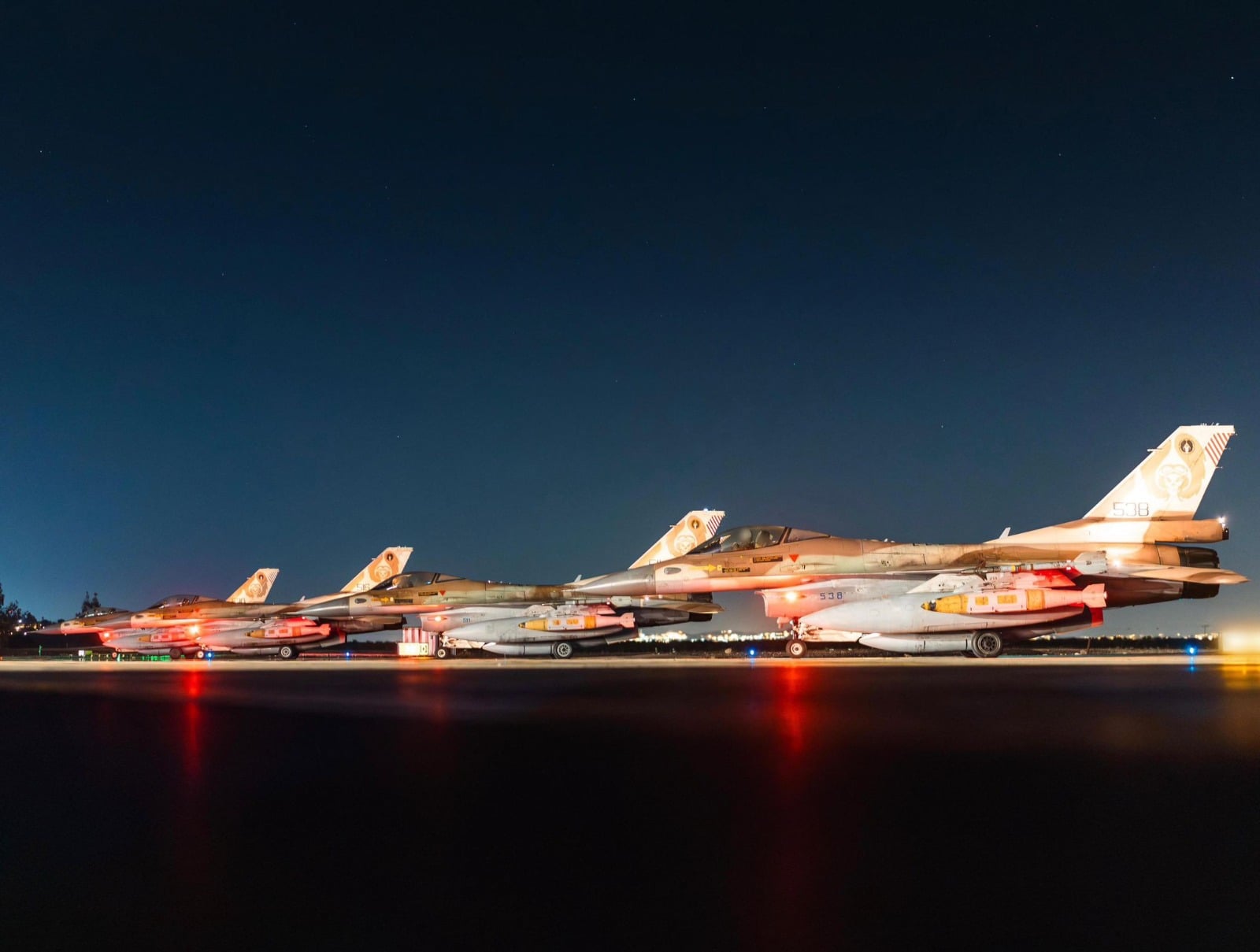
The military assesses that its strikes have destroyed around 85% of Iran’s air defense and detection systems. More than 300 targets relating to Iran’s air defenses, including missile launchers and radars, have been struck, the IDF says.
In terms of Iran’s advanced air defense systems, the IAF assesses that it has destroyed 92% of them, with only a handful of such systems remaining, including some that are hidden and not in use.
The IDF says it has destroyed around 80% of Iran’s older air defense systems, along with 80% of its radars.
Iran also has what the military describes as “decentralized” air defense systems, where missile launchers are connected to various optical systems, such as rudimentary cameras with artificial intelligence tracking software, to target Israeli aircraft. Some 75% of these systems have been destroyed, and military officials acknowledge they are much harder to locate than the advanced systems.
Additionally, the IDF says it has destroyed or disabled around 60% of Iran’s estimated 470 ballistic missile launchers. Some previous military estimates put this number at 70%.
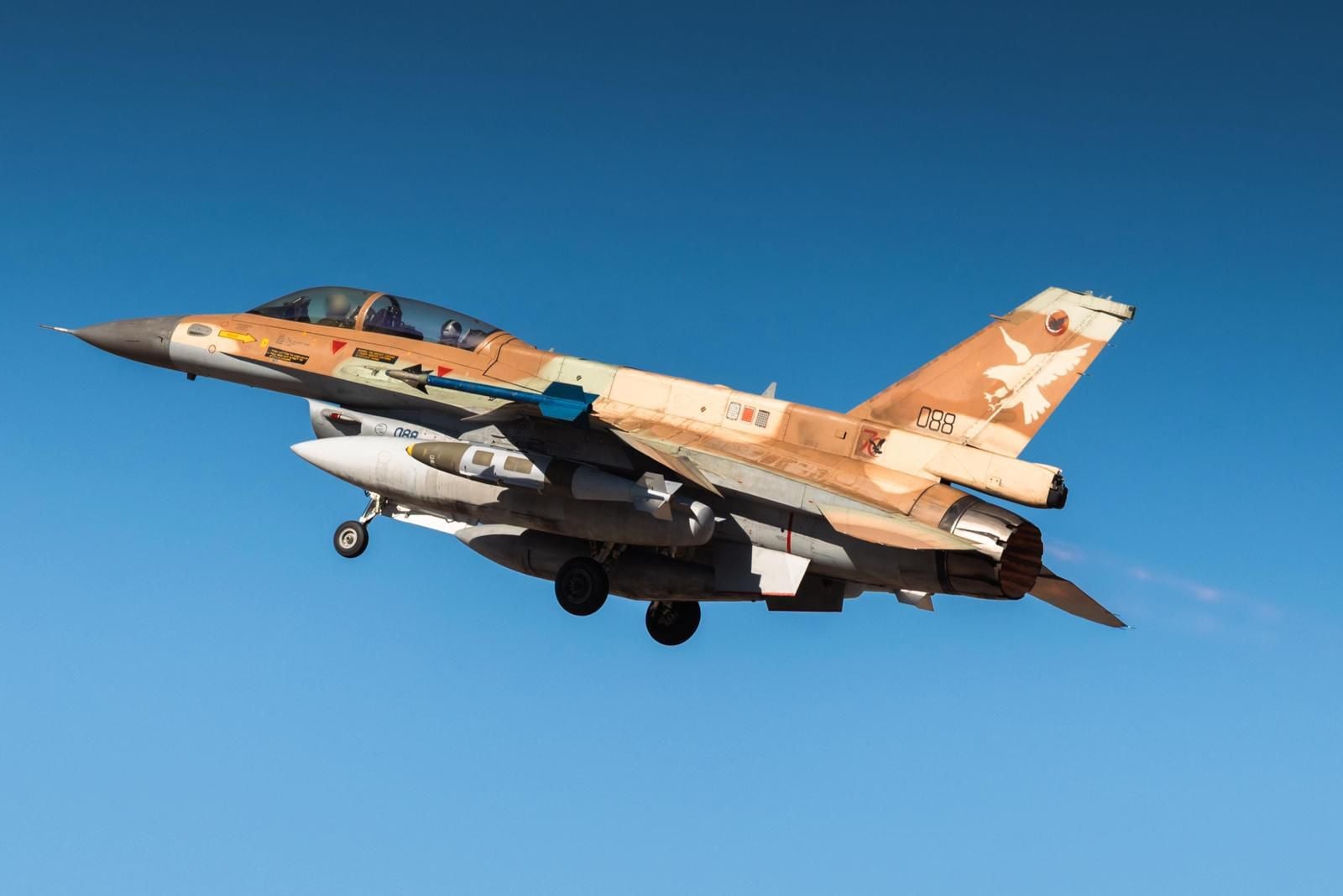
Around 200 of the launchers were destroyed in strikes, while another 80 are not considered to be operational after the IAF struck tunnel entrances to subterranean facilities where they are stored, according to the military.
The IAF says it continues to hunt down the remaining roughly 200 launchers to reduce the missile fire on Israel.
The military also assesses that Iran still has hundreds of ballistic missiles that can reach Israel. It has so far launched over 350 at Israel, with the rate of fire slowing to 10-20 missiles a day in the past week, with just one or two missiles at a time.
Injury count from Hezbollah rocket attack on Kiryat Shmona raised to 4
Four people are injured in the Hezbollah rocket attack on Kiryat Shmona, Magen David Adom says in an update.
The ambulance service says it treated a man in his 60s in serious condition who sustained a shrapnel injury, a woman aged 68 who was injured in the head, and two men in their 20s who were lightly hurt by a blast.
All four are being taken to a hospital, MDA says.
Trump says he told Netanyahu not to strike any more Iran energy sites
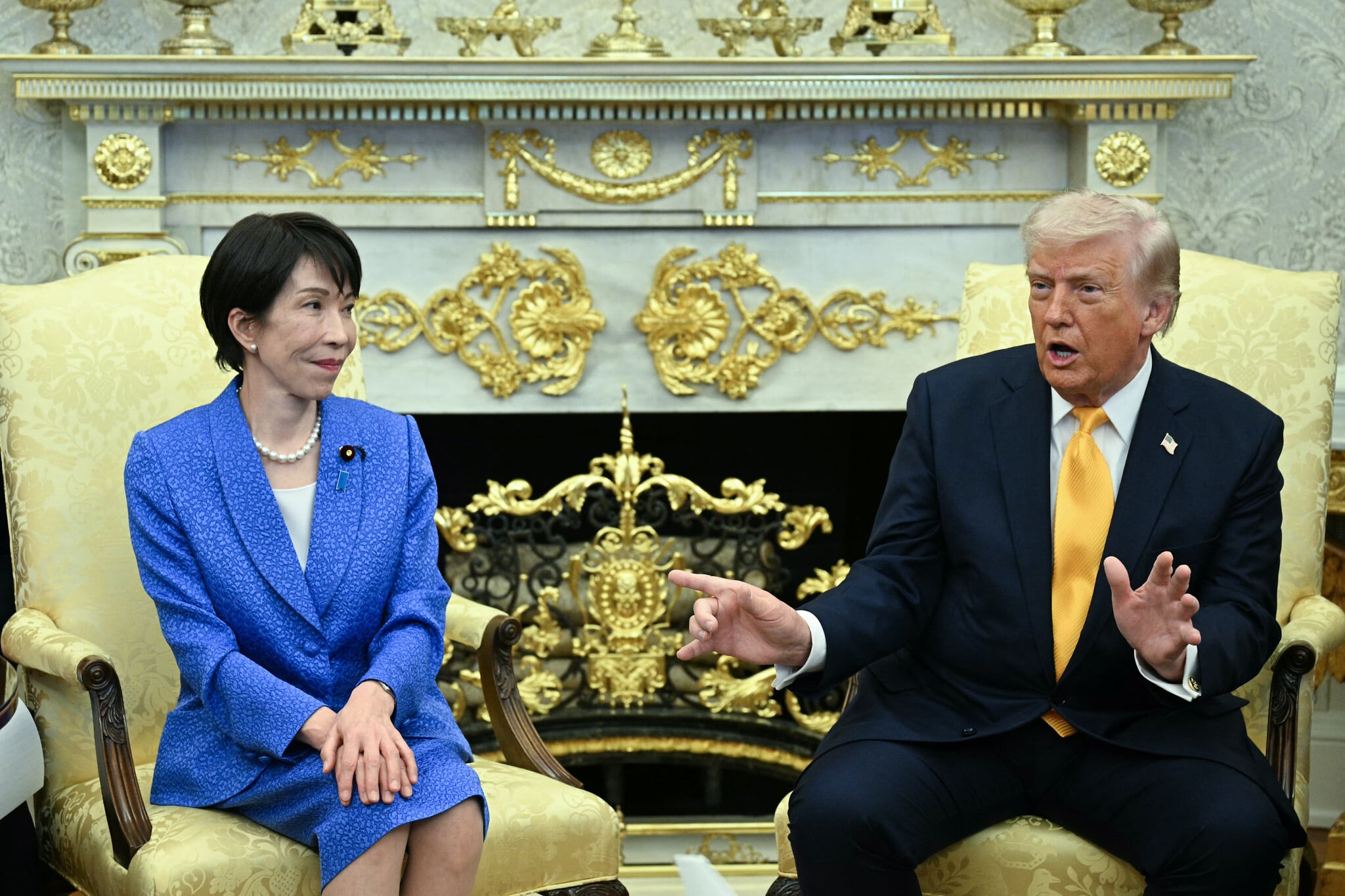
US President Donald Trump meets with Japan's Prime Minister Sanae Takaichi in the Oval Office of the White House in Washington on March 19, 2026. (Photo by Jim WATSON / AFP)
US President Donald Trump says he told Prime Minister Benjamin Netanyahu not to strike any more Iranian oil and gas fields after yesterday’s Israeli strike on South Pars.
“I told him, ‘Don’t do that,’ and he won’t do that. We didn’t discuss [it]. We do independent, but get along great. It’s coordinated. But on occasion he’ll do something, and if I don’t like it.. and so we’re not doing that anymore,” Trump tells reporters in the Oval Office alongside Japans’s visiting prime minister.
Israel’s strike on South Pars infuriated Qatar, which shares the gas field with Iran and came under retaliatory fire from Tehran hours later.
Trump later claimed that he had not been aware of the strike ahead of time, though both US and Israeli officials briefed reporters that there had, in fact, been coordination.
Trump again tells reporters that the war will wrap up “pretty soon,” without giving a specific timeline.
Asked whether he intends to deploy ground troops in Iran, Trump responds, “No, I’m not putting troops anywhere. If I were, I certainly wouldn’t tell you, but I’m not putting troops.”
Treasury chief says US may ‘unsanction’ Iran oil already being shipped
US Treasury Secretary Scott Bessent says = that Washington might “unsanction” Iranian oil that is already being shipped, as energy prices soar due to the war in the Middle East.
Bessent’s comments to Fox Business come as oil and gas prices made a renewed surge after Iran hit the world’s biggest liquefied natural gas (LNG) facility in Qatar and threatened to destroy the region’s energy infrastructure.
Bessent adds in the interview that the US government could also release more oil from its strategic reserves.
US President Donald Trump’s administration has been scrambling to rein in rocketing energy costs after US-Israeli strikes on Iran on February 28.
Tehran’s retaliation brought commercial shipping through the Strait of Hormuz to a virtual halt, snarling energy supply chains.
Around a fifth of global crude oil and liquefied natural gas passes through the critical waterway during peacetime.
Already, international benchmark Brent surged 10 percent earlier before easing to a 5.0 percent increase at $112.76 per barrel.
Recently, the United States also temporarily allowed the sale of sanctioned Russian oil that is at sea. On Wednesday, Trump temporarily waived a century-old maritime shipping law in an attempt to help ease energy prices.
Settlers torch Hebron cars, call out IDF general who expressed alarm over phenomenon
Palestinian media outlets report that settlers set fire overnight Wednesday-Thursday to two vehicles in the southern West Bank city of Hebron. No injuries have been reported.
The settlers also sprayed graffiti reading “Regards to Blot,” apparently referring to Central Command chief Maj. Gen. Avi Bluth.
Bluth yesterday sent a letter to local council heads in the West Bank in which he condemned nationalist crimes against Palestinians, writing that “the phenomenon does not occur in a vacuum — public leadership is required to make its voice clearly heard against it.”
Meanwhile, the Yesh Din organization says that in the first 17 days since the start of the war with Iran, 170 separate incidents of settler violence against Palestinians were reported in the West Bank — an average of 10 per day.
These included assaults, shootings, property damage, and threats.
مصادر محلية: مستوطنون يحرقون مركبتين في ضاحية الرامة بمدينة الخليل pic.twitter.com/lRrNjLz49h
— ahmad s. faqeeh (@AlwanSin30) March 19, 2026
פעולת תג מחיר הלילה בחברון, אחרי מכתבו של אלוף פיקוד המרכז נגד פשיעה לאומנית: רעולי פנים הציתו שני רכבים וריססו גרפיטי "ד"ש בלוט"@HGoldich pic.twitter.com/Ak9yqKuuGJ
— כאן חדשות (@kann_news) March 19, 2026
Board of Peace envoy says Gaza mediators have agreed to framework for reconstruction

US Special Envoy Steve Witkoff (L) shakes hands with Board of Peace top envoy Nickolay Mladenov, right, next to US President Donald Trump's son-in-law and key adviser Jared Kushner, during a meeting of the Board of Peace at the World Economic Forum (WEF) annual meeting in Davos, Switzerland, on January 22, 2026. (Fabrice COFFRINI / AFP)
The Board of Peace’s top envoy to Gaza, Nickolay Mladenov, announces that mediating countries — the United States, Qatar, Egypt and Turkey — have agreed on a “framework” for the reconstruction of Gaza while advancing Palestinian political unity as well as “a negotiated resolution of the Palestinian question.”
“It is now on the table. It requires one clear choice: full decommissioning by Hamas and every armed group, with no exceptions and no carve-outs,” Mladenov tweets. “In this season of hope, may those responsible make the right choice for the Palestinian people.”
“As the blessed days of Eid al-Fitr are upon us, serious efforts persist to chart a hopeful path for Gaza,” he adds.
While the ongoing Iran war has slowed the momentum of US President Donald Trump’s Gaza peace plan, Mladenov’s announcement indicates that the Board of Peace is not waiting to advance its Gaza reconstruction plan.
No ‘definitive time frame’ for ending Iran war — Pentagon
US Defense Secretary Pete Hegseth said earlier today there is no “time frame” for ending the US-Israeli war against Iran, which was launched three weeks ago.
“We wouldn’t want to set a definitive time frame,” Hegseth told a news conference, adding that “we’re very much on track” and that President Donald Trump will be the one to decide when to stop.
“It will be at the president’s choosing, ultimately, where we say, ‘Hey, we’ve achieved what we need to.'”
Hegseth also addressed a report that the Pentagon has requested more than $200 billion in additional funding from Congress to pay for the conflict.
“As far as $200 billion, I think that number could move. Obviously it takes money to kill bad guys,” Hegseth said.
“We’re going back to Congress and folks there to ensure that we’re properly funded for what’s been done, for what we may have to do in the future,” he said.
Top US military officer General Dan Caine, who spoke alongside Hegseth, provided details on weapons being used against Iran and its allied forces in the region.
Caine said A-10 Warthogs — a type of aircraft designed for providing close air support — are “hunting and killing fast-attack watercraft” in the key Strait of Hormuz waterway, which Iran effectively closed to maritime traffic following the start of the war.
He also said AH-64 Apaches are being used in Iraq to target Iran-aligned militia groups there, and that some US allies have begun using the attack helicopters to counter one-way drones launched by Tehran’s forces.
Iran launches day’s 10th missile attack on Israel; no injuries reported
No injuries are reported following Iran’s latest ballistic missile attack on Israel, the 10th since midnight.
The missile, which triggered sirens across northern Israel, was likely intercepted according to preliminary military assessments.
Pro-Iran Iraqi group vows to pause US embassy attacks, with conditions
A pro-Iran group in Iraq vows to stop attacking the US embassy in Baghdad for five days, but only under certain conditions, with strikes targeting other locations in the country.
After a wave of strikes on the US embassy in Iraq’s capital Baghdad in recent days, AFP journalists reported no drone or rocket attacks on Wednesday night.
But on Thursday, an explosion was heard near Erbil’s international airport in the autonomous Iraqi Kurdistan region, said AFP journalists who also saw smoke rising near the fence.
Kataeb Hezbollah says the group’s secretary-general had “issued orders to suspend operations targeting the US Embassy in Baghdad for a period of five days.”
The Iran-backed group, designated by Washington as a “terrorist organisation,” lists several conditions, including Israel ceasing its bombardment of the southern suburbs of Beirut.
That area is a bastion of Lebanon’s Hezbollah, which is also Iran-backed and is at war with Israel.
Iraq’s Kataeb Hezbollah also demands “a commitment to refrain from bombing residential areas in Baghdad and other provinces.”
Whenever “the enemy violates” the truce “the response will be immediate,” it said, warning of more strikes after the five-day period.
UN chief tells US, Israel ‘it is high time to end this war’
UN chief Antonio Guterres calls on the United States and Israel to end their war with Iran before it spirals “out of control,” warning of “potential tragic consequences” for civilians as well as the global economy.
“To the United States and to Israel: it’s high time to end this war that is risking to get completely out of control,” Guterres tells reporters at an EU summit in Brussels.
“To Iran, stop attacking your neighbours. They were never parties to the conflict,” he says.
US earns its lowest-ever score on freedom index
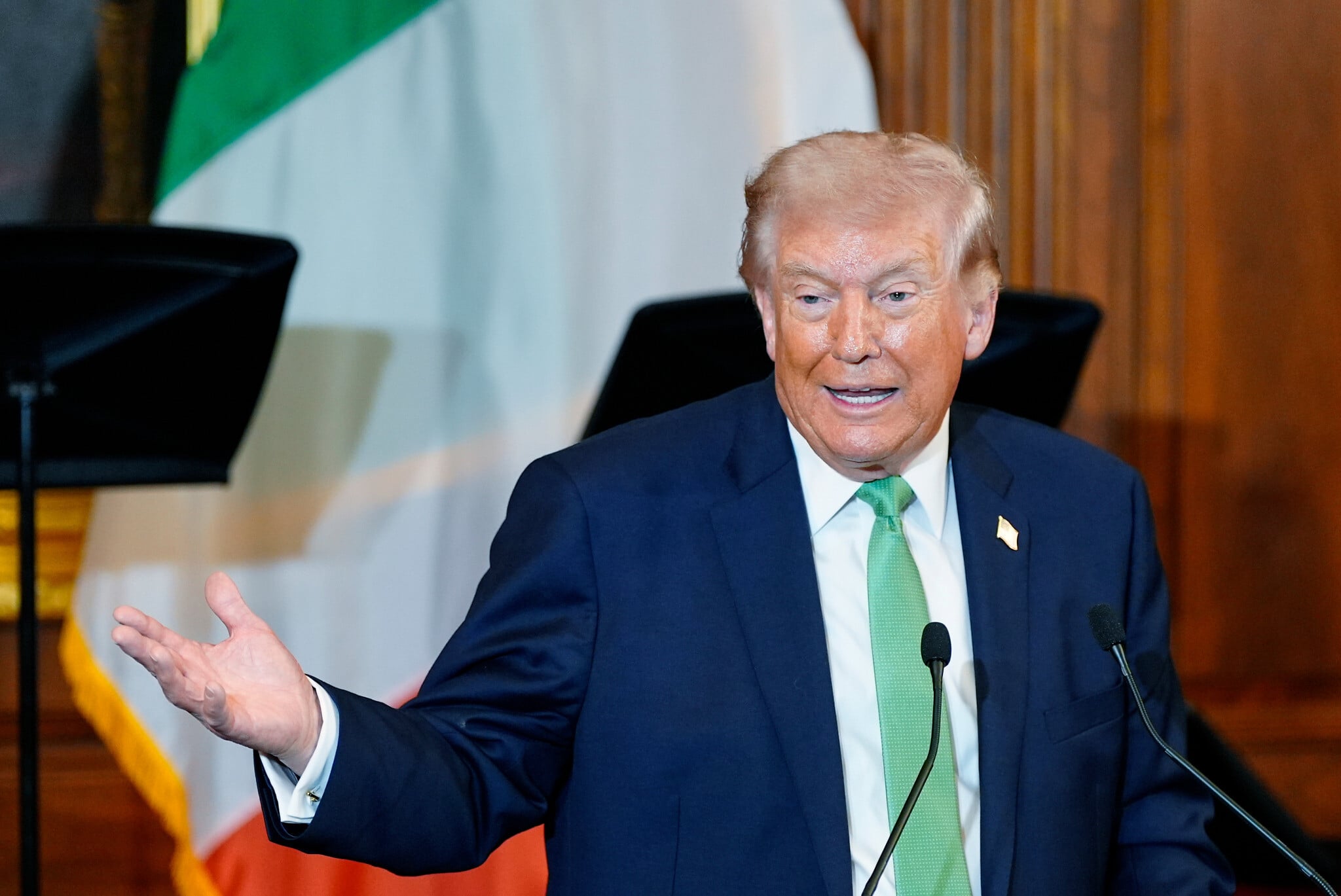
US President Donald Trump speaks during a Friends of Ireland luncheon for Irish Prime Minister Micheál Martin in the US Capitol, on St. Patrick's Day, March 17, 2026, in Washington. (AP Photo/Alex Brandon)
A pro-democracy research group says that freedom in the United States has declined to its lowest level since it started assessments, as President Donald Trump aggressively wields executive authority.
Washington-based Freedom House said that freedom eroded around the world in 2025 for the 20th straight year, in what it called a “grim milestone.”
The United States remained rated free but fell to 81 points out of 100. It was the lowest score since the survey, which first covered 1972, began its 100-point system in 2002.
The score puts the United States at the same level as South Africa and below a number of US European allies as well as South Korea and Panama.
Freedom House says the US decline was due to “both legislative dysfunction and executive dominance, growing pressure on people’s ability to engage in free expression, and efforts by the new administration to undermine anticorruption safeguards.”
Trump has aggressively asserted his power as president, ordering the closure of entire government agencies and deploying armed, masked anti-immigration agents around the country, with the White House promising them impunity.
The United States declined by three points, a drop only experienced by one other “free” country, Bulgaria, where 2024 elections were marred by allegations of fraud.
Overall, only 21 percent of people live in countries rated as “free,” with much of the slip in Africa due to military coups, violence against protesters and the weakening of constitutional protections, Freedom House said.
US stocks fall as inflation outlook worsens due to war

A livestream shows Jerome Powell, chairman of the US Federal Reserve, speaking after a Federal Open Market Committee (FOMC) meeting on the floor of the New York Stock Exchange (NYSE) in New York on March 18, 2026. (ANGELA WEISS / AFP)
Wall Street stocks retreated early Thursday on the latest jump in energy prices as leading central banks decided to hold interest rates steady in light of inflation risk.
International benchmark Brent surged 10 percent before falling back while European gas rose 35 percent following the latest attacks on energy infrastructure in the Middle Eastern war.
About five minutes into trading, the Dow Jones Industrial Average was down 0.7 percent at 45,909.86.
The broad-based S&P 500 fell 0.9 percent to 6,565.60, while the tech-rich Nasdaq Composite Index tumbled 1.3 percent to 21,872.69.
“Obviously energy prices and the war is going to be front and center for a while until investors understand what the path forward is,” says Jack Ablin of Cresset Capital Management.
The European Central Bank raised its inflation forecast while voting to keep interest rates unchanged.
The Bank of England and Bank of Japan also kept rates steady, following the Federal Reserve action on Wednesday.
“The shift in rate-cut expectations has been a major buzzkill for the stock market, which is also sobering up at the sight of rising Treasury yields,” said Briefing.com analyst Patrick O’Hare.
Among individual companies, Rivian jumped 7.5 percent after Uber announced it would invest up to $1.25 billion in the company to purchase 10,000 “fully autonomous” robotaxis with an option for 40,000 more. Uber rose 0.9 percent.
Micron fell 7.3 percent despite reporting quarterly records for revenues and other key financial benchmarks. Analysts pointed to profit taking after earlier increases.
European Central Bank warns of major hit from Mideast war
The European Central Bank warns that the energy shock unleashed by the Middle East war would sharply push up inflation and hit the eurozone’s growth this year.
The ECB kept borrowing costs on hold as expected, but President Christine Lagarde dropped typical language that rates were in a “good place,” and analysts raised their bets on hikes at forthcoming meetings.
From the United States to Britain and Japan, major central banks have all taken a cautious approach at meetings in recent days, keeping interest rates on hold even as worries grow about higher oil and gas prices pushing up inflation.
But Lagarde issues a stark warning that the world was undergoing a “severe shock” due to the war, pitting the United States and Israel against Iran, saying it had “made the outlook significantly more uncertain.”
The conflict was a “risk to the euro area economy,” potentially weighing on growth and pushing up inflation, she says.
“A prolonged war could increase energy prices further and for longer than currently expected and also weigh on confidence,” she says.
New ECB projections forecast that eurozone inflation would come in at 2.6 percent over this year — above the Frankfurt-based institution’s two-percent target, and higher than a pre-war forecast in December of 1.9 percent.
It also cut its 2026 growth forecast to 0.9 percent from 1.2 percent in December.
In a more extreme scenario, where oil prices surge higher than currently expected, the ECB warns that 2026 growth could fall as low as 0.4 percent and inflation might come in at 4.4 percent over 2026.
Lagarde, however, repeatedly insists the ECB was “well positioned” to deal with the unfolding shock.
The decision to hold rates for now was unanimous, she says, adding that the ECB’s rate-setting governing council was “laser-focused” on dealing with the war’s economic fallout.
Iran FM vows ‘zero restraint’ if energy infrastructure hit again
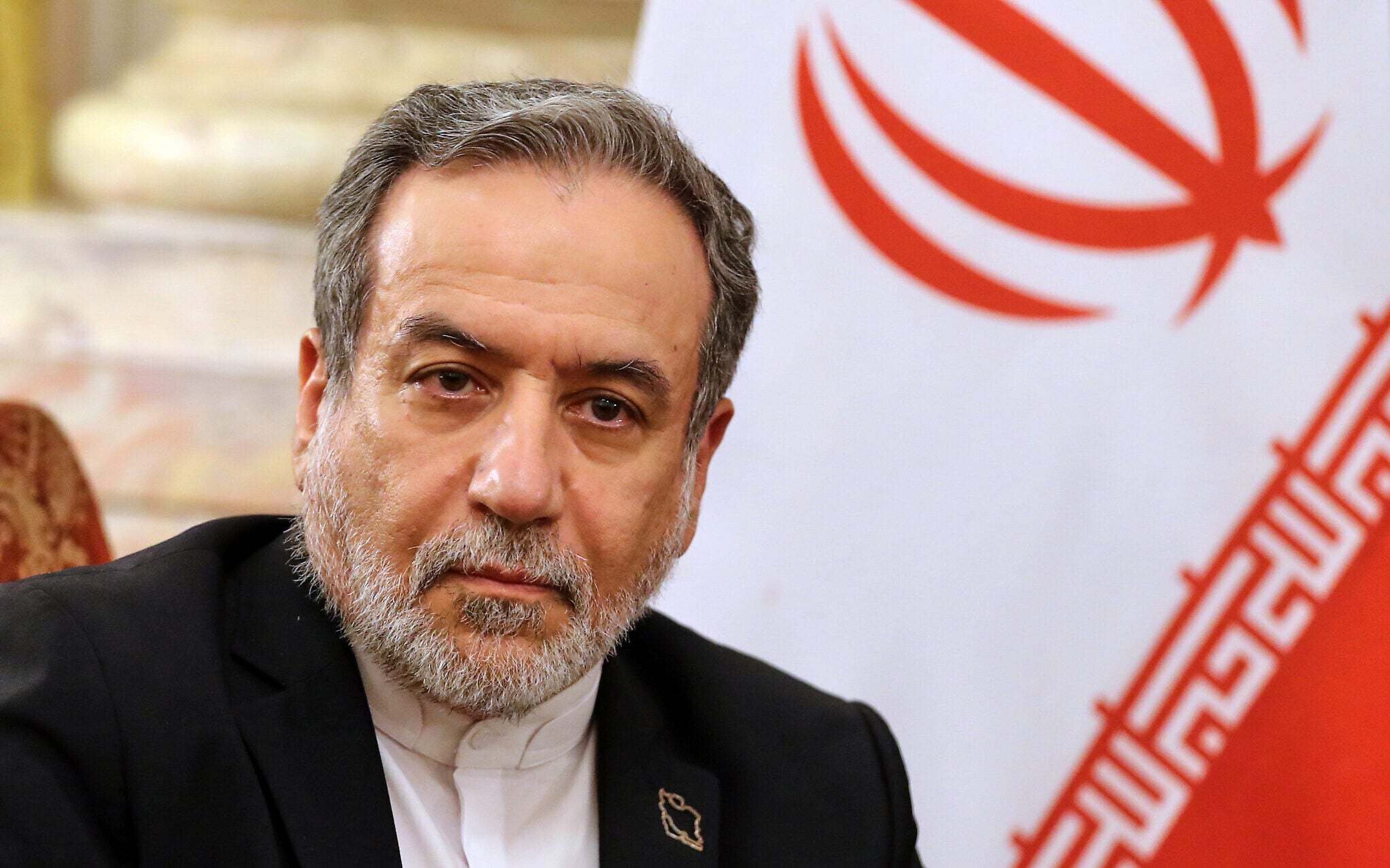
Iranian Foreign Minister Abbas Araghchi looks on during a meeting with Director General of the International Atomic Energy Agency (IAEA) Rafael Grossi, and Egyptian Foreign Minister Badr Abdelatty, at Tahrir Palace in Cairo, September 9, 2025. (AP/Khaled Elfiqi, File)
Iran’s Foreign Minister Abbas Araghchi says that Tehran will not exercise any restraint if energy facilities are attacked in the war with the United States and Israel again.
“Our response to Israel’s attack on our infrastructure employed FRACTION of our power. The ONLY reason for restraint was respect for requested de-escalation,” says Araghchi in a post on X.
“ZERO restraint if our infrastructures are struck again.”
World Trade Organization eyes sharp slowdown in global trade amid Mideast war
The Middle East war could weigh heavily on already slowing global trade, the World Trade Organization warns, saying merchandise trade volume growth could be as low as 1.4 percent this year, compared to 4.6 percent in 2025.
“Sustained increases in energy prices could increase risks for global trade, with potential spillovers for food security and cost pressures on consumers and businesses,” WTO chief Ngozi Okonjo-Iweala says in a statement.
Slovenia asks EU to probe election interference allegedly involving Israeli intel firm Black Cube

Black Cube's internet homepage (screenshot)
Slovenia’s prime minister asks the EU to probe alleged election interference after secretly recorded videos were aired ahead of this weekend’s parliamentary polls.
The case in Slovenia is the latest to fan fears that the rise of social media and artificial intelligence can enable outside actors to influence elections in democracies.
Prime Minister Robert Golob’s liberals are in a tight race against the conservatives of nationalist former premier Janez Jansa, whom Golob unseated four years ago.
In the weeks leading up to the election on March 22, a series of secretly recorded conversations were published, featuring a Slovenian lobbyist, a lawyer, a former minister and a manager.
The videos allegedly show the officials suggesting ways to influence decision makers in Golob’s centre-left coalition government in order to speed up procedures or win contracts.
A Slovenian rights group, together with an investigative journalist and two researchers, on Monday claimed that an Israeli intelligence firm, Black Cube, was behind the videos and that the firm was linked to Jansa’s Slovenian Democratic Party (SDS).
SDS has rejected the charges, saying in a statement that it had never heard about Black Cube.
Earlier this week, Slovenia’s Foreign Minister Tanja Fajon slammed the videos as “a direct attack against our sovereignty”.
Attending an EU summit in Brussels on Thursday, Golob called on the bloc to investigate the affair.
“I call on the Commission to investigate the reports and to refer the matter to the European Centre for Democratic Resilience for an immediate threat assessment,” he said.
French President Emmanuel Macron said Golob “was the victim of clear-cut interference” by “third countries” and misinformation.
“Today, in every election in Europe, there is interference that disrupts electoral processes,” Macron said, calling on the EU executive to come up with guidelines on how to fight the interference.
France wants the EU to require social media networks and other platforms to assess and “mitigate these systemic risks with regard both to fake accounts, illegal content, content that has been altered or generated by artificial intelligence, and political advertising,” the French presidency said in a statement.
IDF says it killed four Palestinian terror operatives in northern Gaza
The IDF says it struck and killed four armed Palestinian terror operatives in the northern Gaza Strip earlier today.
The gunmen had been identified by reservists of the 205th “Iron Fist” Armored Brigade in two separate incidents. The military says the operatives had crossed the Yellow Line and posed an “immediate threat” to the forces.
The IDF says it struck and “eliminated the terrorists to remove the threat.
כוחות צה"ל תקפו ארבעה מחבלים חמושים מארגון הטרור חמאס בצפון רצועת עזה
מוקדם יותר היום כוחות צוות הקרב של חטיבת אגרוף הברזל (205), זיהו בשני אירועים שונים ארבעה מחבלים חמושים במרחב הקו הצהוב שהיוו איום מיידי על הכוחות.
מיד לאחר הזיהוי, הכוחות תקפו וחיסלו את המחבלים במטרה להסיר… pic.twitter.com/L4DzCnjy1R
— צבא ההגנה לישראל (@idfonline) March 19, 2026
Lebanon says death toll from Israel-Hezbollah war rises to 1,001
Lebanon’s health ministry says that Israeli attacks have killed 1,001 people in the country since war erupted between Israel and Hezbollah on March 2, raising a previous toll of 968 a day earlier.
The new ministry statement says the toll included 79 women, 118 children and 40 health workers, with 2,584 other people wounded. The figures don’t differentiate between civilians and combatants.
Trump pick for US homeland security chief clears Senate panel vote
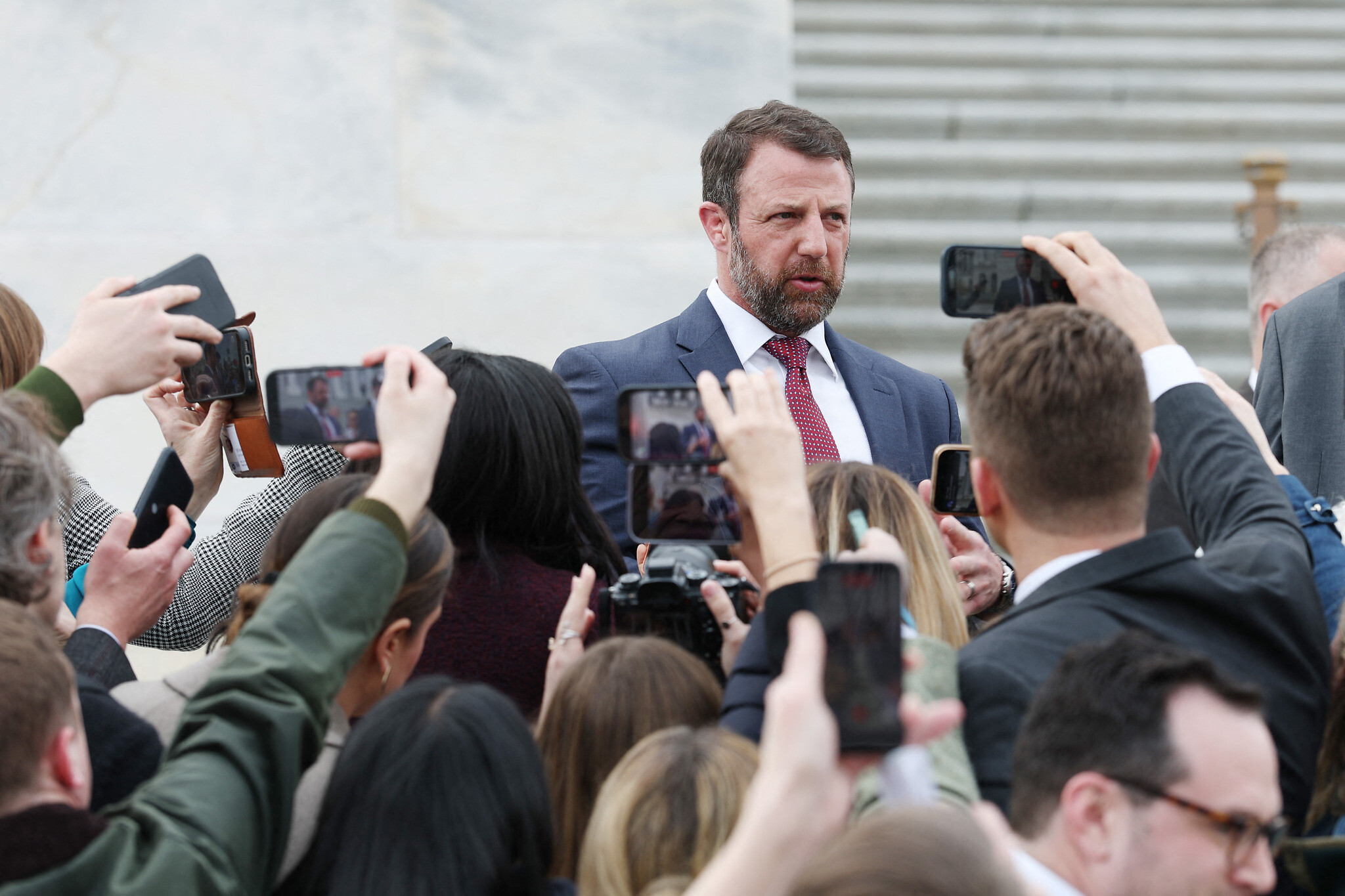
US Sen. Markwayne Mullin (R-OK) speaks to reporters outside of the US Capitol Building on March 05, 2026 in Washington, DC. (Anna Moneymaker / GETTY IMAGES NORTH AMERICA / Getty Images via AFP)
US senators have advanced President Donald Trump’s pick to lead the Department of Homeland Security in a knife-edge committee vote Thursday, after a combative hearing exposed concerns about his temperament and policy agenda.
The Homeland Security and Governmental Affairs Committee voted 8-7 to approve Senator Markwayne Mullin’s nomination to lead the powerful agency responsible for carrying out Trump’s high-profile immigration crackdown.
Republican leaders are eyeing a full Senate vote as early as next week, where he is expected to get an easier ride than he did in the committee.
The panel’s Republican chairman Rand Paul had opposed the nomination, citing what he described as Mullin’s “anger issues” and past inflammatory remarks. That left Mullin needing a Democrat to break ranks, and Pennsylvania centrist John Fetterman obliged.
Qatar PM says Iran attack on gas hub has ‘significant repercussions for global energy supplies’
Qatar’s Prime Minister Sheikh Mohammed bin Abdulrahman Al Thani condemns Iran’s attacks on the state’s main gas hub after Tehran sent waves of attacks against Gulf energy infrastructure a day earlier.
“This attack has significant repercussions for global energy supplies. Such attacks bring no direct benefit to any country, rather, they harm and directly impact populations,” he tells a press conference following extensive damage to the Ras Laffan facility.
There were “persistent Iranian claims that these attacks are against American interests… and this claim is rejected and cannot be accepted,” Al Thani says.
“The clear proof of this is the attack that took place yesterday that targeted a natural gas facility in the State of Qatar,” he adds.
Iraq condemns strikes on Mideast energy facilities: statement
Iraq condemns recent strikes on oil and gas facilities in the Middle East, as the conflict launched by the US and Israel against Iran threatened its already battered economy.
“Recent attacks targeting energy facilities in several of Iraq’s neighbouring countries and other brotherly nations in the region constitute a worrying escalation that threatens to undermine efforts to reduce tensions and jeopardise stability,” the foreign ministry says in a statement.
It also stresses the importance of “ensuring continuous supplies to global energy markets,” following the severe disruption to the Strait of Hormuz through which Iraq previously exported the majority of its oil.
IMF raises concern over global inflation, output over Iran war
The International Monetary Fund says it is monitoring the impacts of the war in Iran on global inflation and output, but that no countries have so far approached it for emergency assistance related to the conflict.
“If prolonged, higher energy prices will lead to higher headline inflation,” says IMF chief spokesperson Julie Kozack at a press briefing.
Kozack says that if oil prices remained above $100 for a year or more, the estimated impact on global inflation could be a rise of up to two percentage points, with output dropping one percentage point, according to “a broad rule of thumb.”
She also confirmed that the IMF had “not received any formal requests for emergency financing” in the wake of the US-Israel war on Iran.
The US and Israel launched strikes on Iran on February 28, sparking a war that has engulfed the Middle East and seen Tehran virtually blockade the key Strait of Hormuz waterway.
About 20 percent of the world’s oil and natural gas passes through the strait, and the crisis has sent energy prices spiralling, with potential knock-on effects on inflation worldwide.
On Thursday, international benchmark Brent crude was trading at around $110 a barrel — up 52 percent from before the war.
Kozack says the world’s most economically vulnerable states would be first in line to feel the fallout.
“They have limited policy space, limited buffers and this in a world where financing conditions may be becoming more challenging for them,” she says.
Kozack highlights that the Fund was monitoring developments on commodity prices, inflation and global financial conditions in the wake of the war.
She stresses that countries would feel the effects in a variety of ways, particularly when it comes to commodity prices, depending on the structure of their economy.
Food prices were another area of concern.
“Fertilizer shipment has been disrupted (due to the conflict), and this, along with transportation disruptions, raises risks that we could see increases in food prices, and those could be substantial, again, depending on the duration and intensity,” she said.
UN maritime body urges ‘safe maritime corridor’ in Gulf
The UN’s maritime body calls for a safe shipping “corridor” in the Gulf to evacuate stranded vessels and seafarers, in a declaration following an emergency meeting that also condemned Iran.
Following two days of urgent talks in London convened because of the Middle East war, the International Maritime Organization (IMO) says in formal declaration that the “safe maritime corridor” should be established as “a provisional and urgent measure.”
The UN agency — responsible for regulating international shipping safety — adds that the corridor must “facilitate the safe evacuation of merchant ships from the high-risk and affected areas to a safe place.”
Group preserving Holocaust memorials urging adding Nazi camps to UNESCO list
Former Nazi concentration camps should be added to the UNESCO World Heritage list, a group preserving the memorials urges, warning that “democracy can no longer be taken for granted.”
Directors of memorials at former camps including Dachau, Buchenwald and Bergen-Belsen join forces at a conference in the Hague to lobby governments to push for their inclusion on the UNESCO list.
The memorial centers “visibly demonstrate what happens when the dignity of all human beings is not protected,” they said in a joint statement.
Micha Gelber, one of the last Dutch survivors of Bergen-Belsen, tells AFP that preserving the memory of the camps was all the more important given the rise of antisemitism in the Netherlands.
In recent days, two explosive devices have been placed outside a Jewish school in Amsterdam and a synagogue in Rotterdam, sparking fear and anger in the Jewish community.
“I always knew that antisemitism didn’t disappear after the war. It always remained and it has its ups and its downs,” says Gelber, 90.
“I think it is important to support any means, any possibility, of not forgetting,” adds Gelber, who has shared his harrowing experiences with more than 1,000 schools and institutions.
Martine Letterie, one of the campaign’s organizers, says concentration camps were increasingly the target of vandalism, including far-right imagery daubed on sites.
The largest Nazi concentration camp complex, Auschwitz Birkenau in Poland, is already inscribed on the UNESCO World Heritage list.
But getting the other sites on the list “would mean they are preserved, whatever government there will be,” Letterie tells AFP.
She points to Germany, where some in the far-right AfD party have pushed back against the country’s tradition of remembering the liberation of the camps.
One of its former leaders, Alexander Gauland, once notoriously described the Nazi era as just “a speck of bird poo” in German history.
“Populist parties are gaining force all over Europe, and they are not really in favour of guarding democracy and the rule of law,” Letterie tells AFP.
“That is what we are worried about.”
US approves over $16 billion in arms sales to Gulf states hit by Iran war
The United States announces the approval of $16.46 billion in military sales to the United Arab Emirates and Kuwait, two Gulf states that have been hit hard by fallout from the Iran war.
Iran responded to the massive US-Israeli air campaign launched late last month with barrages of missiles and drones that have caused deaths and damage in various Gulf countries, which have been forced to expend significant military resources to counter attacks.
US Secretary of State Marco Rubio has “determined and provided detailed justification that an emergency exists that requires the immediate sale” of the military equipment, thereby waiving the requirement that Congress give its approval, a statement from his office says.
The biggest single sale is of lower-tier air and missile defense sensor radars — which are designed to track high-speed targets and give data to a missile defense network — to Kuwait for $8 billion, according to a statement from the State Department.
The next largest was to the United Arab Emirates for a long-range discrimination radar — which tracks ballistic missile threats — and related equipment at a cost of $4.5 billion, the State Department says.
The UAE also received approval to buy systems designed to defeat small, unmanned aircraft for $2.1 billion, advanced air-to-air missiles for $1.22 billion, and F-16 warplane munitions and upgrades for $644 million.
Iran demands ‘clarity’ from Germany on US airbase Ramstein
Iran has asked Berlin to clarify the role of the Ramstein airbase in the US-Israeli war on Iran, Tehran’s ambassador to Germany Majid Nili tells AFP.
“We have asked them to clarify or explain regarding the role of Ramstein,” Nili says, charging that “the role of Ramstein is not officially clear for us.”
“Till now, we don’t have any answer.”
Nili says Iran believes Washington’s use of the airbase in western Germany may violate UN resolution 3314.
The resolution says that territory placed at the disposal of another state cannot be used by that state for perpetrating an “act of aggression” against a third state.
“We don’t know yet whether Ramstein is in that line or not,” he says.
Germany hosts thousands of US military personnel at the Ramstein airbase, which serves as a US Air Force headquarters for Europe and Africa.
Defense Minister Boris Pistorius on Monday said he saw “no reason at present to doubt the legality of the use of Ramstein” in the war against Iran.
German officials in recent weeks have responded to questions about Ramstein’s possible involvement in the war by saying that the US military’s use of the base is governed by treaties.
Nili urged Germany and Europe to call on the “aggressors to stop.”
An ongoing war “has certain consequences for Europe as well,” he says, citing “economic consequences, refugee crisis, terrorism, disintegration of the region”.
“We need a long-lasting ceasefire,” he says, adding that “compensation is another question” regarding alleged attacks on civilian targets.
Nili says the Strait of Hormuz, a vital shipping channel effectively blocked by Iran since the start of the war, is still “open right now” for states that were “not aggressors or supporting aggressors.”
Salam: Tying Lebanon to regional crises gives Israel pretext for aggression
Lebanese Prime Minister Nawaf Salam says that tying Lebanon to regional calculations would give Israel a “pretext to expand its aggression” against the country, where Israel has been fighting Hezbollah for more than two weeks.
Lebanon was brought into the regional war on March 2, when Hezbollah fired rockets toward Israel in response to the killing of its ally Iran’s supreme leader in Israeli-US attacks.
Israel responded with heavy airstrikes across various regions and ground incursions, which combined have left more than a thousand people dead.
In a speech in Beirut, Salam says that “linking Lebanon to regional calculations larger than it is does not protect it. Rather, it doubles the cost for it and gives Israel a pretext to expand its aggression.”
“We must read regional changes through the lens of protecting Lebanon, and we must put the national interest ahead of any other consideration.”
He says, “Lebanon’s priority today is to stop the war, stop the destruction, stop the displacement, protect civilians, ensure their return and launch reconstruction.”
Salam says that “restoring the authority of the state is not against anyone, nor is it a targeting of anyone. Rather, it is a protection for everyone. Lebanon has no future if it remains half a state and half a battleground.”
Russia accuses Israel of ‘targeted’ strike that wounded TV crew in Lebanon
Russia accuses Israel of deliberately targeting a TV crew from state-run RT broadcaster reporting from southern Lebanon with a strike that wounded a reporter and a cameraman.
“The crew’s clothing clearly read ‘press,’ and they were carrying only cameras and microphones… All these circumstances indicate that the attack on the journalists was deliberate and targeted,” the Russian foreign ministry’s spokeswoman Maria Zakharova says in a statement.
The Israeli military said the TV crew was operating in an area where a warning to leave had been issued. It regularly says it “has never and will never deliberately target journalists.”
UC Berkeley settles antisemitism lawsuit, Jewish group says
The University of California, Berkeley, has settled an antisemitism lawsuit filed in 2023, a Jewish legal group says.
Berkeley has agreed to rescind bylaws that were deemed discriminatory against Jews, ensure that student groups cannot exclude “Zionists,” use the IHRA definition of antisemitism, implement antisemitism training, and take several other measures, according to the Louis D. Brandeis Center for Human Rights Under Law, a prominent legal advocacy group.
The lawsuit, filed in November 2023, said that nine student groups had instated bylaws that excluded “Zionist” speakers, even if their speech was in an unrelated field.
The case also cited intimidation, assaults and threats against Jewish students and faculty.
Examples included a Jewish student struck by a metal water bottle by protesters, emails to Jewish students urging their gassing and murder, protesters chanting “intifada” at an Israeli and shattering a glass door, and protesters blocking Jewish students from moving around the campus.
Firefighters gain control of blaze at Haifa refinery; leak of hazardous material ruled out
The National Fire and Rescue Authority says full control has been established over the missile incident at the Bazan oil refinery in northern Haifa, with no casualties and no abnormal air pollution found.
A statement says that 12 fire and rescue teams from the coastal district operated at the scene after it was hit by fragments from an Iranian missile interception.
Firefighters carried out extensive scans of the area and extinguished a fire at the site. They also disconnected the sources of power supply to the facility, the statement says.
Fire and rescue services are still carrying out operations to cool the facility and check for any hazardous materials.
The Environmental Protection Ministry announces that the existence of a hazardous materials incident has been ruled out.
US F-35 makes emergency landing after reportedly coming under Iranian fire
A US F-35 fighter jet had to make an emergency landing at a Mideast base after it was apparently hit by Iranian fire, CNN reports, citing two sources familiar with the matter.
A spokesperson for US Central Command says the jet was “flying a combat mission over Iran” when it was forced to make an emergency landing.
He says the jet landed safely and that the incident is under investigation.
US energy secretary says Trump administration has no plan to restrict oil and gas exports
US Energy Secretary Chris Wright on Thursday says in a post on X that President Donald Trump’s administration has no plan to implement restrictions on oil and gas exports.
Thanks to @POTUS, the United States is the world’s top oil and natural gas producer. We are also the largest natural gas exporter and a top oil exporter. To be clear, the Trump administration has no plan to implement restrictions on oil and gas exports.
— Secretary Chris Wright (@SecretaryWright) March 19, 2026
US weighs military reinforcements as Iran war enters possible new phase
US President Donald Trump’s administration is considering deploying thousands of US troops to reinforce its operation in the Middle East, as the US military prepares for possible next steps in its campaign against Iran, according to a US official and three people familiar with the matter.
The deployments could help provide Trump with additional options as he weighs expanding US operations, with the Iran war well into its third week.
Those options include securing safe passage for oil tankers through the Strait of Hormuz, a mission that would be accomplished primarily through air and naval forces, the sources say. But securing the Strait could also mean deploying U.S. troops to Iran’s shoreline, say four sources, including two US officials.
The Trump administration has also discussed options to send ground forces to Iran’s Kharg Island, the hub for 90% of Iran’s oil exports, the three people familiar with the matter and three US officials say. One of the officials says such an operation would be very risky. Iran has the ability to reach the island with missiles and drones.
Trump administration officials have also discussed the possibility of deploying US forces to secure Iran’s stocks of highly enriched uranium, one of the people familiar with the matter says.
The sources does not believe a deployment of ground forces anywhere in Iran was imminent but declined to discuss specifics of US operational planning. Experts say the task of securing Iran’s uranium stockpiles would be highly complex and risky, even for U.S. special operations forces.
A White House official, speaking on condition of anonymity, says: “There has been no decision to send ground troops at this time, but President Trump wisely keeps all options at his disposal.
“The president is focused on achieving all of the defined objectives of Operation Epic Fury: destroy Iran’s ballistic missile capacity, annihilate their navy, ensure their terrorist proxies cannot destabilize the region, and guarantee that Iran can never possess a nuclear weapon.”
Lebanon’s electricity authority says Israeli attack put a main substation in south out of service
The Lebanese state electricity company says that Israeli attacks in southern Lebanon earlier in the day have put a main power substation out of service, a sign of expanding Israeli attacks on Lebanese infrastructure.
In a statement carried by Lebanon’s state media, the electricity authority says the attack damaged various parts of the station in Bint Jbeil, impacting power provision in the city and surrounding towns.
There is no immediate comment from the Israeli military.
Trump draws parallel between Pearl Harbor and US strikes on Iran in meeting with Japanese PM
US President Donald Trump draws a parallel between US strikes on Iran and Japan’s attack on Pearl Harbor decades ago, as he defended the war against Tehran at a meeting with Japanese Prime Minister Sanae Takaichi in Washington.
“We wanted surprise. Who knows better about surprise than Japan? Why didn’t you tell me about Pearl Harbor?” Trump says when a journalist asks why he had not told allies about his war plans.
“You believe in surprise, I think much more so than us.”
Takaichi’s eyes widen, and she shifts in her chair as Trump, seated beside her in the Oval Office, evoked the moment that drew the US into World War Two.
Q: "Why didn't you tell U.S. allies…about the war before attacking Iran?"
President Trump: "We wanted surprise. Who knows better about surprise than Japan? Why didn't you tell me about Pearl Harbor?" pic.twitter.com/esV9iyvMiV
— CSPAN (@cspan) March 19, 2026
The Japanese attack on the U.S. naval base in Pearl Harbor, Hawaii on Dec. 7, 1941, killed 2,390 Americans, and the U.S. declared war on Japan the next day.
U.S. President Franklin D. Roosevelt called it “a date which will live in infamy.”
The U.S. defeated Japan in August 1945, days after US atomic bomb attacks on Hiroshima and Nagasaki killed hundreds of thousands of civilians.
WATCH: Netanyahu holds press conference for foreign media
Prime Minister Benjamin Netanyahu is set to hold a press conference for foreign media on the Iran war at 8:30 p.m. local time.
Mamdani announces community safety office that will combat hate crimes
New York City Mayor Zohran Mamdani announces the establishment of an Office of Community Safety.
The department was a major campaign pledge from Mamdani, who said the office will combat hate crimes, which overwhelmingly target Jews in the city.
The office is significantly smaller than Mamdani’s campaign pledge, though.
He had vowed to establish the body as a city agency, but the executive order sets up a mayoral office, a less significant measure than a full-fledged agency.
The office was established by executive order, which can be revoked by a future administration.
Mamdani also vowed a $1.1 billion budget for the proposed department, but the office’s budget is only $260 million, and that funding is drawn from other programs and will not bring in any new funds, The New York Times reports.
The city is dealing with a budget deficit in the billions.
The office will also only be staffed by two people, at least at first.
Mamdani’s staff has said the office will expand in the coming months.
Mamdani announced that Renita Francois, a veteran of city government and nonprofits, will head the office as the Deputy Mayor for Community Safety.
The office will take a “whole-of-government approach to crime prevention and public safety that addresses gun violence prevention, mental health and substance abuse treatment, hate crime prevention, victims services, and subway safety,” Mamdani’s office says.
Iran attacks wipe out 17% of Qatar’s LNG capacity for up to five years, QatarEnergy CEO says
Iranian attacks have knocked out 17% of Qatar’s liquefied natural gas (LNG) export capacity, causing an estimated $20 billion in lost annual revenue and threatening supplies to Europe and Asia, QatarEnergy’s CEO and state minister for energy affairs tells Reuters on Thursday.
Saad al-Kaabi said two of Qatar’s 14 LNG trains and one of its two gas-to-liquids (GTL) facilities were damaged in the unprecedented strikes. The repairs will sideline 12.8 million tons per year of LNG for three to five years, he says in an interview.
“I never in my wildest dreams would have thought that Qatar would be – Qatar and the region – in such an attack, especially from a brotherly Muslim country in the month of Ramadan, attacking us in this way,” Kaabi says.
Hours earlier, Iran had aimed a series of attacks at Gulf oil and gas facilities after Israeli attacks on its own gas infrastructure.
State-owned QatarEnergy will have to declare force majeure on long-term contracts for up to five years for LNG supplies bound for Italy, Belgium, South Korea, and China due to the two damaged trains, Kaabi said.
“These are long-term contracts that we have to declare force majeure. We already declared, but that was a shorter term. Now it’s whatever the period is,” he says.
US State Department approves possible sale of aircraft and munitions support to Jordan
The US State Department has approved a possible foreign military sale to Jordan of aircraft and munitions support, as well as related equipment, for an estimated cost of $70.5 million, the department says in a statement.
The principal contractor will be S&K Aerospace, the statement says.
Fidan: Turkey conveying ‘friendly’ advice to Iran not to spread war in which Israel the main perpetrator
Foreign Minister Hakan Fidan says that Turkey is conveying “friendly” advice to Iran to avoid spreading its war with the United States and Israel to the Middle East, and added that Tehran’s attacks on regional countries were unacceptable.
Speaking in Doha, Fidan says Israel was the main perpetrator of the war, but that Iran had a “historic responsibility” not to attack regional countries.
He says Ankara was in contact with both Washington and Tehran to understand where they stood, and that Turkey’s efforts to end the conflict would continue.
KLM cancels flights to Riyadh, Dammam and Dubai until May 17
Dutch airline KLM AIRF.PA says it will not resume flights to Dubai, Riyadh and Dammam until at least May 17 out of safety considerations.
Zamir: Israel is ‘not even halfway’ through Iran campaign – report
IDF Chief of Staff Lt. Gen. Eyal Zamir says Israel is “not even halfway” through its campaign against Iran in an internal discussion, as senior military officials signal there is no immediate timeline for ending the war, Channel 12 reports.
According to the assessment presented in recent high-level deliberations, Channel 12 reports that IDF leadership is unified in opposing a halt to operations at this stage.
Security officials reportedly fear that ending the campaign now could lead to renewed fighting within months, despite recent strikes that have significantly degraded Iran’s ballistic missile capabilities.
IDF eases wartime restrictions in areas of country under less of a threat from Iran missiles
The IDF Home Front Command is easing wartime restrictions in more areas of the country that are under less of a threat of Iran’s ballistic missiles or Hezbollah’s rocket attacks, allowing schools to reopen there.
Following a fresh assessment, the Home Front Command says that from Sunday at 6 a.m., the activity scale in several more areas in the north and south will be adjusted from “limited activity” to “partial activity.” (A full list of locales can be found on the Home Front Command’s website).
This means that in those areas, educational institutions will be able to operate, provided there is an adequate shelter that can be reached in time. Gatherings of up to 100 people indoors and 50 people outdoors are also permitted, under the same conditions.
In the rest of the country, educational activities are still prohibited. Gatherings are limited to 50 people, provided a shelter can be reached in time, and workplaces can operate under the same conditions.
Americans believe Trump will send troops into Iran, and don’t like the idea — poll
Some 65% of Americans believe US President Donald Trump will order troops into a large-scale ground war in Iran but only 7% support the idea, according to a Reuters/Ipsos poll that closed on Thursday.
The three-day poll showed Trump’s broader standing with the public holding largely unchanged at 40%, up 1 percentage point from a Reuters/Ipsos poll carried out in the hours after the US and Israel attacked Iran on February 28. The poll, which gathered respondents from 1,545 US adults nationwide, had a margin of error of about 3 percentage points.
The Trump administration has mulled deploying thousands of US troops to reinforce its operation in the Middle East, Reuters reported on Wednesday. The possible deployments could use air and naval forces to secure safe passage for oil tankers through the Strait of Hormuz, or could involve deploying US troops to Iran’s shoreline. The Trump administration has also discussed options to send ground forces to Iran’s Kharg Island, the hub for 90% of Iran’s oil exports, Reuters reported.
Trump’s Republicans largely support the war as it has played out so far, with 77% saying they approve of US strikes on Iran, compared with 6% of Democrats and 28% of independents.
Some 37% of Americans overall approve of the war, the poll found. Fifty-nine percent disapprove, including about one in five Republicans.
Some 63% of Republicans – and 34% of Americans overall – said they would support deploying a small number of special forces troops to Iran. Fifty-five percent of respondents in the poll said they opposed deploying any ground troops, whether the scale of operations be large or small.
IDF detects Iran missile attack heading toward northern Israel
Another ballistic missile attack from Iran has been detected by the IDF.
Sirens are expected to sound in northern Israel shortly.
Netanyahu: Iran can no longer enrich uranium or manufacture ballistic missiles
In opening remarks at a press conference, Prime Minister Benjamin Netanyahu hails the achievements of the war against Iran.
Specifically, he says in Hebrew, Iran can “no longer enrich uranium” and is no longer able to manufacture ballistic missiles.”
Iran “is weaker than ever” while Israel is a regional power “and some would say a world power,” he says.
The campaign against Iran, he says, will continue for “as long as is necessary.”
However, Netanyahu later notes that the war will end sooner than people expect.
His opening remarks in Hebrew are set to be followed by remarks and a Q&A in English.
No injuries reported after Iran’s 11th missile attack of the day
No injuries are reported following Iran’s latest ballistic missile attack on Israel, the 11th since midnight.
The small number of missiles, which triggered sirens across northern Israel, were likely intercepted, according to preliminary military assessments.
Meanwhile, sirens sound in the Karmiel area and in the Galilee Panhandle amid Hezbollah rocket fire from Lebanon.
Netanyahu: Iran’s missile and drone arsenals ‘massively degraded’ and ‘will be destroyed’
Prime Minister Benjamin Netanyahu opens the English part of his press conference with foreign media by mocking recent rumors about his condition, saying, “First of all, I just want to say, I’m alive.”
Netanyahu says Israel and the United States are “protecting the entire Middle East – and I venture to say, the entire world,” as he outlines progress in the ongoing war against Iran.
Netanyahu asserts that after 20 days of fighting, “we are winning, and Iran is being decimated,” pointing to what he describes as significant damage to Tehran’s military capabilities, particularly their nuclear and ballistic missile programs.
He says Iran’s missile and drone arsenals are being “massively degraded” and vowed they “will be destroyed,” framing the campaign as a continued effort to eliminate the threat posed by the Islamic Republic.
Netanyahu sets out three goals for the campaign against Iran: “One, removing the nuclear threat. Second, removing the ballistic missile threat and removing both of these threats before they’re buried deep underground and become immune from aerial attack. And third, this means creating the conditions for the Iranian people to grasp their freedom, to control their destiny.”
He says the regime is “not only attacking America, not only attacking Israel, not only attacking the Iranian people, it is attacking the entire Middle East and beyond. They’ve attacked civilians and Americans and American assets in Iraq, Kuwait, Saudi Arabia, Bahrain, Qatar, UAE, Oman, and they’ve even attacked through their proxies Cyprus and Europe.”
He notes that “We’ve warned for decades that their ballistic missile program would be used to attack these targets far and wide, and if they’re not stopped, that’s just the beginning. The death cult in Iran is trying to blackmail the world by closing a key international maritime route, the Straits of Hormuz. It won’t work,” he vows.
He asks the assembled media to “imagine how the ‘ayatollah regime’ would be able to blackmail the entire world if they had ballistic missiles with nuclear warheads… international-range ballistic missiles and nuclear-tipped warheads. Imagine what a great threat that would be.”
He says that hundreds of Iran’s launchers have been destroyed. Their stockpiles of missiles are being hit hard, and so are the industries that produce them… In [Operation] Rising Lion [in June], we destroyed missiles and we destroyed a lot of the nuclear infrastructure. But what we’re destroying now are the factories that produce the components to make these missiles and to make the nuclear weapons that they’re trying to produce. We’re wiping out their industrial base in a way that we didn’t do before.”
Netanyahu hits back at ‘fake news’ that he dragged US into conflict with Iran
Prime Minister Benjamin Netanyahu hits back at ‘fake news’ that he dragged the US into conflict with Iran.
“Does anyone really think that someone can tell President [Donald] Trump what to do? Come on,” he says, adding that the US president “always makes his decisions on what he thinks is good for America.”
“In this case, those interests are absolutely clear. And so is the clarity of our achievements. Together in close coordination with President Trump, close coordination between America and Israel, our militaries, our intelligence services, we’re achieving goals in lightning speed,” he says
The “ideological fanatics, these lunatics” running Iran, he says, “find their raison d’être, their reason for being, is wiping out Western civilization and America that leads it… They’ve maimed and wounded thousands of Americans in Iraq and Afghanistan. They killed the American Marines in Beirut. They bombed your embassies. They tried to assassinate the American president, Donald Trump, not once but twice. Now they blackmail for oil.
“Just imagine what they would do, what they’re capable of doing, if these lunatics had nuclear weapons and the means to deliver them to every American city and every European city and everywhere around the globe. This is a danger for the entire world. It’s certainly a danger for Israel. It’s certainly a danger for America.”
“We see eye to eye on that. President Trump and I, Israel and the United States,” he says. “If people are honest, if leaders are honest, they would understand that we’re not only fighting our fight, we’re fighting their fight. I speak to dozens of world leaders. Dozens. They all know that. And privately, they all say that. They say that privately, but I say it publicly. The world owes a debt of deep indebtedness… to President Trump for leading this effort to safeguard our future.”
France says it will double its humanitarian aid to Lebanon
France will double its humanitarian aid to Lebanon to the value of 17 million euros ($19.70 million), France’s Foreign Minister Jean-Noel Barrot says, as Lebanon grapples with Israel’s military campaign in the country.
Barrot makes the announcement on his social media account as he visited Beirut, as part of efforts to get a ceasefire between Israel and Hezbollah.
Jean-Yves Le Drian, France’s special envoy for Lebanon, had said earlier this week that it was unreasonable to expect the Lebanese government to disarm Iran-backed Hezbollah while the country is being bombed by Israel.
Israel has rebuffed an offer of direct talks from Beirut as too little, too late by a government that shares its goal of wanting Hezbollah disarmed but fears that acting against it could risk civil war, sources familiar with the situation said.
Netanyahu: I’m not sure who’s running Iran right now
Israel does not know who is in charge right now in Iran, says Prime Minister Benjamin Netanyahu.
“I’m not sure who is running Iran right now,” he says in English remarks at a press conference.
“Mojtaba [Khamenei], the replacement ayatollah, [has] not shown his face,” he continues.
Netanyahu says there is “a lot of tension” among officials at the top of the regime.
He adds that Israel is seeing cracks in both the political leadership and units in the field.
While offering to help in Hormuz, Italy and Germany rule out military aid without truce
Six major international powers say they were ready “to contribute to” ensuring safe passage through the Strait of Hormuz, though two stress that any initiative will take place post-ceasefire.
Britain, France, Germany, Italy, Japan and the Netherlands said Thursday they were ready “to contribute to appropriate efforts to ensure safe passage through the Strait of Hormuz.”
The grouping says they “welcome the commitment of nations who are engaging in preparatory planning,” as they condemned “in the strongest terms recent attacks by Iran on unarmed commercial vessels in the Gulf.”
But Italy and Germany both subsequently make clear that they are not talking about any immediate military help, but rather a potential multilateral initiative after a ceasefire.
PM says too early to say if Iranian people will topple the regime; won’t detail a potential ‘ground component’ of the campaign
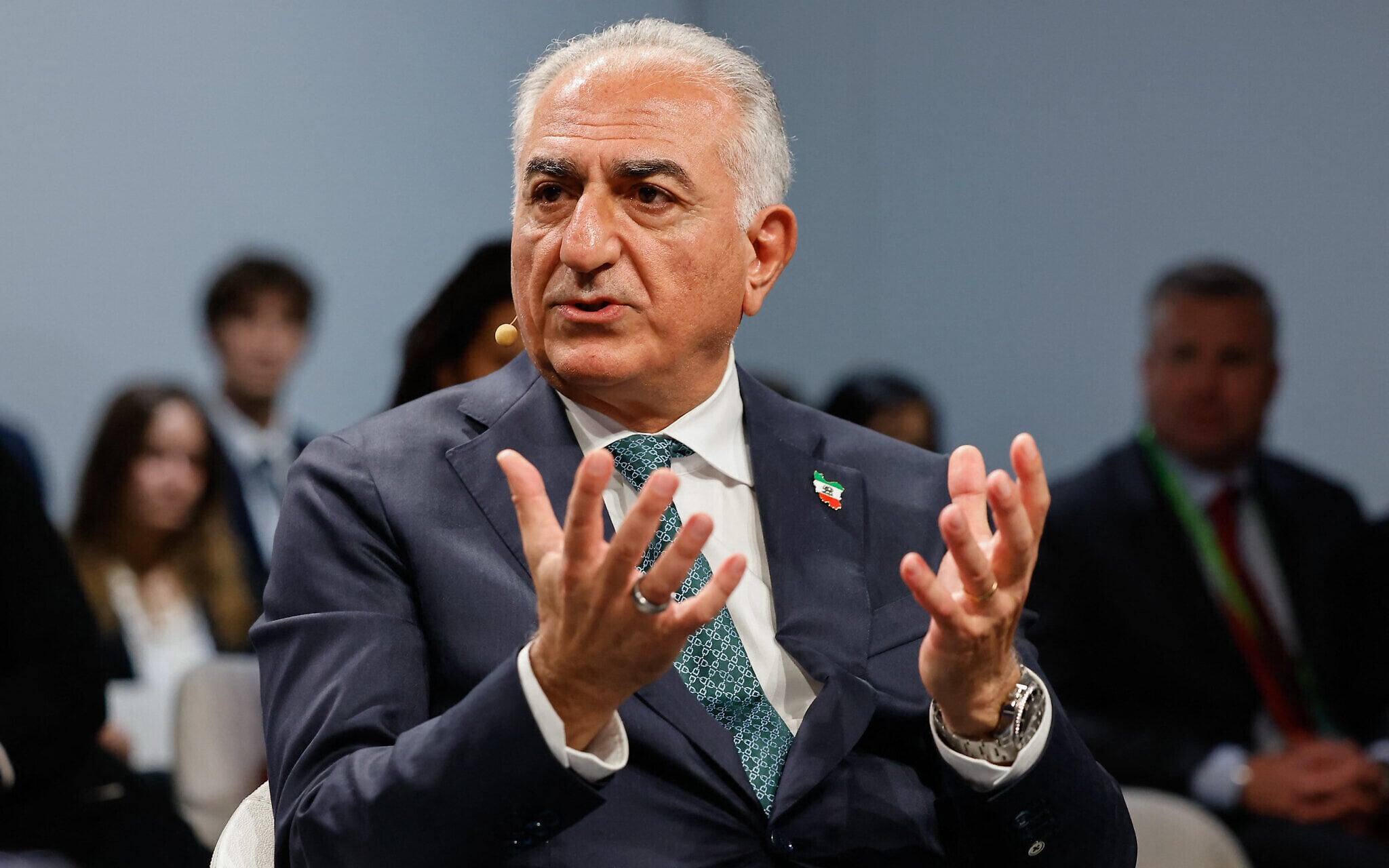
Iran's former crown prince and now key opposition figure Reza Pahlavi attends a discussion during the 62nd Munich Security Conference (MSC) on February 13, 2026 in Munich, southern Germany (Alexandra BEIER / AFP)
Asked about the future of Iran’s leadership in the event of regime change, Prime Minister Benjamin Netanyahu makes plain that Israel would not want to see one hardline clerical ruler replaced by another of similar nature.
“You want a transitional leader that will have a transition. You don’t want to replace one ayatollah with another. You don’t want to replace Hitler with Himmler,” he says, comparing the late supreme leader Ali Khamenei to Adolf Hitler.
Addressing the likelihood of regime change, Netanyahu says, “It’s too early to say,” adding that, “It’s up to the Iranian people… to rise to the moment. We can create the conditions, but they have to, you know, they have to exploit those conditions at a certain point.”
“It is often said that you can’t win, you can’t do revolutions from the air. That is true,” he goes on. “You can’t do it only from the air. You can do a lot of things from the air, and we are doing, but there has to be a ground component as well. There are many possibilities for this ground component, and I take the liberty of not sharing with you all those possibilities.”
He says Reza Pahlavi has been “a force for good. He’s been trying to get the people to unite for a transitional government, a democratic transitional government, or a moderate transitional government. I hope that one comes to being, I think it’s too early to say.”
Asked to comment on flurry of settler attacks, Likud MK responds, ‘I don’t know what you’re talking about’

MK Keti Shitrit attends a conference calling for "Israel's return to the Temple Mount" at the Knesset, Jerusalem, July 24, 2024. (Yonatan Sindel/Flash90)
Likud MK Keti Shitrit is asked during a Knesset Channel interview to comment on the ongoing flurry of settler attacks in the West Bank against the backdrop of the IDF chief of staff’s condemnation of the largely phenomenon on Wednesday.
“I’m sorry to tell you that I don’t know what you’re talking about,” Shitrit responds to a surprised interviewer, who notes that the topic has been all over the news.
“I don’t know what incident the IDF chief of staff was referring to. We’re so busy all the time with different pieces of news. It’s possible that I missed it,” she adds before pointing to a report she says she recently read about Palestinians destroying farmlands in the West Bank so that area settlers have nowhere to graze their cattle.
Asked if she heard about the weekend killing of two young Palestinian children and their parents by Israeli forces who allege that the car the family was in sped at their direction, Shitrit responds, “No. I have no idea. Don’t ask me questions about topics that I’m not familiar with and din’t see or hear about.”
"לא יודעת על מה את מדברת" – ח"כ קטי שטרית במענה לשאלה על המשפחה הפלסטינית שנהרגה מירי צה"ל בתחילת השבוע: "זה חיילים, הם שומרים עלייך ועליי"
מתוך #תא_הכתבים@Rinatspivak @NoaShpigel @shitrit_keti pic.twitter.com/ok7cHVek2U
— ערוץ כנסת (@KnessetT) March 19, 2026
While not being familiar with the incident in the West Bank village of Tammun, the Likud lawmaker insists that it will be investigated.”
“But these are soldiers. They’re protecting you and I,” Shitrit adds.
“I heard one of the military reporters say that the biggest danger to Israel isn’t Iran or Lebanon, rather the Arabs living in East Jerusalem and [the West Bank],” she says.
Shitrit then points out that many Israeli rights activists living along the Gaza border were not spared during Hamas’s October 7 attack, even though they had spent years trying to help civilians in the Strip.
The reporter hits back, asking what this has to do with the topic at hand.
“If the soldiers [in the Tammun] did something, it apparently was necessary,” Shitrit responded.
France’s foreign minister heads to Israel after Lebanon talks
France’s foreign minister will travel to Israel on Friday, in an unscheduled visit, after visiting Beirut on Thursday as part of efforts to reduce tensions in the region and secure a ceasefire in Lebanon.
The foreign ministry says in a statement that Jean-Noel Barrot will discuss with Israeli authorities regional security and humanitarian aid issues, and attempts to de-escalate the conflicts in the Middle East.
Israel has so far rebuffed an offer of direct talks from Beirut as too little, too late by a government that shares its goal of wanting Iran-backed Hezbollah disarmed but fears that acting against it could risk civil war, sources familiar with the situation have said.
President Joseph Aoun, who met Barrot earlier today, has expressed a willingness to begin direct negotiations with Israel, which has carried out airstrikes in Lebanon since Hezbollah fired on Israel on March 2. Hezbollah has rejected the move and fought on.
France has historical ties with Lebanon and – along with the United States – has sought to mediate in the conflict. Barrot spoke with US Secretary of State Marco Rubio before going to Lebanon.
“We call on the Israeli and Lebanese representatives to conduct constructive negotiations with a view to finding a lasting political solution, and we are ready, if necessary, to welcome them,” foreign ministry spokesperson Pascal Confavreux told reporters earlier on Thursday.
France last week presented counter-proposals to US ideas to bring an end to the conflict, two diplomats say.
Three diplomats said the US had been lukewarm to the proposals, but discussions with Washington were continuing. Israel has rejected the proposals, they say.
Huge Trump Iran war funding request faces stiff opposition in Congress
The US military’s request for $200 billion in additional funding for the Iran war met with stiff opposition in the US Congress on Thursday, as Democrats and even some Republicans questioned the need for the money after large defense appropriations last year.
A US official confirmed a Washington Post report that the Department of Defense has asked the White House to approve a more than $200 billion request to Congress to fund the war in Iran.
President Donald Trump has not yet sent a request for the Senate and House of Representatives to approve the huge sum, and his administration made clear the number could change.
Early indications suggest that the war will be the most expensive for the US since the long conflicts in Iraq and Afghanistan. Administration officials told lawmakers that the first six days of the Iran war had cost more than $11 billion.
The Republican-led Congress has already approved record funding for the military since Trump began his second term in January 2025. Last month, he signed into law the Fiscal 2026 Defense Appropriations Act with about $840 billion in funding.
And last summer, over stiff opposition from Democrats, the Republican-led Congress passed a sweeping tax cut and spending bill that included $156 billion for defense.
Democrats questioned why the Pentagon needed more money, given recent cuts to social services, foreign aid and other programs, and said that no one who opposes the war should vote to fund it.
Some of Trump’s fellow Republicans also seemed surprised at the amount being considered. Republican Senator Susan Collins, who chairs the Appropriations Committee, tells reporters at the Capitol that she had not yet been notified about a $200 billion supplemental request.
She says the total is “considerably higher than I would have guessed, but I don’t know how it’s broken down.”
Collins also says she would most likely want a public hearing on such a request.
Netanyahu predicts post-war alternate routes for world oil to bypass Hormuz and other ‘chokepoints’
Answering questions at his English press conference, Prime Minister Benjamin Netanyahu, says it is vital to have “alternative routes instead of going through the chokepoints of the Hormuz Strait and the Bab-al-Mandab Strait in order to have the flow of oil.”
What’s needed are “oil pipelines, gas pipelines going west through the Arabian Peninsula right up to Israel, right up to our Mediterranean ports, and you’ve just done away with the chokepoints for forever.”
This vision “is definitely possible,” he says. “I see that as a real change that will follow this war, but I also see this war ending a lot faster than people think.”
He quotes Winston Churchill saying that democracies only wake up when they hear “the jarring gong of danger… The jarring gong of danger is Iran gets nuclear weapons and ballistic missiles. That’s not a jarring gong. That is an apocalypse,” he says. “Don’t let it happen.”
“Leaders are tasked with the task of seeing danger in time and acting on it,” he adds, “and I hope that in time, people will see the wisdom and the courage of President Trump’s decision, and his leadership, and the fact that we’re working together. America is not fighting for Israel. America is fighting with Israel for a common goal: to protect our future, to protect civilization against these barbarians.”
IDF detects incoming Iran missile attack targeting central Israel
A new ballistic missile attack from Iran has been detected by the IDF.
Sirens are expected to sound in central Israel in the coming minutes.
Asked whether Trump approved strike on Iran’s South Pars gas, Netanyahu says diplomatically: Israel ‘acted alone’
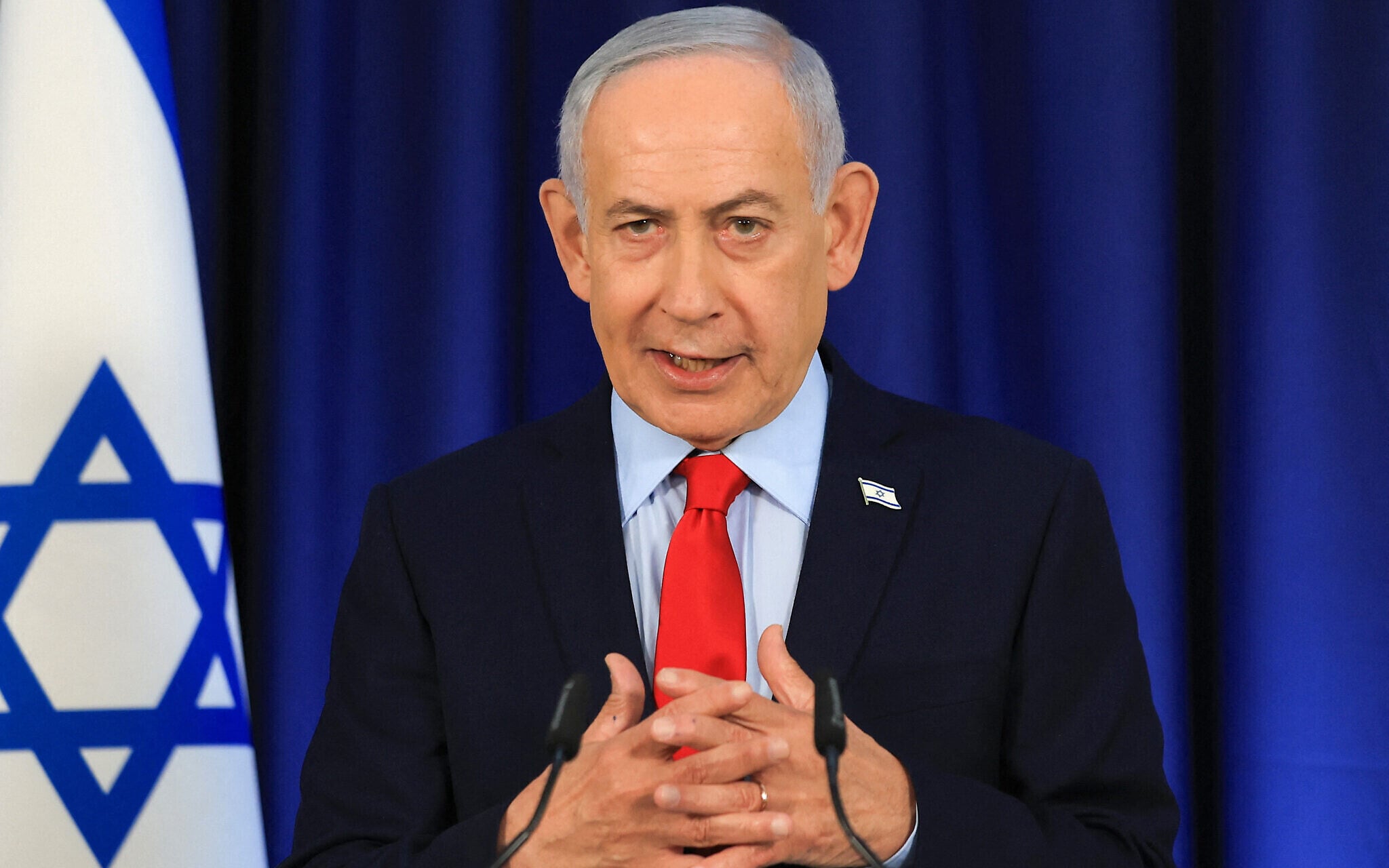
Prime Minister Benjamin Netanyahu speaks during a press conference in Jerusalem on March 19, 2026. (Photo by Ronen Zvulun / POOL / AFP) /
Asked at his press conference whether US President Donald Trump had approved yesterday’s Israeli strike on the Iranian gas fields, Prime Minister Benjamin Netanyahu gives a diplomatic answer: “Fact number one, Israel acted alone against the Asaluyeh [South Pars] gas compound. Fact number two, President Trump asked us to hold off on future attacks, and we’re holding off.”
He says there are many signs that the Iranian regime is cracking and “I wish I could divulge all of them… Will I commit right now that it’s going to happen? I can tell you that we’re working to create the conditions for it to collapse, but it may, it may survive, it may not. If it survives, it’ll be a lot weaker… shorn of industries that it built over decades, death industries, shorn of many other capabilities that they have, and equipped with the experience, with the knowledge, that if they try it again, they’ll be hit again even harder.”
Invoking lessons of history, the prime minister says that “you have to be blind not to see that the democracies led by the United States have to reassert their will to defend themselves, and to oppose their enemies in time, while there’s still time… The fact that people don’t see that,” and that a lot of the news media spreads fake news “and a lot of shortsightedness, and do not see the historic period and the historic struggle that we are engaged in now, doesn’t obviate these truths.”
He is asked again about the claim that Israel “misled” the US into starting this war, with its price also in lost American lives. “Well, I misled no one,” he retorts, “and I didn’t have to convince President Trump about the need to prevent Iran from developing its nuclear program, putting it underground, and being able to launch nuclear-tipped missiles at the United States. He understood that. He explained it to me. I didn’t explain it to him. And I think that our partnership is the only way to avoid this catastrophic development.”
“The loss of servicemen is painful,” he acknowledges, recalling his brother Yoni, killed leading “the historic Entebbe rescue. The cost to bereaved families is enormous, and I sympathize and send the condolences of the people of Israel to these families and to the American people.”
“Freedom is precious. It has its costs. But if you’re not prepared to defend it, if you’re not prepared to resist the tyrannies that are trying to arm themselves with the weapons of mass death, you will have no future,” he says.
“You have to identify danger in time and act in time against it. You either fight or flight,” he says. “Where can you flee? Nowhere, because Iran can reach any part of the world. So you have to, at a certain point, fight… I didn’t have to convince President Trump of anything. He didn’t need any convincing.”
FIFA fines Israel soccer association over systemic breaches of anti‑discrimination and fair‑play statutes
Fans of the Beitar Jerusalem soccer team hold up a sign reading 'Beitar forever pure,' during a match on January 26, 2013. (Flash90)
FIFA says it will take no action against Israeli soccer teams accused by the Palestine Football Association (PFA) of competing while allegedly based in Palestinian territory.
However, FIFA did decide to sanction the Israel Football Association (IFA) over breaches of its anti‑discrimination and fair‑play rules.
The decisions follow a FIFA Council meeting that addressed two issues stemming from a proposal submitted by the PFA at the 74th FIFA Congress in Bangkok in May 2024.
On the question of Israeli clubs based in settlements in the West Bank, the Council adopted conclusions from FIFA’s Governance, Audit and Compliance Committee (GACC), which had been asked to examine whether such clubs should be allowed to play in competitions organized by the IFA.
FIFA said no action should be taken, citing the unresolved legal status of the West Bank under public international law.
“FIFA should take no action given that, in the context of the interpretation of the relevant provisions of the FIFA Statutes, the final legal status of the West Bank remains an unresolved and highly complex matter under public international law,” the governing body says in a statement.
The participation of teams from Israeli settlements has been a recurring source of tension within FIFA for nearly a decade. The PFA has long argued that clubs based in settlements in the West Bank – territory Palestinians seek as part of a future state – should not compete in leagues run by the IFA.
In the separate disciplinary decision, FIFA sanctions the IFA for what it describes as systemic breaches of its anti‑discrimination and fair‑play statutes, following an investigation into the association’s handling of racism in Israeli football.
FIFA’s Disciplinary Committee says the IFA has failed to take adequate action against persistent racist behavior by supporters of certain clubs, notably Beitar Jerusalem, and had not responded sufficiently to inflammatory and politicized public statements by football officials and clubs under its jurisdiction.
As part of the sanctions, the IFA has been fined 150,000 Swiss francs ($190,621) and ordered to implement a mandatory prevention plan to combat discrimination, including educational campaigns and monitoring measures. The association must also display anti‑discrimination banners at its next three A‑level FIFA competition home matches.
Netanyahu: Regime is ‘like a hollowed-out, rotten piece of wood’
Answering the final question at his press conference, Prime Minister Benjamin Netanyahu rejects the notion that, in eliminating supreme leader Ali Khamenei, he risks empowering an even harder-line regime leadership.
“It’s important that they know that if they think they’re going to target the world, target the president of the United States, and so on, they themselves are being targeted. That creates a lot of uncertainty. We’ve found that that can have an effect.”
Twenty days into the war, he stresses, “we’re seeing cracks” in the regime… not only in the top command; we’re seeing cracks in the field. You know, it’s sort of like a hollowed-out, rotten piece of wood that’s holding on the outside, but there’s a lot of rot inside. We’re seeing some defections.”
He adds that there are signs of “fear and trepidation in the IRGC units that are manning the ballistic missiles. You know why? Because they’re afraid to die. They’re not all suicidal. In fact, most of them are not.”
“Yes, the regime could change,” he repeats. “Is it guaranteed? No. And is it up to the Iranian people in the final accounting to make use of the conditions that we’re doing it.”
“They’re very brave, by the way,” he says of the Iranian people. “I don’t come and criticize them in any way… They’ve suffered enormously. And the question is, will we have a meeting ground between the weakening of the regime and the rising of the people in many ways that could develop? We’ll see.”
He hails the depiction of Israel as a “model ally” of America, set against “all the vilifications that are leveled at Israel — ‘Israel is sponging off America’ and all that. No, it’s not. It’s not. Israel is a brave country, a resolute country, with an incredible army, incredible soldiers, incredible courage, and we’re fighting alongside the United States when the chips are down… We’re fighting for a common goal.”
No injuries reported following day’s 12th Iran missile attack
No injuries are reported following Iran’s latest ballistic missile attack on Israel, the 12th in the past day.
The small number of missiles, which triggered sirens across the Jerusalem area and parts of southern Israel, were intercepted or struck open areas, according to preliminary military assessments.
After criticism from Mamdani, Palestinian author speaks out against him, calls American Jews ‘monsters’
Susan Abulhawa, a prominent Palestinian-American author, calls Jewish Americans “monsters” after a controversy surrounding New York City Mayor Zohran Mamdani.
Mamdani’s wife, Rama Duwaji, illustrated a book for Abulhawa, who has a history of antisemitism, provoking controversy last week.
Mamdani later said his wife had never met Abulhawa, had been commissioned to work for her via a third party, and said Abulhawa’s past comments were “reprehensible.”
Abulhawa pushes back in an interview with Briahna Joy Gray, a far-left commentator and the former press secretary for US Sen. Bernie Sanders’s 2020 presidential campaign.
The interview is titled “Zohran throws Palestinians under the bus after Zionist hitjob.”
“There is a pattern of using Palestine and Palestinian pain for, whether it’s street cred or political gain or whatever it is,” Abulhawa says of Mamdani’s comments, “and then throwing us under the bus when whatever gain has been achieved.”
Later in the interview, she turns her fire on American Jews.
“Jewish Americans are the most privileged demographic in this country. It’s not to say that some people don’t like Jews because they’re Jews, but frankly, I think the resentment that they are seeing now is stemming from the world watching the so-called Jewish State commit a genocide,” Abulhawa says.
“We can’t ignore the fact that it’s not just Israelis, it is Jewish Americans,” due to Jewish American support for Israel, Abulhawa says.
“I just don’t have a vocabulary that’s terrible enough to describe what they’re doing and the fact that they do not possess a conscience,” she says. “I think no words, no terrible words should be spared for these monsters, because they are monsters.”
IDF says it hit over 130 targets in western and central Iran over past day
The Israeli Air Force hit over 130 targets in western and central Iran in the past day, the military says.
According to the IDF, the targets included ballistic missile launchers, drones, and air defense systems.
IDF detects day’s 13th Iran missile attack heading toward Jerusalem area
The IDF has detected another ballistic missile attack from Iran.
Sirens are expected to sound in the Jerusalem area in the coming minutes.
No injuries reported following day’s 13th Iran missile attack
No injuries are reported following Iran’s latest ballistic missile attack on Israel, the 13th in the past day.
The missile, which triggered sirens across the Jerusalem area and parts of southern Israel, was likely intercepted, according to preliminary military assessments.
IDF detects day’s 14th Iran missile attack en route to Jerusalem area
A short while after telling civilians they can leave bomb shelters, the IDF has detected another ballistic missile attack from Iran.
Sirens are expected to sound in the Jerusalem area in the coming minutes.
EU leaders to ask Brussels to help on energy price surge linked to Iran war
EU leaders will ask the European Commission to help their countries take temporary and targeted measures to curb the surge in energy prices triggered by the Iran war, according to draft joint conclusions seen by Reuters.
The draft document also says any measures should maintain long‑term investment incentives, support faster deployment of renewables and safeguard fair competition in the EU’s internal market.
Subsequently, the leaders from the European Union’s 27 countries called for de-escalation in Iran and the wider region on Thursday as well as a moratorium on striking critical infrastructure, amid growing concerns about the impact of the Iran war on the global economy.
Leaders discussed the situation in the Middle East and its broader implications during a regular summit in Brussels.
“The European Council calls for de-escalation and maximum restraint, the protection of civilians and civilian infrastructure and full respect of international law by all parties,” the leaders say in written conclusions following their talks.
“In this regard, it calls for a moratorium on strikes against energy and water facilities,” they say.
Iran not letting citizens cross into Turkey: minister
The number of Iranians crossing into Turkey has dropped by about a third since the war began, with Tehran now restricting them from crossing the frontier, Turkey’s interior minister says.
“Since the start of the war, our citizens have been able to cross into Iran without restriction; however, Iran has imposed restrictions on its own citizens and is not letting them cross to our side,” Interior Minister Mustafa Ciftci tells journalists.
He does not say when the exit restrictions began.
Initially, Iranians had been able to cross into Turkey, AFP correspondents at the Kapikoy border crossing says, although they appeared to be few in number.
“Since the start of the war, there has been a fall of a quarter or almost a third in the number of Iranian citizens crossing into Turkey,” he says.
At the same time, “there has been an increase in the number of Iranian citizens crossing (from Turkey) to their side,” he says, without giving numbers of entries and exits.
There are three crossings along the 500-kilometre (300-mile) frontier between Turkey and Iran.
On March 2, both sides had mutually agreed to suspend day-trip crossings.
“We have been closely monitoring our border crossings… and observing the entries and exits since the start of the war,” Ciftci says, insisting there were “no problems at the moment.”
Turkey has not given any updated figures on border crossings since March 4, when Ciftci said around 2,000 people crossed each way.
Iran’s neighbours have long feared that an attack on the country could destabilise the entire region, unleashing an influx of refugees — which so far has not happened, despite nearly three weeks of US-Israeli air strikes.
Turkey currently hosts more than 74,000 Iranians with residence permits and some 5,000 refugees.
Sirens sound in Jerusalem area for fourth time in an hour
Yet another ballistic missile launch from Iran has been detected by the IDF, targeting the Jerusalem area.
Sirens are now sounding in the area, for the fourth time in an hour.
None of the previous attacks caused damage or injuries.
IDF detects Iranian missile launch toward northern Israel
Another ballistic missile launch from Iran has been detected by the IDF, targeting northern Israel.
Sirens are expected to sound in the area in the coming minutes.
This comes shortly after sirens sounded across the Jerusalem area.
Iranian cluster bomb launched at northern Israel in latest attack, footage shows
One of the ballistic missiles launched from Iran at northern Israel a short while ago carried a cluster bomb warhead, footage shows.
Sirens sounded in Haifa and across northern Israel amid the attack.
One of the ballistic missiles launched from Iran at northern Israel a short while ago carried a cluster bomb warhead, footage shows. https://t.co/RgwLaKJqlf pic.twitter.com/bGM8E4NRr5
— Emanuel (Mannie) Fabian (@manniefabian) March 19, 2026
Report: Uzbek worker arrested after appearing to liken people running for shelter from missiles to rats

A police officer arrests an Uzbek construction worker, after posting a TikTok appearing to liken those taking shelter during an air raid siren to rats at Iran war's outset, in video uploaded to Facebook on March 4, 2026. (Facebook/Avi Chen)
Police arrested an Uzbek construction worker the day the Iran war broke out, after he filmed a video during a siren in which he appeared to liken those taking shelter to rats, according to a recent Haaretz report.
In the video uploaded to TikTok, the foreign worker reportedly asks his viewers in Tajik if they hear the sirens in the background. He then says, “Everyone is running away, like rats, everyone is running away, there is nobody outside.”
Avi Chen, an Israeli citizen of Bukharian origin, saw the video and filed a complaint with the police over the man’s comments. Footage of the arrest shows that Chen accompanied police during the worker’s arrest, translating between an officer and the detainee as the former is heard shouting at the latter.
“This is the fate of everyone who incites against us,” Chen is seen saying to the camera before the cop pats down the cuffed detainee.
Haaretz reports that police arrested him on suspicion of disturbing public order, rather than incitement. Unlike the former, incitement suspicions necessitate approval from the State Attorney’s Office to investigate.
After the man was arrested, Chen posted to Facebook saying he met with officials in Uzbekistan’s embassy, claiming they were involved in reprimanding the construction worker before police had gotten involved. He further alleged that the man would soon be deported from Israel.
But Haaretz reports, after reaching out to the Uzbek embassy, that the worker has since been released from custody and remains in the country.
The embassy further called his detention unlawful.
Soon after the war broke out, National Security Minister Itamar Ben Gvir, who oversees police, began urging law enforcement to crack down on supposed incitement in both Israel proper and the West Bank. According to the National Security Ministry, Prison Service chief Kobi Yaakobi issued a directive to redefine any inmate who “expresses support for Iran” as a security prisoner.
Footage shows burning fragment crashing in Haifa in latest Iranian missile attack
Footage shows a burning fragment crashing down in Haifa amid Iran’s latest ballistic missile attack on northern Israel.
No injuries were reported amid the missile fire.
Footage shows a burning fragment crashing down in Haifa amid Iran's latest ballistic missile attack.
No injuries were reported amid the missile fire. pic.twitter.com/NVIc7aJO3S
— Emanuel (Mannie) Fabian (@manniefabian) March 19, 2026
IDF detects incoming Iran missile attack targeting northern Israel
A new ballistic missile attack from Iran has been detected by the IDF.
Sirens are expected to sound in northern Israel in the coming minutes.


read more: