

 From the Liveblog of
Thursday, March 19, 2026
From the Liveblog of
Thursday, March 19, 2026
Knesset panel reinstates oversight mechanism over $1.8 billion in emergency funds pushed by coalition
 Add ToI as a Preferred Source on Google
Ariela Karmel is a political correspondent at The Times of Israel. She previously reported for Calcalist and Haaretz. She holds an MA in Middle Eastern and African History from Tel Aviv University and a BA in Political Science from the University of British Columbia.
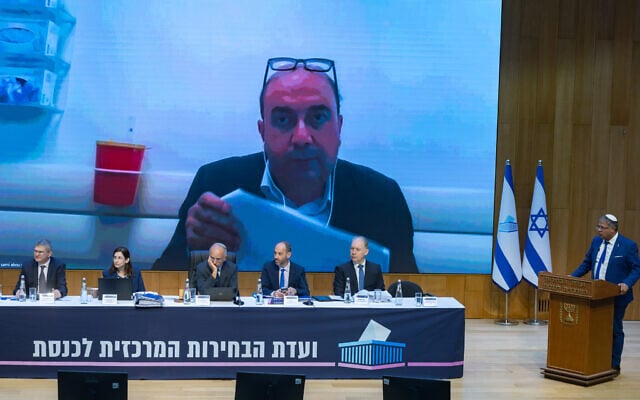
The Knesset Finance Committee says that a clear oversight mechanism has been added to govern how a NIS 5.8 billion ($1.8 billion) “civilian emergency reserve” in the government’s proposed 2026 budget is used, following demands from opposition lawmakers on the committee.
In a statement, the committee says that a clause will be added to the bill stipulating that funds will be used “solely for expenses directly stemming from Operation Lion’s Roar,” and that “the allocation of the funds will no longer be alterable by government decision, unlike the previous situation.”
The move comes after it emerged during a committee discussion on Tuesday that the funds were not anchored in legislation with a defined oversight mechanism, against the advice of Finance Ministry officials, as part of proposed amendments to the as-yet-unpassed budget amid the ongoing war with Iran and Hezbollah.
The revelation prompted outrage from opposition lawmakers who warned that the lack of safeguards meant the funds could be diverted toward political or coalition spending, particularly in an election year.
Committee members and Yesh Atid MKs Vladimir Beliak and Naor Shiri, along with Yesh Atid chair Yair Lapid sent a letter to the Finance Ministry, Knesset legal advisor, and attorney general, demanding the cancellation of the funds, which they described as an unlawful “blank check” for the coalition to use for political purposes.
Lapid celebrates the decision, saying in a post on X that, “This means that this multibillion-shekel sum was prevented from being diverted for political purposes and benefits to the ultra-Orthodox.”
“This is an enormous sum of money that we succeeded in saving for the Israeli taxpayer,” he adds.







The Times of Israel Community.