

 From the Liveblog of
Thursday, March 21, 2024
From the Liveblog of
Thursday, March 21, 2024
Forensic chief gets Israel Prize for work identifying murdered, fallen since Oct. 7
 Add ToI as a Preferred Source on Google
Renee Ghert-Zand is the health reporter and a feature writer for The Times of Israel.
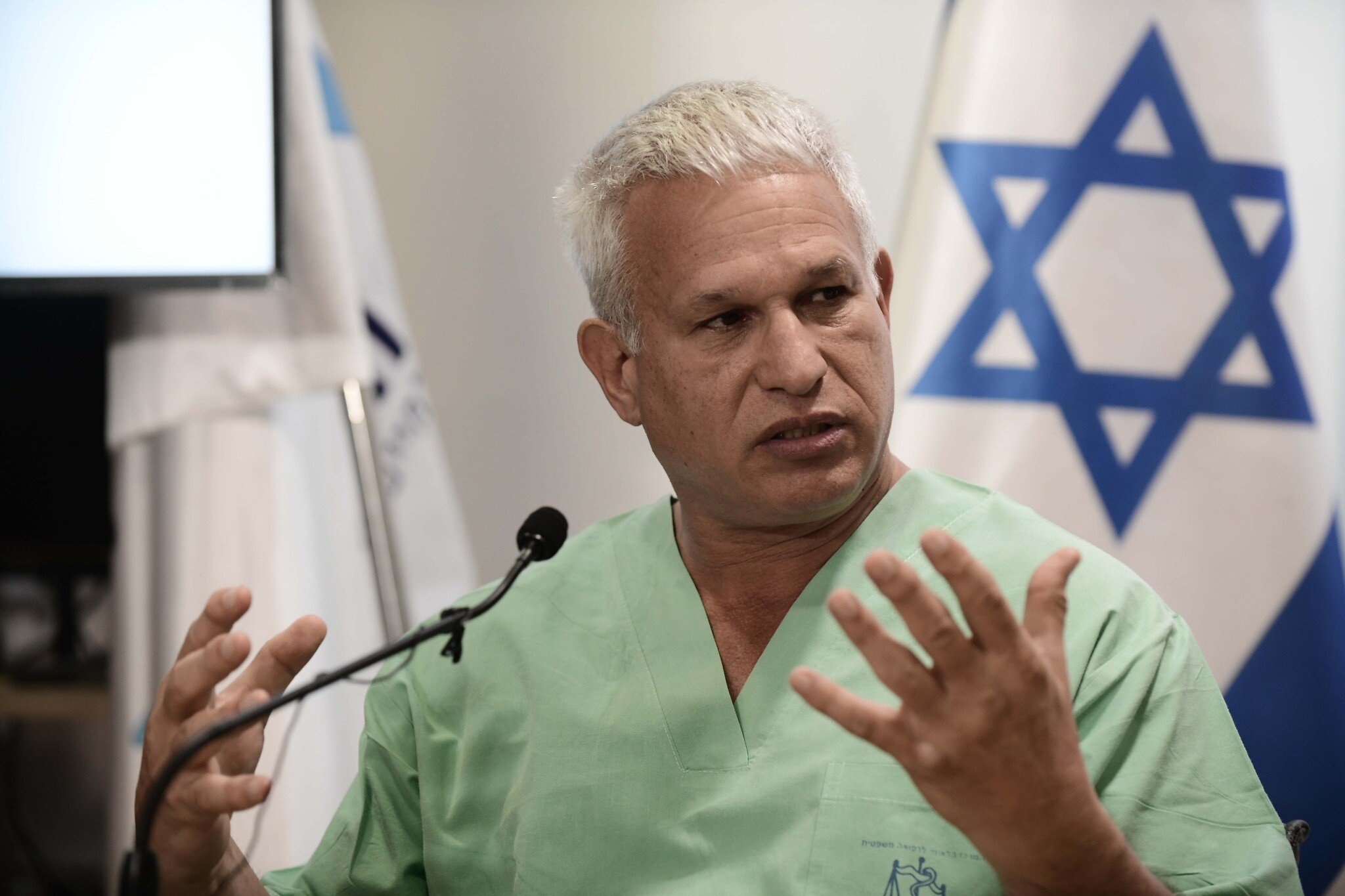
Dr. Chen Kugel, director of the National Institute of Forensic Medicine (Abu Kabir), has been awarded the Israel Prize for civilian bravery, one of two new categories announced to highlight contributions made in the wake of October 7.
The Israel Prize committee recommended to Education Minister Yoav Kisch that Kugel be recognized for his work leading the institute and his efforts to identify the murdered and fallen since October 7. The most difficult cases for identification of human remains were directed to Abu Kabir, where Kugel and other staff worked day and night to provide answers to the families of the murdered and missing.
“I am very grateful to the Israel Prize committee for awarding me the prize for civilian bravery. I am very moved, and it is a great honor for me. However, the prize is not for me personally but rather for the institute’s entire staff who worked with me nonstop to make sure that everyone who died or was murdered — cruelly slaughtered — can be memorialized, and that we can provide a balm for their families. This is our routine work for the state and our work during painful times of national crisis,” Kugel says.
“This prize is given for civilian bravery, but during these days I am unable to label myself as such because, in the past months, I have encountered real heroes — people who endangered themselves to save others, sometimes at the cost of their lives,” he says.
The public became more aware of the critical work done at Abu Kabir because of the challenges its staff faced in trying to extract DNA from tiny, burned bone shards, which was all that remained of some of the victims of October 7. However, the institute has long faced challenges due to understaffing and underfunding.
“In the last year, the Health Ministry has begun working to expand and strengthen the institute. We have laid the cornerstone for a new building suiting the institute’s needs,” says Health Ministry director-general Moshe Bar Siman Tov.
“Together with the Finance Ministry and the Israeli Medical Association, we must work to improve the salaries of the institute’s doctors and other employees so that they are properly compensated. We are determined to do this so that there will be a next generation of professionals who will be able to address the state’s needs in all situations,” he says.
The ceremony will be held on Yom Ha’atzmaut, May 14.
The Israel Prize this year is mired in controversy.
In mid-February, the government announced that the traditional categories for the prize, the country’s highest civilian honor, would be canceled for 2024, and two new categories related to the ongoing war against Hamas in Gaza would be awarded instead — “Societal Responsibility” for civic efforts and volunteering, and “Citizen Heroism” for civilian acts of bravery. The move was reportedly made to avoid giving a prize to a prominent critic of the government. However, the Education Ministry backtracked this week and reinstated the traditional categories in addition to the two new ones.

The Times of Israel Community.