

Magritte masterpiece at Israel Museum being repaired after pinecone puncture
‘The Castle of the Pyrenees,’ which was donated to the museum in the 1980s, was damaged by a young boy who idly pierced the canvas while visiting with his family
 Add ToI as a Preferred Source on Google
Jessica Steinberg, The Times of Israel's culture and lifestyles editor, covers the Sabra scene from south to north and back to the center
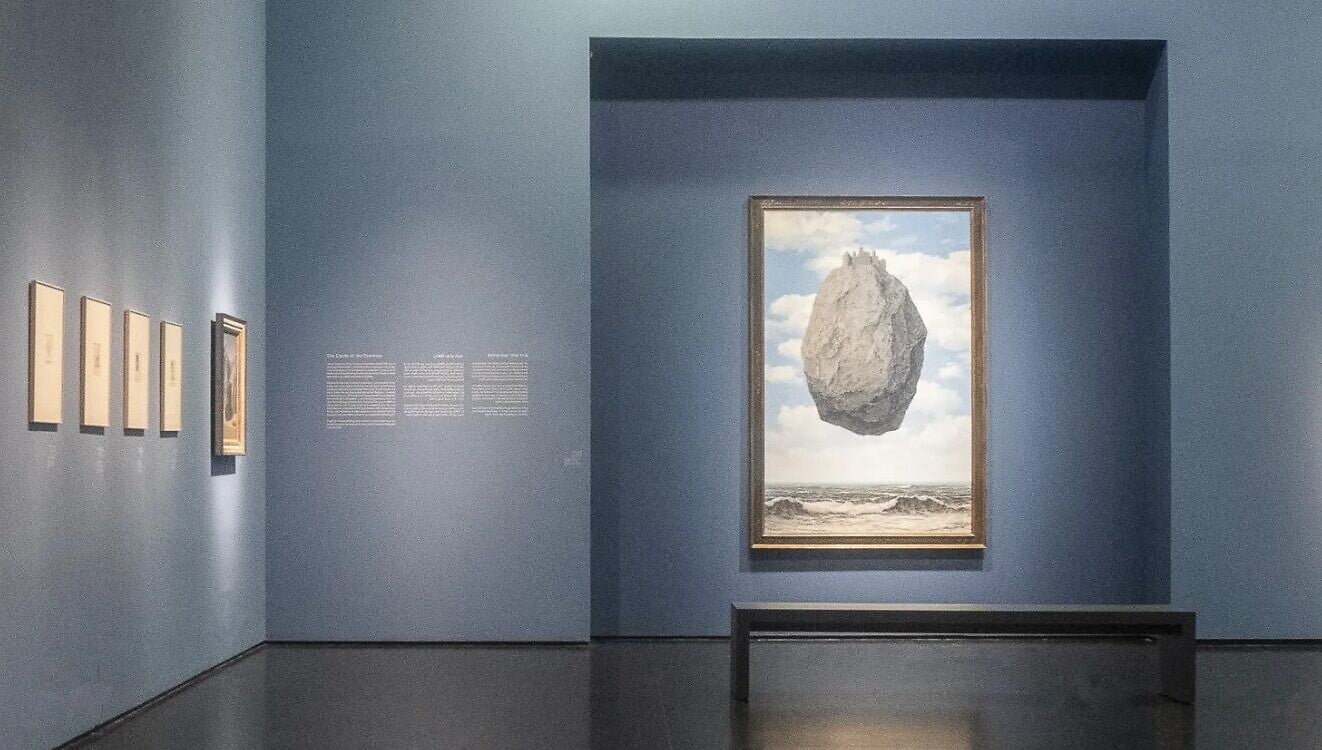
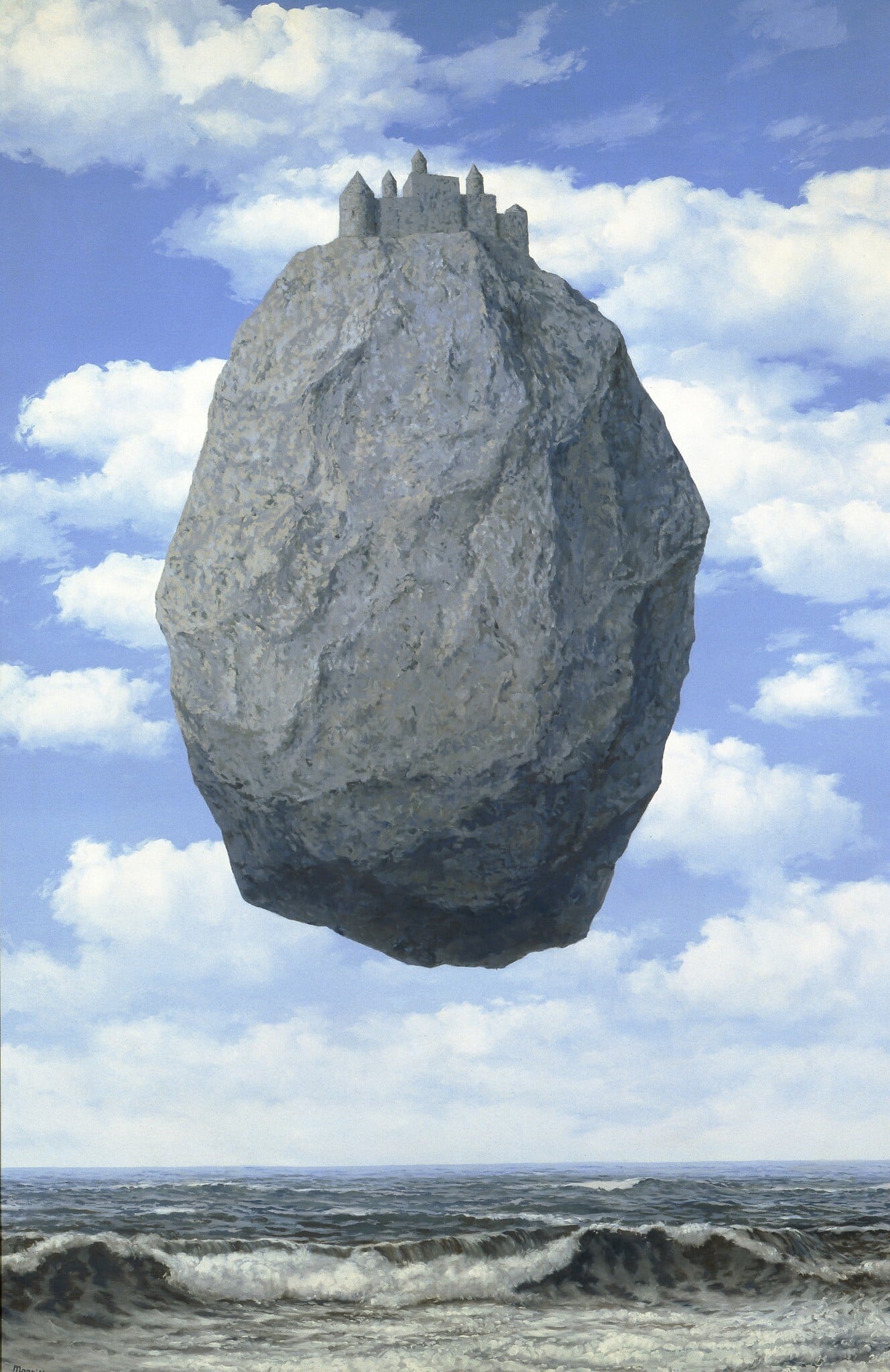
It was an errant pinecone that punctured “The Castle of the Pyrenees,” the famed Surrealist masterpiece by René Magritte that normally hangs in the Israel Museum’s permanent collection gallery.
A young boy was visiting the museum with his family several weeks ago when he idly pierced the canvas with a pinecone he picked up in the museum’s sculpture garden.
The painting was punctured in a matter of seconds, before a guard noticed what was happening, according to the museum staff.
The piece is now being repaired and restored in the museum’s conservation laboratory.
Sharon Tager, who directs the museum’s conservation laboratories department, told Ha’aretz that the restoration process will take several weeks.
Tager explained that the canvas is mended and the layers of oil paint are then carefully treated to make it nearly impossible to detect that the painting was damaged.
Magritte’s painting was not glazed or protected by an alarm, as the museum wants to preserve the viewing experience and allow visitors to get as close as possible to the artworks.
In this case, however, one young visitor got a little too close.
“The Castle of the Pyrenees,” depicting a large, castle-topped rock dangling in a blue sky over a churning sea, has hung in the Israel Museum since 1985.
The painting started as a commissioned work, intended to cover the ugly view outside the New York City office window of the artist’s esteemed friend, lawyer and art lover Harry Torczyner.
The Belgian artist and his Jewish, Belgian-born friend and patron Torczyner met in 1957.
Torczyner, who because of the Nazis fled Belgium for New York with his wife Marcelle Siva Torczyner, commissioned the Pyrenees castle as a rock of hope, topped with a castle.
“LONG LIVE MAGRITTE!…‘The Castle of the Pyrenees’ floats majestically and proudly. It is superb… and intact! The waves of the North Sea bring me fresh air and joy. For the moment, the painting is hanging on the wall, while a custom-made frame is being installed to cover the window,” wrote Torczyner at the time.
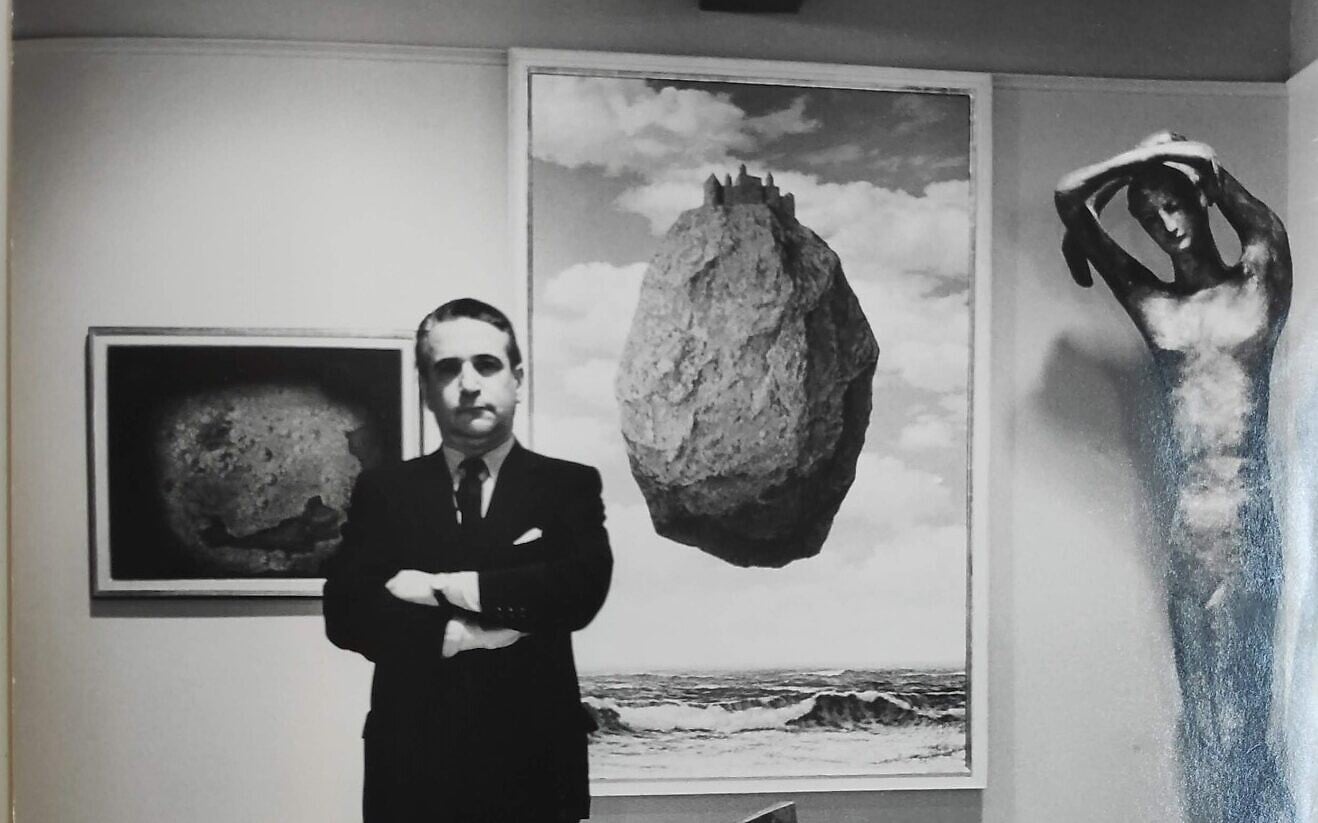
The painting remained in Torczyner’s office for nearly two decades, removed only rarely to be displayed in exhibitions.
In 1985, Torczyner decided to donate the work to the Israel Museum on the twentieth anniversary of its founding.
“Today The Castle of the Pyrenees is about to leave my office for Jerusalem,” Torczyner wrote at the time. “It will make another voyage across time and space, as I have set for it a trajectory as necessary as the elements Magritte had deemed necessary for his painting. In Jerusalem, the Castle of the Pyrenees will join other magic rocks, towers and walls.”
And now, pinecones as well.








The Times of Israel Community.