

‘Teddy bear with a spine of iron’: How Gadi Eisenkot has emerged as Netanyahu’s chief election rival
The former IDF chief, in many ways the polar opposite of Netanyahu, represents to many voters a long-forgotten type of Israeli politician, one they are eager to see in power again
 Add ToI as a Preferred Source on Google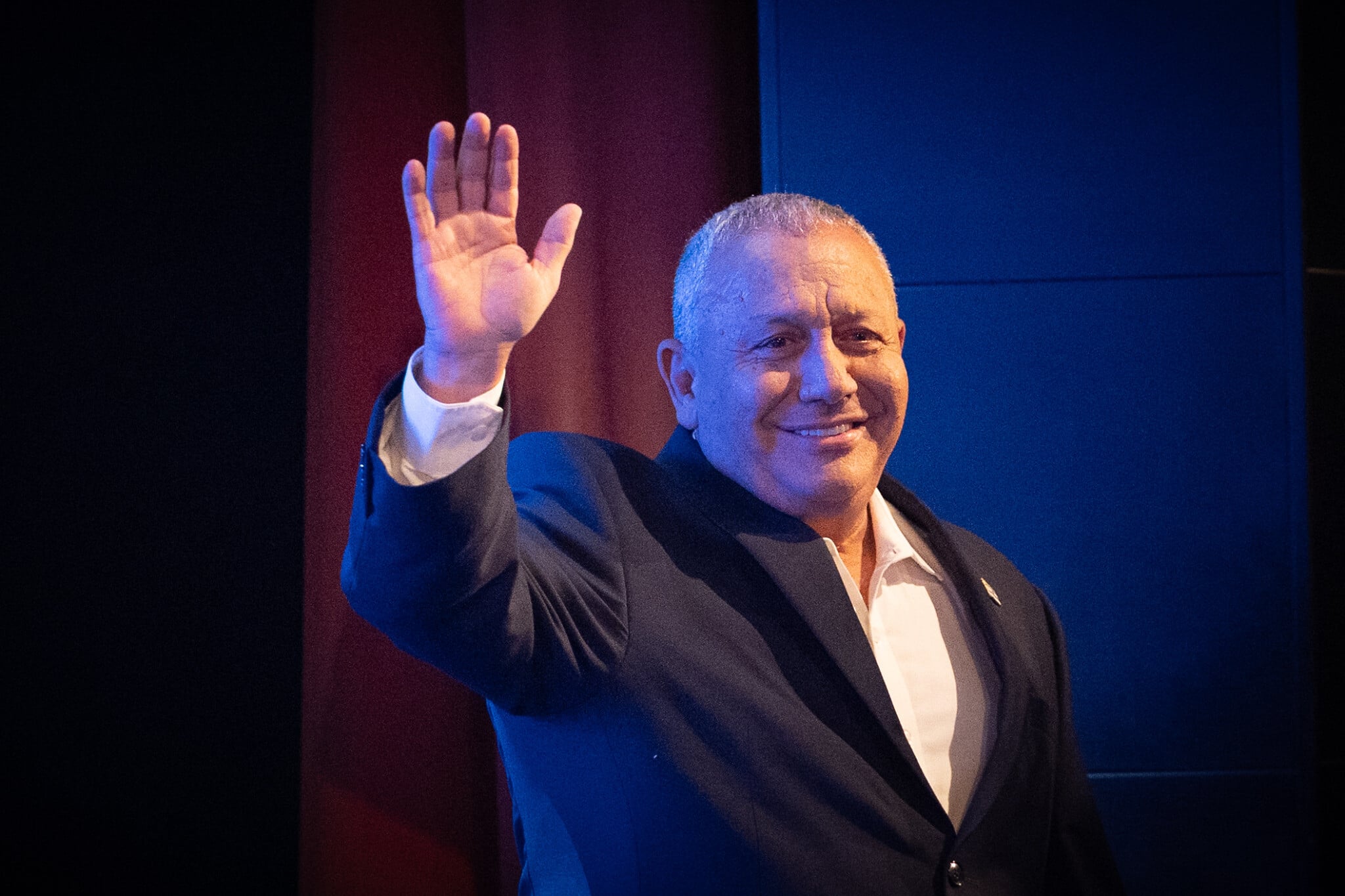
JTA — If you believe the polls, Prime Minister Benjamin Netanyahu — Israel’s dominant political player and media maestro since 2009 — will see his Likud outscored in the October 27 election by a party founded by a relative political neophyte with relatively limited communications skills and a nondescript platform.
How is that possible?
The rise of the potential usurper, former Israel Defense Forces chief of staff Gadi Eisenkot, who has emerged as the (uncrowned) leader of the Zionist opposition bloc pushing to oust Netanyahu and his allies next month, is remarkable. He only formed his party, Yashar (Hebrew for “straight” or “honest”), less than a year ago, in September 2025. He lacks the political resume of many of his rivals within the opposition. He served as a member of Knesset for just three years in Benny Gantz’s National Unity party and for just eight months in Netanyahu’s war cabinet.
His party platform also doesn’t stand out — it positions itself somewhere in the political center, with its stated goals neither distinct nor specific: “Seeking truth, rehabilitating Israeli society after the war and strengthening the country in the long term.”
In a move designed to curb Eisenkot’s rise and end his bid to become prime minister, his main opposition rivals — former prime ministers Naftali Bennett and Yair Lapid — merged their parties in April to create what they hoped would be a new center-right political juggernaut. In doing so, Bennett seemed poised to take over as the sole candidate who could beat Netanyahu.
But four months later, Eisenkot’s party is consistently receiving 23-24 seats of the 120 that comprise the Knesset in polls, while Bennett and Lapid’s party, B’Yachad (Hebrew for “together”), is lagging far behind at 13 seats. In contrast, Netanyahu’s Likud garners about 19-21 seats in current polls. The rival blocs headed by Netanyahu and Eisenkot are neck-and-neck in many polls, neither reaching a 61-strong Knesset majority, with two Arab parties holding the balance of power.
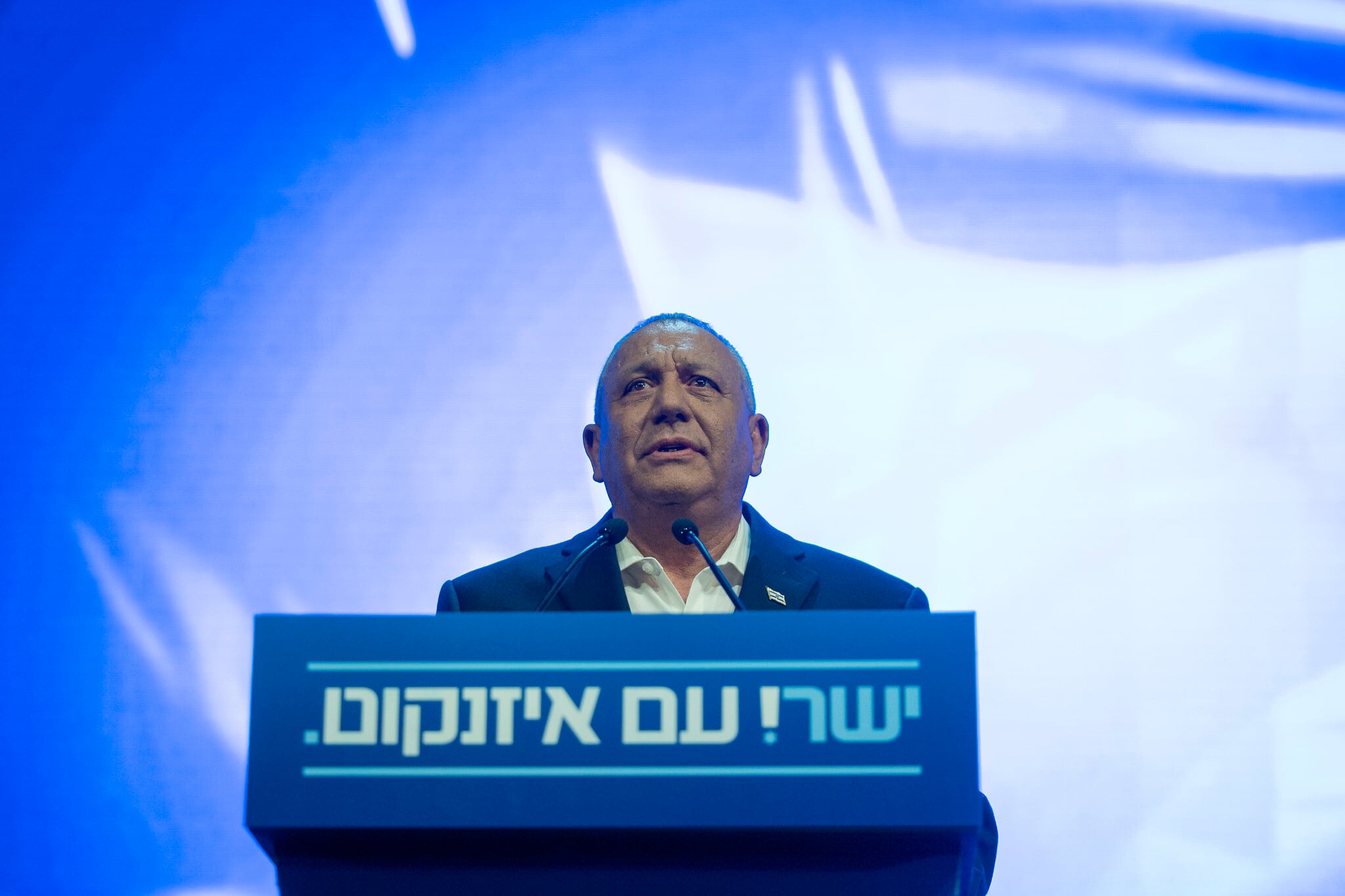
Even more remarkably, Eisenkot has made inroads in far-flung areas of Israel previously considered Likud strongholds, such as Dimona in the south and Kiryat Shmona in the north. The Likud campaign itself is telling — in recent months its social media accounts and spokespeople have focused their criticism almost entirely on Eisenkot. The attention to the political newcomer suggests they view him as the ultimate threat to Netanyahu’s reign, which he has maintained for some 16 of the last 17 years.
Unassuming Eisenkot is the un-Bibi
Many attribute Eisenkot’s rise to his personality and style. He is, in many ways, the exact opposite of the polished and urbane Netanyahu, who is currently facing charges of corruption. Eisenkot, who often attends events in a simple black T-shirt and jeans, lacks the theatrical flourish of some of his competitors. He has a broad, unassuming smile and likes to talk about his grandchildren.
Then there’s his personal and professional background. Eisenkot, 66, would be the first prime minister of Mizrahi, or non-European, descent. He is the son of immigrants from Morocco and grew up in Israel’s geographical periphery, in Tiberias along the Sea of Galilee and Eilat on the Red Sea. He rose through the ranks of the Golani infantry brigade, which is associated with blue-collar and hardworking Israelis, until reaching the pinnacle of the Israeli military hierarchy.
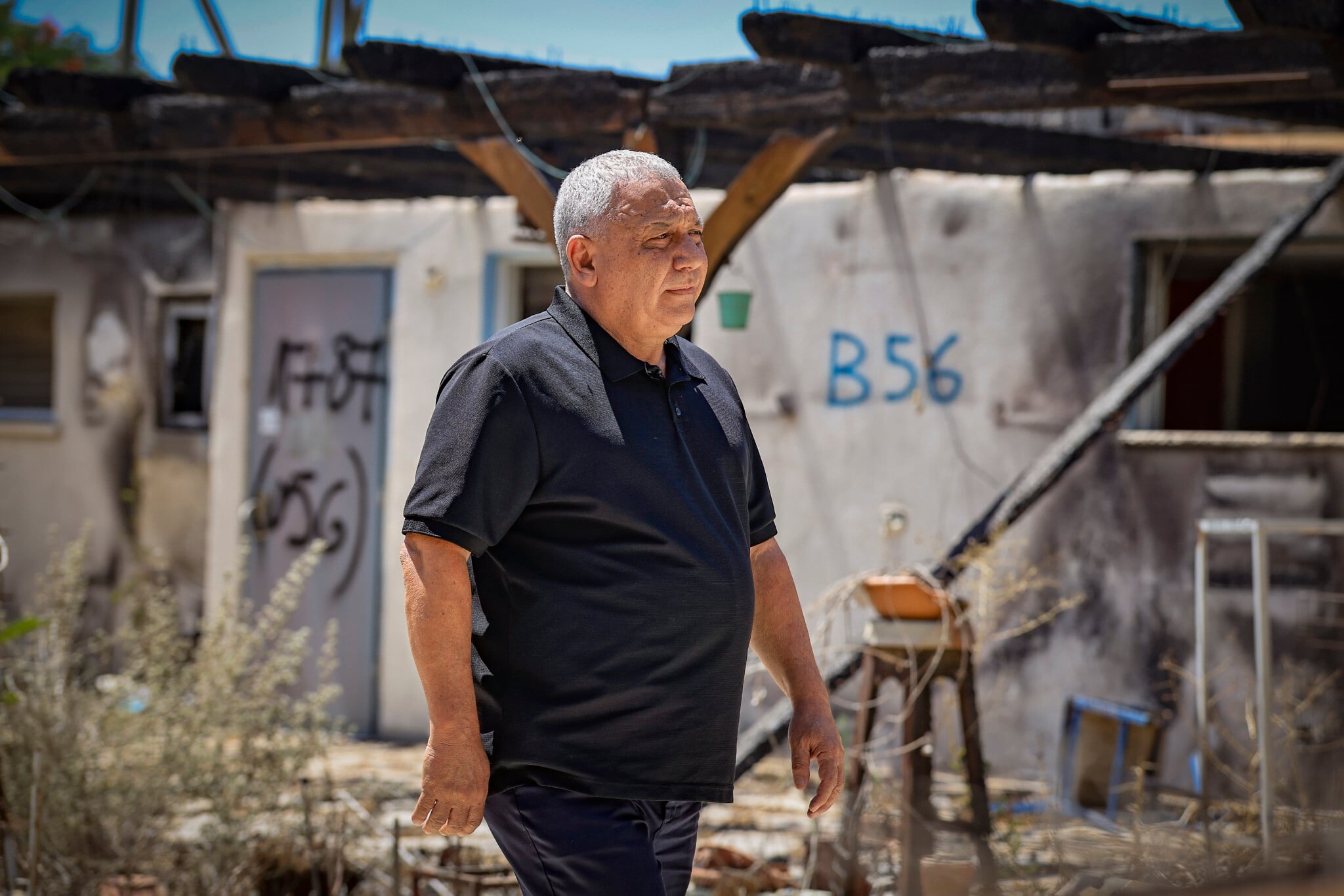
The loss of his son, as well as two nephews, in the Gaza war has made him a symbol of Israeli sacrifice in the ongoing conflict, while Netanyahu’s sons haven’t participated in the war
As a general, he gained respect for his meticulous attention to detail and his ability to think outside the box. In December 2023, his youngest son, Gal, was killed in combat in the Gaza Strip. The loss of his son, as well as two nephews, in the Gaza war has made him a symbol of Israeli sacrifice in the ongoing conflict, while Netanyahu’s sons haven’t participated in the war.
“The Israeli public recognizes in Gadi the honesty and humility that it wants to see in its politicians in the State of Israel, which for a long time has not seen this leadership profile,” said Inbar Harush-Giti, a member of Yashar and a long-time advocate for the integration of ultra-Orthodox Israelis into broader society.
“Gadi is also someone who talks to people at eye-level, people relate to him. They create a deep emotional connection with him,” she told the Jewish Telegraphic Agency. “Of course, there is his personal story of someone who paid the highest price, and therefore it is hard not to see in him the essence of fighting, Zionist, patriotic Israeliness.”

She added that another factor in Eisenkot’s appeal is his Jewish identity.
“Gadi defines himself as traditional, as do I, and this also gives a lot of space for people for whom Judaism or Jewish identity is important,” she said.
The term “traditional” is generally applied in Israel to Jews, primarily Mizrahi, who embrace certain forms of Orthodox practice as well as many aspects of secular life. Traditional Jews are extremely common among the Israeli electorate, but often marginalized in political debates that draw battle lines between the religious and secular sectors.
But it hasn’t just been Eisenkot’s personal traits and story that have attracted voters; it’s how they have been channeled into his political endeavors and those of his party, maintained Harush-Giti. In other words, Eisenkot’s simplicity and humility are not just remnants of a long-forgotten type of Israeli politician but reflect attitudes towards governance that were prevalent in Israel’s early years.
“We believe deeply in David Ben-Gurion’s approach of mamlachtiyut,” Harush-Giti said, defining the oft-used term that is usually translated as “statesmanship” as “the general good takes priority over the good of one specific group.” Harush-Giti said it was no coincidence that during the period between his discharge from the IDF in 2019 and his entry into politics in 2022, Eisenkot served as chairman for organizations that commemorate Ben-Gurion.
Israelis yearn for something new
Moshe Klughaft, a former adviser to Netanyahu and Bennett, attributed Eisenkot’s polling achievements more to his timing than his persona or platform.
“Gadi Eisenkot’s success in polls stems from the public yearning for something new, and he is the opposition’s newest leader,” Klughaft wrote to JTA in response to a series of written questions. He described “a desperate desire for someone coming from the outside” as “a significant component for voters.”
Klughaft pointed out that a number of opposition party leaders during the current government’s tenure have been either replaced, like Labor chair Merav Michaeli, or have lost significant support, like Lapid and former defense minister Benny Gantz.
A second reason for Eisenkot’s success lies with weaknesses in Bennett’s campaign, Klughaft added. “Bennett’s strategy that ‘only a right-wing [candidate] will defeat Netanyahu’ was rationally correct,” in that a majority of Israelis currently define themselves as right-wing.
”But emotionally,” according to Klughaft, “it created negative feelings. Bennett was essentially saying to opposition voters from the center-left: ‘Your opinions are not good enough in order to govern, you must anoint me because I am right-wing.’ When Gadi came, he said to those same voters, ‘It’s okay, someone from your camp can also be prime minister,’ and this made Bennett’s entire campaign unnecessary,” Klughaft wrote, referring to a perception that Eisenkot is centrist, and in some people’s eyes even center-left.
Eisenkot has attempted to tweak this perception, announcing in August that he opposed Palestinian statehood, a position usually associated with the Israeli right. Eisenkot is also known for his hawkish views on the use of force; he often reminds viewers that, as IDF chief of staff, he came up with what he called the “Dahiyeh Doctrine,” which called for intense, disproportionate bombardments of enemy strongholds in response to attacks, even if these strongholds are positioned in residential neighborhoods, like the one in south Beirut that gave the doctrine its name.
Still, Eisenkot’s outspoken liberal values, his emphasis on a strong, centralized public sector and past comments in favor of separation from the Palestinians are some reasons that he is considered a centrist. Another indication of this is the fact that Eisenkot has not strictly ruled out forming a coalition that includes Islamist Arab party Ra’am.
Another misstep by Bennett, in Klughaft’s view, was his merger with Lapid, with the intent being to form a big enough party to win more seats than Likud and have the first shot at forming a coalition. “Some 40% of Bennett’s original voters opposed Lapid, and the merger simply threw them out of the party. Lapid was essentially Bennett’s worst choice for a merger, yet he chose it,” Klughaft said.
In fighting Eisenkot, Bennett and Lapid have focused most of their fire on what they claim is his inexperience, in contrast to their long service as ministers and even prime ministers. The two have not offered many criticisms about Eisenkot’s stated policies, since the parties have largely similar platforms, but instead have urged Eisenkot to “wait his turn.”
A willingness to take campaign contributions — and to hit back hard
Despite his salt-of-the-earth persona, Eisenkot has not shied away from significant campaign contributions from wealthy donors. The Eisenkot campaign has raised some NIS 16 million (about $5.3 million) in large financial guarantees from some of Israel’s wealthiest donors, according to Israel’s state comptroller. The guarantees function as an interest-free loan. Every party that enters the Knesset receives state funding that is meant to cover campaign expenses, and Eisenkot intends to return the payments after the election.
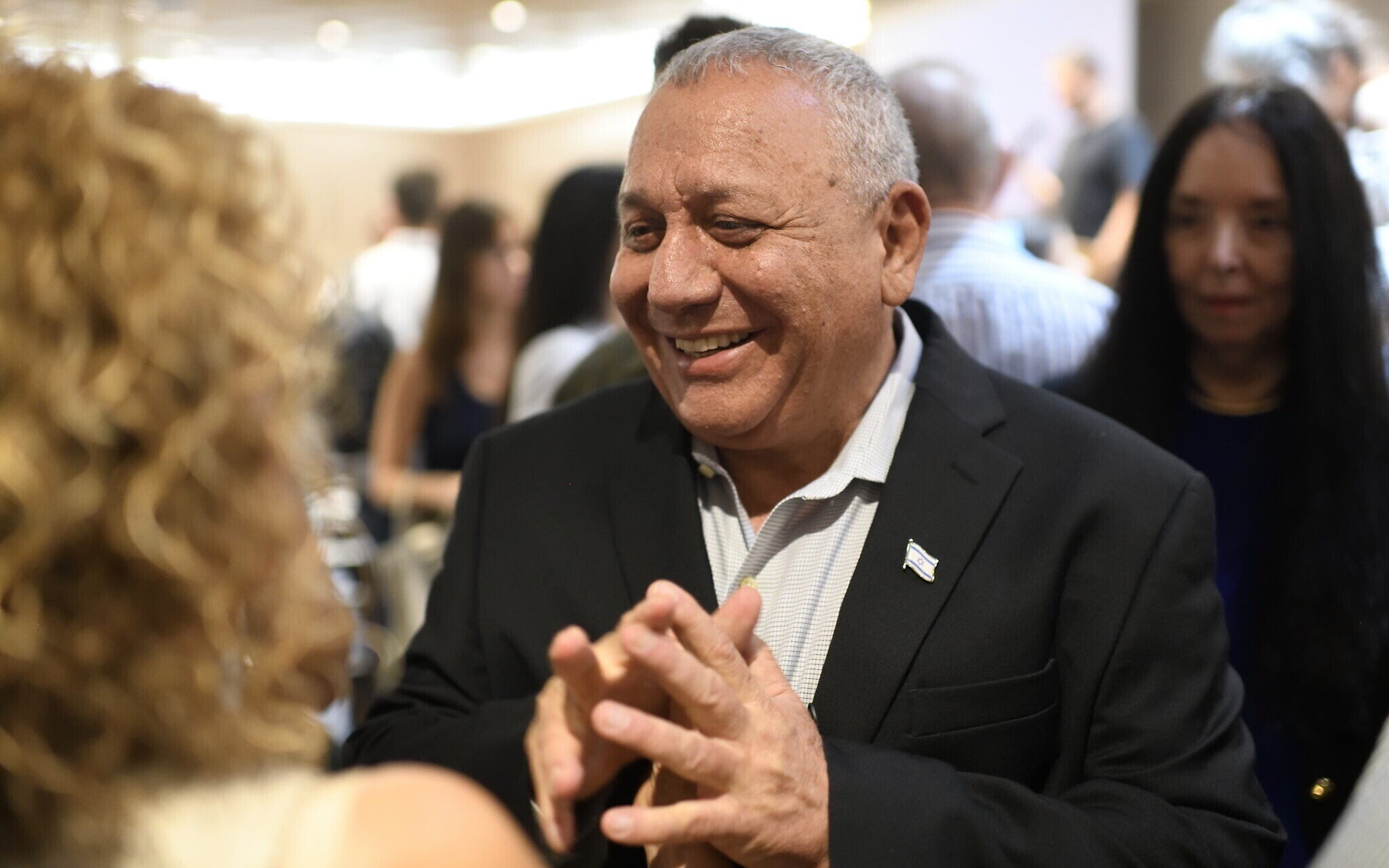
Funds alone are not enough to secure votes, however, and Eisenkot and his fellow party members have also been working the crowds at campaign events across the country. They’ve held meet-and-greets, town-hall-style events and other functions from the aforementioned Likud strongholds in the north to those in the south.
He’s also shown himself to be adept in the new media space. Eisenkot, whose social media presence up to a year ago began and ended with Facebook, has hired a savvy media team. They’ve made his presence felt on X, Instagram and other platforms, while also arranging an array of interviews in both the mainstream media and less conventional outlets such as podcasts.
Recently, the former IDF chief of staff gave an hourlong interview on a podcast hosted by well-known publicist and comedian Shir Reuven, in which he candidly discussed the loss of his son and the ways in which he and his family dealt with the grief and pain.
Rather than post about unity and positivity, as some other opposition members have done, his internet campaign has adopted hardball tactics used by Netanyahu himself, and he has not been afraid to take some heavy swings at the prime minister
But perhaps the biggest surprise from Eisenkot, who does not come across as aggressive, has been his sharp, pointed and powerful criticism of Netanyahu — arguably more biting and effective than other opponents’.
Rather than post about unity and positivity, as some other opposition members have done, his internet campaign has adopted hardball tactics used by Netanyahu himself, and he has not been afraid to take some heavy swings at the prime minister.
Over and over, Eisenkot’s social media accounts have posted short videos that begin with snippets of Netanyahu promising to safeguard Israel’s security and then cut to harsh and sometimes even graphic footage from October 7 or other attacks against Israel. Another recurring theme is videos portraying Netanyahu as a liar.
Eisenkot has also been willing to selectively invoke the facts in order to disparage Netanyahu — a tactic many accuse the prime minister of routinely using himself. For example, in response to seemingly baseless claims by Netanyahu that Eisenkot will recognize a Palestinian state, Eisenkot’s media accounts responded by showing reels of Netanyahu endorsing the two-state solution. The most recent clip, however, was from 2016 — and Netanyahu has since repeatedly said he will not accept Palestinian statehood, which his policies have reflected.
הפעם הכדור בידיים שלנו. pic.twitter.com/vX7zjbJ3sS
— Gadi Eisenkot – גדי איזנקוט (@gadi_eisenkot) September 9, 2026
There are still red lines that Eisenkot has not crossed, however. He has largely avoided criticizing the prime minister over personal or family matters, even though Netanyahu posted a video, created by artificial intelligence, showing Eisenkot running to embrace a soldier — perceived by many to be a stand-in for his son Gal — and then turning away from his outstretched arms into the arms of Ra’am chair Mansour Abbas. Likud later denied the young soldier was meant to represent Gal Eisenkot.
The Netanyahu campaign’s AI-generated video was widely condemned, but in public Eisenkot shrugged it off. On social media, however, he punched back with full force. There, his campaign published an identical video showing Netanyahu approaching a soldier but then turning and hugging ultra-Orthodox United Torah Judaism party chairman Yizhak Goldknopf, who has been pushing the government to exempt ultra-Orthodox men from military service.
Some analysts have described the former general as a “teddy bear with a spine made of iron.” Whatever the merits of that description, he has shown that despite being a novice, he can play hardball in Israeli politics.
Times of Israel staff contributed to this report.




The Times of Israel Community.