

Hoping to put wind back in sails, B’Yachad tacks toward liberal-Zionist center
Unveiling slate at high-energy rally, Bennett’s party bets roster of experienced ‘doers’ and promises of universal service, Oct. 7 inquiry can win back support without relying on the right

 Add ToI as a Preferred Source on Google
Ariela Karmel is a political correspondent at The Times of Israel. She previously reported for Calcalist and Haaretz. She holds an MA in Middle Eastern and African History from Tel Aviv University and a BA in Political Science from the University of British Columbia.
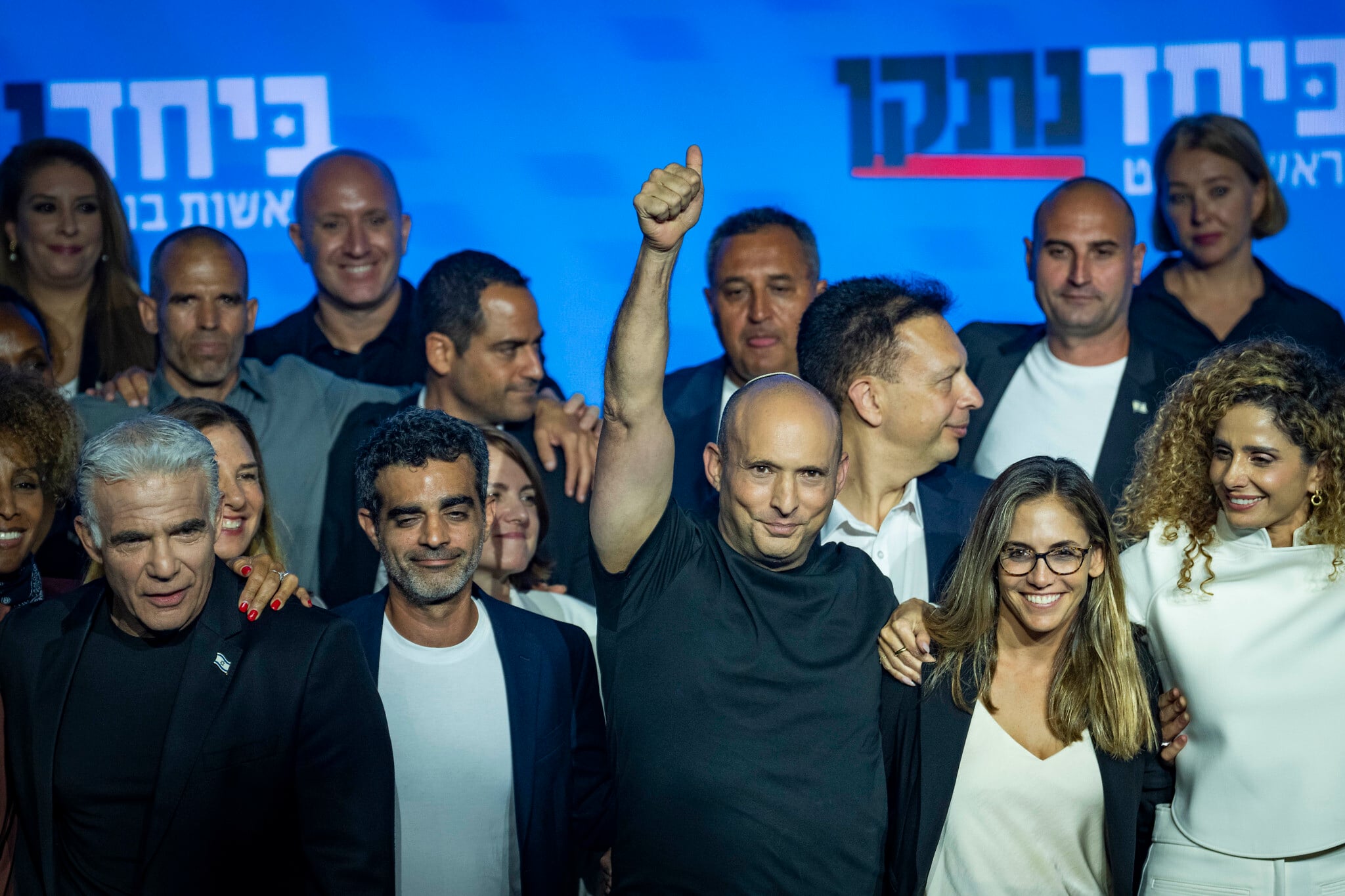
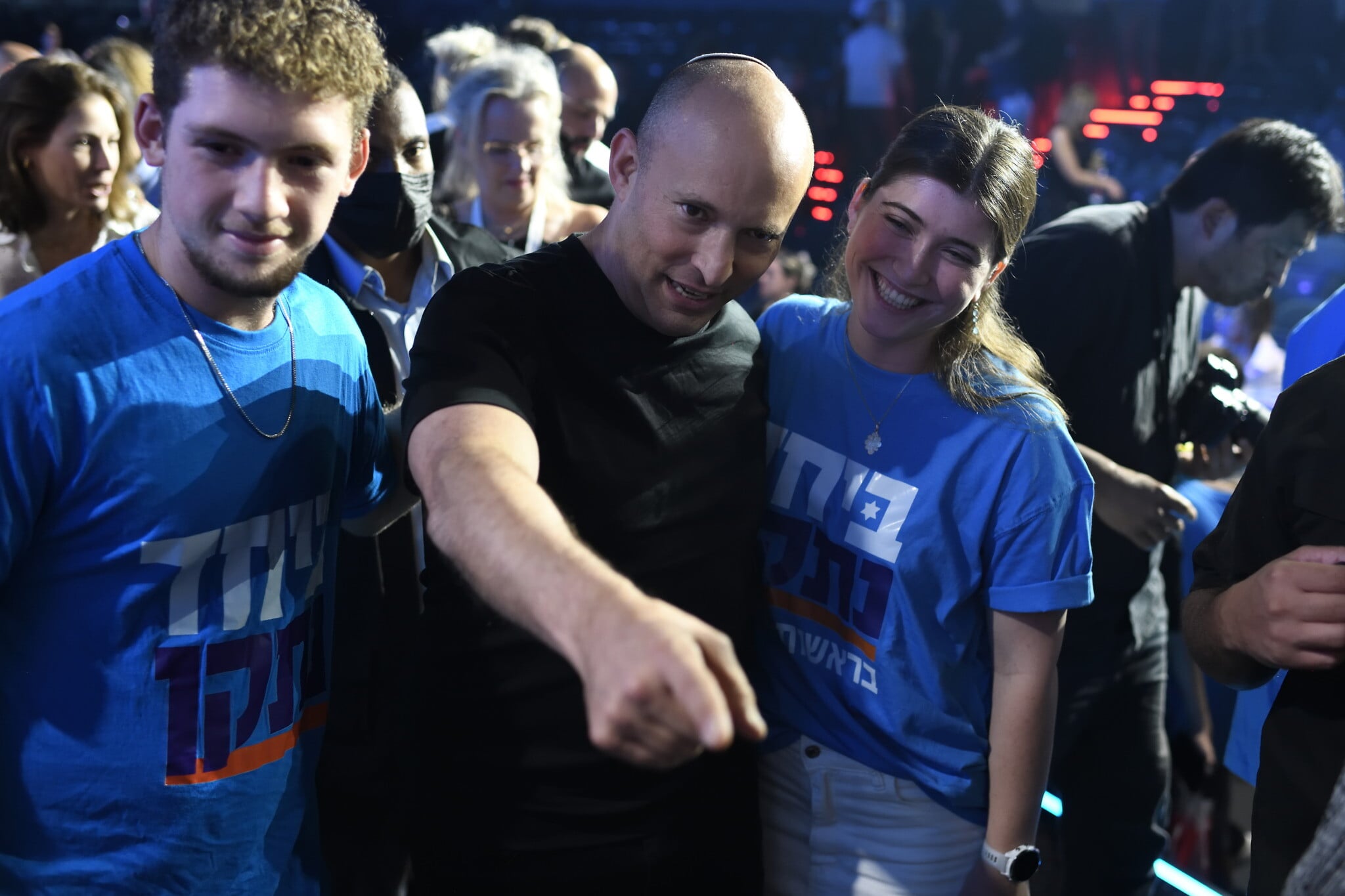
Drums pounded and chants rang out Sunday night as dozens of young activists in matching blue shirts packed B’Yachad’s unveiling of its final Knesset slate, giving the event the atmosphere of a pep rally as Naftali Bennett presented the candidates he says are ready to begin “fixing” Israel from their first day in government.
The slate unveiled ahead of Tuesday’s deadline for the October 27 election is heavy on experience: two former prime ministers, lawmakers and former ministers, senior civil servants and military officers, alongside reservist activists and figures impacted by the October 7 attacks. Bennett repeatedly described them as “doers” — professionals equipped to repair what the party calls years of incompetent governance.
But the event also offered perhaps the clearest picture yet of what B’Yachad has become politically. Months after Bennett returned to politics with ambitions of assembling a broad coalition stretching deep into the disaffected right, his alliance with Yair Lapid and the subsequent rise of Gadi Eisenkot’s Yashar have dramatically reshaped that project.
Sunday’s event suggested B’Yachad is no longer organizing itself around winning right-leaning voters back, but is embracing the constituency it actually has: liberal-Zionist, largely centrist Israelis animated by military and national service, competent government, a state commission of inquiry into October 7 and an end to sweeping Haredi draft exemptions.
It is not a small constituency. Whether it is a large enough one to fulfill Bennett’s ambitions is another matter.
The composition of the slate undoubtedly reflects the party’s pitch that experience is the antidote to the failures of recent years.
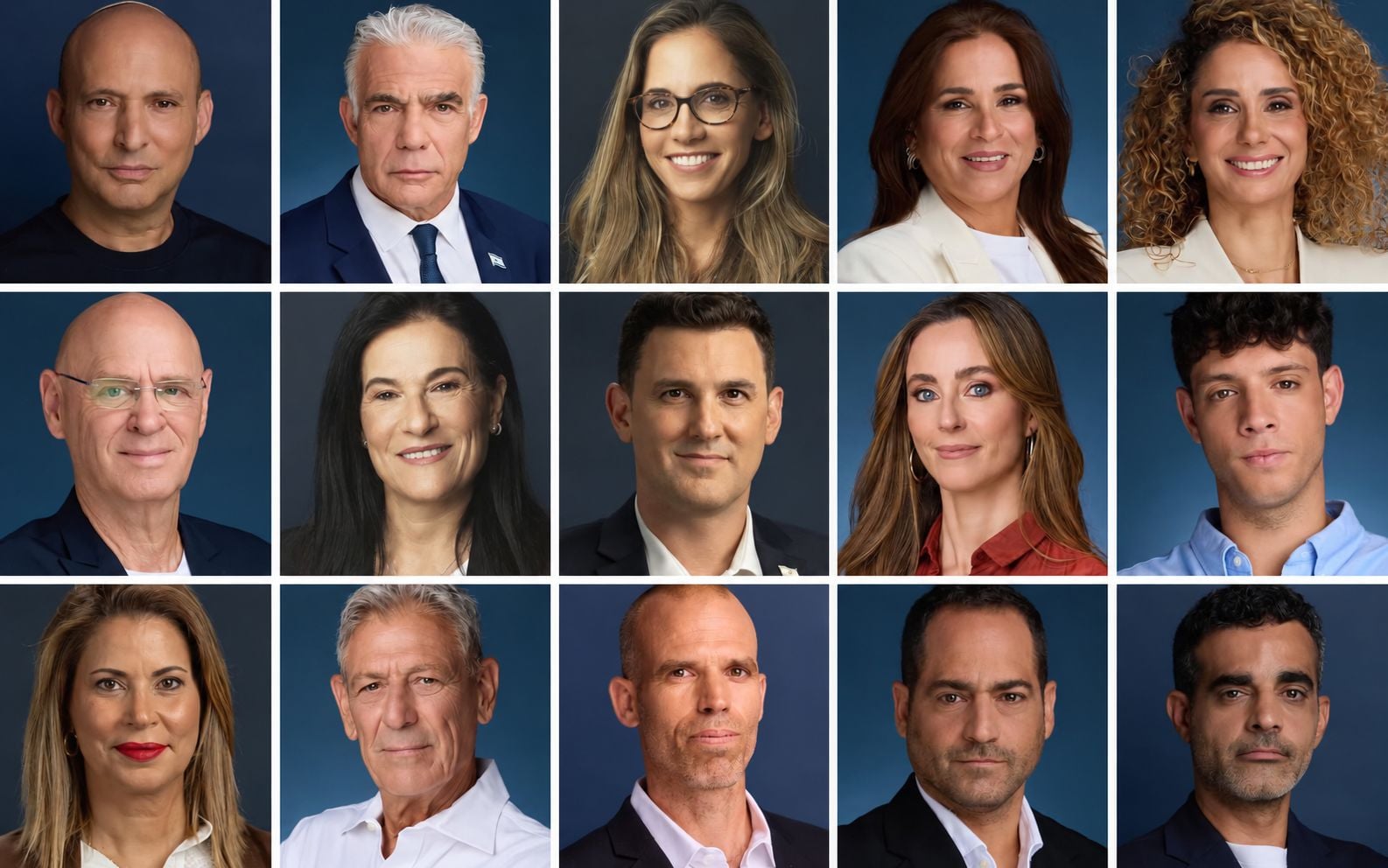
Bennett and Lapid occupy the top two spots, followed by Keren Terner, former director general of both the finance and transportation ministries; Yesh Atid MK and opposition whip Merav Ben Ari; and Liran Avisar Ben-Horin, a former director general of the Communications Ministry.
Further down are former lawmakers and ministers, crucially interspersed with political neophytes whose public identities were transformed by the Hamas-led October 7, 2023, attack and the war that followed: reservist activists, survivors and bereaved relatives.
Among them is former IDF general Noam Tibon, who became a household name after mounting a mission on October 7 to rescue his son, Haaretz journalist Amir Tibon, his daughter-in-law and their two young children from their home in Kibbutz Nahal Oz while the community was under attack.
The combination gives B’Yachad a slate that is at once deeply experienced in the pre-October 7 political and bureaucratic establishment and consciously shaped by everything that has happened since.
The message tying the two together is difficult to miss: The state failed, and these are the people who know how to fix it.
“We have the best team led by Naftali Bennett, who was an excellent prime minister,” Tibon, sixth on the slate, told The Times of Israel at the slate launch event Sunday. “The list of candidates are all people who have done something in their lives. We have a work plan; people will enter office and start working.”
Omer, a 22-year-old blue-shirted volunteer from Tel Aviv, argued similarly that B’Yachad offers “the most experience, the most proven political achievements.” He pointed to the Bennett-Lapid government that ruled from 2021 to 2022 and the more than two dozen policy programs B’Yachad says it has prepared for implementation.
“These are not people who are just now entering politics and learning their way,” he said. “These are people who have really come to change and fix.”
Extensive political experience may not be the electoral asset B’Yachad believes it to be, though.
The party’s argument is straightforward and, after the failures of recent years, intuitive: The current government is filled with people it regards as incompetent and unqualified, so the answer is to replace them with people who have already legislated, managed ministries, commanded troops and understand how the machinery of the state works.
Yet there is a sense that the electorate is hungry for figures perceived as standing outside the political system, especially since October 7.
Eisenkot’s rapid rise, for example, has been fueled in part by an image of him as blunt, direct and honest rather than a practiced political operator. While he isn’t exactly inexperienced — he is a former IDF chief and was a minister in Prime Minister Benjamin Netanyahu’s war cabinet — he is not known for his legislative prowess.
His appeal points to a distinction between experience running major institutions and experience as a professional politician, and raises the question of whether a long Knesset resume is necessarily the selling point B’Yachad believes it to be.
A party that has found its political home
If the makeup of B’Yachad’s slate reveals what kind of politicians the party believes Israelis want, the crowd Sunday offered an equally revealing picture of the voters it now appears to be seeking.
The event felt unmistakably liberal and Tel Avivian: young, secular and fervently opposed to the current government and its policies, though not necessarily comfortable with the political left as represented by Yair Golan’s Democrats.
It is a markedly different political home from the one Bennett occupied for much of his career and from the much broader electorate he initially hoped to assemble upon returning to politics.
A former leader of the religious-Zionist Jewish Home party and onetime champion of the settlement movement, Bennett once commanded significant support on the right. Much of that support evaporated in 2021 after he parlayed support for the right-wing Yamina into a job as head of a government that included both the left-wing Meretz and Mansour Abbas’s Islamist Ra’am party, as part of a broad coalition cobbled together with Lapid.
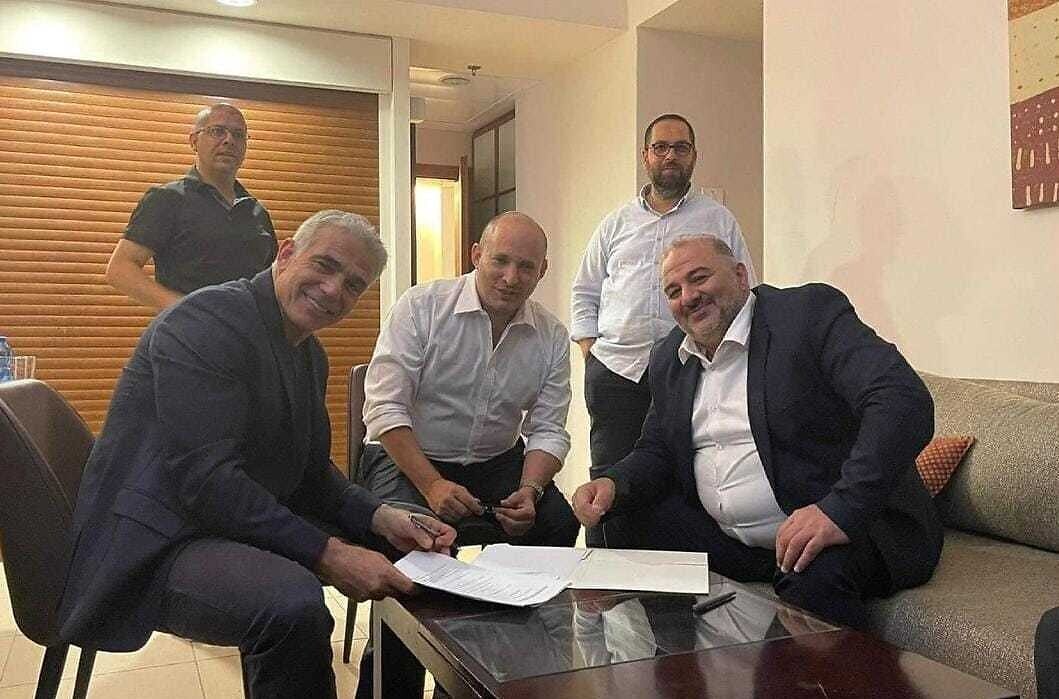
When Bennett returned to politics this year, he appeared to harbor hopes of building on support for that big-tent coalition while drawing heavily from voters who had soured on Prime Minister Benjamin Netanyahu but remained firmly on the right. The gambit placed a risky bet that there were enough voters on the right who had not written him off after joining with Abbas, and enough on the left who were undisturbed by his right-wing stances.
For a while it worked, with Bennett propelled to the top of early polls, but the strategy has begun to crumble since Eisenkot’s entry into the race, which gives disaffected center-right voters an alternative without Bennett’s baggage.
Bennett’s decision in May to unite with Lapid’s Yesh Atid, which was then hovering around the 3.25% electoral threshold, has also done more harm than good, according to political analysts.
Polls in May had B’Yachad with around 25 seats, putting it neck and neck with Likud. Today, surveys have the party at roughly half that number, well behind both Likud and Eisenkot’s Yashar.
There was nothing at Sunday’s event to give the impression that the party was still straining to convince skeptical right-wingers to return to Bennett. Rather, the campaign appeared to have accepted that much of that contest is now being fought elsewhere, and to be leaning into the constituency that has coalesced around B’Yachad: liberal Zionist centrists for whom military and national service, competent government and functioning state institutions are central to their political identity, and who are demanding both an accounting for October 7 and a universal military draft.
That means its central battle is not against Likud, but against Yashar.
Despite lacking Eisenkot’s chest full of medals, or the personal sacrifice of the war-bereaved father, Bennett and Lapid have made military service a central battlefield on which to win points from Yashar.
Reservists were prominently represented on the slate and celebrated from the stage, while Bennett’s promise to end Haredi draft exemptions and integrate them economically drew enthusiastic cheers.
Tibon described the issue as the clearest dividing line between Eisenkot’s Yashar and B’Yachad.
While Eisenkot has called for a significant increase in Haredi enlistment, he has stopped short of demanding universal service and has made overtures to Shas, keeping open the possibility of bringing the ultra-Orthodox party into a future coalition and leaving him room to maneuver.
“Draft the Haredim and stop the evasion. Anyone who doesn’t serve will not receive a shekel from the state,” Tibon said. “We will not have a government with the Haredi [parties], and we will end the Haredi autonomies.”
“When [Eisenkot] talks about a coalition with Shas, he’s talking about 30 percent enlistment,” he added. “We say, as Bennett said, if they don’t serve, not at my expense. They all must be drafted.”
The distinction reflects the different electoral bets the two parties are now making.
Eisenkot is still trying to maintain a wider tent stretching into the disaffected right, a potentially significant constituency that Bennett once appeared best positioned to capture.
A Channel 12 poll in March found that as many as 40% of Likud voters did not intend to vote for the party in the coming election. Many are angry over precisely the issues B’Yachad emphasized Sunday: the government’s continued efforts to preserve broad exemptions from military service for Haredi men and its refusal to establish a state commission of inquiry into October 7, which surveys have consistently found is supported by a majority of Israelis.
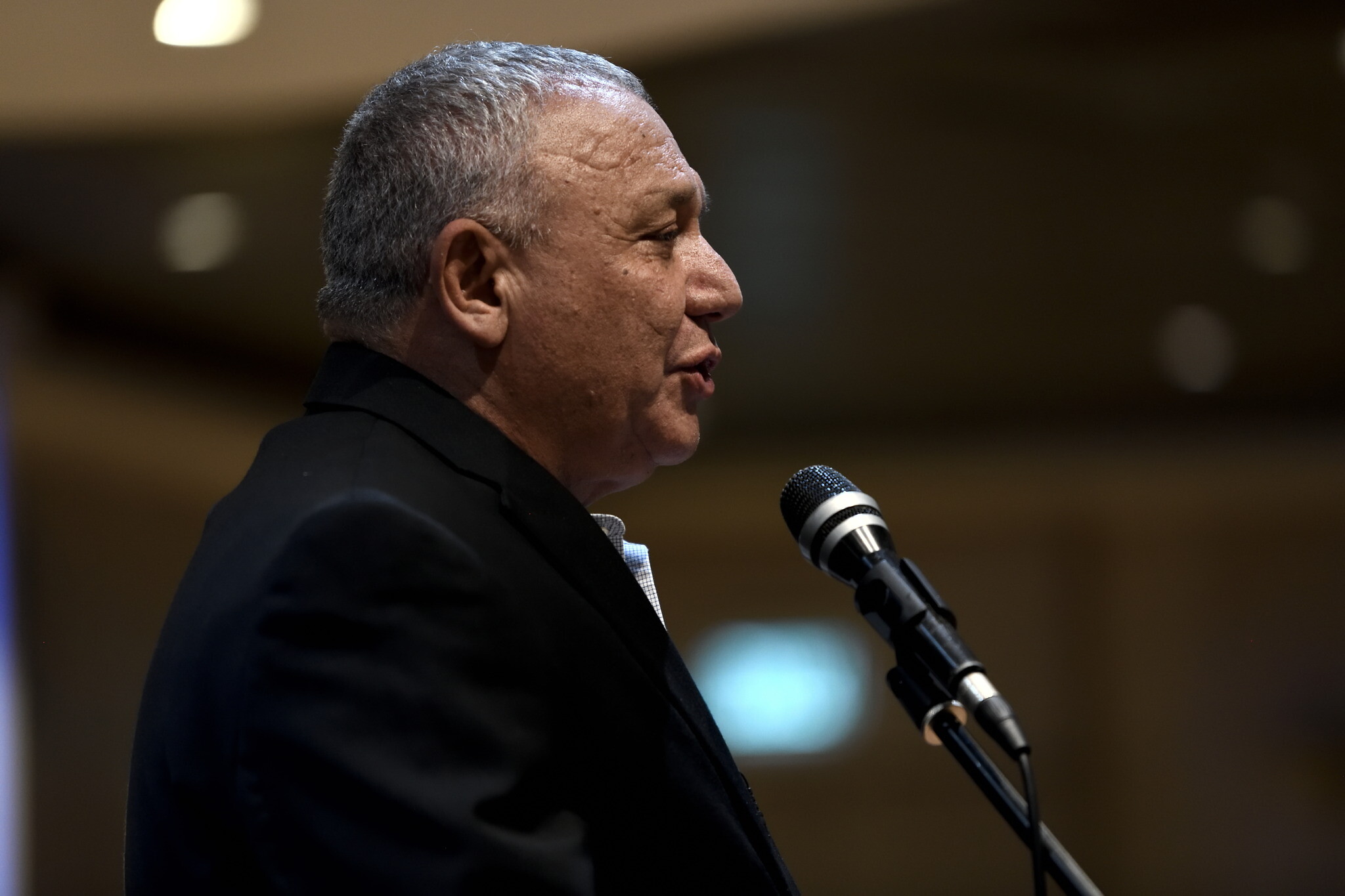
B’Yachad, in contrast to Yashar, appears increasingly willing to draw sharp lines — universal enlistment, no Haredi parties — that fit comfortably with the liberal-Zionist constituency on display Sunday, even if they leave less room to build the kind of sprawling center-right coalition Bennett once envisioned.
For activists like Omer, who joined B’Yachad’s youth movement shortly after Bennett and Lapid announced their alliance in March, the party was the only place where he felt “politically at home.”
“I was at an event in Jaffa and said, ‘wow, this is my political home, this is where I have to be — as a civic duty,’” said Omer, who was discharged from the IDF as an officer in February and is preparing to begin his undergraduate studies at Tel Aviv University.
But the youthful energy in the room may have been somewhat deceptive. Polling in recent years has repeatedly shown younger Jewish Israelis leaning further right than older generations, with many attracted in particular to National Security Minister Itamar Ben Gvir’s far-right Otzma Yehudit.
Omer was unconcerned by the disconnect, or by B’Yachad’s decline in the polls, saying neither reflected the enthusiasm he encounters in the field.
“I believe that our path is just, and polls may go up and down, but even if we aren’t first in the polls, we are currently the most significant political force on the map,” he said. “I unequivocally believe that B’Yachad will win and succeed.”
That confidence was easy to find in the crowded hall Sunday night. Whether it extends far enough beyond it is the harder question.









The Times of Israel Community.