

Sea of Galilee beaches stay open despite recent brain-eating amoeba infection
Health Ministry official says ‘everyone will decide what they want to do,’ with area expecting influx of visitors over holidays; no wave of hotel cancellations recorded after boy hospitalized
 Add ToI as a Preferred Source on Google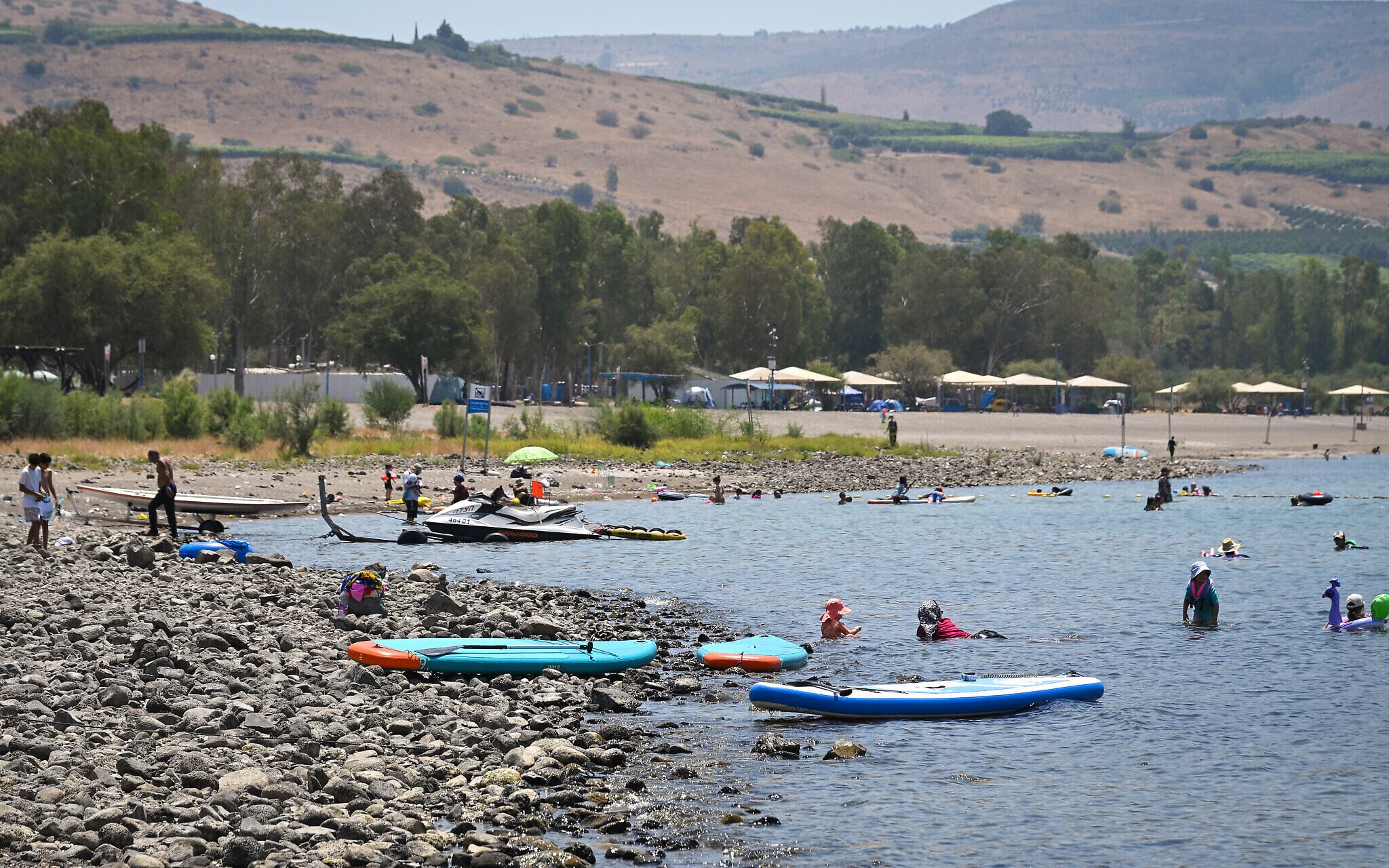
Beaches along Israel’s Sea of Galilee are being kept open, authorities said Monday, despite a child contracting an infection from a rare brain-eating amoeba after swimming in the water.
Prof. Siegal Sadetzki, head of the Public Health Division at the Health Ministry, told reporters in a briefing that the amoeba was very difficult to locate because of its low concentration in bodies of water, but that it was certainly present in the Sea of Galilee.
“From a professional standpoint, when speaking of swimmers, I’m not sure it is easy to cross the Sea of Galilee with a nose plug, and therefore there’s a simple and effective solution, which is to postpone a social and mass event to a more convenient date. As for individuals, everyone will decide what they want to do based on the existing risk,” she said.
Organizers of the annual Speedo Sea of Galilee Swim announced Monday that the event — previously scheduled for September 19 — would be pushed off until November 14 due to the incident.
Tiberias Mayor Yossi Nava, who is also head of the Kinneret Cities Association, said in a video statement that “the Sea of Galilee’s beaches are open to the general public; there is no directive to close the beaches.”
“Hotels, holiday villages, campsites and resorts are prepared and expecting thousands of guests during the Tishrei holidays [Jewish High Holidays], and we hope that vacationers will come and enjoy safe swimming in the Sea of Galilee,” he said, adding that the public should listen to instructions from the Health Ministry.
The 9-year-old child was hospitalized in serious condition with encephalitis and was sedated and intubated in the intensive care unit at Rambam Health Care Campus in Haifa, the Health Ministry said Sunday.
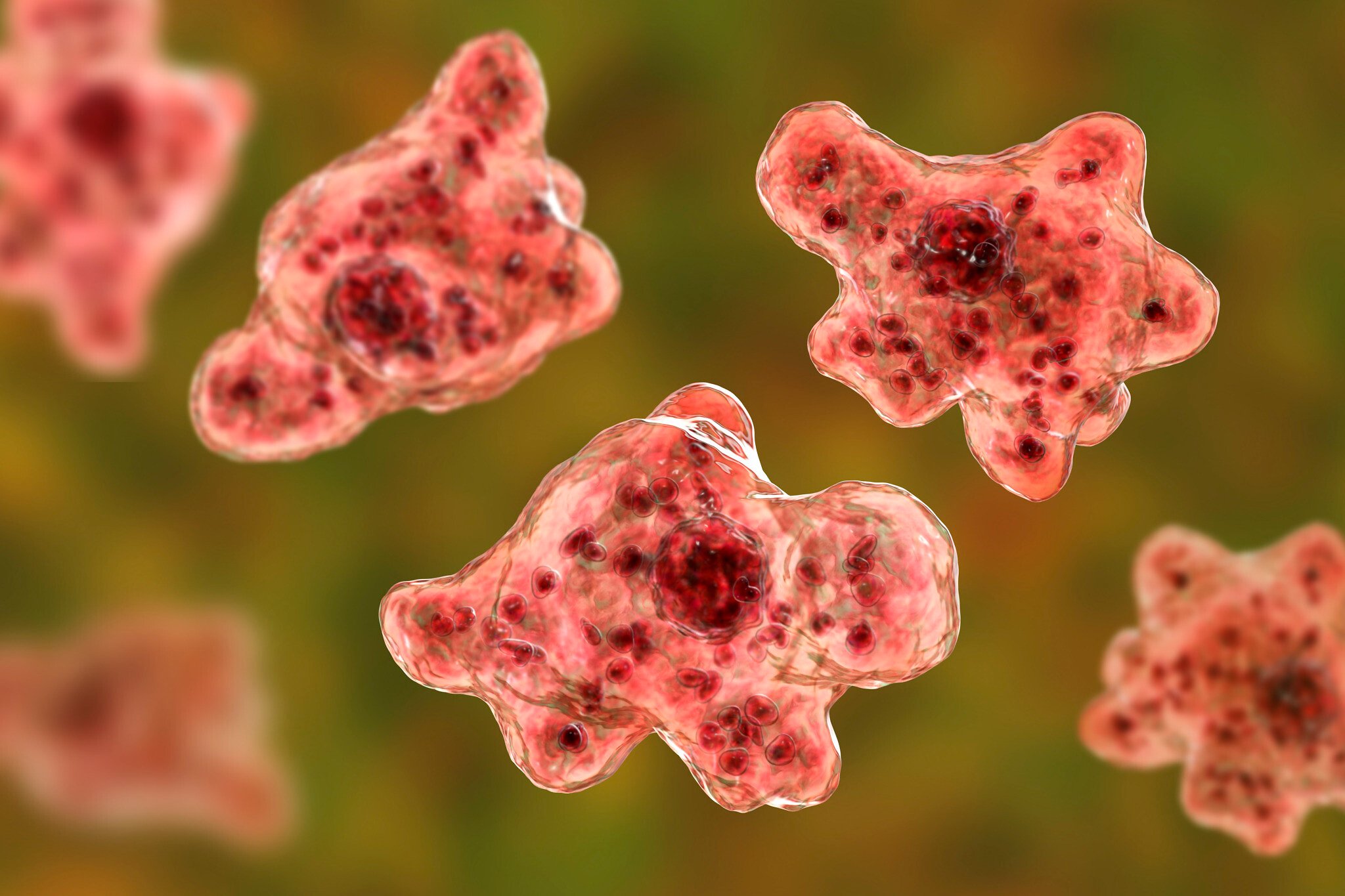
Tests sent to the ministry’s laboratory confirmed that the boy contracted the infection from Naegleria fowleri, the rare brain-eating amoeba. An initial investigation revealed he swam at Kursi Beach about a week before he was hospitalized.
To reduce risk when swimming in warm freshwater, health officials advised keeping water from entering the nose — especially when diving, jumping or putting one’s head underwater — by holding the nose shut or using nose clips. Swimmers should also avoid stirring up sediment in shallow waters, where concentrations of the amoeba can be higher, the ministry said.
Despite the alert, the Ynet news site reported that hotels in the area have not registered a wave of cancellations or messages of concern from expected guests who have booked rooms for the upcoming Jewish High Holidays.
The amoeba causes an extremely rare but highly fatal infection of the central nervous system. Fewer than 500 cases have been reported worldwide, including two in the US over the past year. Israel has seen three recorded cases in recent years.
Naegleria fowleri thrives in warm freshwater sources. Infection occurs exclusively when contaminated water enters through the nose, allowing the organism to travel to the brain. It cannot be contracted by drinking water, nor does it spread from person to person.










The Times of Israel Community.