

With his own hands, Yair Lapid dismantled his life’s work
Facing dismal polls and amid a desperate merger with Naftali Bennett, the centrist leader abruptly ended the careers of almost 20 sitting Yesh Atid lawmakers

 Add ToI as a Preferred Source on Google
Shalom Yerushalmi is the political analyst for Zman Israel, The Times of Israel’s Hebrew current affairs website
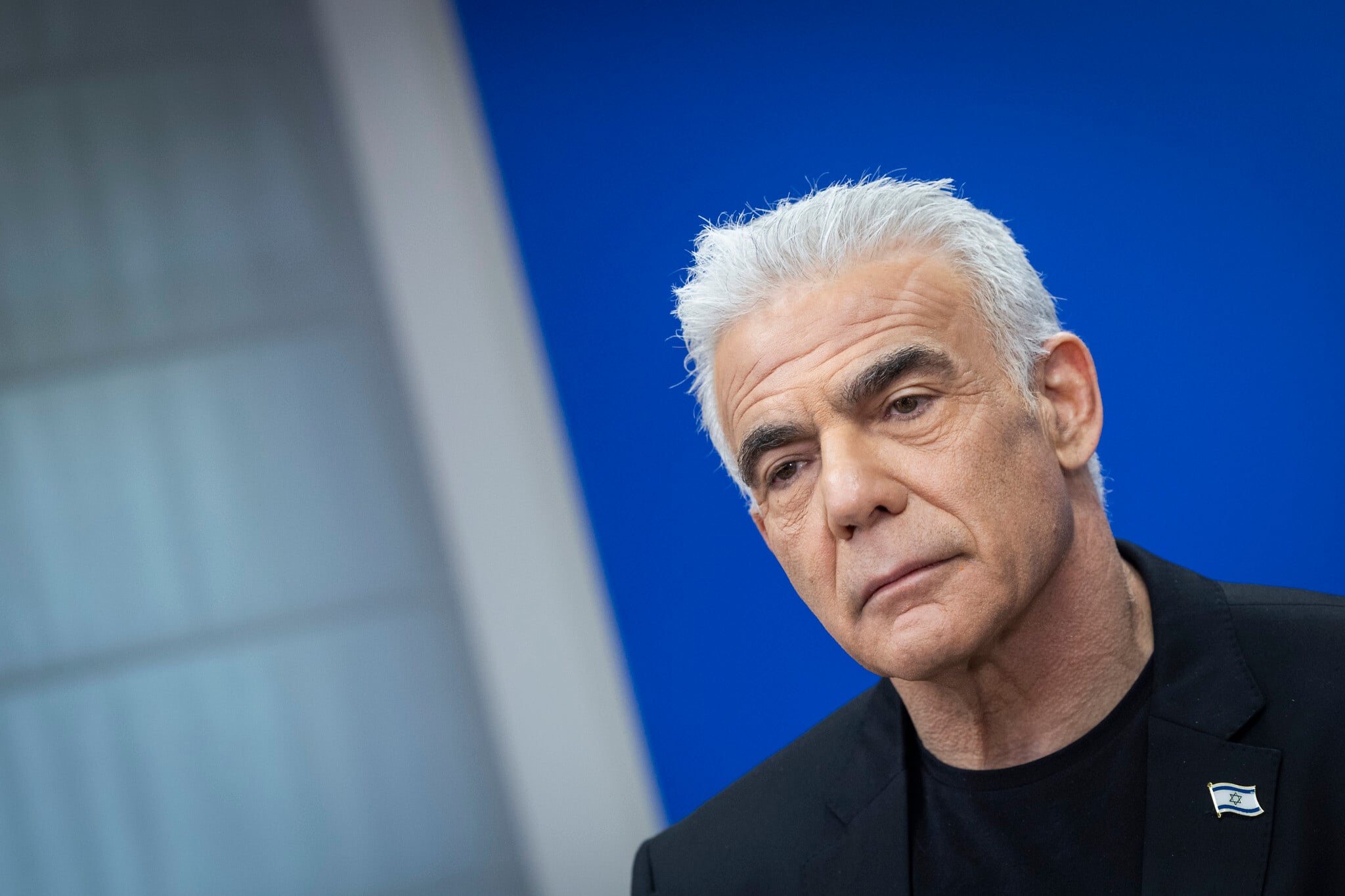
It is hard to overstate the political drama that consumed Yair Lapid this past weekend. Thirteen years after founding Yesh Atid — the centrist powerhouse that briefly propelled him to the premiership in 2022 — the opposition leader sat down with a sheet of paper and dismantled his life’s work with his own hands.
One by one, Lapid crossed out the names of sitting lawmakers. In a single stroke, he destroyed their political careers, severed their primary livelihoods, and obliterated the futures they had envisioned for themselves in the next Knesset.
A tally of the casualties reveals nearly 20 MKs who embarked on the just-completed grueling Knesset term at Lapid’s side, only to be purged from the slate and vanished as if they had never existed.
These were not backbench fillers; many were excellent parliamentarians who could easily have sustained the faction had it still been polling anywhere near the commanding 24 seats it secured in the November 2022 election.
The list of prominent names left on the cutting room floor includes Karine Elharrar, Mickey Levy, Michal Shir, Moshe Turpaz, Shelly Tal Meron, and Yorai Lahav-Hertzanu.
Some lawmakers read the writing on the wall in time and pivoted to other political adventures. Former police commander Yoav Segalovitz made the stunning leap to the slate of the Arab Islamist Ra’am party, while Elazar Stern defected to Gadi Eisenkot’s newly formed Yashar. Others simply went home, dejected and disappointed. Lapid’s predictable platitudes about amicable partings and the necessity of “generational change” sound perfectly reasonable — right up until they apply to you.

Regardless of the spin, this romanticized framing cannot conceal Yesh Atid’s slow-motion collapse over the past few years. Following its recent desperate merger with former prime minister Naftali Bennett, Lapid’s party has been reduced to a mere six or seven realistic slots on their joint B’Yachad (Together) slate.
According to MK Ram Ben Barak, who spoke with 103FM Radio on Sunday, Yesh Atid’s downward spiral began the moment Lapid refused to join an emergency unity government that contained far-right minister Itamar Ben Gvir following the outbreak of the war after the Hamas October 7 invasion and massacre. While other political autopsy reports exist, the grim result speaks for itself.
Lapid’s inability to topple Prime Minister Benjamin Netanyahu — even after a national trauma on the scale of October 7 — bred deep public disillusionment, gradually dragging Yesh Atid down toward the 3.25% electoral threshold.
To be fair, the brutal mechanics of Israeli politics underline the challenges Lapid faced. Through cunning maneuvering and classic kalanterism — the local term for unabashed political defection and horse-trading — Netanyahu managed to weld together an ironclad 68-seat coalition that was virtually impervious to opposition attacks. Yet public sentiment remains unforgiving: the opposition failed, and the opposition leader ultimately bears the blame.
Enter Bennett. In April, the former right-wing premier approached Lapid with an offer he could not refuse. At the time, Bennett was hailed as the great political savior, poised to return from his hiatus and heal a fractured nation. Polls were showering him with 20 seats or more, eclipsing Lapid’s meager six.
On paper, the merger was a masterstroke, reuniting the duo that had ousted Netanyahu in 2021. Bennett inherited Lapid’s formidable ground game and organizational infrastructure, alongside instant legitimacy as a prime ministerial candidate. Lapid, in turn, hitched his wagon to a vote magnet whose momentum was expected to propel their joint faction back to Yesh Atid’s former heights. Both men confidently predicted a sweeping electoral triumph that would swiftly reinstall Bennett in the Prime Minister’s Office.

Reality proved otherwise. In fact, the trajectory almost entirely reversed. The joint B’Yachad ticket steadily bled support, hitting a new low last Friday when a Maariv poll predicted just 12 seats. The humiliation deepened on Sunday night when a second poll, by Kan news, gave them a paltry 13 seats — and cruelly aired at the exact moment Bennett was standing on stage at the Expo Tel Aviv fairgrounds complex, ceremoniously unveiling the joint slate alongside Lapid and their fresh crop of candidates.
The autopsy of this polling disaster reveals a fatal double-bind: Bennett alienated his right-wing base by aligning with the centrist Lapid, while Lapid bled left-leaning voters to the Democrats (the new merger of Labor and Meretz) because of his association with the hawkish Bennett. Meanwhile, both men lost huge swaths of potential voters to former IDF chief Gadi Eisenkot, whose Yashar is riding a massive wave of popularity.
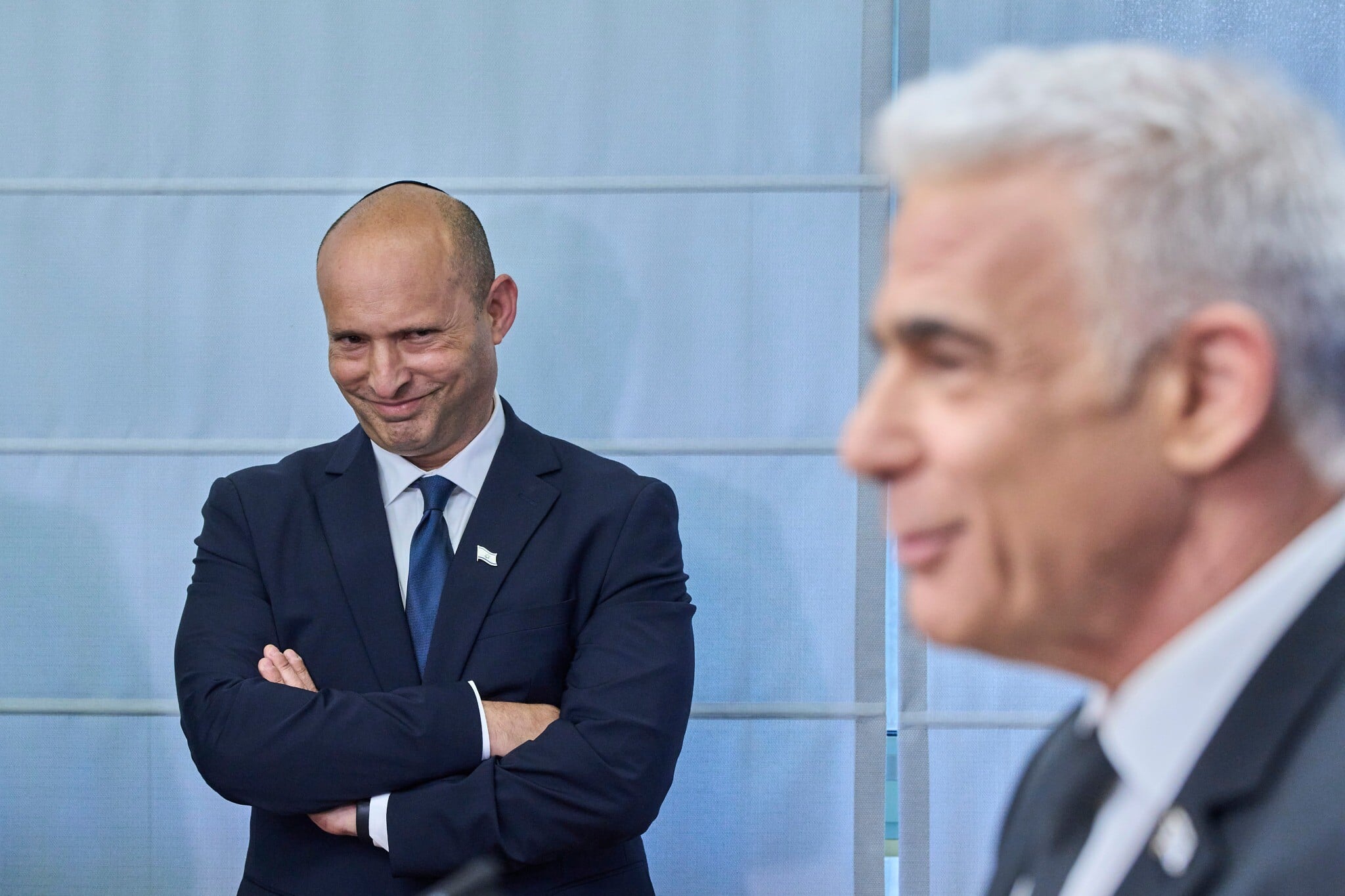
The cultural disconnect is palpable. One of the candidates told me on Sunday that immediately after the launch ceremony, he received a call from a friend who had recently become strictly Orthodox. “Bennett didn’t bring even one right-winger onto his slate. How do you expect me to support you?” the friend demanded.
Forced to ration his shrinking political capital, Lapid used his five realistic slots (spanning up to 15th place on the joint B’Yachad slate) to rescue four standout MKs who had proven their mettle over the last term: Merav Ben-Ari, Meirav Cohen, Ram Ben Barak, and Naor Shiri. He then awarded a slot to Maj. Gen. (res.) Noam Tibon. Had Bennett succeeded in recruiting popular centrist figures like Chili Tropper and Shira Shapira to B’Yachad — they went to Eisenkot’s Yashar instead — Lapid’s loyalists would have been pushed even further down the list into irrelevance.
It is also impossible to ignore the distinct scent of personal score-settling in Lapid’s placements. He gave the comfortable sixth spot to Tibon while banishing Ben Barak — a former deputy Mossad chief and ex-chairman of the powerful Knesset Foreign Affairs and Defense Committee — to the precarious 12th slot. Ben Barak previously challenged Lapid for the Yesh Atid leadership and has publicly vowed to do so again after the election. It is safe to assume Lapid has not forgotten.
Lapid did offer Ben Barak a consolation prize. If the center-left “change bloc” manages to form the next government and B’Yachad is allocated three cabinet portfolios, Ben Barak is guaranteed one of them. Should they end up in the opposition, Ben Barak will have first pick of a Knesset committee to chair — assuming, that is, he makes it into the Knesset.
Notably, Lapid adamantly refused to hold open primaries to select the party’s parliamentary candidates, despite having finally allowed a leadership primary earlier this year. His official excuse was that Yesh Atid lawmakers were a close-knit group of friends and he had no desire to pit them against one another on the eve of a crucial election. Instead, he took it upon himself to personally torpedo the political careers of 20 of his own MKs.

Meir Cohen, Mickey Levy, and Karine Elharrar — three of Yesh Atid’s most recognizable veteran faces — were conspicuously absent from Sunday’s slate launch at Expo Tel Aviv. Other ousted candidates also stayed away. No matter how it is spun, no one enjoys being told, “You were an excellent lawmaker, and it’s a real shame we won’t be seeing you in the Knesset cafeteria anymore.”
On the other side of the aisle, Bennett packed his half of the slate with relative unknowns. Among his more prominent picks are Keren Turner and Liran Avisar Ben-Horin, both of whom previously served as directors-general of government ministries. Nisan Zeevi of Kfar Giladi, a former parliamentary aide to Likud’s Avi Dichter, is also considered a strong asset due to the high-profile public campaign he has spearheaded on behalf of the displaced residents of Israel’s battered northern border.
For Bennett’s sake, one can only hope his vetting process was flawless this time around. He cannot afford to discover new iterations of Amichai Chikli or Idit Silman hiding in his ranks — the infamous defectors from his previous Yamina party whose political betrayals spectacularly toppled his and Lapid’s government in 2022.








The Times of Israel Community.