

Looking for new friends: 8 things to know for December 21
With the US pulling out of Syria, some in Israel try to look on the bright side, like the chances of forging new partnerships with Russia and some others
 Add ToI as a Preferred Source on Google
Joshua Davidovich is The Times of Israel's Deputy Editor
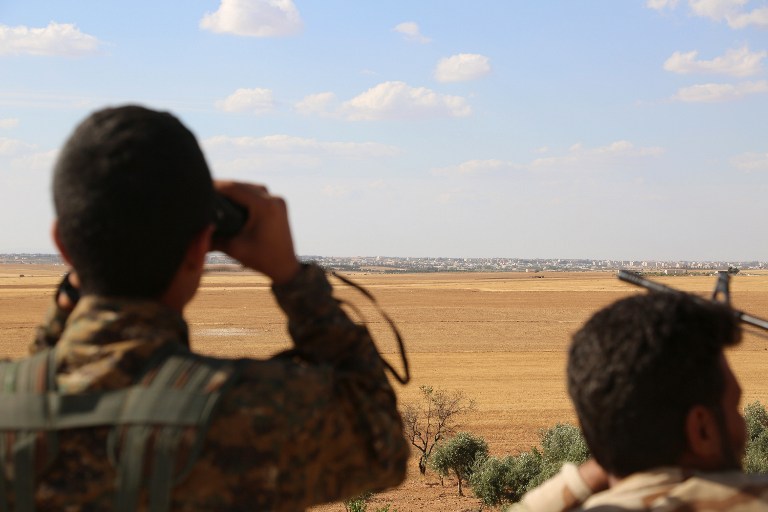
1. An Israeli failure: Though their concerns are but a mere shadow of the much more immediate danger facing Syria’s Kurds, Israelis are continuing to fume/act angsty about the US decision to withdraw from Syria.
- Official Israel has kept from directly criticizing the president’s decision, with Prime Minister Benjamin Netanyahu saying only that Israel would redouble its efforts against Iran.
- Nonetheless, the lead editorial in Haaretz calls the move a “slap in the face to Netanyahu.”
- “The withdrawal of American forces from Syria sends a clear message to Israel, as well as to other US allies in the region: Work things out for yourselves, because we’re looking out only for our own direct interests. Netanyahu can continue telling Israelis that today’s Washington is inhabited by a friendly president, unlike his predecessor. But in practice, declarations of support that aren’t backed by actions on the ground are worthless,” the editorial reads.
- Yedioth Ahronoth’s Nahum Barnea notes that when it comes to Israel there are two kinds of presidents, those who are involved and will work to push away Israel’s enemies, but will also curb its annexationist tendencies; and isolationists like Trump who will let Israel do what it wants in the Palestinian territories, but will weaken its influence in the region.
- Though he notes Netanyahu broke bread with the second kind, he doesn’t think it’s fair to blame him for the American withdrawal: “If he sinned, he sinned by being overly obsequious to Trump and Putin and in being too self-assured of his ability to manage them. The rhetoric was the problem, not the message.”
2. A new alliance: But was the problem just Netanyahu’s attitude toward Trump, or did he also make strategic blunders?
- Israel’s Channel 10 news and Axios reports that there was a deal on the table for America to pull out of Syria in exchange for Russia getting Iran to do the same, as well as the lifting of US sanctions on Iran.
- But when presented with the deal, Netanyahu rejected it, citing the lifting of sanctions, according to the report.
- “For Netanyahu, stopping the Iranian nuclear program was above everything else, and this is why he refused to show any flexibility on the issue of US sanctions,” an Israeli official is quoted as telling reporter Barak Ravid.
- In the end, Israel wound up with the American pullout and no deal for Iranian withdrawal. But Israel Hayom reports that it’s okay, because Israel signed a different deal with Russia, Jordan and Saudi Arabia to curb the Iranians, which is why Trump feels comfortable pulling his troops out.
- The paper, citing Jordanian sources, says Russia agreed to “curb” Iran and Hezbollah, though what that means is not clear. The report also notes that “no less importantly, Russia will continue to give Israel freedom of action against Hezbollah and Iranian targets and against ‘game changing’ weapons in Syria.”
- With the paper being openly pro-Netanyahu and pro-Trump, it has every reason to want to try and soften the blow of the decision, but if true, it would confirm a deal that has long been rumored to have been in the works.
3. Trust the Kremlin? Haaretz’s Amos Harel calls any Russian promises regarding Syria “empty.” “The immediate takeaway is that pushing out the Iranians and Shiite militias is not close to taking place,” he writes.
Lina Khatib, a Middle East expert at Chatham House in London, tells The New York Times such an alliance is possible, but also casts doubt on its coming together so quickly.
“It seems to me we’re seeing the rise of a new axis in the Middle East, aligning Russia, Israel and countries like Saudi Arabia against Iran,” she is quoted saying. “But this will take a while to play out. And it does not remove the immediate danger that is now going to increase when it comes to Israel’s own security.”
4. Caught between frenemies: The Syria pullout appears to be the first major point of contention between Israel and the US, and has put the pro-Trump, pro-Netanyahu crowd in a bind.
- AIPAC, which is among the most prominent examples, released a statement Thursday that didn’t quite criticize Trump, but still attempted to telegraph concern: “The administration should work with our regional allies and take steps to counter the mounting aggression of Iran and its terrorist proxy Hezbollah. Iran must not be allowed to have a permanent military presence in Syria, which is counter to US interests and threatens the peace and security of the region.”
- JTA’s Ron Kampeas writes in his weekly The Tell political roundup (you should subscribe, by the way) that AIPAC “has been itching for a pretext to make nice with Democrats, after years of relations strained by its contentious relationship with Obama on Iran policy. A pro-Israel/Democratic alliance to push back against Trump’s Syria decision would be perfect in that regard — but AIPAC does little without the Israeli government’s green light, and Trump and his aides very much know this.”
- In Israel Hayom, which finds itself in the same boat, columnist Avraham Ben Tzvi tries to look on the bright side, dreaming up the possibility that the US could take steps to “compensate and strengthen trust, like giving backing to the proposal now in the senate to recognize Israeli sovereignty over the Golan Heights.
- Also looking on the bright side, Yedioth’s Alex Fishman predicts that Russia may join Israel in trying to push out Iran, which he says may strengthen ties between Moscow and Jerusalem.
5. Muddied border: Even if the Syria problem were solved, Israel is still facing the possibility of conflict in Lebanon with Hezbollah, especially now that an operation to blow up the tunnels has begun.
- Israel Hayom writes that “tensions have reached a peak,” with the explosive operation.
- Touring the muddy, rain-soaked border with the army, ToI’s Judah Ari Gross notes that the IDF is also not planning on leaving the area anytime soon, though initially Israeli officials had said the operation was likely to take weeks.
- “We are not restricted by time. It can take days, weeks, months. We will find all of them,” an officer says.
- An IDF official tells The Times of Israel that the inclement weather that has hit Israel over the past two and a half weeks has slowed the search effort.
6. Settlement split: A day after ToI reported that one settler leader was accusing his colleagues of “dancing on the blood of the murdered” by taking advantage of terror attacks to demand increased building and security measures, it seems the rift may be even wider.
- Yedioth reports that a rally Sunday held outside the Prime Minister’s Office in which some of these calls were made was organized by a “forum” of four local West Bank council leaders, and not the Yesha council, an umbrella group that often represents the movement.
- According to the report, the forum seems to be attempting to muscle out Yesha and its de facto leader emeritus Zeev Hever, in what may herald a shift in the internal power politics of the settlements.
7. Not the real Netanyahu: That rally also saw ministers protesting their own government, which Haaretz’s Yossi Verter notes is just one way in which ministers, Netanyahu included, are dancing to the tune of whoever is furthest to the right.
- Verter quotes opposition chief Tzipi Livni saying that she does not actually think Netanyahu wants any of the outpost legalizations or other hard-line measures, noting the time she spent with him as justice minister in his third government.
- “Bibi will not go out and start a war. In that respect, he is responsible. But he is incapable of being less right-wing than Jewish Home. And they are pushing to build and to authorize the unlawful, and to evict families of terrorists, and he caves in to them. I’ll say it again, it isn’t him. I’ve spent hundreds of hours with him – his actual positions are different,” she’s quoted saying.
8. Out of Tehran: The story of the escape of a group of American diplomats from Iran following the 1979 revolution was famously recounted in the movie Argo.
- But less well-known is the story of the 34 Israelis who were also stranded in the city as the ayatollahs took over, which Yedioth’s Ronen Bergman looks back on. (A story by the paper on the same events, in less detail, was published in 2014.)
- According to Bergman, the group included people from the Mossad, Shin Bet, IDF, Foreign Ministry and even a Knesset member.
- While not as dramatic as the Canadian caper, Bergman tells of how the group, after days of hiding out at their homes, planned to go to the Hilton in the center of Tehran and catch a bus to the airport, where they had seats reserved on a flight out. But upon getting to the hotel, revolutionary guards detained them, and the El Al manager in the country was taken so he could sign paperwork to “donate” his car to the revolution.
- When a deputy of Khomenei came to find them in the lobby, they thought they would be grabbed and killed, but instead he just grumbled that they needed to leave right away. So they hopped on the bus, leaving the El Al manager behind.
- The El Al manager managed to catch the last bus to the airport after his own adventures, but was sure he would miss his plane with the airport full of fleeing diplomats and others, until an airport official he knew from his work spotted him in a long line and took him to his plane, leaving him with some telling words.
- “We’re sorry you have to leave this way,” he recalls the airport official telling him, “but we’re sure you’ll be back one day.”





The Times of Israel Community.