 Add ToI as a Preferred Source on Google
METULLA — While diplomats in New York discussed the attack tunnels dug into Israel from Lebanon on Wednesday, Israeli soldiers on the border were preparing to seal them shut.
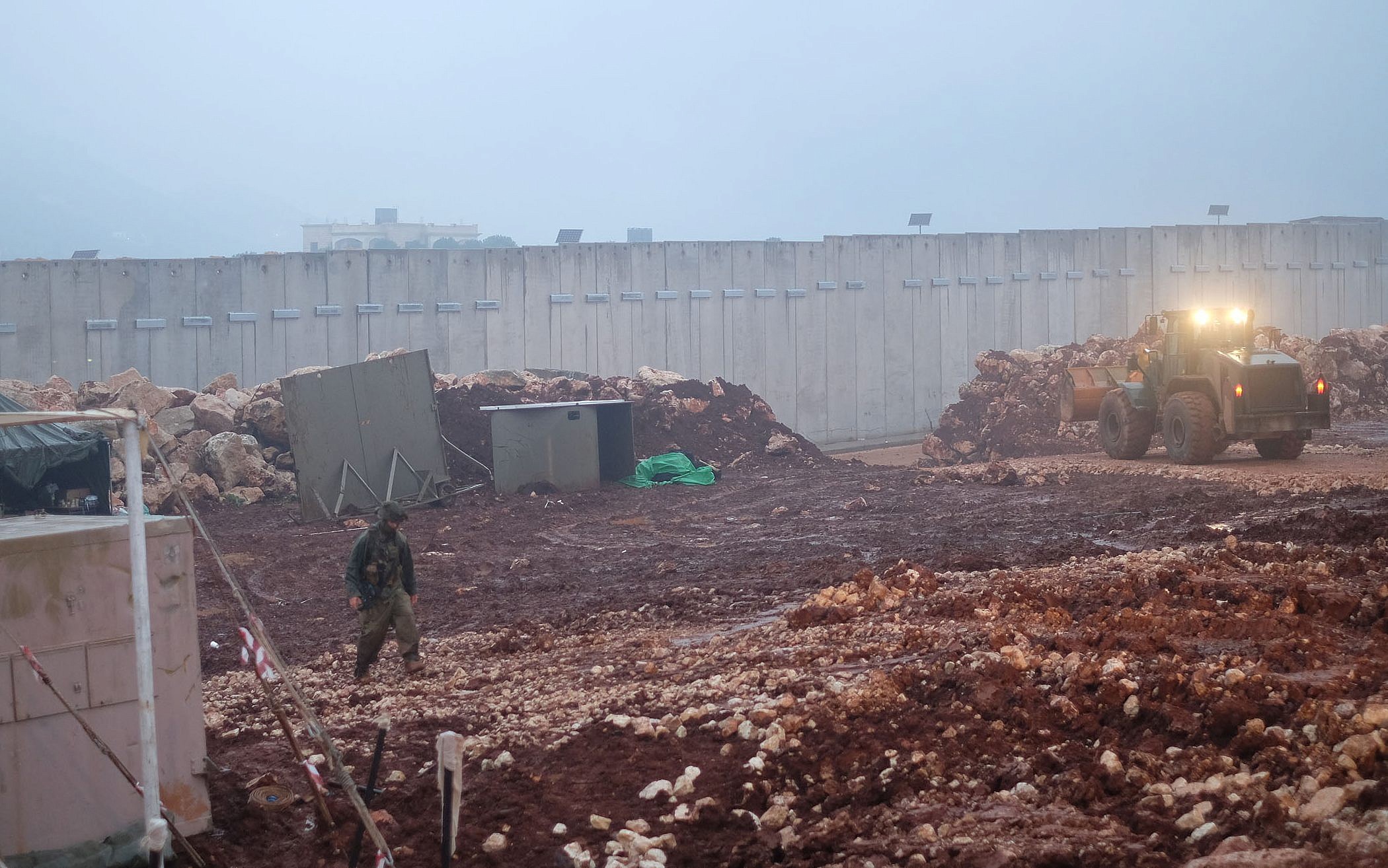
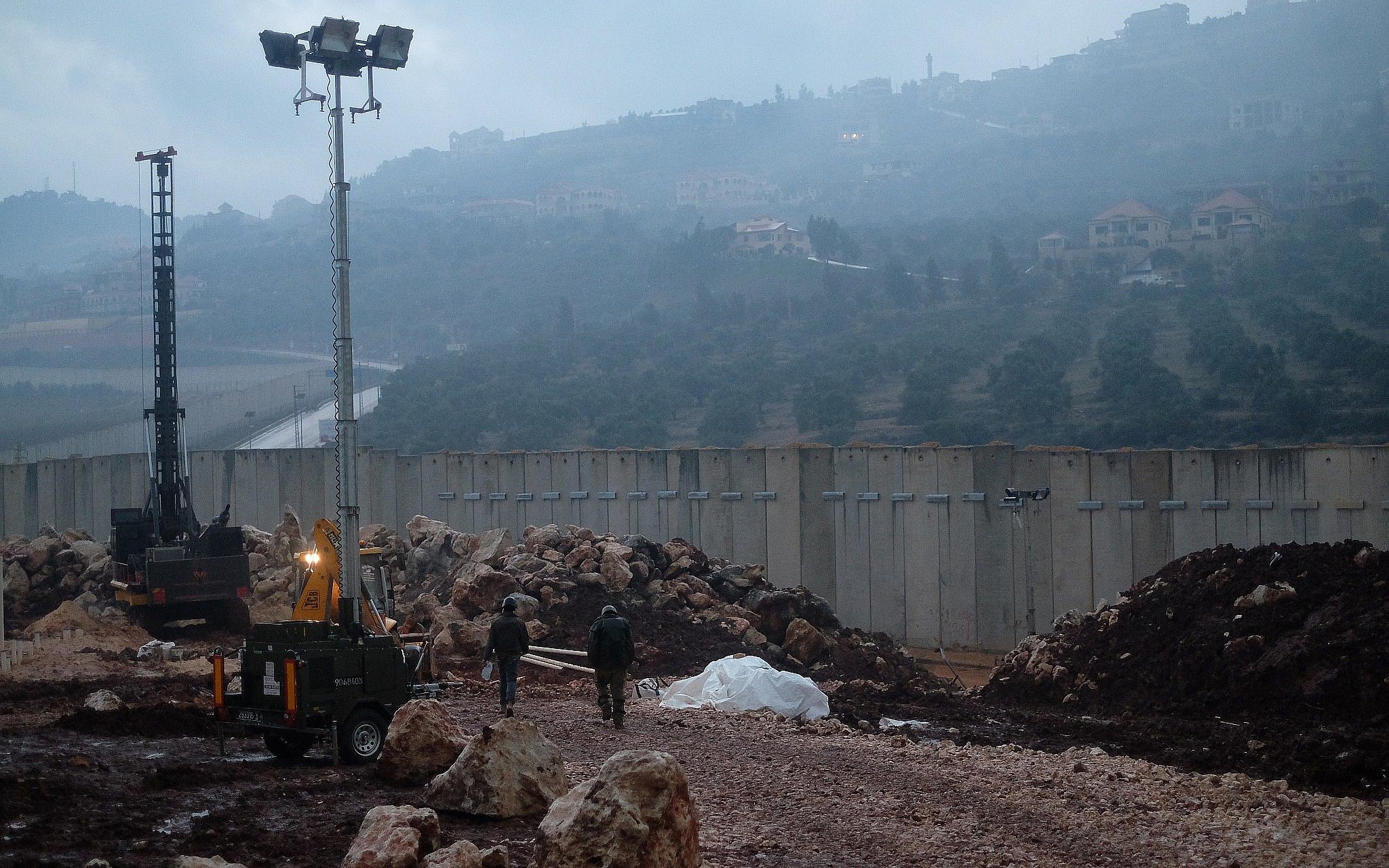
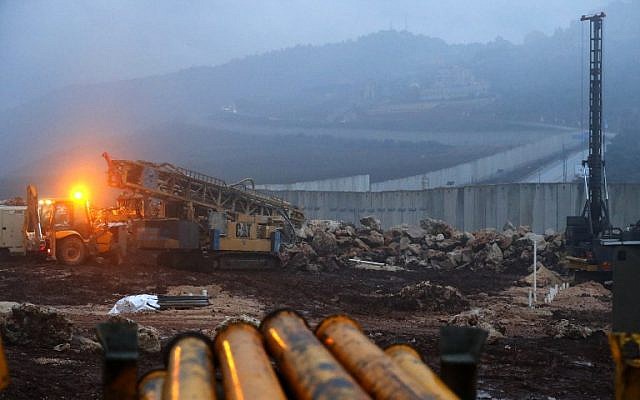
Their boots and pants caked with rust-colored mud, combat engineers and civilian construction personnel walked around the site of the first tunnel the army said it found inside Israel, in an apple orchard south of the town of Metulla, boring into the earth with massive construction machines and pumping a concrete slurry into the ground.
On December 4, the Israel Defense Forces announced it was launching Operation Northern Shield to find and destroy tunnels that the military says the Iran-backed Hezbollah terror group dug into northern Israel from southern Lebanon.
So far, the army has said it has fully exposed four, but knows of the existence of several more. The military censor bars publication of the exact numbers.
But for the past two and a half weeks, the army’s efforts have not only been focused on locating the tunnels — something that could have been done without the fanfare that accompanied Northern Shield — but also on garnering foreign support for its operation, along with denunciations for Hezbollah’s actions and, to a lesser extent, the government of Lebanon’s inaction.
To those ends, the military has waged a public relations and diplomatic campaign, regularly briefing journalists and organizing tours of the border for ambassadors and foreign attaches.
While it is unlikely these efforts will result in direct intervention by the United Nations or other foreign groups, they can provide international legitimacy should the situation along the border deteriorate into all-out conflict.
Israeli officials say they do not believe Hezbollah is interested in war at this time, but the close proximity at which the army is operating raises the potential for a minor misunderstanding or accident to have outsize ramifications.
Indeed, one person visiting the tunnel noted that street signs within Lebanon were legible from the area where the IDF soldiers were operating.
On Thursday, the IDF confirmed it had begun sealing shut some of the four passages it has uncovered so far, while remaining mum about the exact methods it was employing.
The military refuses to say exactly how many tunnels it believes Hezbollah dug into Israel, presumably to keep the Iran-backed terrorist army guessing as to how much the IDF knows about the subterranean plot.
According to the military, the tunnels were meant to be used as part of an opening gambit by Hezbollah in a future war against the Jewish state. To capture portions of the Galilee, dozens to hundreds of the group’s fighters were to be sent through the tunnels, as masses of other terrorist operatives swarmed the border aboveground and a fusillade of rockets and mortar shells blanketed the areas, preventing Israeli reinforcements from reaching and liberating them.
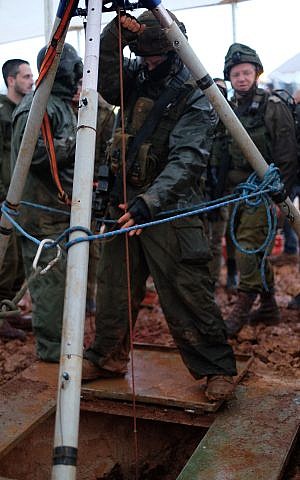
“It was their element of surprise,” a military official told journalists next to the 20-some-meter hole in the ground leading to the Metulla tunnel on Wednesday.
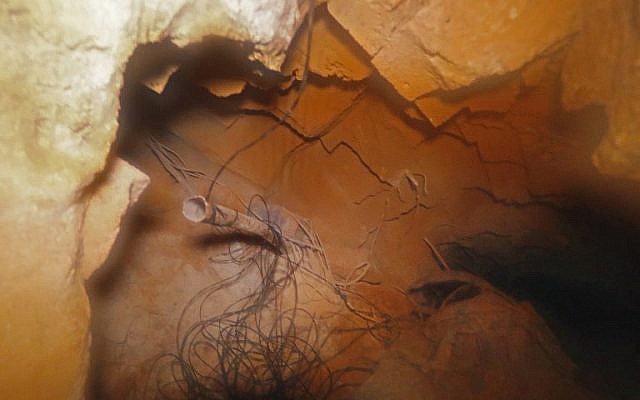
The tunnel found south of Metulla was some 200 meters (660 feet) long and extended 40 meters (130 feet) into Israeli territory at an average depth of 25 meters (80 feet).
It’s tall enough for grown men in full combat gear to walk through without having to crouch. Other tunnels appeared to be larger, including one that the military reportedly believed was going to be used to bring motorbikes and larger weapons into Israel for the opening salvo.
The officer, who spoke on condition of anonymity, said finding and eventually destroying these tunnels has set back the terror group’s plans by several years.
“Their attack plans have been ruined, and it means [those plots] are less threatening than they were before,” he said.
Initially, Israeli officials said the operation was likely to take weeks. But on Wednesday, the officer said it was an open-ended effort.
“We are not restricted by time. It can take days, weeks, months. We will find all of them,” the officer said.
An IDF official told The Times of Israel that the inclement weather that has hit Israel over the past two and a half weeks has slowed the search effort.
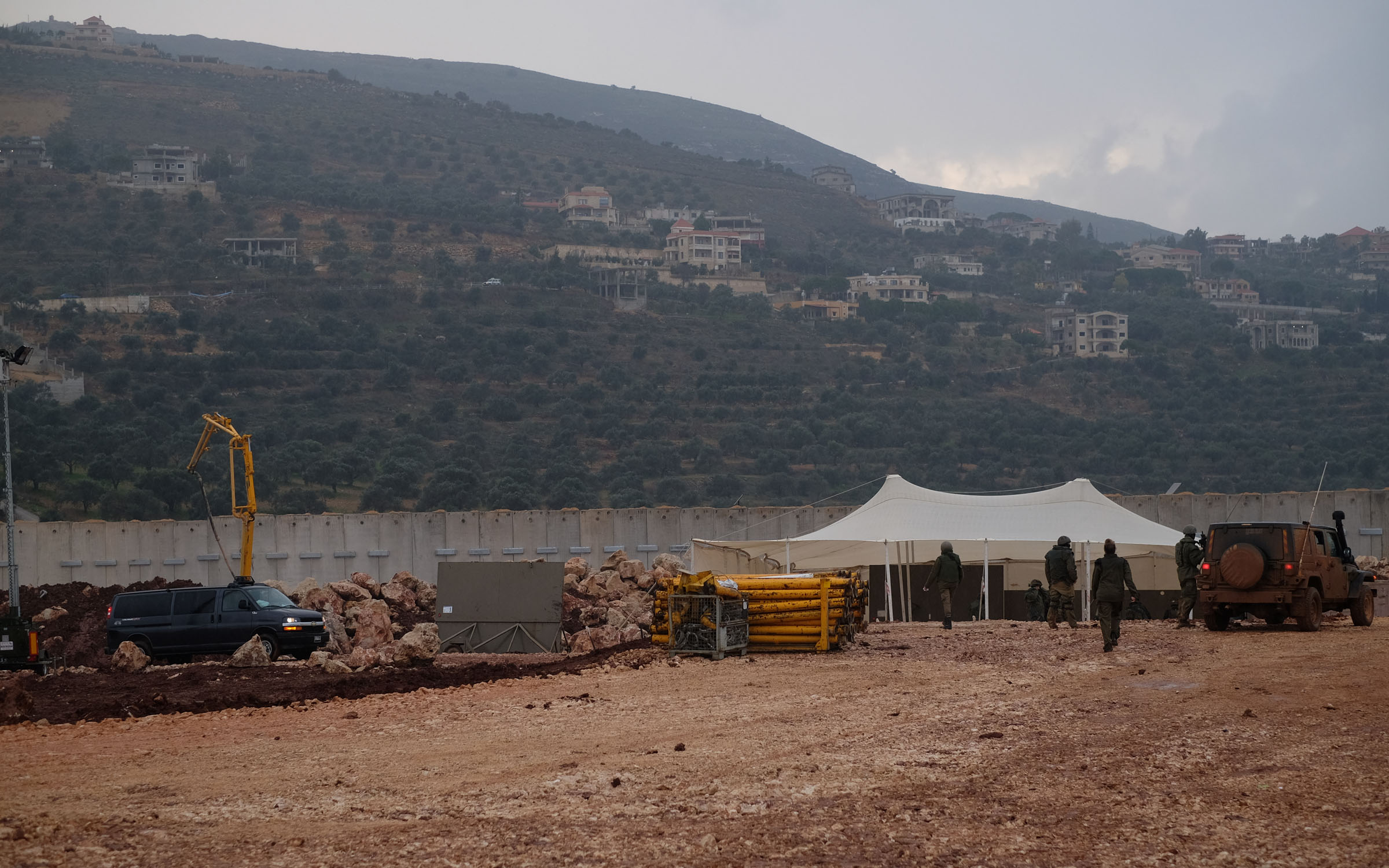
The rain has churned the rocky soil of northern Israel into a thick mud, and the accompanying mountain fog cuts visibility to nil, making it more difficult to surveil the area and guard the engineering efforts along the border.
The army has had suspicions of the tunnels’ existence for over four years and known for certain for over two, but decided to keep that fact a secret — even intentionally deceiving the public to do so — until the launch of Northern Shield this month.
But since the start of the tunnel-busting operation, Israel — primarily through the IDF Spokesperson’s Unit — has gone from being silent to leading a full-court press campaign, selling the media and through it the public, both domestic and international, on the severity of Hezbollah’s violations both of Israel’s sovereignty and of the United Nations Security Council resolution that ended the 2006 Second Lebanon War, Resolution 1701.
Northern Shield began with urgent, early-morning briefings to journalists about the launch of the operation and its goals. This was followed, some 14 hours later, with a prime-time press conference by Prime Minister Benjamin Netanyahu, IDF Chief of Staff Gadi Eisenkot and IDF Spokesperson Ronen Manelis.
A day before Wednesday’s UN Security Council meeting in New York, the military released an English-language video on social media of a British-Israeli officer in the IDF Spokesperson’s Unit calling for the powers of the UN peacekeeping force in Lebanon, UNIFIL, to be expanded.
This may not be what you expect to hear, but it’s the truth and it needs to be told. pic.twitter.com/pDvaa9GL7b
— Israel Defense Forces (@IDF) December 18, 2018
Two days before the council meeting on the tunnels, the military gave CNN exclusive access to film inside one of the passages, giving the operation both immediate international coverage from the US-based outlet and domestic attention as Israeli outlets broadcast CNN’s footage.
And this reporter and over a dozen others were brought to the Metulla tunnel in an armored bus by the military’s spokesperson unit on Wednesday afternoon with just enough time to film and photograph it for those videos and pictures to be published alongside articles about the Security Council discussion.
The State of Israel tried to get the Security Council to take action against Hezbollah in light of the tunnels. That effort failed, but members of the body publicly denounced the terror group for digging the tunnels and affirmed Israel’s right to defend itself.

The Times of Israel Community.