

Merkel wins party backing for coalition, while vowing renewal
German chancellor, 63, to be oldest member of new cabinet, which is ‘future oriented’ and includes critics from right
 Add ToI as a Preferred Source on Google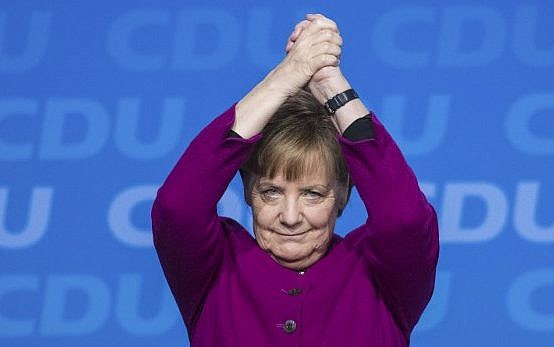
BERLIN, Germany (AFP) — Chancellor Angela Merkel on Monday overwhelmingly won the blessing of her conservative party for a hard-fought coalition deal, a relief for the veteran leader who has been weakened by party infighting over five months of political impasse in Germany.
At a congress of Merkel’s Christian Democratic Union (CDU), the party she has led for nearly 18 years, delegates voted in favor of a government pact hammered out with the center-left Social Democrats (SPD).
The strong approval from the CDU gives a boost to the chancellor, who suffered a major setback when the party recorded its worst score since the 1950s in September’s general election.
The congress was also about the party’s future, with Merkel moving to quell a right-wing rebellion as she vowed to “set the party on course towards… renewal.”
In a clear sign that attention had turned to the question of succession, the biggest applause of the day was also reserved for the conservatives’ newly appointed general secretary, Annegret Kramp-Karrenbauer.
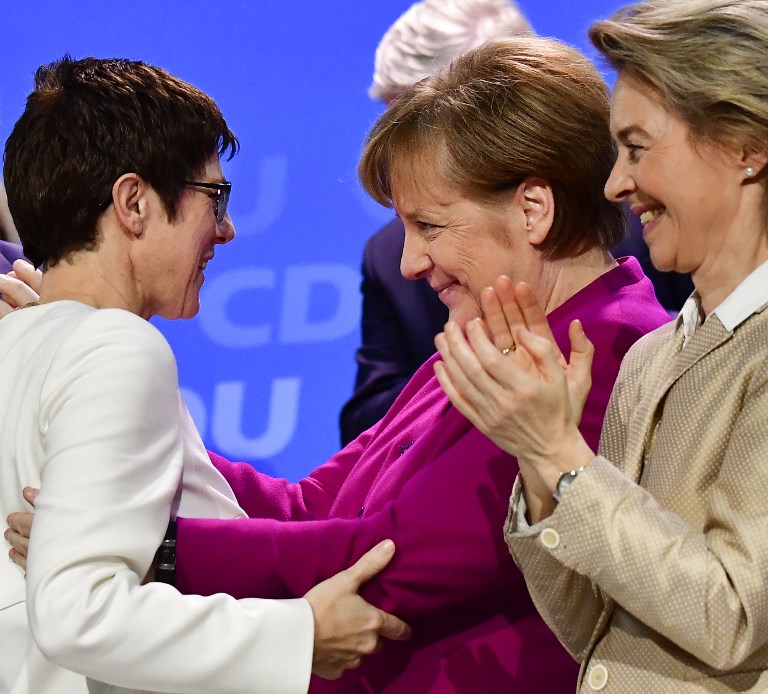
Dubbed AKK or “mini-Merkel” by German media, the premier of Germany’s tiny Saarland state was tapped by Merkel last week to take over as CDU general secretary, fueling speculation the veteran chancellor is lining up her successor.
A staunch Catholic who, despite her centrist stance, has also advocated a tougher line on migration, Kramp-Karrenbauer was seen as a wise choice to soothe internal discontent.
High price
Merkel, once the seemingly invincible leader of her party and the nation, has looked severely weakened in recent months, given her protracted struggle to put together a viable coalition for her fourth and likely final term.
She had to pay a high price to coax the reluctant SPD back into another loveless “grand coalition,” the alliance which has ruled Germany for eight of her 12 years in power.
The deal included the CDU ceding control to the Social Democrats of the powerful finance ministry, seen by conservatives as a guarantor of budgetary rigor in Germany and the eurozone.
Opponents of Merkel’s liberal refugee policy have grown more outspoken as the country’s major parties face pressure from the far-right AfD party, which has railed against a mass influx of more than one million asylum seekers since 2015.
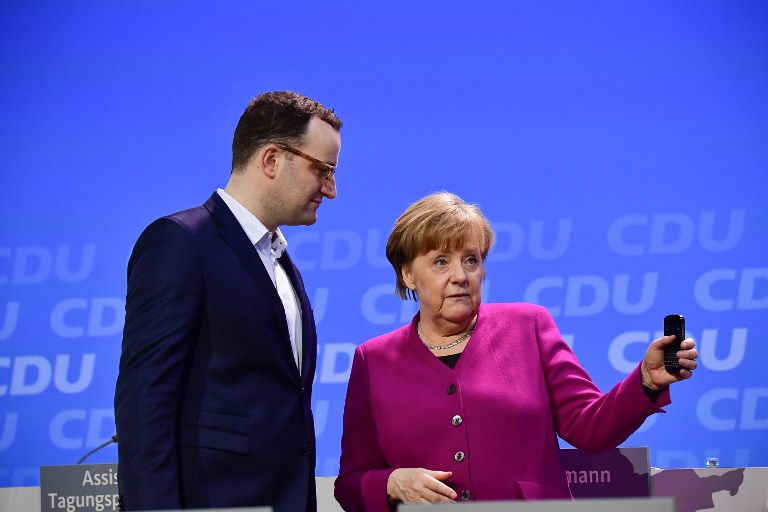
To tamp down the rumblings, Merkel moved on Sunday to co-opt one of her most outspoken CDU critics, Jens Spahn, by bringing him into her next cabinet as health minister.
Spahn, 37, a former deputy to hardliner Wolfgang Schaeuble at the finance ministry, has repeatedly slammed Merkel’s centrist policies, particularly on immigration.
He has also advocated a sharp conservative shift in a bid to woo back voters from the AfD, which garnered nearly 13 percent in the September election.
Announcing the new line-up, Merkel called Spahn “a representative of the younger generation” who would play a constructive role.
“People sometimes make critical comments — Jens Spahn is not the only one and that’s OK,” she said.
“Nevertheless we have the task to do something good for Germany and that’s what he wants to do, just like all the other cabinet members.”
‘Future-oriented’
Political analyst Timo Lochocki said the cabinet choice illustrated the difficult position in which Merkel finds herself within her party.
“Clearly, she felt that she had to make concessions to the conservative wing to remain able to take action,” he said.
Merkel filled the remaining CDU ministries with loyalists, keeping Ursula von der Leyen at the Defense Ministry, putting close ally Peter Altmaier on the economic affairs brief and placing Julia Kloeckner in the agriculture job.
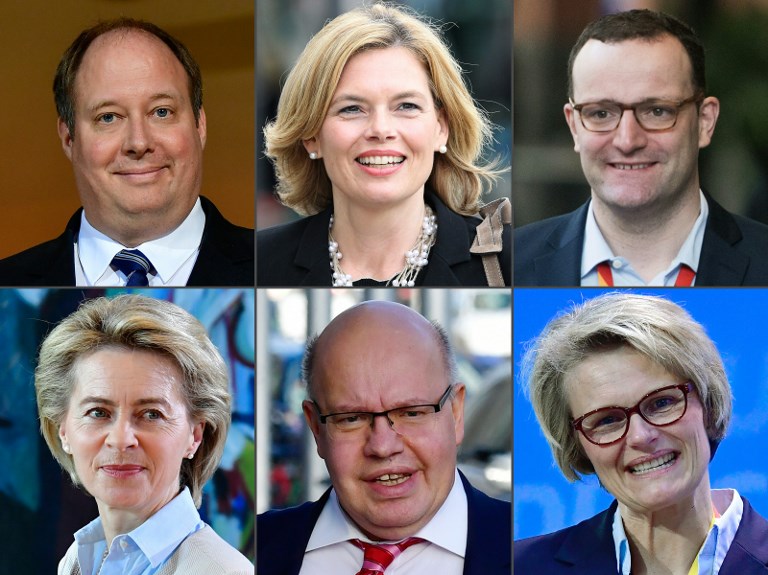
Two relatively obscure CDU politicians, Anja Karliczek and Helge Braun, are to take the education and chief-of-staff briefs, respectively, said Merkel, noting that at 63 she will be the oldest member of the government.
The cabinet picks “are future-oriented — they bring together experience with new faces in a good mix,” Merkel said, while admitting it had required some “painful” choices.
Carsten Linnemann, a Merkel sceptic in the party, welcomed the personnel choices but said they must go along with a return to conservatism.
“We need to set new priorities and show a clear profile, so the CDU is recognizable again and can hold its own in a grand coalition,” he told the Funke Mediengruppe newspaper group.
The SPD still needs to approve the coalition arrangement, with the results of a crunch membership ballot to be announced on Sunday, March 4.
If its members vote “no,” Germany faces more political paralysis and potentially snap elections that would threaten to end Merkel’s long tenure.




The Times of Israel Community.