

Ministers told virus transmission rate climbing, public resisting testing
Gamzu says 30,000 daily tests needed for good overview; worries about increased morbidity in Arab communities, rise in number of young children diagnosed since daycares opened
 Add ToI as a Preferred Source on Google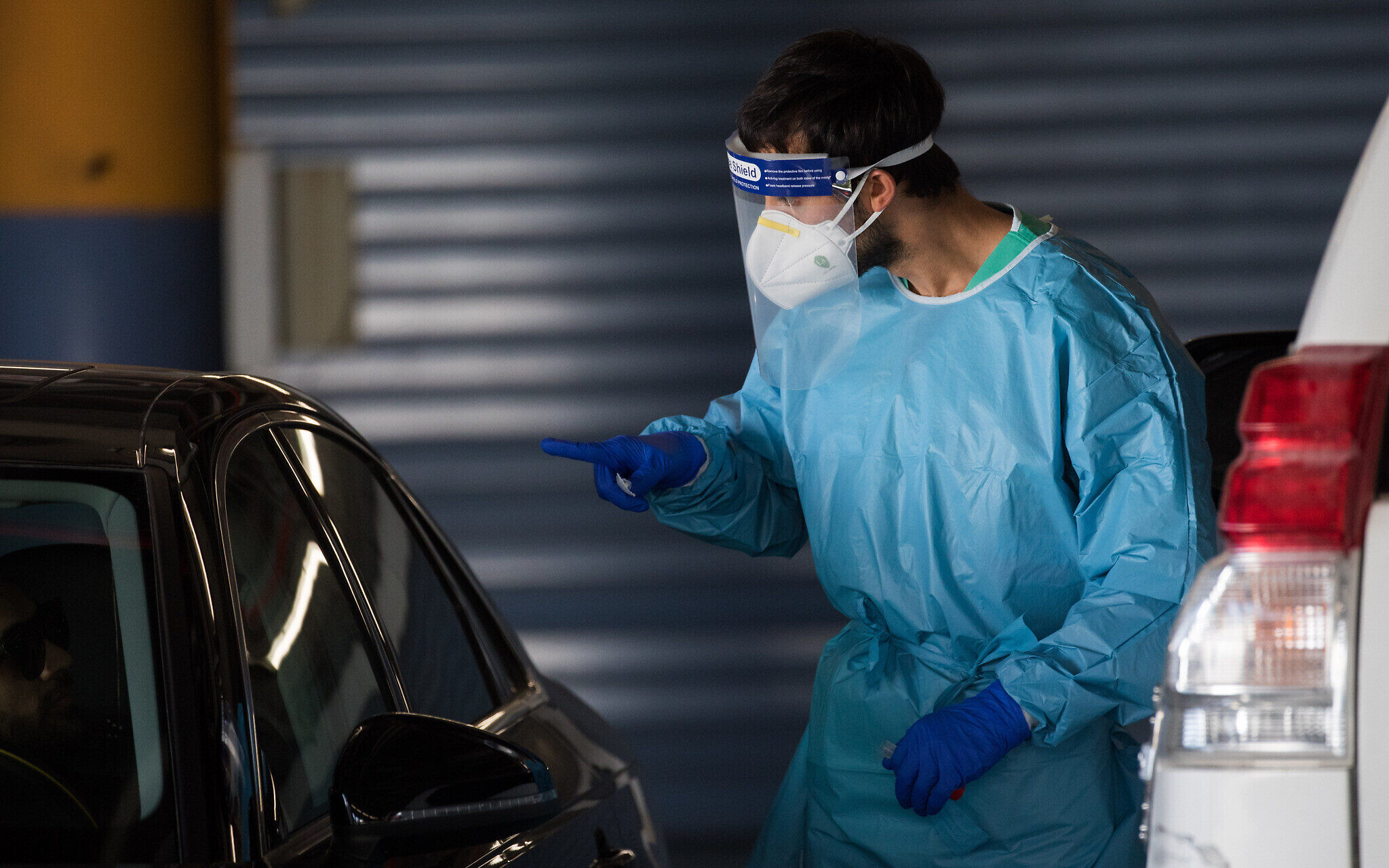
The coronavirus cabinet was presented with figures on Monday that showed Israel’s basic reproduction number, or the rate of new cases stemming from each coronavirus infection, stood at 0.8, the level at which health officials have previously said they would recommend scaling back some of the steps taken to ease the lockdown.
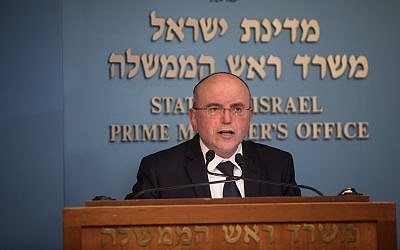
According to leaks from the meeting to Hebrew-language media, Meir Ben-Shabbat, head of the National Security Council, reportedly confirmed the task force’s findings, saying that the R-number for transmission was “at least” 0.8 and that although the number of new cases was not yet trending upwards, the rate of decrease had slowed.
“The rate of decline is slowing down. The figure of the transmission of infections should worry us. We have not gone back to a high number of tests, and of those [that are carried out], the positive rate is relatively high,” Ben-Shabbat said according to Army Radio.
“There should be concern about the red areas [with high rates of infection], and the increase in morbidity in Arab localities,” Ben-Shabbat said, without giving further details.
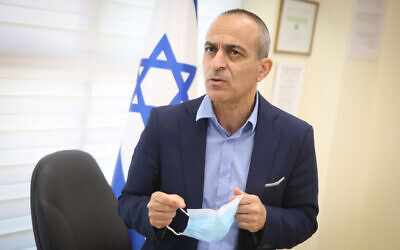
Outgoing coronavirus czar Ronni Gamzu, who is spearheading national efforts to curb the coronavirus, told ministers that testing rates were falling as people were unwilling to have samples taken.
“People don’t want to be tested. It’s an ongoing battle,” Gamzu said, adding that 30,000 tests would need to be carried out on a daily basis to maintain a good overview of the rate of infection in the country; however, “even with free testing, people don’t go.”
In an exchange between Prime Minister Benjamin Netanyahu and Gamzu, it was noted that a number of localities were not meeting targets for the number of tests to be carried out on any given day.
Gamzu also said there was an increase in the number of infections in children under the age of five since daycares and kindergartens reopened on October 18, but that the effects of the move were still not clear.
“I will say cautiously that I need two more days to draw conclusions, but there is an increase in the positive [test] rate in children aged 0-5. Most are also asymptomatic, but of course they play a role in the [general] increase in morbidity,” Gamzu reportedly said.
A military task force warned earlier on Monday that the rise in the rate of positive test results could indicate that the downward trend in coronavirus infections had stopped.
Israel sharply brought down its daily COVID-19 infection rates from some 8,000 in mid-September to several hundred by late October with a nationwide lockdown, which it began to gradually ease two weeks ago.
According to Health Ministry data on Monday, the rate of positive tests had risen from around two percent throughout last week to 2.9% on Saturday and 3.1% on Sunday.
“This probably indicates a slowing down to a halt in the decline in morbidity,” the task force warned, noting that there was still a decline in the number of fatalities and patients in serious condition compared to last week.

The positivity rate was taken from a smaller number of tests — fewer than 8,000 on Saturday, as is typical for the weekend, when testing rates plummet, and 21,115 on Sunday — after days in which as many as 40,000 samples were examined.
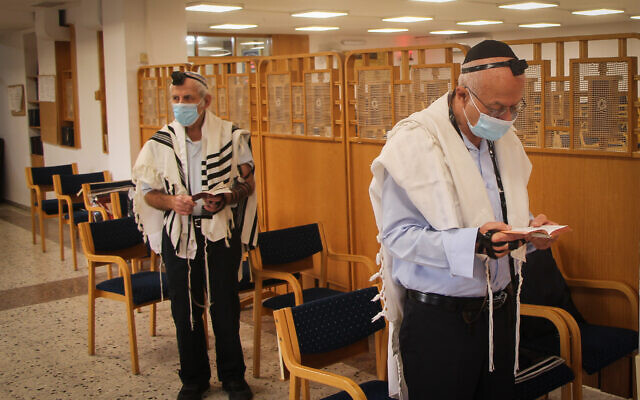
Grades 1-4 in schools, houses of worship, beauty salons, and bed and breakfasts reopened on Sunday as Israel continued to roll back some of the coronavirus restrictions under a gradual exit plan from the country’s second nationwide lockdown. Daycares, kindergartens and preschools reopened on October 18.
On Sunday, the cabinet endorsed new regulations increasing the fines for violations of coronavirus lockdown restrictions, but, under pressure from ultra-Orthodox parties, deferred the matter for discussion on Monday by the coronavirus cabinet before it would be advanced to the Knesset for final approval.
After over a month of national lockdown that succeeded in curbing high infection rates, but also paralyzed much of the economy and public life, the government has struggled to agree on how to ease the restrictions, with pressure from some ministers to quickly lift the closure facing opposition by other cabinet members — among them the prime minister — who want to move more cautiously.
Commercial stores are slated to reopen to customers next week, but health officials have said they would push to keep them shuttered if case numbers continue to rise.









The Times of Israel Community.