

James Webb telescope shows Jupiter as never before, with auroras and tiny moons
Photos capture unprecedented views of planet’s northern and southern lights, and swirling polar haze
 Add ToI as a Preferred Source on Google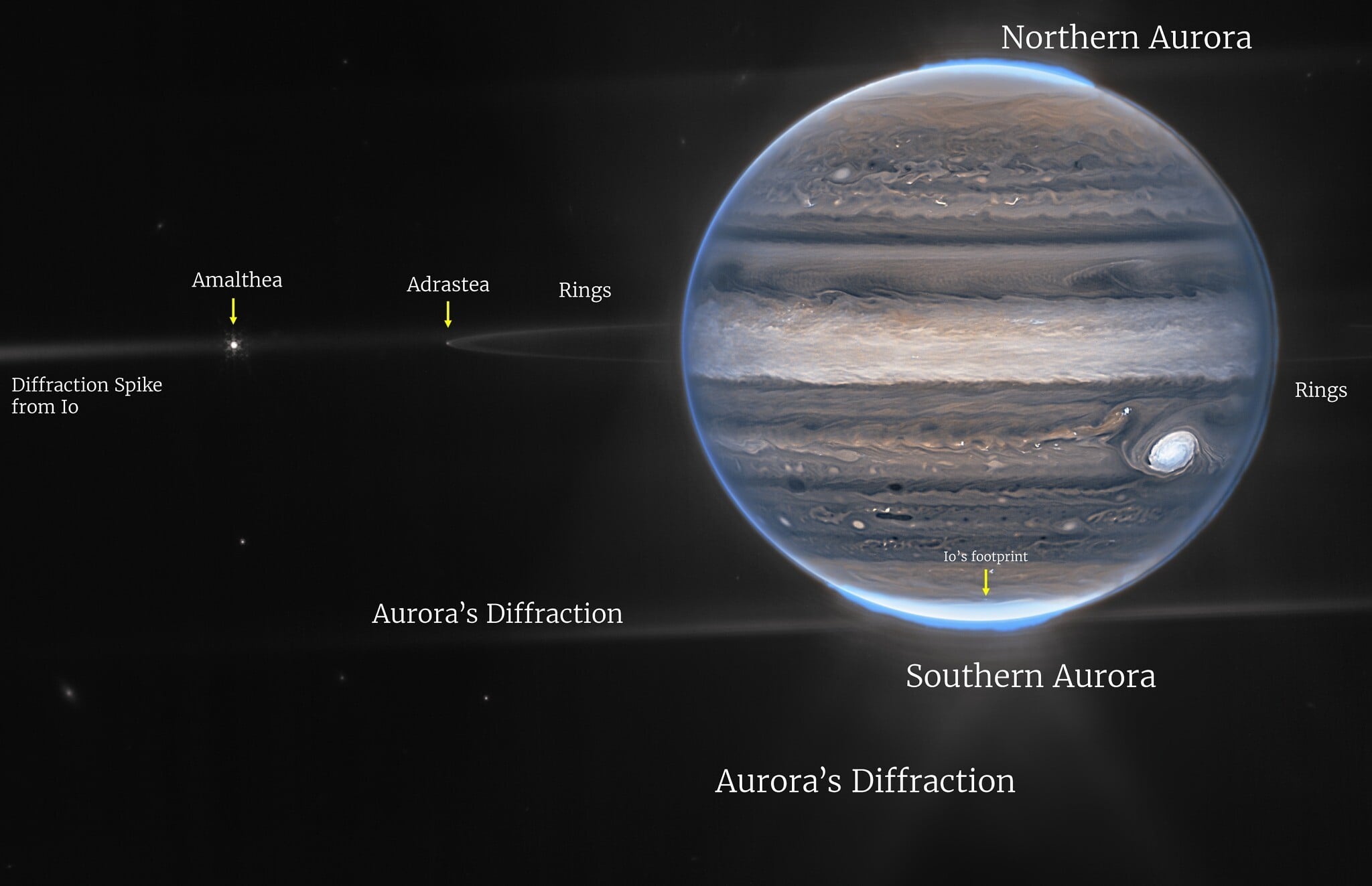
CAPE CANAVERAL, Florida (AP) — The world’s newest and biggest space telescope is showing Jupiter as never before, auroras and all.
Scientists released the shots Monday of the solar system’s biggest planet.
The James Webb Space Telescope took the photos in July, capturing unprecedented views of Jupiter’s northern and southern lights, and swirling polar haze.
Jupiter’s Great Red Spot, a storm big enough to swallow Earth, stands out brightly alongside countless smaller storms.
One wide-field picture is particularly dramatic, showing the faint rings around the planet, as well as two tiny moons against a glittering background of galaxies.
“We’ve never seen Jupiter like this. It’s all quite incredible,” said planetary astronomer Imke de Pater, of the University of California, Berkeley, who helped lead the observations.
“We hadn’t really expected it to be this good, to be honest,” she added in a statement.
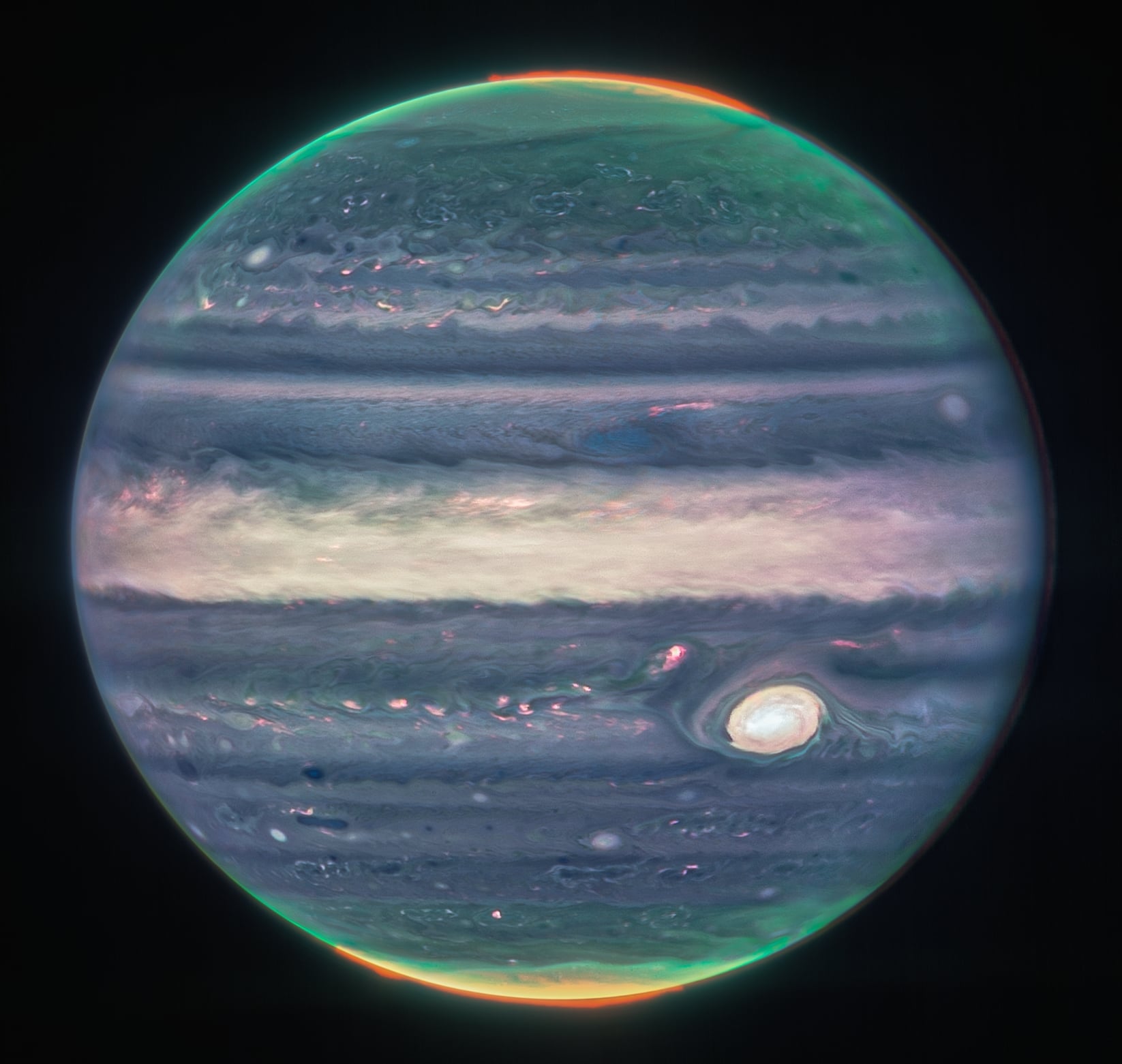
The infrared images were artificially colored in blue, white, green, yellow and orange, according to the US-French research team, to make the features stand out.
NASA and the European Space Agency’s $10 billion successor to the Hubble Space Telescope rocketed away at the end of last year and has been observing the cosmos in the infrared since summer.
Scientists hope to behold the dawn of the universe with Webb, peering all the way back to when the first stars and galaxies were forming 13.7 billion years ago.
The observatory is positioned 1 million miles (1.6 million kilometers) from Earth.










The Times of Israel Community.