

No money, mo problems: 8 things to know for January 25
Israel fears more violence from Gaza after Hamas rejected Qatari money, though Iran-backed Islamic Jihad is seen as the main troublemaker
 Add ToI as a Preferred Source on Google
Joshua Davidovich is The Times of Israel's Deputy Editor
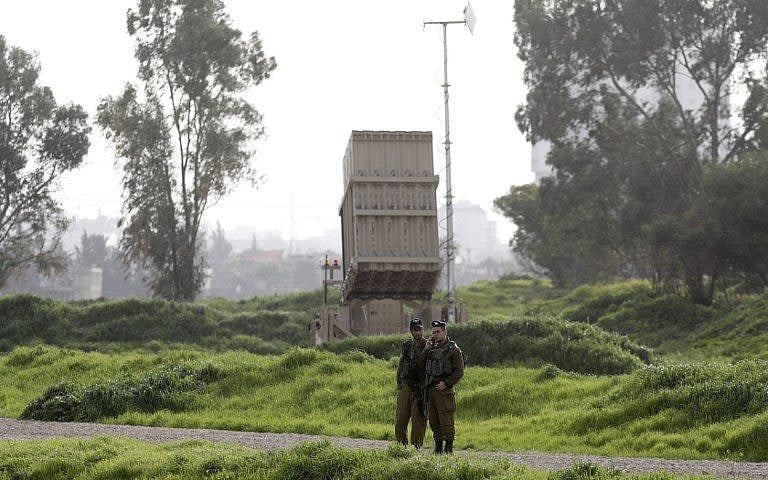
1. Readying for violence: Hamas’s surprise decision to reject Qatari aid money after Israel briefly froze the transfer has the Israeli military gearing up for the possibility of renewed violence along the border.
- “If no agreement is reached, the chances for violence along the border tomorrow afternoon are high,” a Gazan source tells the Ynet news site.
- Haaretz reports that defense officials “estimate that the number of protesters will be the same as weeks prior (10,000 or so), but with the possibility of more serious violence and attempts to harm soldiers and come near the fence.”
- Israeli forces are being beefed up along the border and Iron Dome batteries deployed, including one near the Tel Aviv metropolitan area, with Iran-backed Islamic Jihad seen as the main instigator of both the violence and the rejection of the aid money.
- “The IDF estimates that Islamic Jihad will try to bring about a deterioration in the situation by firing rockets at Israel,” Hadashot news reports.
2. Hamas has some balls in its court: Hamas has also been accused of having close ties to Iran (and to IS, go figure).
- Israel Hayom reports that Egyptian President Abdel Fattah el-Sissi is telling the leadership of the Hamas terror group it must decide if it wants to be a client of Tehran or enjoy Cairo’s efforts to broker a ceasefire with Israel.
- Analyst Shimrit Rafael writes in Yedioth Ahronoth that Hamas has some cojones going toe to toe with Israeli Prime Minister Benjamin Netanyahu the way it is, but may not have much of a choice.
- “Hamas leaders live among their people, and Gaza right now is a pressure cooker: Officials who last got a pay check in August and are not hoping for $100 from the Qatari grant, the grumps who won’t get anything and the ideologues who think that every deal is the end of Palestine and accuse [the leaders] of being Abbas’s twin in the matter,” Rafael writes.
3. Iran seeks revenge: Israel Hayom’s top headline draws a direct link between Iranian actions in the north and Islamic Jihad in Gaza: “Iran was embarrassed in the north, and is looking for revenge from Gaza.”
- Amos Harel in Haaretz writes that Iran is trying to get revenge in whatever way it can, quoting former general Yitzhak Shapira surmising that they are willing to go as far as a direct confrontation with the Jewish state for revenge.
- “As Iran sees it, it cannot swallow the Israeli attacks, especially in light of the end of the Israeli ambiguity policy and its willingness to take direct responsibility for attacks on targets in Syria.
4. Jaafari’s plan: Alex Fishman writes in Yedioth Ahronoth that the Iranians are getting antsy to get the gears moving on the so-called Jaafari Plan, named for the head of the Islamic Revolutionary Guards Corps, which seeks to have the IRGC gaining footholds all over the Middle East as the spearhead to spread the Iranian revolution abroad.
- Syria, where they have been trying to maintain a presence, is a main target, but Israel and Russia keep getting in the way.
- “The Iranians need to shake off both actors that are thwarting it, and it is getting more and more pressing as the signs of a permanent settlement in Syria grow. So it’s become urgent for the Iranians to put military pressure on Israel so they will stop foiling the Jaafari Plan.”
5. Iron don’t: The US is apparently getting ready to buy two Iron Dome missile batteries from Israel, but some are raising questions over whether the purchase really fits their needs, Al-Monitor’s Jack Detsch reports.
- Iron Dome was designed to protect Israelis, mostly civilians, from the mostly crude and not super advanced or long range rockets shot by Hamas and Hezbollah. However, the US wants its army to be ready to defend against China and Russia, which have decidedly more sophisticated weapons, like cruise missiles.
- Iron Dome’s interceptor “was not originally designed for cruise missile defense,” researcher Rick Berger is quoted telling the news site. “The short-term nature of this buy can’t be emphasized enough, and the Army may change horses again for the next two batteries.”
- Another researcher, Michael Ellman, says “Iron Dome’s interceptors do not have the reach or speed to engage successfully a scud warhead, or any other missile with a range greater than 50 kilometers [30 miles].”
- (In fact, Iron Dome has successfully defended against Hamas missiles which went farther, though they were likely slower and less advanced than many missiles used by traditional armies.)
6. The king and Bibi: French newspaper Le Desk news reports that Netanyahu is eyeing a pre-election trip to Morocco.
- Less than two years ago, King Mohammed VI canceled his participation in the west African ECOWAS summit because Netanyahu was going to be there. Now, according to Le Desk, he may see warming ties with Israel as key to gaining US support for its occupation of Western Sahara.
- The trip would be the latest in a series of high-profile diplomatic maneuvers Netanyahu is trying to engineer in the lead up to elections. Even the prime minister’s more strident critics admit that diplomacy is the one area he has excelled in, and he likely wants to showcase that.
- According to Israel Hayom, another such visit may be Brazilian president Jair Bolsonaro to Israel, also in the weeks before the April 9 vote. And he will almost certainly travel to the US for the AIPAC conference, and one assumes he’ll hop over to the White House to ham it up with US president Donald Trump and get some clutch pre-vote PR.
7. Pre-occupied minds: Should Netanyahu head to Rabat, him and Mohammed can chat about Western Sahara, often cited by Israelis trying to point out what they say are discriminatory policies that target only the West Bank and not other occupied territories.
- The territory was specifically named by Irish lawmaker Frances Black when explaining that her bill criminalizing trade with settlements in occupied territories did not only refer to Israel.
- But on Thursday, when the bill passed yet another hurdle, Black’s triumphant tweet included an emoji of a Palestinian flag, but not Western Sahara or any other territory like it.
Amazing! First the Seanad, now the Dáil: an overwhelming majority have voted for the Occupied Territories Bill 2018 and a ban on illegal #SettlementGoods! Ireland will always stand for international law + human rights, & we're one step closer to making history. Onwards ???????????????????? pic.twitter.com/28LKTZzAw0
— Frances Black (@frances_black) January 24, 2019
- Netanyahu reacted furiously to the Irish lower house advancing the bill, calling it anti-Semitic, and calling in the Irish ambassador for a dressing down.
- Speaking to The Times of Israel about the bill a few months ago, Israeli diplomats seemed cool as cucumbers, surmising the government would halt it. Now, they seem a bit more panicked.
8. Going after the press: Haaretz’s Yossi Verter writes that Netanyahu is also panicked about elections and the possible indictments against him, as he lashes out at everyone and their mother.
- “Netanyahu has no God but the one that gazes out at him from the mirror every morning. He is a desperate man. When the head of a crime organization senses that his days are numbered and the pincers of the law are closing in on him, he ices a state’s witness or blows up a police station. As the noose is tightening around Netanyahu’s neck, he is aiming to topple the institutions enforcing the law, make them illegitimate — the long arm of the media — and issue a din rodef, a talmudic license to kill,” he writes.
- He gets some help in his efforts on Friday from pro-Netanyahu columnist Haim Shine in pro-Netanyahu Israel Hayom, who marvels at how Netanyahu manages to withstand so much distortion from the lamestream media.
- “TV channels, every night, don’t stop for a moment trying to portray him as corrupt. Criminal suspicions invented by fevered minds, and fake commentators creating an ocean of fake news,” he writes. “The amazing achievements of the state that he made happen during his term are buried and hidden.”





The Times of Israel Community.