

North Korea says it will suspend nuclear and missile testing
Announcement by Kim Jong Un comes days before expected talks with South Korean leader Moon Jae-in; Trump welcomes ‘very good news for North Korea and the world’
 Add ToI as a Preferred Source on Google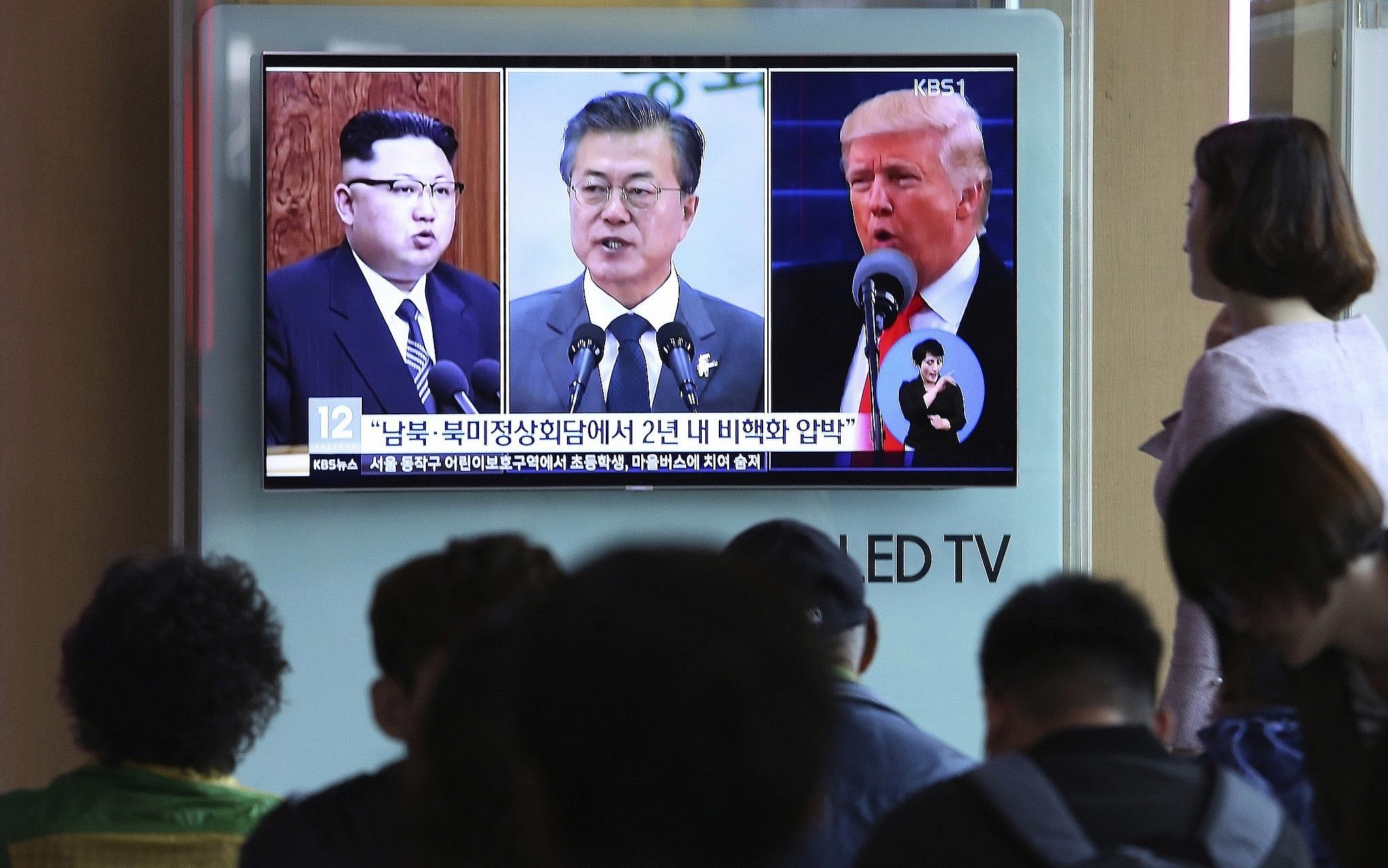
North Korea will carry out no more nuclear or intercontinental ballistic missile tests and will shut down its atomic test site, it said Saturday in a move immediately welcomed by US President Donald Trump.
Pyongyang’s declaration, long sought by Washington, will be seen as a crucial step in the fast diplomatic dance on and around the Korean peninsula.
It comes less than a week before Kim meets South Korean leader Moon Jae-in for a summit in the Demilitarized Zone that divides the peninsula, and ahead of a much-anticipated encounter with Trump himself.
The North had developed its weapons in what he called a “great victory”, and so “no nuclear test and intermediate-range and inter-continental ballistic rocket test-fire are necessary for the DPRK now”.
“The mission of the northern nuclear test ground has thus come to an end,” he added at the gathering of the central committee of the Workers’ Party, according to the official KCNA news agency.
The party decided that nuclear blasts and ICBM launches will cease as of Saturday — the North has not carried any out since November — and the atomic test site at Punggye-ri will be dismantled to “transparently guarantee” the end of testing.
Within minutes of the report being issued, Trump tweeted: “This is very good news for North Korea and the World — big progress! Look forward to our Summit.”
North Korea has agreed to suspend all Nuclear Tests and close up a major test site. This is very good news for North Korea and the World – big progress! Look forward to our Summit.
— Donald J. Trump (@realDonaldTrump) April 20, 2018
Pyongyang has made rapid technological progress in its weapons programs under Kim, which has seen it subjected to increasingly strict sanctions by the UN Security Council, US, EU, South Korea and others.
Last year it carried out its sixth nuclear test, by far its most powerful to date, and launched missiles capable of reaching mainland United States.
Kim and Trump traded threats of war and personal insults as tensions ramped up, and even when there was an extended pause in testing, US officials said that it could not be interpreted as a halt without an explicit statement from Pyongyang.
South Korean envoys have previously cited Kim as promising no more tests, but Saturday’s news is the first such announcement directly by Pyongyang.
“Certainly this is a positive development,” said Daniel Pinkston of Troy University. “It’s a necessary but not sufficient step in North Korea returning to its past non-proliferation commitments.”
The formal declaration of an end to testing comes after Kim stated in his New Year speech that the development of North Korea’s nuclear force had been completed.
In the same address, he said he had a nuclear button on his desk, prompting Trump to tweet that he had a bigger one of his own.
Events have moved rapidly since then, catalysed by the Winter Olympics in the South, and Seoul is now pushing for a peace treaty to formally end the Korean War, raising hopes that a settlement could finally be reached on the peninsula.
But there is a long way to go and Moon himself acknowledged this week that the “devil is in the details”.
The US is seeking the complete, verifiable and irreversible denuclearization of the North, while according to Moon, Pyongyang wants security guarantees, leaving much room for negotiation.
The North has long demanded the withdrawal of US troops from the peninsula and an end to its nuclear umbrella over South Korea, something unthinkable in Washington.
For its part, Pyongyang has been relatively reticent about the process, making its first official reference to contacts with the US only last week, when KCNA said Kim had discussed “the prospect of the DPRK-US dialog.”
But the leader told the Workers’ Party meeting: “A fresh climate of detente and peace is being created on the Korean peninsula and the region and dramatic changes are being made in the international political landscape.”
Trump this week confirmed that CIA chief Mike Pompeo had met with the reclusive thirty-something strongman in secret Easter weekend talks — the most significant US-North Korea contacts in almost two decades.
On Wednesday he said details of a summit between himself and Kim in May or June were “being worked out now.”
The United States and North Korea — foes since a bloody, muddy hot conflict of the 1950s and the ideological battles of the Cold War — have had peace within sight before.
But with similarly risk-taking mercurial leaders in both Washington and Pyongyang, there are hopes the two countries can go a step further than 2000, when Kim’s father and Bill Clinton met each other’s emissaries, but never each other.
Trump said Wednesday, with Japanese Prime Minister Shinzo Abe at his side, that the North had “a bright path available” if it was willing to abandon nuclear weapons.
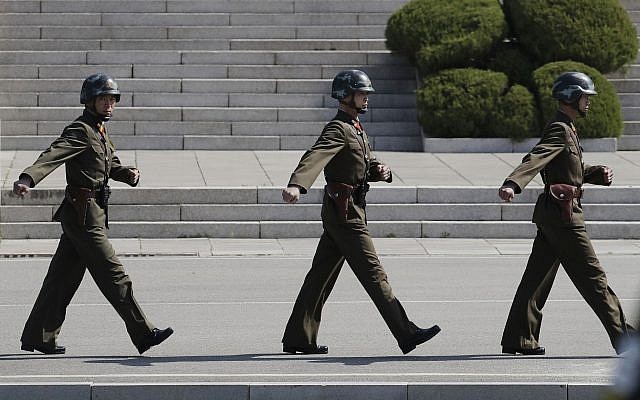
North Korea’s military is an integral part of the ruling regime, and officials and outside experts say it is still not clear that Kim is willing to completely give up those weapons.



The Times of Israel Community.