

Police reportedly suspect Netanyahu may have obstructed Bezeq probe
Judicial sources tell TV station that media adviser’s instructions to ‘destroy their phones’ at launch of Case 4000 could have come from prime minister
 Add ToI as a Preferred Source on Google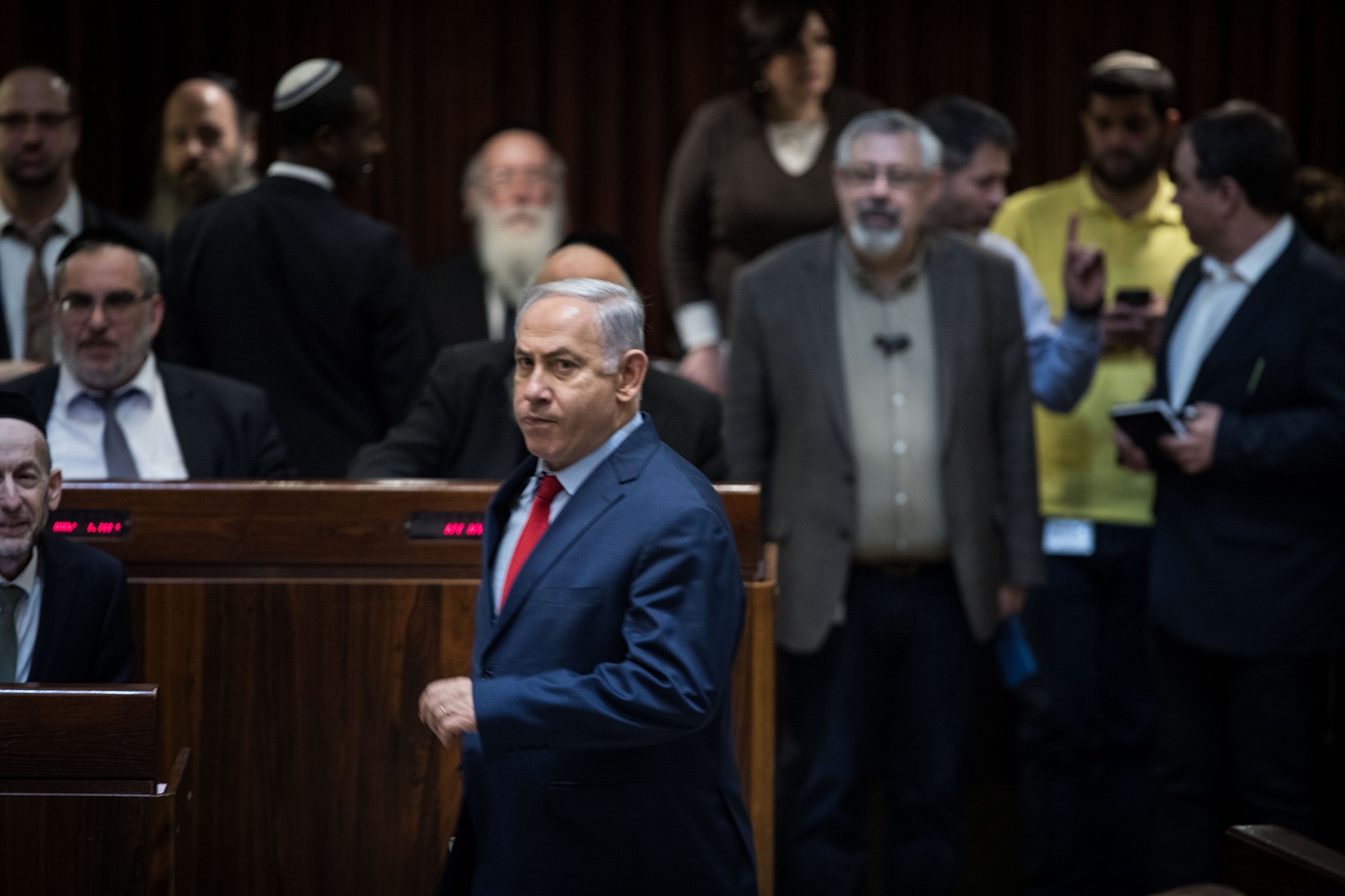
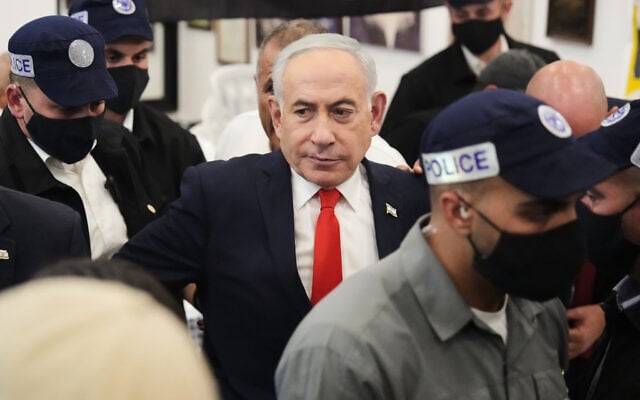
Prime Minister Benjamin Netanyahu will be asked about suspicions that he tried to obstruct an investigation, according to a report Monday.
Netanyahu will likely be asked about the suspicions the next time police interrogate him over a case surrounding alleged bribery connected to the Bezeq telecommunications firm and the Walla news website, Hadashot TV news reported, citing unnamed judicial sources.
The case revolves around suspicions that Bezeq was given regulatory favors in exchange for favorable coverage of Netanyahu and his wife Sara in the news site.
According to an earlier report in the Yedioth Ahronoth daily, Nir Hefetz, Netanyahu’s former media adviser who later turned state’s witness, instructed main suspects Shaul and Iris Elovitch to “destroy their phones,” as the Bezeq graft probe kicked off. Shaul Elovitch owns both Bezeq and Walla.
Police reportedly suspect that Hefetz would not have acted to destroy evidence without instruction from Netanyahu.
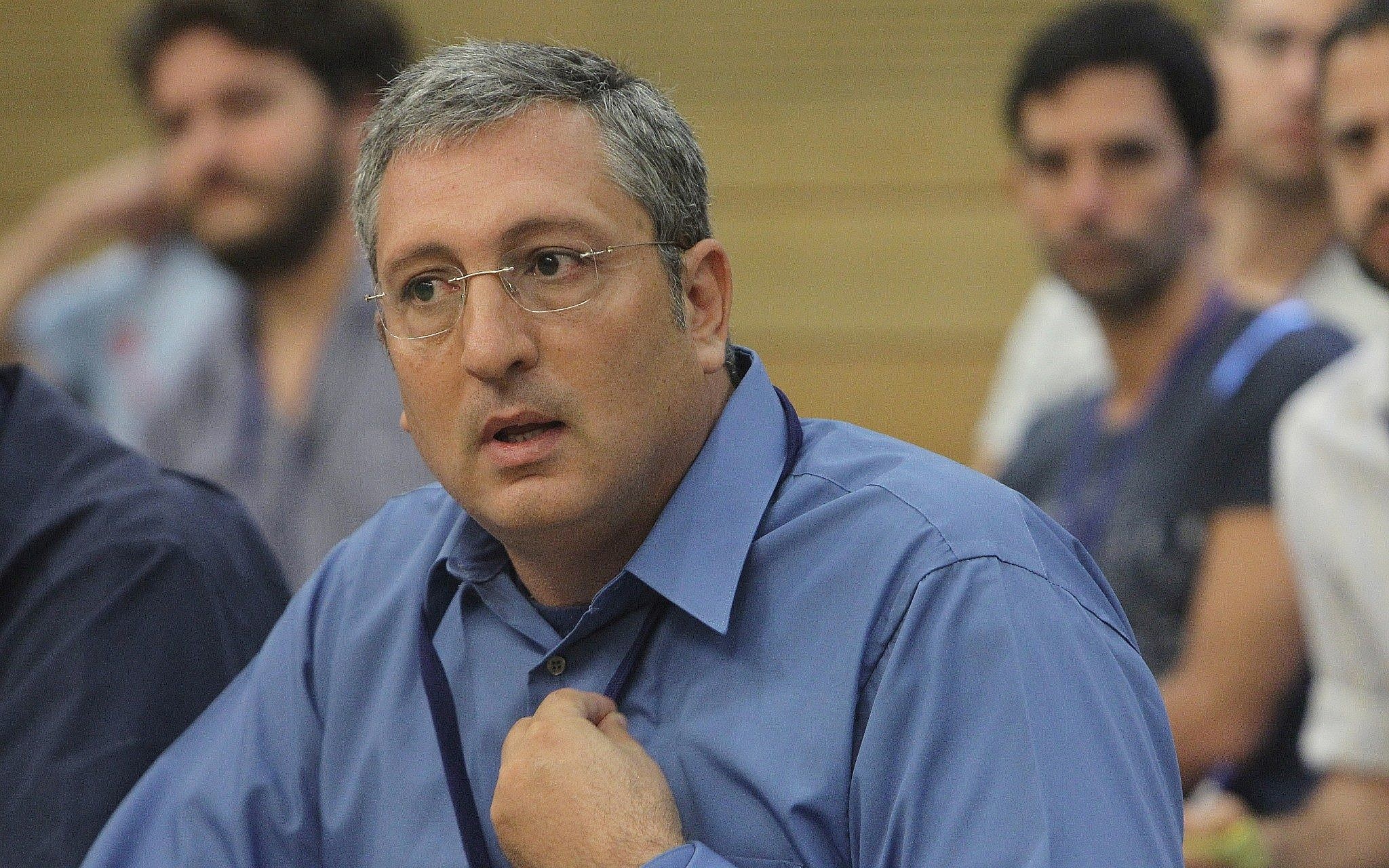
“Erase the texts from Sara. Destroy the phone,” Hefetz was quoted as saying. “When the stories started to pop up, I understood everything needed to be erased. I told Shaul and Iris to erase the messages, destroy the phone. I destroyed mine.”
The report said that although Hefetz had broken his phone, he supplied investigators with other recordings upon turning state’s witness earlier this month.
A second report, on Channel 10 news, said that police are in possession of text messages sent by Yair Netanyahu to Elovitch, complaining about the coverage on Walla.
The younger Netanyahu will likely be interrogated as a suspect in the near future, the report said. His mother has already been questioned under caution, meaning she could become a suspect.
Netanyahu’s office denied the accusations to Hadashot.
“Leaking materials from the investigation, even if they are false accusations, is the real attempt to obstruct the investigation. The prime minister always comported himself lawfully,” a statement read.
Netanyahu and his wife were slated to be questioned Monday, but the interrogations were put off until the weekend after the prime minister contracted strep throat.
Hefetz, who served as a media adviser to the Netanyahu family, is considered a central witness in the so-called Case 4000, the third case to entangle the prime minister.
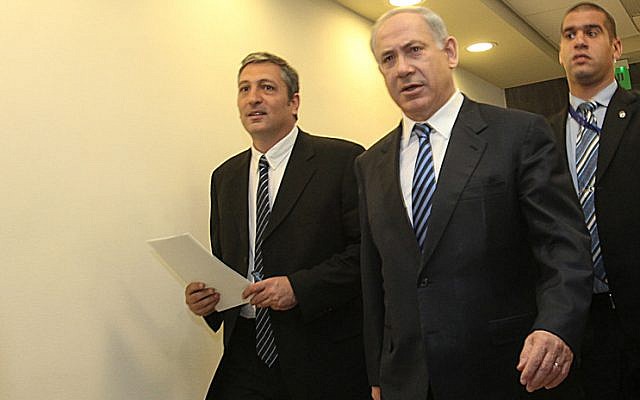
According to Ynet, Hefetz acted as the key point-man, bringing instructions from the prime minister regarding Bezeq to Shlomo Filber, the director-general of the Communications Ministry. Filber, another longtime Netanyahu confidant, has also turned state’s witness in the case.
The report said Hefetz also put Sara Netanyahu in touch with Iris Elovitch.
Channel 10 previously reported that Sara Netanyahu had sent WhatsApp messages to Iris Elovitch complaining about Walla’s coverage and asking why a certain editor had not yet been fired.

The network also reported that police possess messages between the two women that relate to the alleged benefits extended to Bezeq in return for positive coverage by Walla.
This, said the TV channel, turned Sara Netanyahu into a suspect in the case.
The prime minister was first named in late February as one of the people believed to have been involved in bribery in Case 4000. State prosecutor Yehudit Tirosh of the Israel Securities Authority said that in his previous role as communications minister, Netanyahu was at the center of “a very grave instance of giving and taking bribes.”
“I have no way of properly describing the benefit [he received],” she said. “We are talking about enlisting a leading news site to provide adulating coverage in return for regulatory benefits given by the Communications Ministry, the minister of communications, and the director-general of the Communications Ministry,” she said.
Netanyahu served as communications minister from November 2014 to February 2017, concurrent with his time as prime minister. During that time, Walla’s coverage notably changed to favor the Netanyahu family, and Bezeq was given permission, among other things, to buy the satellite cable provider Yes, overriding antitrust issues, and to renege on its commitment to lease out its infrastructure to telecom competitors, so they could provide competing fixed line and internet services.
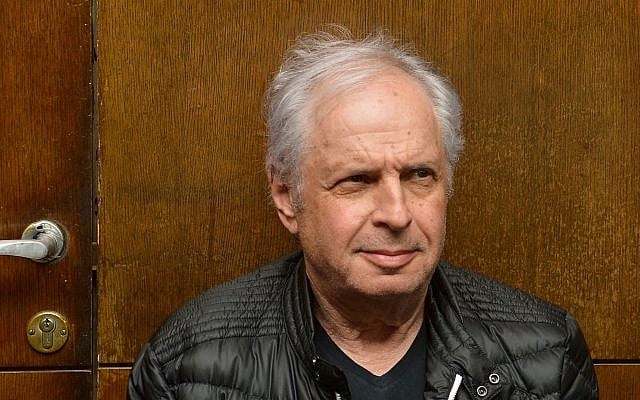
In addition to Case 4000, Netanyahu is suspected of wrongdoing in so-called cases 1000 and 2000, in which police have recommended he be indicted for bribery, breach of trust, and fraud.
In Case 1000, Netanyahu and his wife are suspected of receiving illicit gifts from billionaire benefactors — amounting to some NIS 1 million ($282,000) worth of lavish goods from the Israeli-born Hollywood producer Arnon Milchan and Australian resort owner James Packer — in return for certain benefits.
Case 2000 involves a suspected illicit quid-pro-quo deal between Netanyahu and Yedioth Ahronoth newspaper publisher Arnon Mozes that would have seen the prime minister weaken a rival daily, the Sheldon Adelson-backed Israel Hayom, in return for more favorable coverage from Yedioth.
Netanyahu and his family have denied wrongdoing in all of the cases.





The Times of Israel Community.