

From commune to oasis: Postcards from the American Colony
The landmark hotel on the ‘seam’ between east and west Jerusalem unveils its archives, illustrating a tumultuous, passionate, and sometimes eccentric history
 Add ToI as a Preferred Source on Google
Jessica Steinberg, The Times of Israel's culture and lifestyles editor, covers the Sabra scene from south to north and back to the center
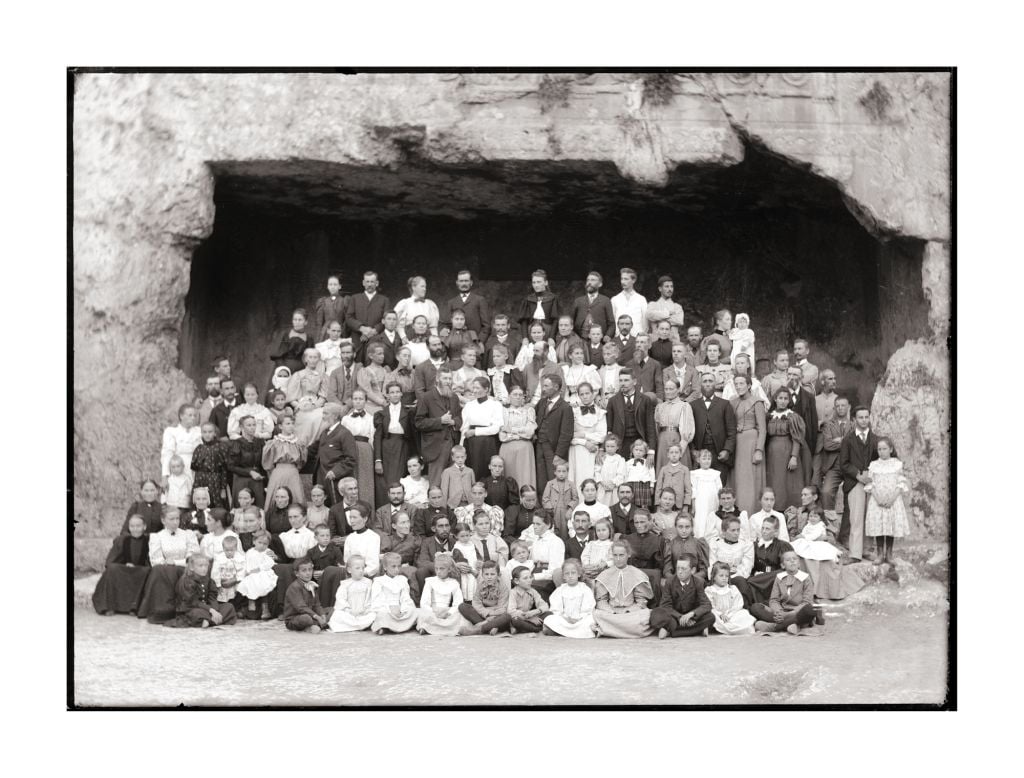
If the American Colony Hotel could talk, the stories it would tell. Now, the intimate Jerusalem hotel, built in the 19th century as an Ottoman pasha’s mansion (and once home to an American-Swedish religious commune), is doing the next best thing, opening its rich archives to the public, offering a treasure trove of photographs, postcards, telegrams and sheet music memorializing its intricate history.
Placed in a restored anteroom of the hotel’s pink-stoned building known as the Palm House, the archives are a quiet, serene space. They also contain only a fraction of the tens of thousands of photographs and documents found in the American Colony’s attics and storage rooms, said Rachel Lev, the Israeli curator hired seven years ago by the hotel to organize the collection.
An additional 17,000 pieces are now part of the Library of Congress, completing a collection that is “very important to the library,” said Dr. Barbara Bair, historian in the Manuscript Division at the Library of Congress in Washington, DC.
Then again, this is a project that began many years prior to Ms. Lev’s work, said Paul Vester, a direct descendant of the colony’s original founders, who is currently chairman of the hotel’s board of directors.
“We knew we had this stuff,” said Vester, who was born and raised in England and now lives in California. “When the hotel became more of a hotel and less of a commune, things got dispersed among attics and lofts.”
-
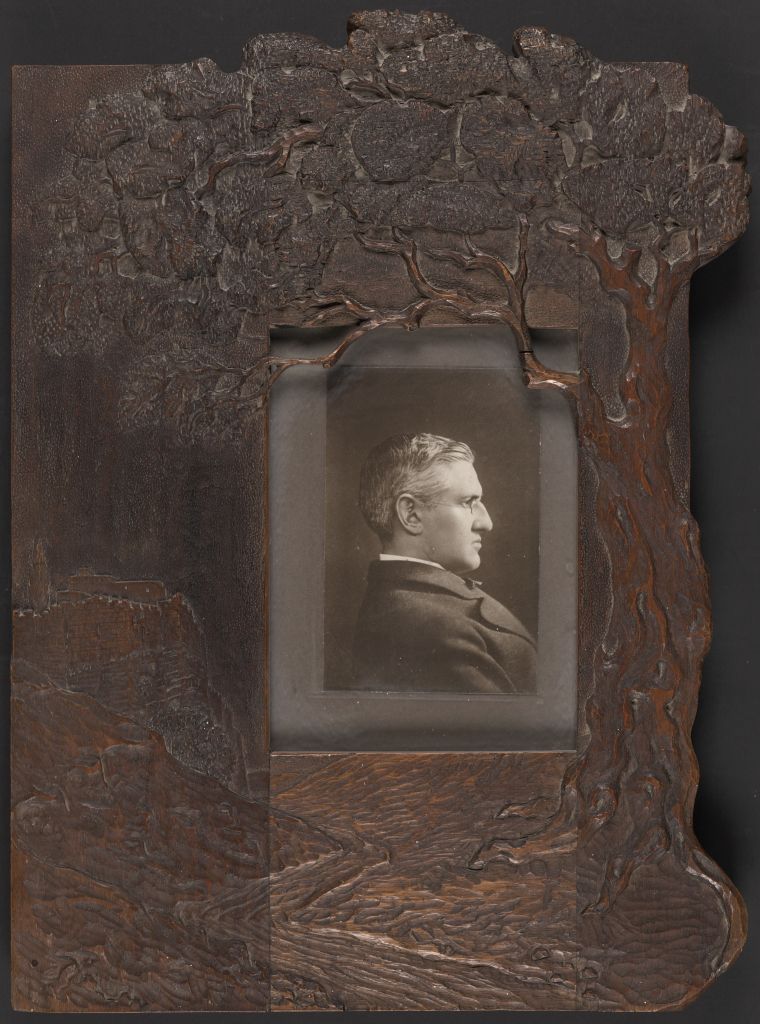
- Portrait of Horatio Gates Spafford (1828-1888), poet, philosopher, biblical scholar and lawyer, c. 1860-1888, set in a frame of engraved and glazed olive wood, with images of a sheltering tree, a river and the house on a wall — the first home of the American Colony in the Old City of Jerusalem (Library of Congress, 2005/Courtesy American Colony Archive Collections)
-
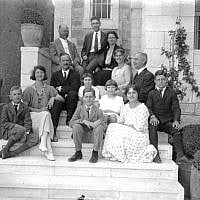
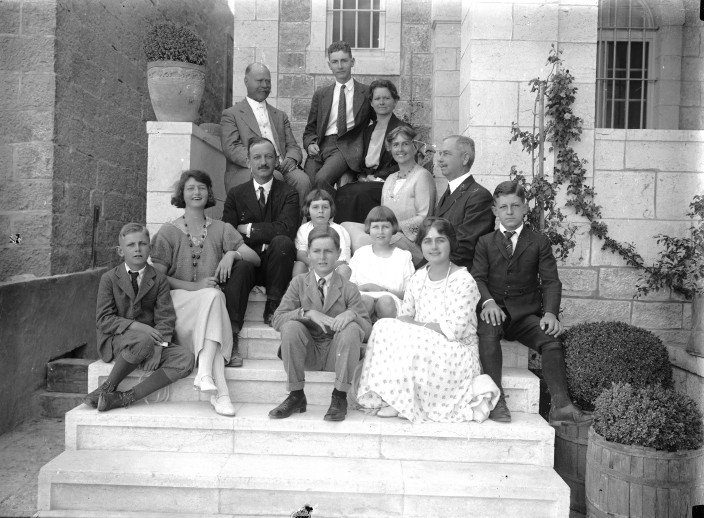
- The Vesters and the Whiting families with Jacob Spafford on stairs of the Palm House, 1924 (photo credit: American Colony Photo Department photographers from American Colony Members, Activities and Aid Projects, 1890-1930, negative collection) The American Colony Archive Collections
-
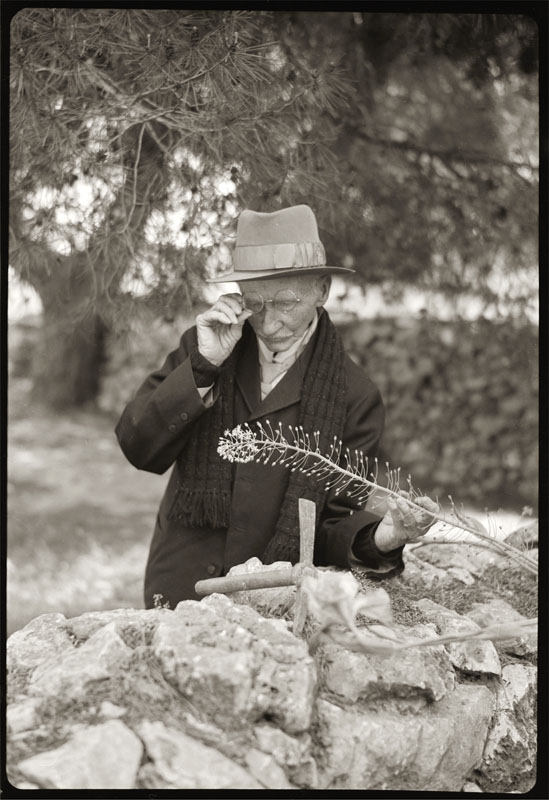
- Botanist and American Colony member John Edward Dinsmore, the American Colony School headmaster, examining a ‘hatzav,’ or sea quill (Prints and Photographs Division, Library of Congress, Washington, D.C.)
-
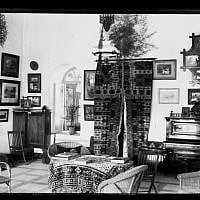
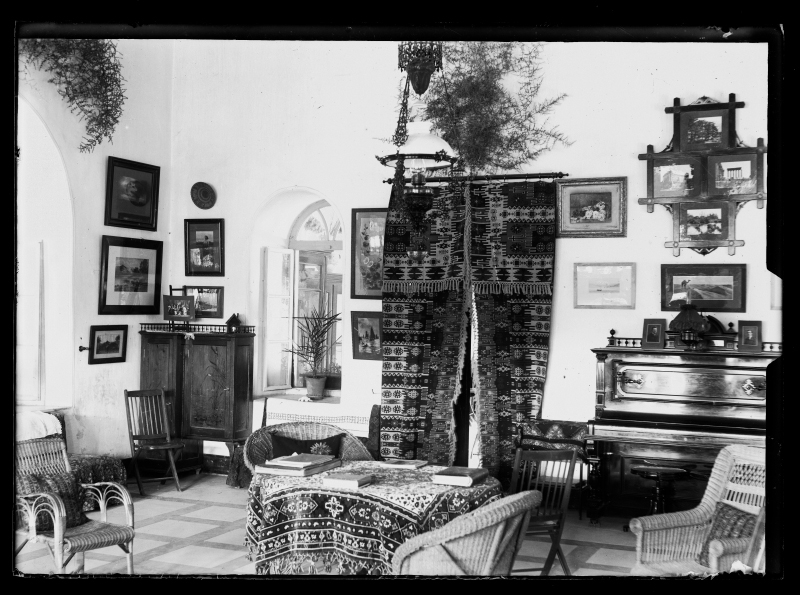
- The American Colony Salon, 1900-1920 (photo credit: American Colony Photo Department photographers from, American Colony Members, Activities and Aid Projects, 1890-1930, negative collection/The American Colony Archive Collection)
-
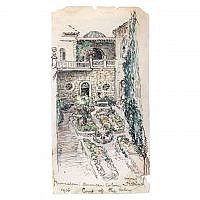
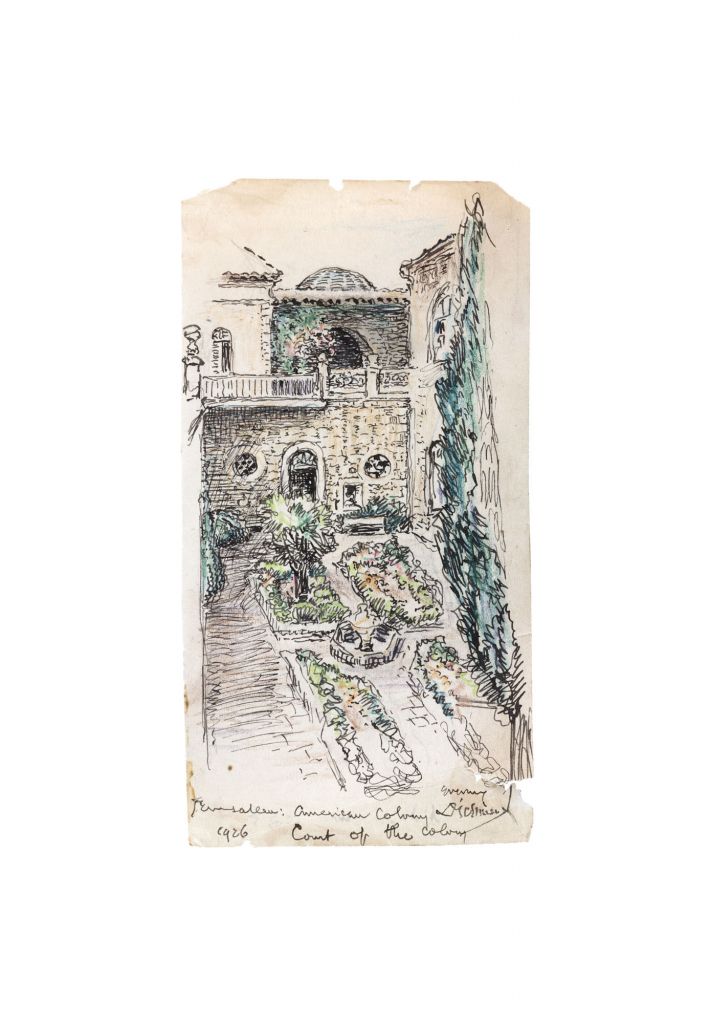
- The American Colony Courtyard, drawing by John E. Dinsmore (American Colony Archive Collection)
It is Paul Vester, among others, who can put much of the hotel’s history into context. His father first brought him to the American Colony in 1952, for a six-week stretch in the summer. He remembers “lying on the beds in Room 14,” reading comic books that he and his brother, Nick, bought at a shop in the Old City.
The colony was already functioning as a hotel by that point, and the Vester family owned Vester & Co., a curio shop in the Old City. But by the early 1960s, the hotel managers asked Paul’s father, Horatio Vester, for help.
“They called him, because the hotel was going downhill,” he said. “I suppose they actually wrote to him back then.”
Horatio Vester, a barrister by training, went to Israel for six months in 1960, and then moved permanently to the American Colony with his British-born wife, Valentine, “turning the hotel around,” said his son.
It made the most sense to call upon the Vesters, one of the original families that had helped establish “the colony.”
-
![Swedish Colony members lounging in the salon [Pasha Room] in spring 1897, with its original hand-painted wooden ceiling, considered one of the oldest in the Middle East. (photo credit: American Colony Photo Department photographers/from members and activities of the American Colony, American Colony Archive Collections)](https://static-cdn.toi-media.com/www/uploads/2014/04/AMCOL_069-200x200.jpg "Swedish Colony members lounging in the salon [Pasha Room] in spring 1897, with its original hand-painted wooden ceiling, considered one of the oldest in the Middle East. (photo credit: American Colony Photo Department photographers/from members and activities of the American Colony, American Colony Archive Collections)")
- Swedish Colony members lounging in the salon [Pasha Room] in spring 1897, with its original hand-painted wooden ceiling, considered one of the oldest in the Middle East. (photo credit: American Colony Photo Department photographers/from members and activities of the American Colony, American Colony Archive Collections)
![Swedish Colony members lounging in the salon [Pasha Room] in spring 1897, with its original hand-painted wooden ceiling, considered one of the oldest in the Middle East. (photo credit: American Colony Photo Department photographers/from members and activities of the American Colony, American Colony Archive Collections)](https://static-cdn.toi-media.com/www/uploads/2014/04/AMCOL_069.jpg "Swedish Colony members lounging in the salon [Pasha Room] in spring 1897, with its original hand-painted wooden ceiling, considered one of the oldest in the Middle East. (photo credit: American Colony Photo Department photographers/from members and activities of the American Colony, American Colony Archive Collections)")
-
- The American Colony Salon, 1900-1920 (photo credit: American Colony Photo Department photographers from, American Colony Members, Activities and Aid Projects, 1890-1930, negative collection/The American Colony Archive Collection)
-
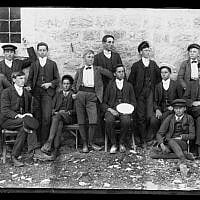
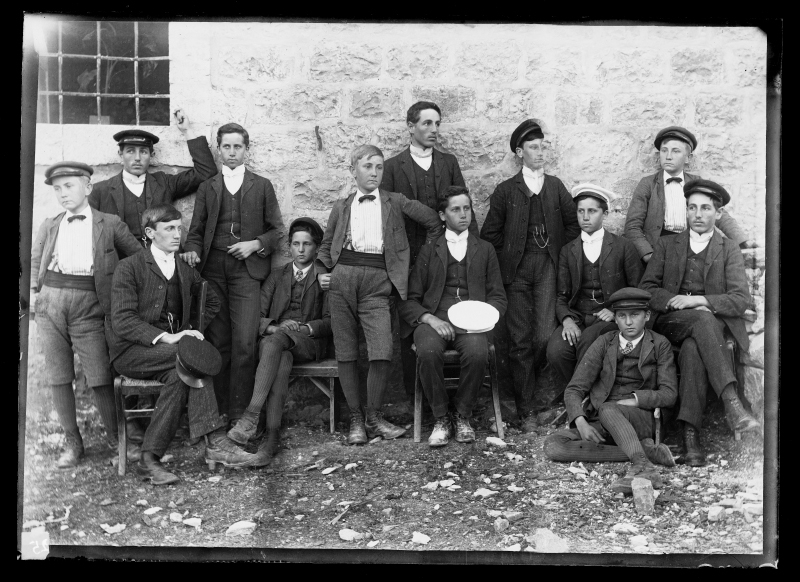
- The members of the American Colony brass band, circa 1900, included both Americans and Swedes and played sacred music, serenades, marches and operatic and classical music, as well as Swedish folksongs. (photo credit: American Colony Photo Department photographers/from American Colony members, activities and aid projects 1890s–1930s, negative collection/reproduction from a dry plate glass negative/Courtesy American Colony Archive Collections)
-
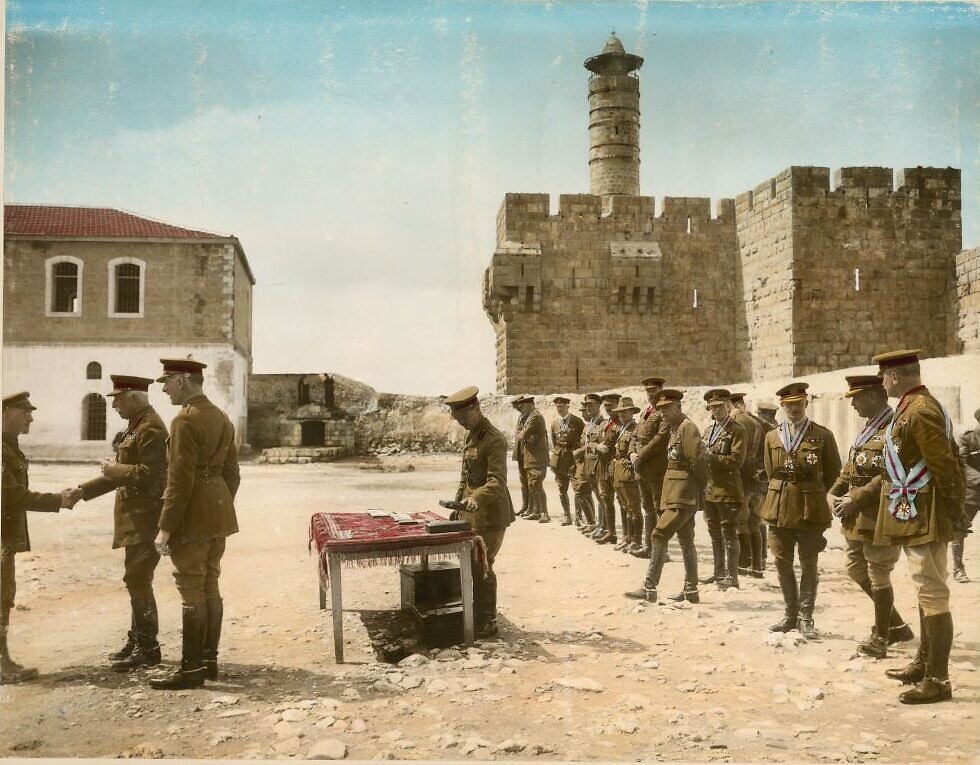
- Illustrative: An officer swearing-in ceremony during the British Mandate in Palestine, March 19th, 1918 (American Colony Photo Department/ Reproduction from hand colored photographic print/ American Colony Archive Collection)
-
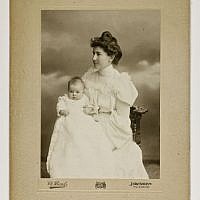
- Bertha Spafford Vester and Baby, c. 1905 (Chalil Raad Photographer, Jerusalem/Photographic print/American Colony Archive Collections )
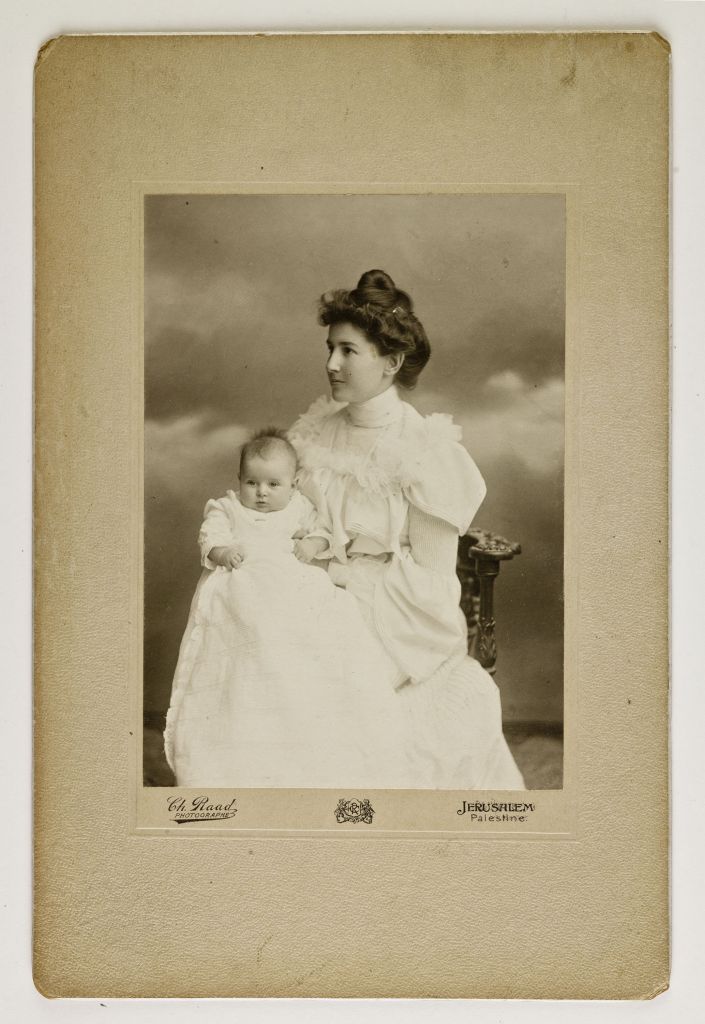
It was in 1881 that Horatio and Anna Spafford — Horatio Vester’s maternal grandparents — devout Christians from Chicago, left their American hometown for Jerusalem. They were mourning the tragic deaths of their four daughters who had drowned in a shipwreck, while traveling to Europe for a vacation.
After breaking with their church, they came to the Holy Land with 16 other members of the church, calling themselves “The Overcomers,” and settling in a house in the Old City, where they were known as “the Americans” and credited with helping those around them. A community of Swedes eventually joined them and, as their numbers swelled, they bought the pasha’s palace, located near the Old City in what is now East Jerusalem.
They were definitely a commune, said Bair, the Library of Congress historian who spent several years working with Valentine Vester on the hotel’s history and documents.
“They came to find Jesus, and they were here at such a critical time,” added curator Lev.
At its height, the commune numbered 150 people, many of whom lived through two world wars, the 1927 earthquake, and ongoing strife in their adopted home.
The commune members didn’t function as missionaries, but took religion seriously, even taking an oath of celibacy, not allowing members to marry. The oath wasn’t broken until Bertha Spafford, Horatio and Anna’s daughter, born after her sisters’ deaths, wanted to marry Frederick Vester, from the city’s nearby German Colony, a neighborhood established by members of Germany’s Templer society, another marginal community.
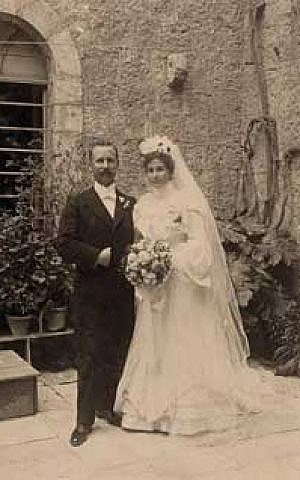
They married, eventually raising their own family, including Horatio, Paul Vester’s father.
By that point, the American Colony had become an inn for Western travelers and pilgrims, after Jaffa hotelier Plato von Ustinov (grandfather of the British actor Peter Ustinov) was looking for a place to put up guests visiting Jerusalem and asked the Spaffords for help. (In 1987, Peter Ustinov filmed much of the 1930s-set Agatha Christie mystery Appointment with Death at the hotel.)
Throughout its history as a hotel, the American Colony, which sits on the “seam” between east and west Jerusalem, has been considered neutral territory for Israelis and Arabs, said Paul Vester. It often housed journalists, as well as celebrities and politicians, and the hotel’s cool, blue-tiled verdant garden courtyard has long been a haven for the city’s disparate citizens.
Vester’s parents ended up spending the next 40 years running the hotel, until Horatio Vester’s 1980 retirement. The daily management of the hotel was handed over to Gauer Hotels of Switzerland, but the American Colony — now a member of The Leading Hotels of the World — is still owned and run by a board of directors that is chaired by Paul Vester.
His mother, Valentine, was the matriarch of the hotel, living in her apartment of the Palm House, where she was known for serving gin and tonics to those she liked, including Bair. She reigned over the hotel’s archives and direction until her death in 2008.
“She was a very strong presence here,” said Bair. “She was quite a lady, and she ended up spending most of her life here.”
It was Valentine Vester who negotiated the handover of a portion of the American Colony’s archives to the Library of Congress.
“We encouraged her for a long time,” said Bair, “and we rolled out the red carpet for them when they finally gave it to us.”
-
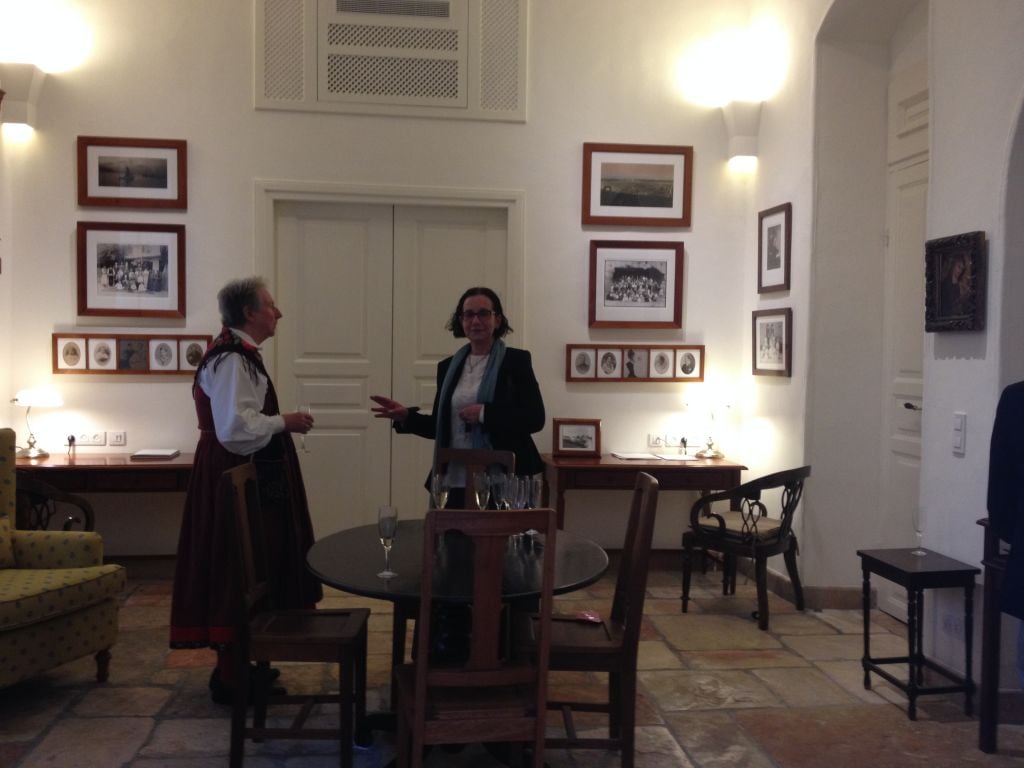
- Rachel Lev (right), the curator of the collection, with Skans Victoria Airey, the Nås Historical Society Archive historian (photo credit: Jessica Steinberg/Times of Israel)
-
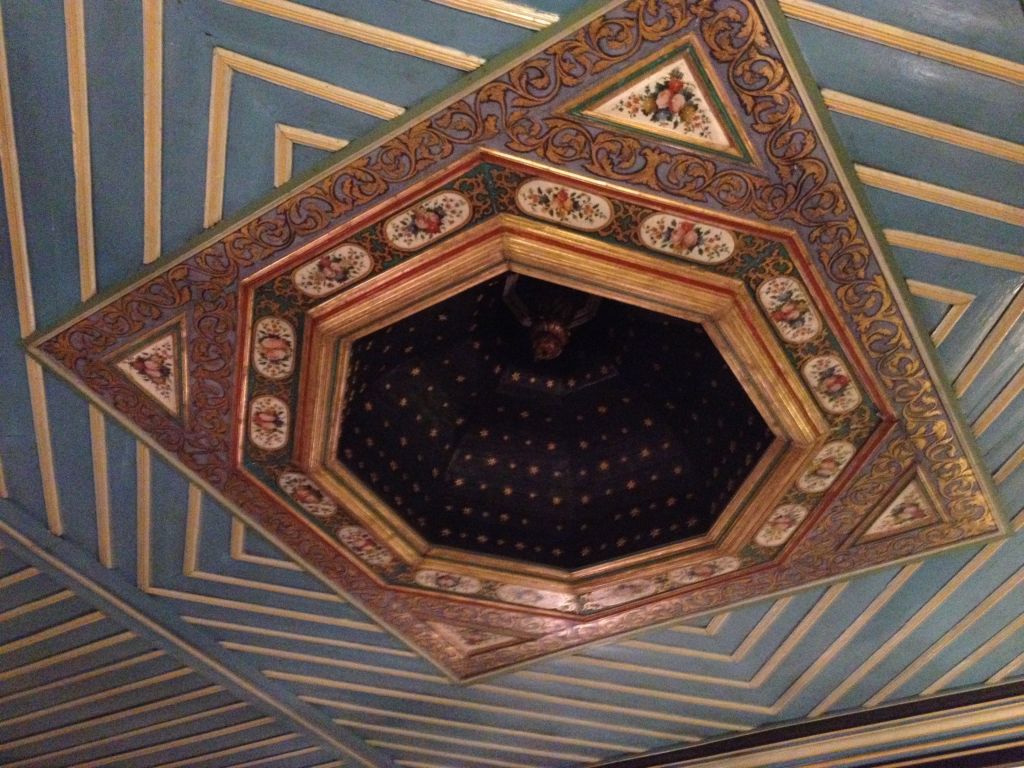
- The hand-painted wooden ceiling of the hotel’s Pasha Room had to have an unexploded bomb removed from its roof following the 1967 Six-Day War. (photo credit: Jessica Steinberg/Times of Israel)
-
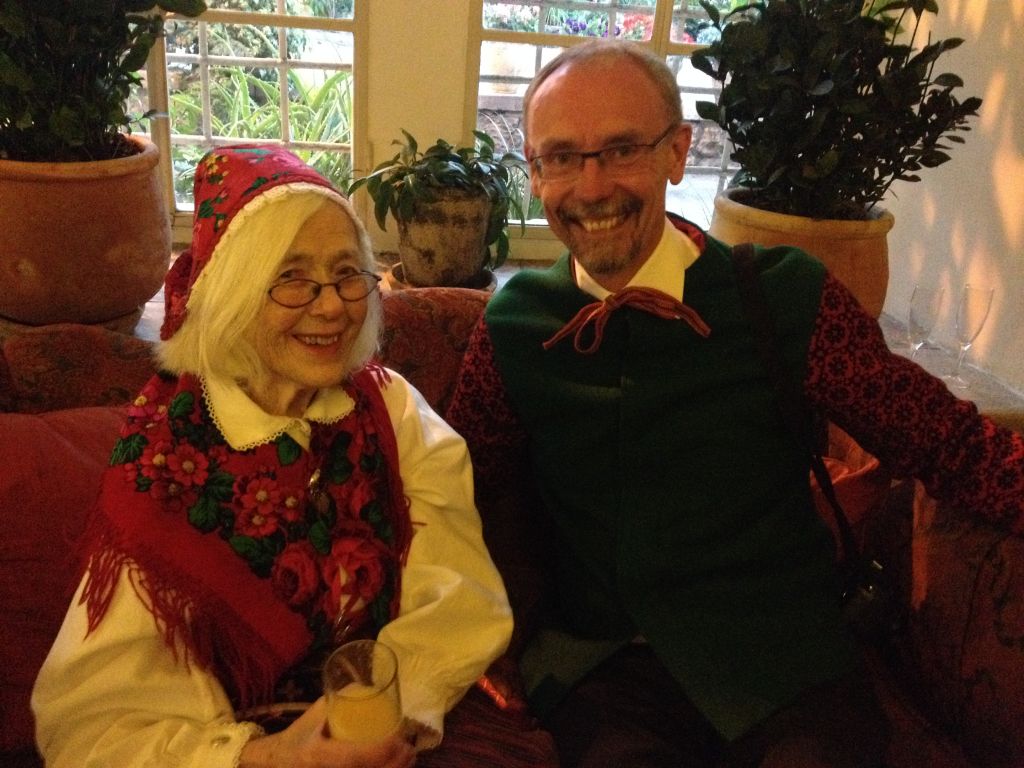
- Ann-Marie Nåssel Matson and Bjorn Johansson, both descendents of the original Swedish members of the American Colony, came to Jerusalem from Stockholm to mark the opening of the archives (photo credit: Jessica Steinberg/Times of Israel)
The hotel hosted its own red-carpet celebration of the archives on Tuesday. Guests were invited to peruse the restored archival room before entering the hotel’s main building, where a brass band from Nazareth played selections from the American Colony Brass Band repertoire of the 1900s.
Heading upstairs, past a long hallway hung with original photos from the hotel’s 100-plus years of history, guests made their way to the Pasha Room, an elegant hall with one of the only original hand-painted wooden ceilings in the Middle East, said Jeremy Berkovits, the hotel’s financial controller and the owners’ representative. When it was painstakingly reconstructed a few years back, an unexploded shell from the 1948 war had to be removed from inside the rooftop.
“That’s just typical history for this place,” said Berkovits.
Guests milled around outside on the terrace, drinking champagne and scooping up warm, sweet squares of knafeh cheese pastries and rosewater-flavored malabi pudding, while black-and-white film images scrolled across one of the original stone walls.
Inside the Pasha Room, young Arab singers from Nazareth and a local chamber choir performed period hymns and Swedish folk songs. They concluded with “It is well with my soul,” a haunting hymn written by Horatio Spafford following the earlier death of an infant son, and then his four daughters:
When peace like a river, attendeth my way/
When sorrows like sea billows roll;/
Whatever my lot, Thou hast taught me to know,/
It is well, it is well, with my soul.
—
This article contains affiliate links. If you use these links to buy something, The Times of Israel may earn a commission at no additional cost to you.









The Times of Israel Community.