

Rebuffing protest, Knesset unveils Gaza evacuation statue
Sculpture marking dismantling of 25 settlements in 2005 finds place in parliament; speaker says it’s not permanent, not political
 Add ToI as a Preferred Source on Google
Marissa Newman is The Times of Israel political correspondent.
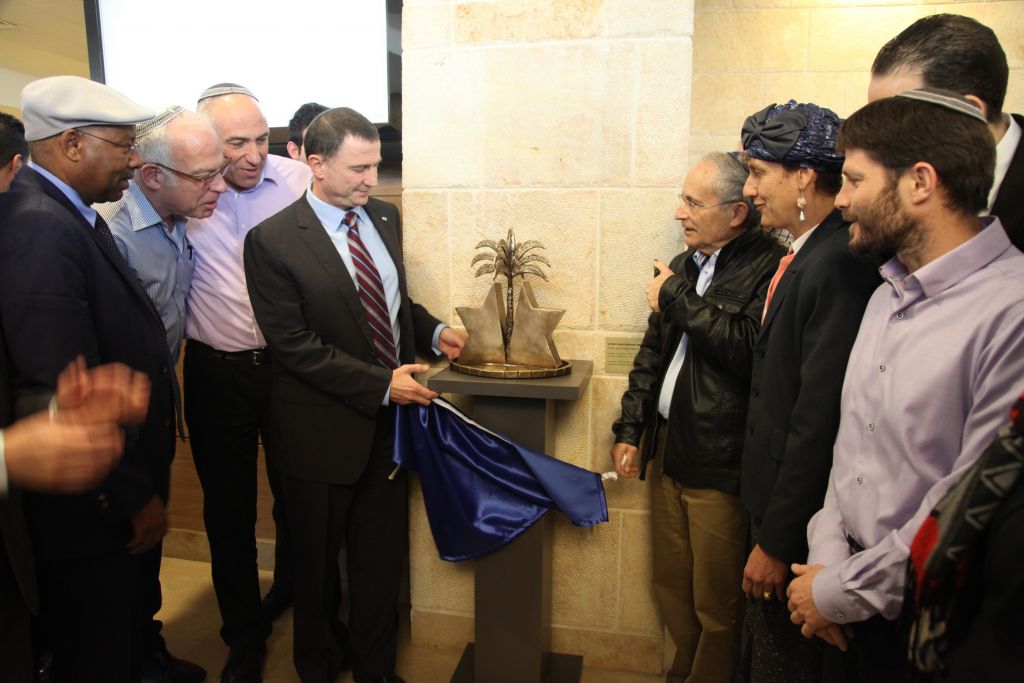
The Knesset on Monday inaugurated a statue commemorating the evacuation of Jewish settlements in Gaza and the West Bank a decade ago, overriding objections by the director of the Peace Now organization.
Earlier Monday, the head of the left-wing NGO, Yariv Oppenheimer, sent a letter to the Knesset questioning Speaker Yuli Edelstein’s authority to formally commemorate the 2005 evacuation of 8,000 Israelis from 21 settlements in the coastal enclave and several hundred more from four settlements in the northern West Bank.
“I believe that with all due respect to the pain of the evacuees, placing a permanent memorial to mark one specific political and controversial event (which included no loss of life) is not appropriate, and raises suspicions that Knesset Speaker Yuli Edelstein is treating the legislative house as his own house,” Oppenheimer wrote, noting that there are no memorials in the wing for the assassination of former prime minister Yitzhak Rabin, the Yom Kippur War, the evacuation of Yamit in the Sinai Peninsula, or the massacre at Kafr Kassem.
The Knesset legal adviser, in response, said the installation was not permanent, and was apolitical.
The legal response maintained that Edelstein, who lives in a West Bank settlement and supports the settlement enterprise, had rejected calls for a permanent installation on the settlements for the reasons detailed in Oppenheimer’s letter.
“It is noteworthy that the model that is being set up now does not take a stance vis a vis the disengagement, and that even those who backed the plan do not deny that the evacuation of the settlements was a national, historic event, and therefore there is nothing to prevent the commemoration in the way the Knesset speaker, who has this authority, has chosen,” the response said.
The Knesset speaker maintained that he had no political motive in installing the sculpture — by Israeli artist Aharon Shevo — in the Kedma wing.
“It is appropriate that the Knesset, which made the decision on the matter, remember and remind visitors of the settlements of Gush Katif and northern Samaria [in the West Bank],” Edelstein said.
“I had no political intentions in putting up the piece, and as long as I am Knesset speaker, it will remain here,” he added.
The statue, a small model of a sculpture that used to be situated in the settlement of Nitzan, features a six-pointed star, split open by a palm tree. The names of the 25 former settlements are carved on it.








The Times of Israel Community.