

Saving Pvt. Bar-Orian from obscurity
A family fights for recognition of an Iranian-born Israeli who gave up his life in an act of heroism 50 years ago
- See more Times of Israel on Google - add us as a Preferred Source
Mitch Ginsburg is the former Times of Israel military correspondent.
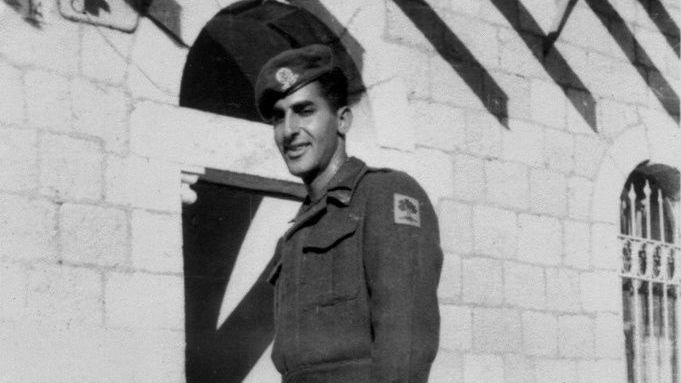
Fifty years ago this fall, Pvt. Hagai Bar-Orian, an Iranian-born soldier from the Golani Brigade, performed what appears to be an act of uncommon heroism — sacrificing his life to save his brothers in arms.
Today, the family, a former general, and a member of the Knesset’s Foreign Affairs and Defense Committee are urging the army and the Defense Ministry to recognize his actions and to decorate him posthumously for “an act of camaraderie, courage and fortitude, which saved the lives of dozens of soldiers,” according to an October 29 letter from MK Omer Bar-Lev to Defense Minister Moshe Ya’alon.
The family, having presented the case to the then-head of IDF Manpower Division, Maj. Gen. Orna Barbivai, in April 2014, has not heard a word from the army since.
Bar-Orian, in October 1964, was dressed as a police officer and deployed to Hebrew University’s Mount Scopus campus. Under the Armistice agreement of 1949, the campus, an enclave within the enemy state of Jordan, was a demilitarized zone. Israel was allowed to maintain 35 civilians and 85 police officers on campus – the precise number present on the eve of the war.
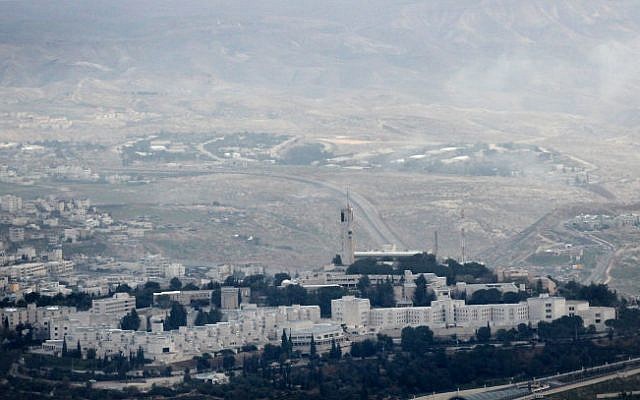
The army, however, understood that in any future war the enclave would come under attack. In 1956 it established a covert unit, Matzof 247, that charged eight or nine soldiers with going undercover as policemen and smuggling arms onto the campus so that it could be defended.
“It felt like being on another planet,” said Aryeh Shnipper, one of the permanent soldiers on the base, about life on the enclave.
Maj. Gen. (res) Uri Saguy, a former head of the IDF’s Military Intelligence Directorate and Bar-Orian’s platoon leader, likened the service on Mount Scopus at the time “jail” and said it was dark, quiet and spooky — but, with the Old City of Jerusalem closed off to Israelis at the time, there was an ineffable charm in serving on eye-level with the golden Dome of the Rock.
The unit, masquerading as police officers during the day and operating as soldiers at night, managed to smuggle to Mount Scopus three jeeps, cut into foot-long pieces and outfitted with three recoilless artillery tubes, several 81mm. mortars, and, among other weaponry, thousands of pounds of explosives.
Shnipper estimated that there were 3,000 grenades hidden in the Chemistry Department of the university; some of them were WWII-era Mills Bombs, first designed by Sir William Mills for Britain in World War I.
The commander of the Matzof decided that the explosive mechanism in those grenades needed to be replaced with a more modern and trustworthy apparatus. Isaac Duchner, a kibbutznik who had recently immigrated to Israel from Cuba, described the dangerous chore. There were two groups of soldiers, he said. One unscrewed the grenade and removed the time-delay fuse and the explosive component and placed the grenades in a sack; the other, sitting on an enclosed balcony, removed the safety pin and the “spatula,” neutralizing it entirely.
Duchner, a Nahal Brigade soldier and the commander of the second group, said the soldiers were lucky if they slept three hours a night.
On October 13, 1964, the soldiers had been at work for several consecutive hours. Pvt. Bar-Orian, a demolitions-trained Golani soldier, had been brought to the base several days before to assist the covert unit in its task. He was one of 11 brothers and sisters, a native of Isfahan, Iran, and a resident of the Bucharim neighborhood in Jerusalem.
“Suddenly, instead of a pop,” the normal sound the grenade made when the safety clip was released, Duchner recalled, “we heard a psss.”
The grenade was smoking. Someone had failed to disassemble it. Everyone froze, Duchner said. After a moment, he ran toward the grenade but Bar-Orian came around the table and picked it up.
Duchner followed him at a run, yelling “Throw it! Throw it!” he said.
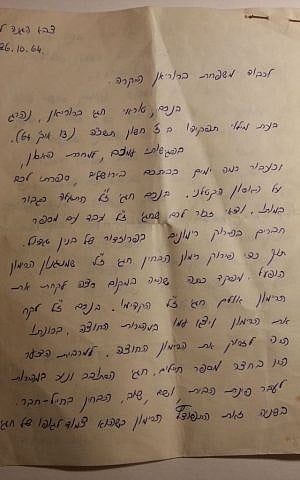
Bar-Orian, though, according to written testimony by his battalion commander – Lt. Col. Michael Feikes, who was killed in the Six Day War – ran outside with the grenade and encountered soldiers. “He turned around and moved quickly toward the corner of the house, but there, too, he saw a soldier,” Feikes wrote. “At that second the grenade exploded, close to Hagai’s body. He apparently pressed the grenade close to his body so that the shards would not injure his friends.”
Duchner, who broke into tears twice while relaying the story, was taken to the Bar-Orian family home in Jerusalem to tell the parents what had happened. He remembers a dark room and a very old floor; an old house, “falling apart” and a room “filled, filled with children.”
The grandmother started ripping her clothes and crying, he said. At the funeral, the father, Chai, jumped into the grave once Hagai had been lowered into the earth.
The army order to keep the event a secret, coupled with the father’s emotional collapse and his subsequent death several years later, led to a decades-long silence.
Eyal Shragai, Hagai’s nephew, said during the memorial evening, “We knew you through the tears. The tears did the talking.”
Shragai said in a phone interview after the memorial that his mother, Ruti, kept no picture of her brother in the house and that only at age 16 did he learn, from his older brother, of his fallen uncle. And only two years ago, not long after completing his own army service in the Nahal Brigade – he didn’t even know his uncle had been in Golani – did he learn about the battalion commander’s letter and the circumstances of Hagai’s death.
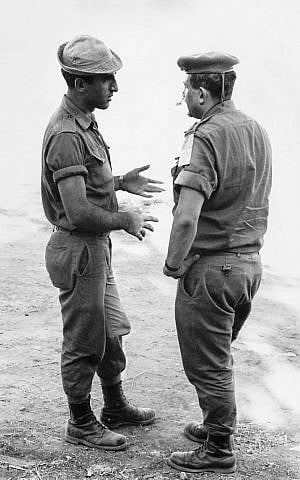
Since then he has contacted Saguy, the general, who met with Barbivai in order to “right the historic wrong.” Letters from Feikes and a brigade commander, and the oral testimonies of Duchner and another soldier present that day, were passed on to Barbivai, who agreed, despite the 50 years that passed, to weigh the matter of a decoration for valor.
That was in April. Since then, Shragai said, he has not heard a thing.
“To the dismay of the family, despite the time that has elapsed, no decision has been reached,” and, the family has learned, “the IDF has not made contact with the eyewitnesses to verify the details of the case,” MK Omer Bar-Lev, an army colonel in reserves, wrote to Ya’alon.
Undoubtedly, Bar-Lev wrote, in such cases the details must be examined before proceeding but a bereaved family should not be left “with no answers and no response” for so long. He urged Ya’alon to expedite the process and to consider “granting Hagai a decoration for his actions.”
This would not be without precedent. In 1954, Pvt. Natan Elbaz, while neutralizing grenades in a similar way, also encountered a live bomb and jumped on it in order to save his friends. He was awarded Israel’s third-highest military honor, the Medal of Distinguished Service. In 2006, during the Second Lebanon War, Maj. Roee Klein, who coincidentally served in the same Golani battalion as Bar-Orian, the 51st, replaced a fallen platoon leader during a face-to-face battle with Hezbollah, assumed command, and eventually jumped on a live grenade in order to shield those around him. He was awarded the country’s second-highest honor, the Medal of Courage.
“For me,” Shragai said, “the most important thing” – the reason he has taken on this mission for recognition – “is historic justice.” A byproduct of that, though, he said, would be that the family could talk about Hagai. “Not just as someone that died,” he added. “But as someone to be proud of.”




The Times of Israel Community.