

Scandalized anew by a story old as its victims
Elder abuse is not a new issue, but the publication of tapes at one nursing home has the papers as shocked as if they are hearing about it for the first time
 Add ToI as a Preferred Source on Google
Joshua Davidovich is The Times of Israel's Deputy Editor
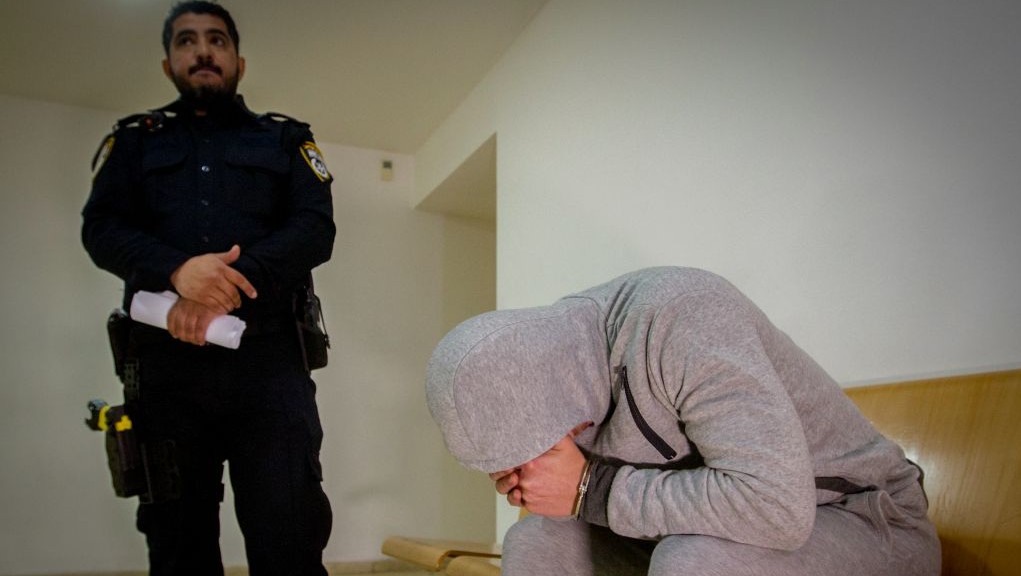
Elder abuse is a problem everywhere. Some 1 in 10 elderly people around the world suffers some kind of abuse, according to the World Health Organization.
The most widespread type of abuse is financial — old people being scammed out of money — and Israelis’ aptitude at taking advantage of the elderly through a battery of stings and flim-flams is already well-known. The next most “popular” is physical abuse, and the incidence of that rises sharply among those in nursing or assisted living facilities.
None of this is new, and unfortunately nobody should be surprised that these types of things go on, but revelations that the elderly were being abused at a specific nursing home in Haifa have still managed to scandalize the country, drawing attention to an ever-present and ever-ignored danger. Since a report aired Saturday night, Israelis have been shocked, shocked over what is occurring at old age facilities and on Monday morning, with papers having been given time to look into the issue themselves, pages are filled with harrowing tales of abuse of eye-watering wailing from the families of those whose loved ones are being kept in these institutions.
Despite the fact that it was a Channel 2 report showing abuse from inside the Neot Kipat Hazahav nursing home in Haifa that set off the scandal over the nursing homes, Yedioth Ahronoth claims that it was actually the one that “opened Pandora’s box,” showing off a series of clippings on the issue going back to February 6 (which did little more than rile a few officials) to make its case.
Touting its “new testimony,” the paper publishes photos showing elderly people tied to beds and accusations of abuse from two children of people kept in old age homes. Though the paper refuses to name the facilities or even detail where they are, the breadth of the accounts shows that the issue is not contained to one bad apple in Haifa.
“One time I came and [my father][ was holding his hand and it was a bit swollen,” Ilanit Darmon, whose Shoah survivor father died in an old-age home after a fall, is quoted saying. “I asked him what happened and he said he touched his diaper while he was being changed and the caretaker twisted his hand. I wanted to complain, but he forbid me. They’ll get back at me,’ he claimed. And it seemed he was right.”

In an accompanying column, octogenarian novelist Aharon Appelfeld notes that nobody’s words of condemnation, his included, will do any good, since what is needed is more robust oversight. Famous for all of his writings being colored by the Holocaust, his short column in Yedioth, seeking to address the larger issue of the place of the elderly in society, is no different.
“We’ve turned our elderly into a burden. Holocaust survivors, who years ago were people with a face, who fought Satan bravely no matter where — in the ghetto, in the camps or in the forests — are finding themselves in beds or wheelchairs,” he writes. “But the elderly don’t need to be a problem or a burden for society — old age can be an extraordinary and amazing blessing for a family. We don’t know how to derive the maximum from our elderly. Stop turning the elderly into a burden — they have wisdom that young people don’t. They have sensitivity and experience that young people don’t. Hug them.”
Israel Hayom also puts the elder abuse scandal front and center, but zeroes in on the one home in Haifa, writing about the arrests of five workers, the promised crackdown by Health Minister Yaakov Litzman and the protest by families of those whose parents are staying at the facility.
“How could someone do a thing like this? Only a person with a heart of stone,” Esther, the daughter of one of the people seen in the Channel 2 videos being abused, is quoted saying.
As if there is any defense for abusing the elderly, Israel Hayom columnist Hagit Ron-Rabinovich asks much the same questions, over and over again, and pens a stirring wake-up call in the wake of the videos.
“There needs to be probing soul-searching over our elderly. Because they, these elderly, the beaten, the humiliated, are the parents of everyone, they are the grandmothers and grandfathers we have,” she writes. “They too were once young and energetic, and they made their dreams and their children, and they raised them and now, in the sunset of their days, we have dozed in our watch over them. We have dozed. These terrible pictures are a painful alarm. And the time has come to awaken, and not let the bitter truth be conquered by the occupation of routine.”
Haaretz also covers the elder abuse story, but only on the inside pages, its front page taken up with an occupation of another kind, the one that normally makes headlines — Israel’s military occupation in the West Bank.
A day after making waves by reporting on a secret regional summit with US secretary of state John Kerry, Jordan and Egypt a year ago, the paper now teases out a bit more, detailing Prime Minister Benjamin Netanyahu’s own counteroffer to the peace plan proposed by Kerry, including US recognition of building in settlements in exchange for a freeze elsewhere, US commitment to block anti-Israel UN votes, Saudi and UAE participation in a peace summit and more.
According to an unnamed Israeli source quoted in the piece, Netanyahu also didn’t like having Kerry involved in the process at all.
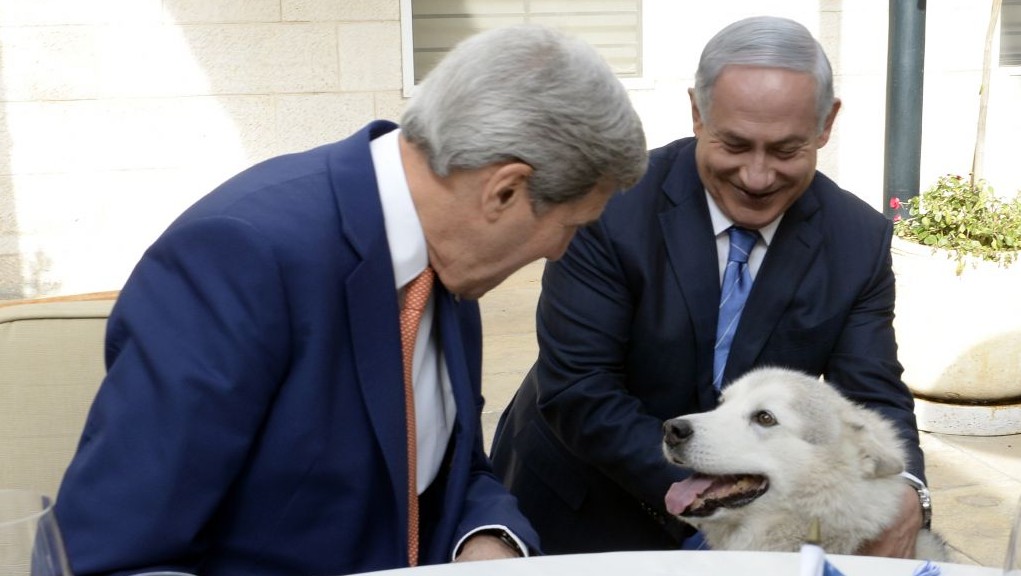
“Netanyahu didn’t want to be Kerry’s adjunct and certainly didn’t want his principles. He didn’t trust him and feared that Kerry would ruin the regional program,” the source is quoted saying. “Netanyahu wanted a regional initiative that he would lead, together with the leaders of Jordan and Egypt, and only at a later stage add the American administration, and Kerry personally, to the process as a supporting actor.”
The paper’s lead editorial joins opposition lawmakers in taking Netanyahu to task for refusing to move on the opportunity created by the Aqaba summit and blaming his rejection on coalition difficulties.
“If Netanyahu was the one who initiated the summit, as he told Likud ministers Monday, he should have created the political conditions to allow the peace initiative to be realized,” the paper writes.
“Instead Netanyahu trashed the Kerry initiative and evaded fulfilling the promises he made to Kerry, Abdullah and Sissi to make gestures to the Palestinians in the territories. At the moment of truth the prime minister preferred his partnership with Bennett, who is dragging Israel to the abyss of annexation and apartheid, over the chance to advance the two-state solution with regional backing,” the paper writes.
Stockholm syndrome
Meanwhile, Netanyahu’s new best bud for making his regional peace dream a reality found himself back in a distracting and silly hubbub Sunday after seeming to make up a terror attack in Sweden. And if one wanted a hint that the Stockholm brouhaha is a distraction welcomed by the Donald Trump administration to keep prying eyes away from actual damning scandals, one need look no further than Trump-backing Israel Hayom, which doesn’t exactly shy from the Swedish chafe.
“Sweden to Trump: ‘there was no attack here,’” reads the paper’s headline, and while the story mostly deals with Trump’s rally, it also goes into the baffling Swedish claim and backlash.

“Yesterday, the White House announced in response that when Trump said ‘what happened in Sweden’ he meant the rise in crime, and not a specific incident,” which a nice way of saying the president was watching Fox News.
The paper also goes into some of the continuing pushback against Trump calling the media the enemy of the people. Over in Yedioth’s op-ed page, Nahum Barnea also tackles this allegation, tracing its history back to a campaign by settlers in Kiryat Arba 40 years ago.
“Only in the last few years did [this claim about the media] turn from a horrible oddity into a threatening reality. Only in the last few years have the interests of politicians aligned with this new, violent, conversation on social media. The result is physical threats, cursing and chasing journalists and the delegitimization of the work of journalism on the whole,” he writes, giving Americans a taste of what they can expect. “The media is not the enemy of the people, neither in the US nor in Israel. The people are its customer, its consumer, its source of income. It woos them, nuzzles them and fights for its attention. … In Israel, unlike in the US, the media is not protected by the law: there is no law. What protects the freedom of journalists to work are the rules of the game, the fruit of 69 years of democracy and court decisions, and the public’s interest.”






The Times of Israel Community.