

Talking Syria, thinking Iran
Every move by and toward the Assad regime is registered in Tehran, while ultra-Orthodox conscription in Israel is back in the headlines
 Add ToI as a Preferred Source on Google
Aaron Kalman is a former writer and breaking news editor for the Times of Israel
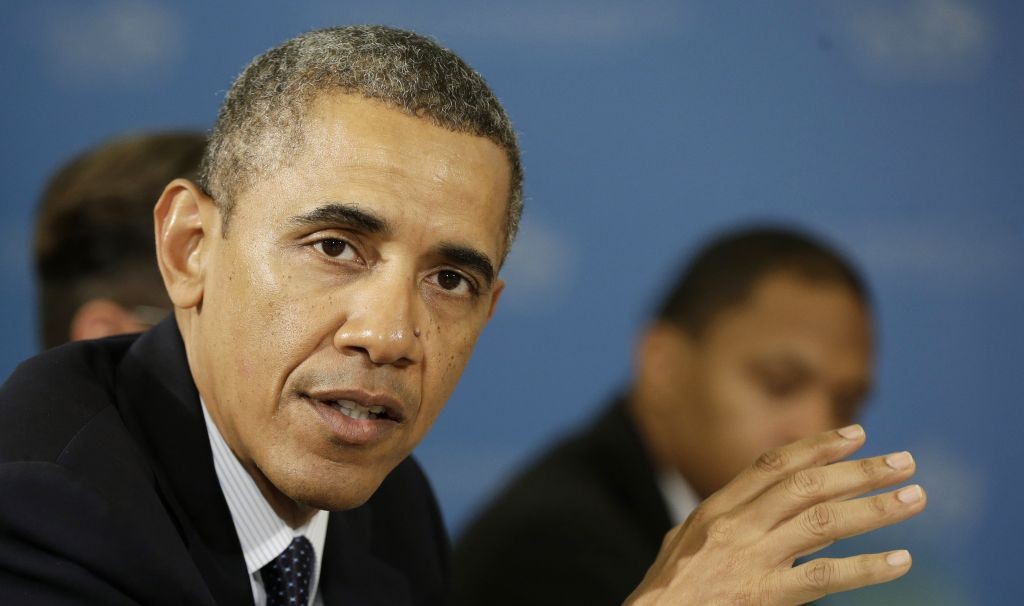
Though they’re still reporting on Syria, Monday’s Hebrew dailies shift their focus toward the implications of the chemical weapons deal on Iran’s nuclear program.
The lead story on Haaretz‘s front page discusses the latest reactions regarding the Russian-brokered deal to remove Syria’s chemical weapons from President Bashar Assad’s hands — and the effects such a deal could have on Iran.
“Iran shouldn’t deduce that we won’t attack it,” US President Barack Obama is quoted from an ABC interview in the daily’s headline. In the Sunday interview, the first since the US and Russian agreed on the Syrian arms deal, the president said the “Iranians understand that the nuclear issue is a far larger issue for us than the chemical weapons issue, that the threat… against Israel that a nuclear Iran poses is much closer to our core interests.”
“My suspicion is that the Iranians recognize they shouldn’t draw a lesson that we haven’t struck [the Bashar Assad regime] to think we won’t strike Iran,” Obama added.
Also Sunday, US Secretary of State John Kerry met with Prime Minister Benjamin Netanyahu in Jerusalem. After being updated about the details of the Syrian deal, Netanyahu said “the world must guarantee that extreme regimes don’t possess weapons of mass destruction.”
Yedioth Ahronoth, too, focuses on the effect of the Syrian arms deal on Iran’s nuclear program. The Hebrew daily highlights Obama’s statement that he’s been in touch, via correspondence, with Iranian President Hasan Rouhani.
Obama said Rouhani wasn’t going to make the job of dismantling his country’s nuclear program easy, but emphasized that a real military option on the table could enable a diplomatic move to happen.
The Hebrew paper cites an Iranian paper which claimed Obama told Rouhani he’d consider easing the sanctions currently in place if there was diplomatic progress. “Obama, the source said, wrote that he expects Iran to take action and not only to talk,” the paper writes.
Veteran columnist Eitan Haber writes that the agreement with Syria “at least for now, is a substantial achievement for President Obama who was laughed at last week by the whole world, and now, at least temporarily, he’s laughing at the world.”
Haber says Obama’s policy — the results of which should be visible within the next week or so — saved taxpayers’ money and the lives of American soldiers. The president, he writes, “wrapped his steel fist in a silk glove.”
Israel’s history with the Syrians shows the Syrian side likes to have the last say in any battle, Haber says. “Now we have to wait and see,” if the Syrian regime can still make a move that will put them back on top. Either way, he concludes, Iran is watching every move by Washington.
Maariv‘s lead story deals with the never-ending saga of the struggle to draft ultra-Orthodox men into the IDF, and the ancillary issue of the shortened service for national-religious men in the hesder program.
The paper reports that Defense Minister Moshe Ya’alon has hinted he won’t implement the proposed legislation “word for word,” but agrees that the Peri Commission’s suggestion for a new draft law is the best option at the moment.
Legislators who were present at a special session on the issue told the daily that Ya’alon made it clear he viewed the number of ultra-Orthodox men to be dismissed from military service — the commission recommended exempting 1,800 — as an optional and advisory number, rather than binding.
The MKs also told the paper he said the four-year transition period recommended by the commission could in fact be longer. “The meaning is Ya’alon might try and empty the law from any real content,” the paper states. The minister’s approach, it says, was welcomed by MK Moshe Gafni (UTJ), who said it was one the ultra-Orthodox parties could accept.
In addition to the conscription of the ultra-Orthodox, Ya’alon also addressed the issue of extending the service time of the national-religious hesder programs from 16 to 24 months. He also raised the option of extending the service time for women in order to shorten the amount of time men serve.
Still on army-related issues, Israel Hayom reports that IDF munition caches in the Golan Heights are easily accessible to sightseers and hikers who are traveling in the area.
In an article featuring pictures of rifle rounds, special nonlethal liquids used to disperse demonstrations and other munitions, the tabloid writes that the depots, which “stand in open areas in the northern Golan Heights and even on often traveled paths,” were discovered by inspectors from the Environmental Protection Ministry during a routine trip in the area.
“I view the IDF as a body that should provide an example in all the social and environmental issues, and so I expect the IDF to make the protection of the environment a core part of its vision,” Environmental Protection Minister Amir Peretz told the paper.







The Times of Israel Community.