

Trump’s Gaza proposal will jeopardize Israel’s future, warns head of liberal JCPA group
Jewish Council for Public Affairs CEO Amy Spitalnick says there is consensus among US Jews that Israel needs to get the hostages home and create a path forward for the Palestinians

 Add ToI as a Preferred Source on Google
Zev Stub is the Times of Israel's Diaspora Affairs correspondent.
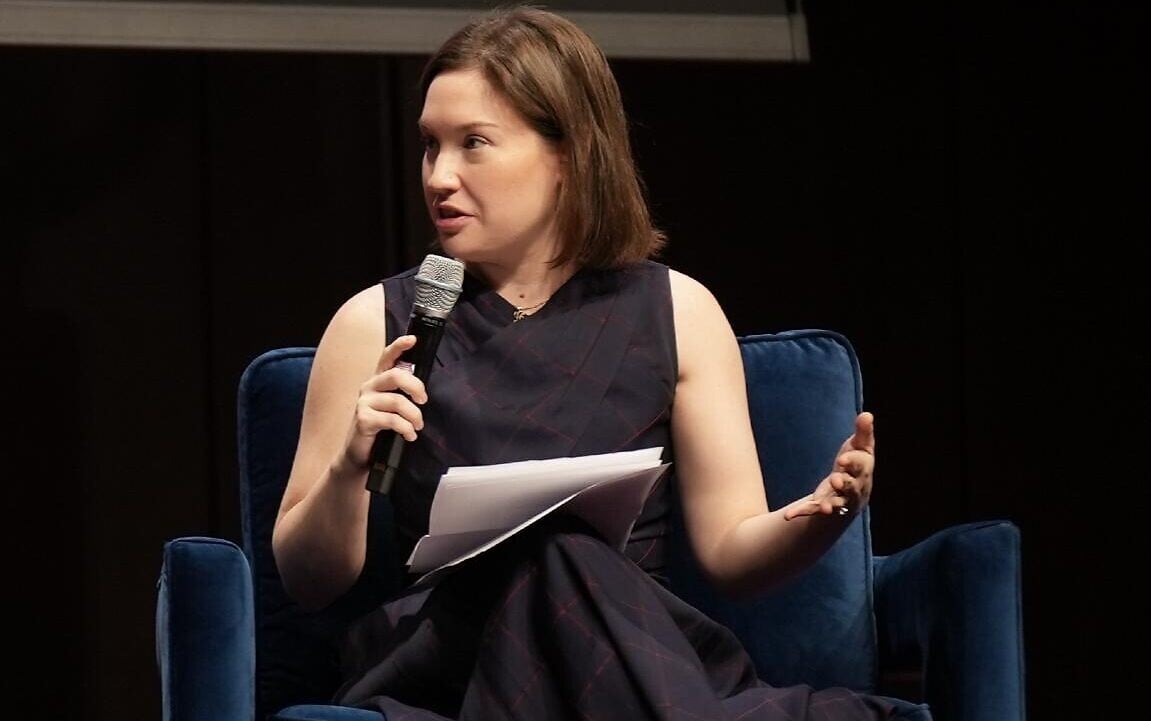
US President Donald Trump’s plan to move millions of Gazans out of the Strip and redevelop the territory is inconsistent with Jewish values and could put Israel’s future at risk, the head of the liberal Jewish Council for Public Affairs said Monday.
Amy Spitalnick, in Israel for a gathering of the Conference of Presidents of Major American Jewish Organizations, was on hand Sunday night when Prime Minister Benjamin Netanyahu told the leadership summit that Trump’s proposal for Gaza is “the only plan that can work,” a contention she strongly disagrees with.
“[Trump’s proposal] is out of step with Jewish and humanitarian values,” Spitalnick told The Times of Israel. “The idea of forcibly removing Palestinians from Gaza is simply unacceptable. It’s also out of step with Israel’s own future, which is tied to the ability for there to be a Palestinian state or Palestinian self-determination. When we lose sight of those long-term interests, it ultimately jeopardizes Israel’s future.”
Five hundred days into Israel’s war with Gaza, there is “broad consensus, both within the United States and in Israel,” that Israel’s path forward needs to bring the hostages home and put Israel and the Palestinian people on a path toward long-term security, safety, and dignity, said Spitalnick, whose organization works with Jewish coalitions to promote democratic values in the US..
Trump’s plan calls for the two million residents of Gaza to be permanently resettled elsewhere and the Strip rebuilt, likely as a tourist haven, a vision Spitalnick has called “absurd and dangerous” even as Netanyahu’s government embraces it.
Like many in Israel, most American Jewish groups have approached the Trump proposal cautiously, seeking to maintain positive ties with the new administration without fully endorsing or rejecting the controversial plan.
Spitalnick said she believes her views represent the mainstream of American Jewry.
“I spend a lot of time traveling around the country, speaking to both local Jewish communities and doing extensive work in interfaith or civil rights spaces,” Spitalnick said. “American Jews have a deeply complex understanding and relationship with Israel. The vast majority do have a deep personal relationship with Israel and believe that it needs to exist, but they also have fundamental disagreements with the government and its policies.”
Prior to the Sunday summit, Spitalnick posted a message along with National Council of Jewish Women CEO Sheila Katz and Women of Reform Judaism CEO Rabbi Liz Hirsch, noting that, for the first time, the majority of participants at the conference are women, “a powerful and long-overdue shift.”
“Given the ideological diversity of the speakers, most organizations participating — including our own — do not align with every speaker or viewpoint we hear from,” the trio wrote on Instagram. “However, we are united in our purpose and proud to stand together. Women’s voices belong at every table — not as guests, but as leaders shaping the conversations and decisions that will define our shared future.”

Spitalnick started her position at JCPA just a month before October 7, 2023. Since then, JCPA has done extensive work both publicly and behind the scenes working with coalitions across diverse backgrounds to strengthen relationships and protect Jewish safety, she said.
These include working with the Leadership Conference on Civil Rights, an umbrella group of more than 240 national civil and human rights organizations, to navigate the tensions of antisemitic protests on college campuses.
Another partnership with the American Federation of Teachers, the second-largest teacher’s labor union in America, is putting forward the message that Jewish safety is inextricably linked with democracy, Spitalnick said.
“Our work is about addressing antisemitism wherever it exists, on both the right and the left,” she said. “We get attacked every day from both sides.”









The Times of Israel Community.