

Relative calm returns to Temple Mount as police deployed
Heavy security presence at site after violence over Jewish New Year in Jerusalem left an Israeli man dead
 Add ToI as a Preferred Source on Google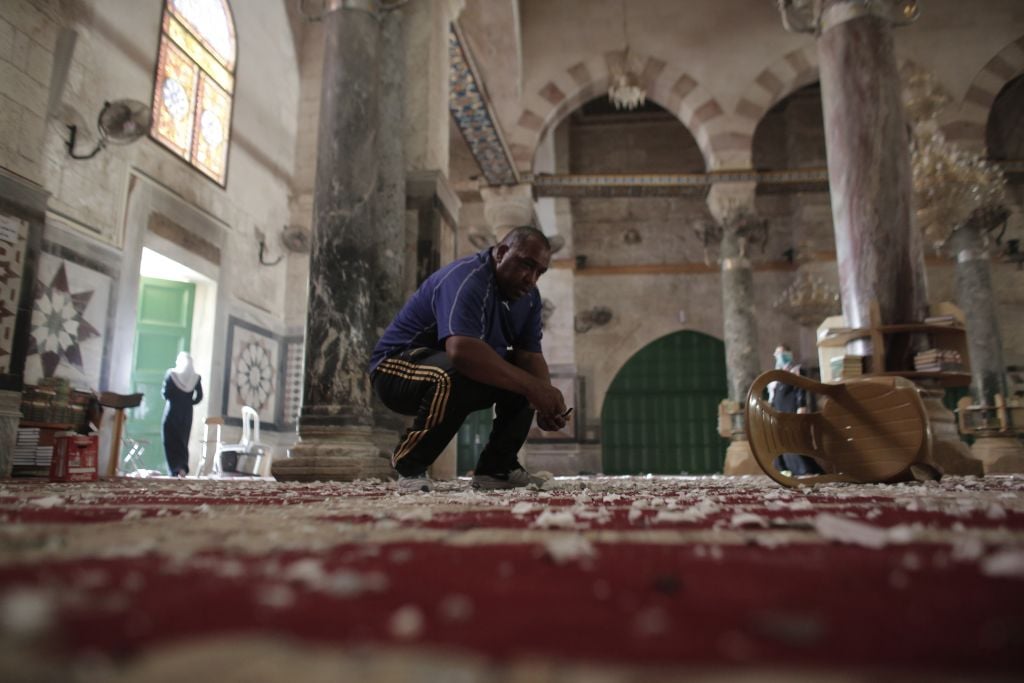
Following three days of clashes between Muslims and Israeli forces at the Temple Mount, quiet returned early Wednesday to the hilltop compound after police were deployed to calm rising tensions at the site.
There was a heavy Israeli security presence at the entrance to the compound and adjacent to the Al-Aqsa Mosque, where Muslim demonstrators clashed with Israeli forces over the last three days during the Jewish New Year. Police appeared careful not to inflame the situation by getting too close to the mosque.
Fifteen religious Jewish visitors toured the site early Wednesday, accompanied by Muslim authorities who administer the compound and an Israeli officer. Jews are permitted to visit the the Temple Mount, which is considered the holiest site in Judaism and the third holiest site in Islam and is a frequent flashpoint for tensions, but are banned from praying there.
Video from the site claiming to be from Wednesday morning showed police forcefully arresting a man while guarding a group of Jewish visitors amid loud chants of “Allahu akhbar.”
גם הבוקר מהומות של ערבים בהר הבית כמו בכל ימי החג הם מנסים לעורר פרובוקציות ולהתפרעה#הר_הבית
Posted by Pub-leak on Wednesday, September 16, 2015
Police presence was beefed up in Jerusalem Tuesday night after three days of violent clashes with Palestinian protesters on the Temple Mount and a fatal stone throwing incident elsewhere in the capital, as a UN official warned the skirmishes could spark a broader conflict.
Acting Police Commissioner Bentzi Sau said that police actions at the site in recent days were based on valid intelligence reports, and vowed to bring violent protesters to justice.
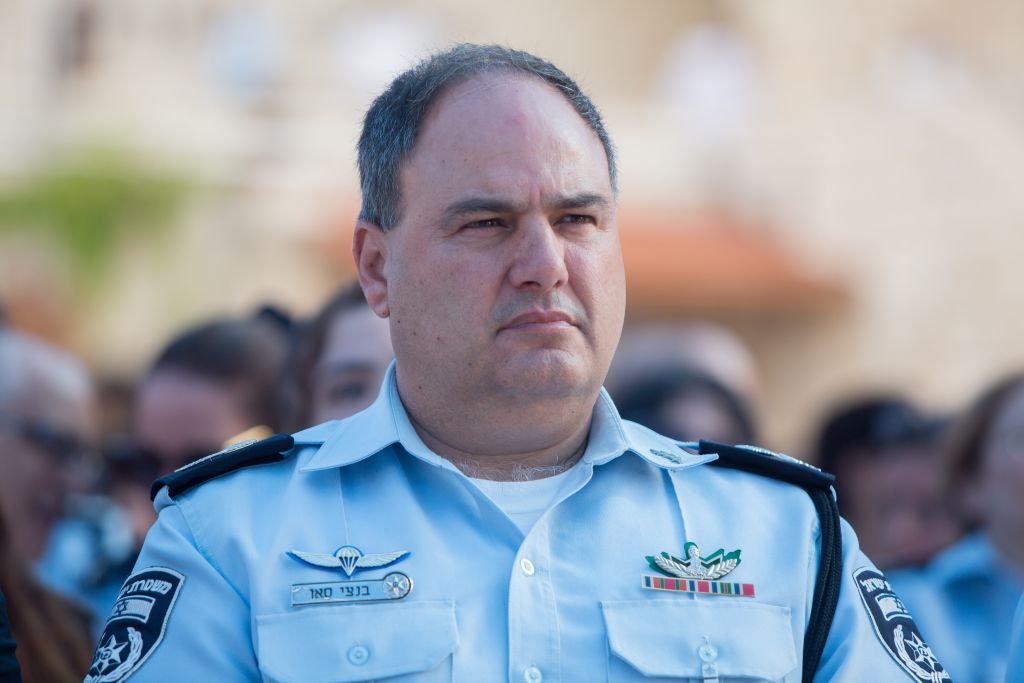
“Over the past three days, we have seen attempts by a number of individuals who are trying to aggravate and exacerbate the security situation in Jerusalem, and destabilize the security and peaceful coexistence in the city,” he said Tuesday.
Sau ordered an open-ended reinforcement of Israel’s security presence in the capital until calm was restored. Hundreds of additional officers were being deployed, with the goal of thwarting more violence and arresting those responsible for attacks in recent days.
He said there had been “an upsurge” in attacks, including stone-throwing and petrol-bomb throwing at police.
“We are determined to prevent disturbances and will bring those who violate the calm or harm police officers of civilians to justice,” Sau said.
Late Tuesday night, Prime Minister Benjamin Netanyahu said he would seek harsher punishments for rock throwers and others involved in low-level violence, as he convened an emergency meeting of top ministers and security officials.
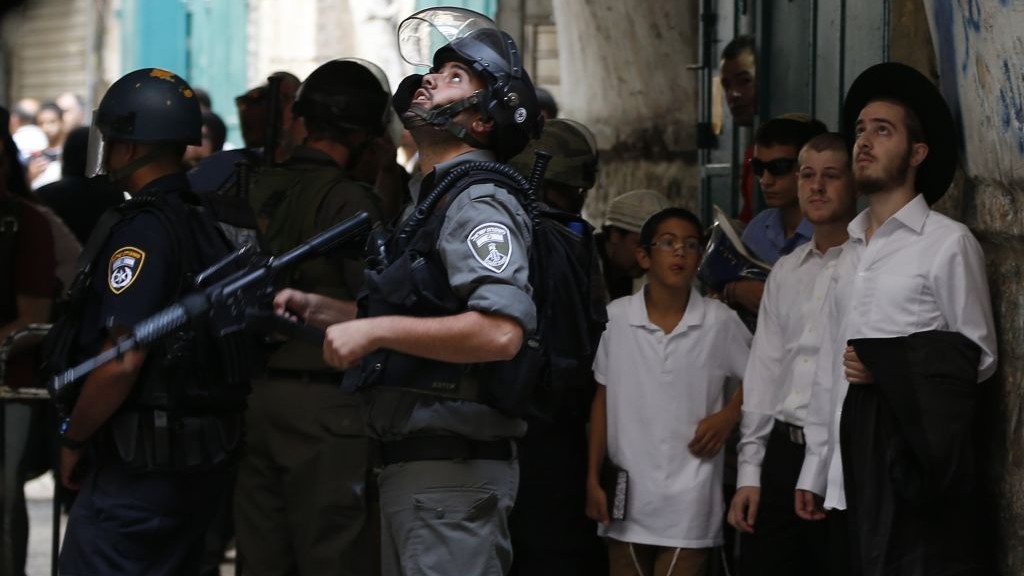
Clashes began Sunday at the holy site during a visit by religious Jews ahead of the Rosh Hashanah holiday, and violent protests also took place in other areas of East Jerusalem.
In the worst of these, an Israeli man, Alexander Levlovitz, was killed when stones were thrown at his car, causing him to lose control and slam into a lamppost in the Jerusalem neighborhood of East Talpiot.
Public Security Minister Gilad Erdan said the uptick in violence should not be termed an “intifada,” and called for stricter measures to use against rioters.
“I wouldn’t call it an intifada, but there’s definitely been a slow increase over the years in rock throwing and Molotov cocktail attacks,” he told Army Radio.
On Tuesday morning, Israeli police battled Palestinian protesters who holed themselves up in the al-Aqsa Mosque, where Israeli officials said they had stayed overnight, and prepared petrol bombs, rocks, fireworks and other means to attack police and Jewish visitors to the holy site.
Security officials blamed the Muslim authorities at the site for allowing it to be abused.
In the Arab world, meanwhile, leaders issued a stream of denunciations of Israel’s actions at the site, with King Abdullah of Jordan, which has custodianship rights over Muslim holy places in Jerusalem under its 1994 peace treaty with Israel, warning that bilateral ties would be affected if the violence continued.
From Sunday to Tuesday, Israeli security forces arrested 26 Palestinian protesters, and 14 Israeli police officers were lightly injured by rocks and firecrackers hurled at them, the Hebrew-language news site Ynet reported. Dozens of Arab protesters were injured as well, according to Channel 2.
Additionally, three Israeli civilians were lightly injured in Jerusalem’s Old City Tuesday morning after being attacked by a Palestinian. The perpetrator was apprehended by police shortly after the attack.
UN Middle East peace envoy Nickolay Mladenov warned the Security Council Tuesday that the clashes at the al-Aqsa Mosque compound could ignite a broader conflict.
“As the Middle East faces a vicious tide of terror and extremism, such serious provocations have the potential to ignite violence well beyond the walls of the Old City of Jerusalem,” Mladenov said.
The Islamic Movement and the Hamas terror organization said Israeli action at the site constituted a declaration of war, while Iran called for an emergency meeting of the Organization of Islamic Cooperation to condemn Israel.
The UN and US have urged restraint on both sides amid the latest clashes.
On Sunday morning, security forces seized pipe bombs at the site in an operation carried out hours before Jews prepared to celebrate the Jewish New Year. The Shin Bet security service alerted police to the cache, apparently an effort by Palestinians to stock up on bombs, flares and rocks ahead of an organized riot.
The police said its forces had entered the site, after protesters began throwing stones and firecrackers at the Mughrabi Gate, the access point for non-Muslim visitors to the site. Police said that protesters had wedged open a door to the mosque, which officers had later closed, allowing visits to the Temple Mount to continue as scheduled.





The Times of Israel Community.