

US official: Differences with Israel on Iran only ‘tactical’
Iranians, not French, rejected nuclear deal, official adds, predicting Iranian economy will worsen despite possible sanctions relief
 Add ToI as a Preferred Source on Google
Raphael Ahren is a former diplomatic correspondent at The Times of Israel.
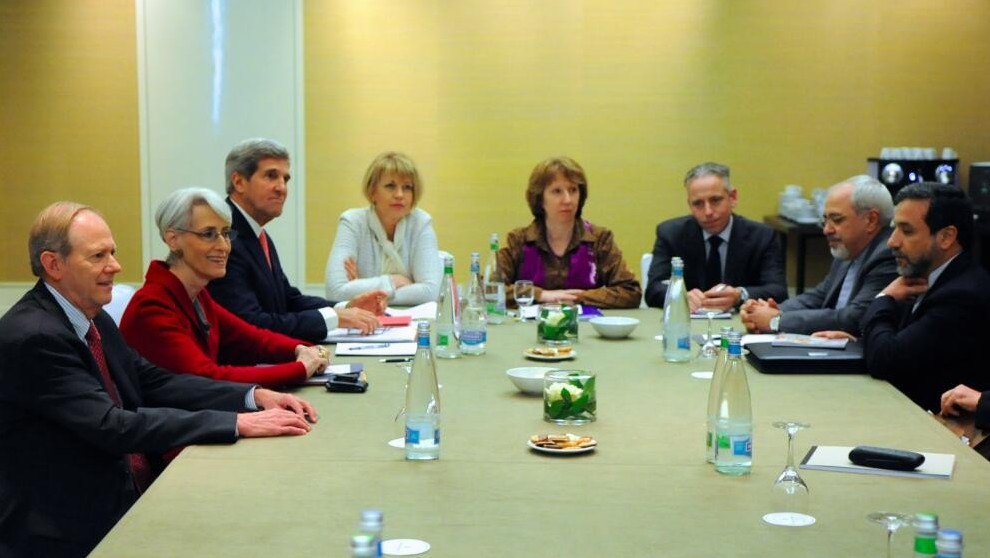
The disagreement between the United States and Israel is tactical in nature and Washington remains committed to preventing Iran from acquiring a nuclear weapon, a senior American official who is intimately familiar with the talks said Sunday in Jerusalem, trying to assuage fears that Washington might back a deal that would compromise Israel’s security.
The only difference between Jerusalem and Washington lies in determining the best strategy for reaching the two countries’ joint objective, the official said. While the US, together with five other world powers, strives to strike a first agreement that would temporarily freeze Iran’s progress toward nuclear weapons capability, in order to buy time to eventually reach a permanent deal, Prime Minister Benjamin Netanyahu rejects this phased approach, insisting on a final agreement that would remove all doubts over Tehran’s nuclear program at once.
Briefing Israeli journalists in a Jerusalem hotel, the American official said that even after limited sanctions relief in the framework of an interim deal, as proposed by the West, Iran’s economy would continue to deteriorate. The official also said it wasn’t the French but the Iranians who had rejected a temporary deal Saturday in Geneva, contrary to previous reports.
“The United States and Israel have worked very closely and consulted often, in the way to proceed forward — some days we may disagree on tactics,” the senior official said. “But we absolutely agree on the objective and we absolutely agree that we need a comprehensive agreement and we hope to get one very soon.”
The US, Britain, Russia, China and France — the so-called P5+1 — are working toward “an agreement where Iran takes a first step in a phased approach to a comprehensive agreement, which is what we all want,” the senior US official said. “We all want a comprehensive agreement, as does Israel. The question is how to get there. And we and the P5+1 believe that one does that by taking a step that ensures that Iran’s nuclear program cannot advance further; that, in fact, parts of it can be rolled back, to put time on the clock to negotiate a comprehensive agreement.”
This first stage should last no longer than six months, the official said, after which the P5+1 hope to sign a final agreement that would resolve the current nuclear standoff once and for all.
The official acknowledged a “disagreement” over a temporary deal that would allow Iran to continue enriching uranium to the level of 3.5 percent, but explained that the P5+1 believe they “should try and stop the advance of Iran’s nuclear program while we’re negotiating that comprehensive agreement.” Otherwise, the official said, the Iranians would just keep progressing toward a nuclear bomb.
The deal in the works would have the Iranians halt uranium enrichment to 20 percent purity, and their existing stocks of 20% would be converted to fuel rods; enrichment to 3.5% purity would be able to continue at Natanz and Qom. Further, operations at the Arak facility would have to cease. In exchange, the Iranians would have sanctions lifted on petrochemical products, gold, auto and airplane parts, and assets worth $3 billion would be unfrozen. The sanctions on the country’s gas and banking industries would remain in place.
“This is a disagreement [between the US and Israel]. But our close partnership and friendship with Israel will move forward as it always has. We will work our way through this because we share the same objective.”
Talks this weekend in Geneva yielded significant progress but no agreement. Iran and the P5+1 are scheduled to meet again on November 20. “I don’t know whether we will reach an agreement at the next session,” the official said.
If a deal is struck, however, it will bring “unprecedented transparency and monitoring of Iran’s program,” the official pledged, “and will ensure compliance with what is agreed to.” And any sanctions relief would be “modest, targeted and reversible. All of the core sanctions architecture will not be dealt with until a comprehensive agreement is reached. And Iran understands this. They wish it were otherwise, but it is not.”
Because the majority of the sanctions, including the US trade embargo, remain in effect, Iran’s budget deficit and other economic troubles will continue to increase, the senior official said. Since all oil and banking sanctions would run on, “the pressure on Iran will increase, not decrease,” the official said. “What we’re saying to the international community is ‘Your staying cohesive on the sanctions has helped bring Iran to the table and kept them at the table. So you need to keep going. We, the US, will send teams around the world to make sure that those sanctions stay in place. We will continue to vigorously enforce the sanctions.’”
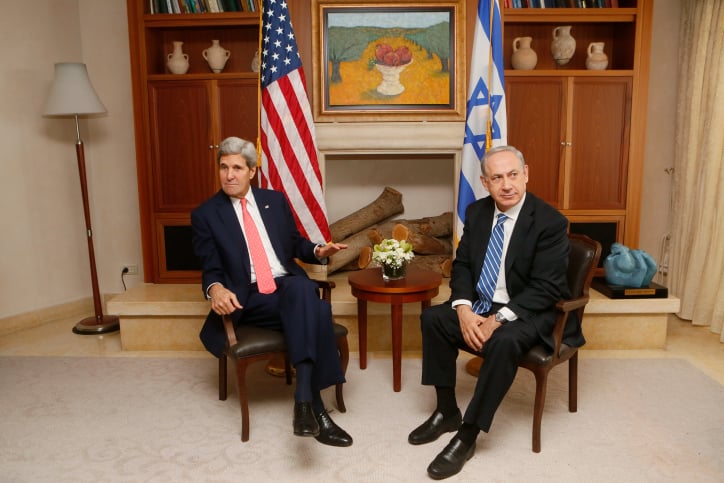
Israel vehemently rejects any deal that would allow Iran to continue enriching uranium. The proposed agreement between the P5+1 and Iran is “bad and dangerous,” Netanyahu said Sunday, calling on world leaders not to sign it. Rather than ease sanctions prematurely — which could lead to the unraveling of the sanctions regime — they should be toughened to force Iran to give up its nuclear program, Jerusalem officials reason.
The senior US official disagreed with that assessment, saying that more sanctions would likely cause Iran to leave the negotiations and proceed toward nuclear weapons. That would lead the international community to blame the Americans for not having exhausted all diplomatic avenues before resorting to military force.
Since the offer on the table would merely suspend certain sanctions for six months, it was unlikely to lead to a complete unraveling of the sanctions regime, the official said, arguing that businesses would think twice before entering a market that could be closed again after half a year.
“We’re clearly not more in a hurry than Iran, because we had a tough deal that we put on the table, one that we thought addressed the issues of concern and they could not take it yet. I hope they consider this a lost opportunity for them,” the official said. “We’re not in a rush. It has to be a good deal.”








The Times of Israel Community.