

10,000 dead, and still Assad holds on. Why is the Syrian revolution stuck?
Disunity — within the opposition, and in the international community — is proving an insurmountable obstacle
Elhanan Miller is the former Arab affairs reporter for The Times of Israel
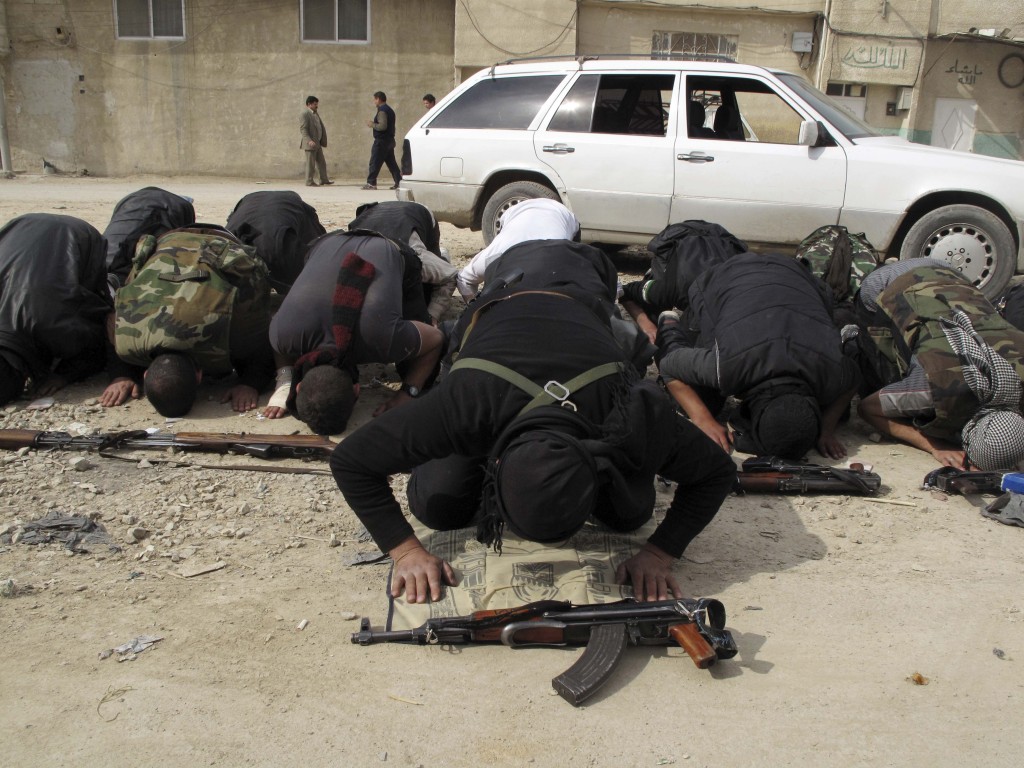
A year into the Syrian revolution, Bashar Assad is still standing strong.
For months Syria has hardly left global headlines. The death toll is a relentless, daily 80 or so, with the Syrian Observatory, a London-based Human Rights organization, documenting 7,306 civilian and 2,802 army victims since last March. Yet even those numbers, combined with damning email correspondence and repeated international pledges to help the opposition have apparently left the Syrian ruler unscathed.
So why is the Syrian revolution stuck?
“As things stand, there is no united front for the opposition,” Malik Abdeh, chief editor of Syrian opposition Barada TV, told The Times of Israel. “Syria has ethnic and sectarian divisions. There will never be a single, united opposition and the world should come to terms with that.”
On Sunday, it seemed the world had. During an Istanbul conference held by the “Friends of Syria,” a group of pro-opposition countries, the United States reportedly pledged $100 million and communications equipment to the Syrian opposition. But the gathering fell short of supplying the rebels with weapons, as Saudi Arabia has sought.
Khaled, a Damascus resident studying in London, regarded the opposition summit in Istanbul with the typical Syrian sense of irony.
“I don’t think the Istanbul conference will bring anything new or helpful to Syria,” he told The Times of Israel. “Except a few opposition leaders who will now have stable incomes from Gulf states.”
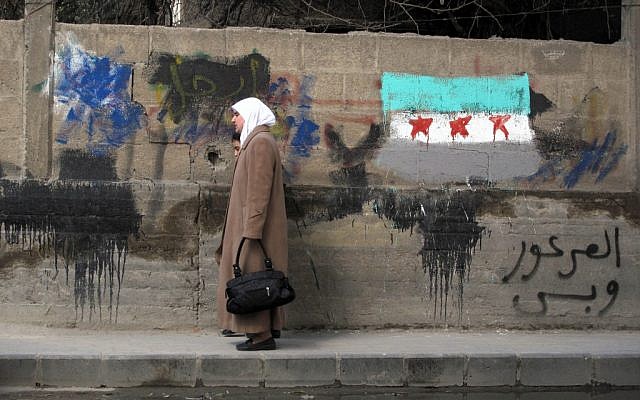
Abdeh of Barada TV agreed. He said that funds and communications systems alone will not suffice to topple Assad in the absence of logistical support from Turkey and Jordan, two US allies neighboring Syria.
“Providing communications devices to the Syrian opposition will not tip the balance of power in the opposition’s favor,” he said. “It will not be a game changer.”
According to Abdeh, the exiled Syrian opposition is politically inexperienced and holds little sway over the fighters on the ground.
“The [foreign] opposition’s role is secondary,” he said. “The opposition fills the role of mediator between the grassroots and the international community rather than a leadership role.”
One such “mediator” is Washington-based Syrian activist Ammar Abdulhamid, a fellow at the Foundation for the Defense of Democracies. In an interview with CNN, Abdulhamid admitted that “we [the Syrian opposition abroad] don’t have a political agenda and aren’t tabling a plan… there needs to be a public debate and we want to empower Syrians to do that.”
‘Providing communications devices to the Syrian opposition will not tip the balance of power in the opposition’s favor. It will not be a game changer.’
Abdeh acknowledged that the Syrian opposition lacks a clear vision and direction, a problem — he claims — which is more fundamental than a budgetary deficit. Rifts within the opposition surfaced during a meeting in Istanbul March 27, when the Kurdish contingent left in anger after its demand for recognition of an autonomous Kurdish region within Syria went unanswered.
Another veteran opposition activist, Haitham Maleh, protested the authoritarian character of Burhan Ghalioun, a Syrian-French university professor who heads the Syrian National Council (SNC), the main opposition bloc.
“I want to see the council act democratically. Until now, they are acting like the [ruling] Baath Party,” Maleh told Reuters.
But the opposition’s worst concern, perhaps, lies in the fact that Assad still enjoys substantial support within Syria. According to Abdeh, at least 2 million Syrians back Assad today.
“In Libya, Qaddafi needed to rely on mercenaries from outside,” Abdeh said. “In Syria, on the other hand, Assad enjoys plenty of internal support.”
Khaled, the Syrian student in London, assured The Times of Israel — somewhat morosely — that Syria is in good hands; the hands of God.
“Nothing will happen to us except what Allah has decreed for us,” he quoted from the scripture.
—
Follow Elhanan Miller on Twitter
The Times of Israel Community.