Sue Surkes is The Times of Israel's environment reporter
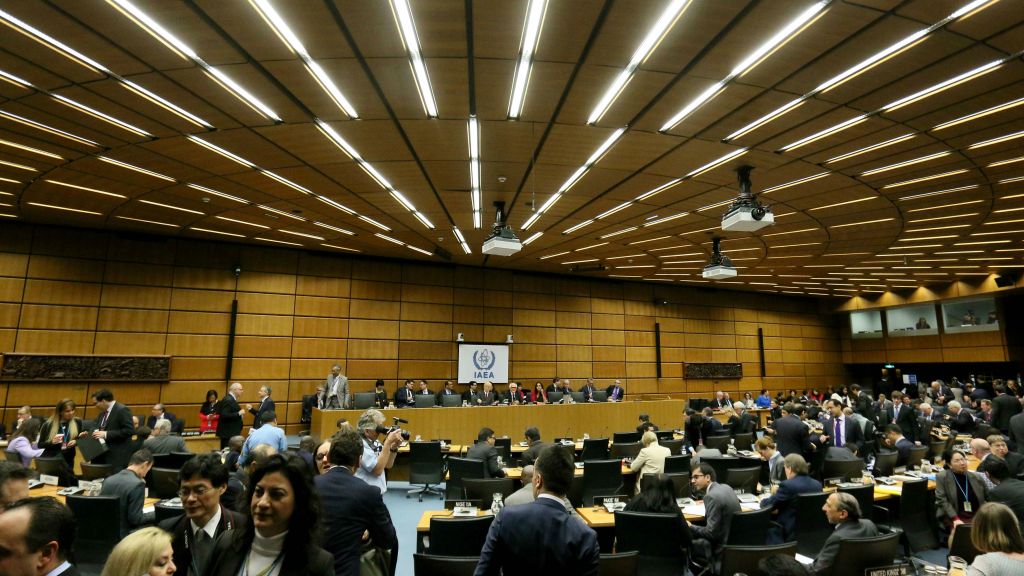
General view of the board of governors meeting of the International Atomic Energy Agency, IAEA, at the International Center in Vienna, Austria, Monday, March 7, 2016. (AP Photo/Ronald Zak)
Arab members of the United Nations’ International Atomic Energy Agency will refrain this year from trying to pressure Israel into nuclear transparency until a revision of their strategy yields results, the Reuters news agency reported Wednesday.
Arab League Ambassador to the UN Wael Al Assad told Reuters that this will be the first time in three years that a resolution will not be submitted at the IAEA’s general conference, which meets in a week’s time.
The last time such a resolution succeeded was in 2009, but it did not force the UN to watch Israel’s nuclear activity any more closely, Reuters reported.
“We need to deal with this in a more results-oriented way,” Al Assad said. “We are not interested in resolutions that have no implementation mechanism.
“We need to seek other means and policies; we are now in a process of revision (until next March),” he told Reuters. He did not go into what changes were being considered.
Get The Times of Israel's Daily Editionby email and never miss our top stories
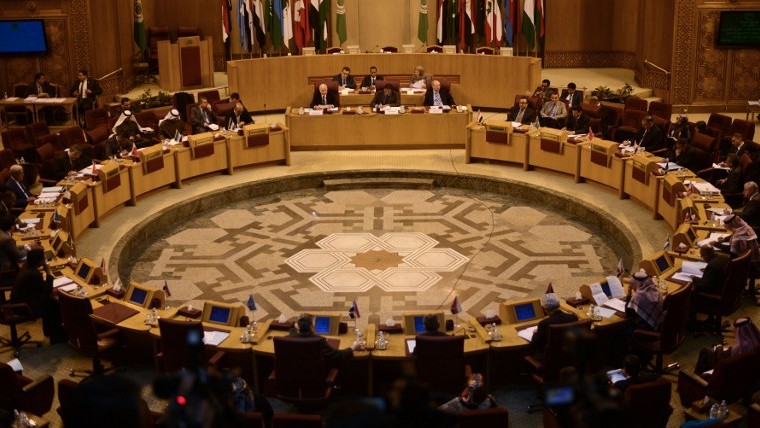
Arab League diplomats attend a meeting at the league’s headquarters in Cairo on January 5, 2015. (AFP/Mohamed el-Shahed)
Israel maintains a policy of so-called nuclear ambiguity, neither publicly confirming nor denying the existence of an atomic arsenal.
On Thursday, former US secretary of state and four-star general Colin Powell alleged that Israel possesses some 200 nuclear weapons, in an email apparently leaked by Russian hackers.
Advertisement
Help us report truthfully on social media
As a multimedia journalist, my job is to take the quality, fact-based journalism produced by The Times of Israel newsroom and make it accessible across every platform — from Instagram posts to podcasts to short-form videos.
This is how many, especially young people, consume news these days. But misinformation is rampant on social media. Our team at ToI produces accurate, responsible short-form reporting on Israel and the Jewish world.
If you believe in the importance of factual social media journalism, please consider joining our reader support group, The Times of Israel Community. Your financial support is essential to sustain responsible multimedia reporting.
We’re really pleased that you’ve read X Times of Israel articles in the past month.
That’s why we started the Times of Israel - to provide discerning readers like you with must-read coverage of Israel and the Jewish world.
So now we have a request. Unlike other news outlets, we haven’t put up a paywall. But as the journalism we do is costly, we invite readers for whom The Times of Israel has become important to help support our work by joining The Times of Israel Community.
For as little as $6 a month you can help support our quality journalism while enjoying The Times of Israel AD-FREE, as well as accessing exclusive content available only to Times of Israel Community members.
Thank you, David Horovitz, Founding Editor of The Times of Israel


 Add ToI as a Preferred Source on Google