

As outpost bill resurfaces, settlers bemoan failure to halt ‘final’ eviction
Hundreds gather outside Knesset to protest Amona demolition; West Bank leaders hail ‘opportunity to establish our place in the Land of Israel for hundreds of thousands of years to come’
Raoul Wootliff is a former Times of Israel political correspondent and Daily Briefing podcast producer.

As lawmakers in the Knesset attempted to finalize a controversial bill to legalize West Bank outposts, hundreds of protesters gathered outside the parliament building Monday morning to decry the upcoming evacuation of Amona, the most contentious of the unrecognized settlements.
The legislation — which would legalize some 4,000 housing units in the West Bank built on privately owned Palestinian land — was set to face a final plenary vote Monday evening but was then postponed until at least Tuesday.
Condemned by the Barack Obama administration, the European Union, the United Nations and Israel’s attorney general, the so-called Regulation Law is being hailed by the settler movement as a turning point in the 50-year settlement project. Once passed, supporters say, the era of evacuating Jewish settlements will be over, though the measure will not cover the doomed Amona outpost, slated for evacuation by early next month.
The legislation had been taken off the Knesset slate late last year, as Prime Minister Benjamin Netanyahu reportedly waited for Obama to leave office. On Sunday, he announced it would come back for a vote.
“This is a historic moment,” Avi Roeh, head of the Binyamin Regional Council told the crowd. “This is our opportunity to establish our place in the Land of Israel for hundreds of thousands of years to come.”

But for the 1,000-plus crowd of youths and families that made their way mostly from West Bank settlements to Jerusalem, the bill barely makes up for the “travesty” of the Amona evacuation.
“It is thanks to the fight for Amona that the Regulation Law will be passed,” bellowed Yesha Council chairman Yossi Dagan from the temporary podium less than a hundred meters from the Knesset gates. “But despite the law, the government has failed to prevent the unfathomable tragedy of uprooting a Jewish settlement.”
First put forward by the Jewish Home party, the original proposal was intended to overturn a High Court of Justice verdict forbidding the expropriation of the privately owned Palestinian land on which Amona sits. The clause that would have circumvented that court ruling, however, was removed from the bill following coalition infighting.
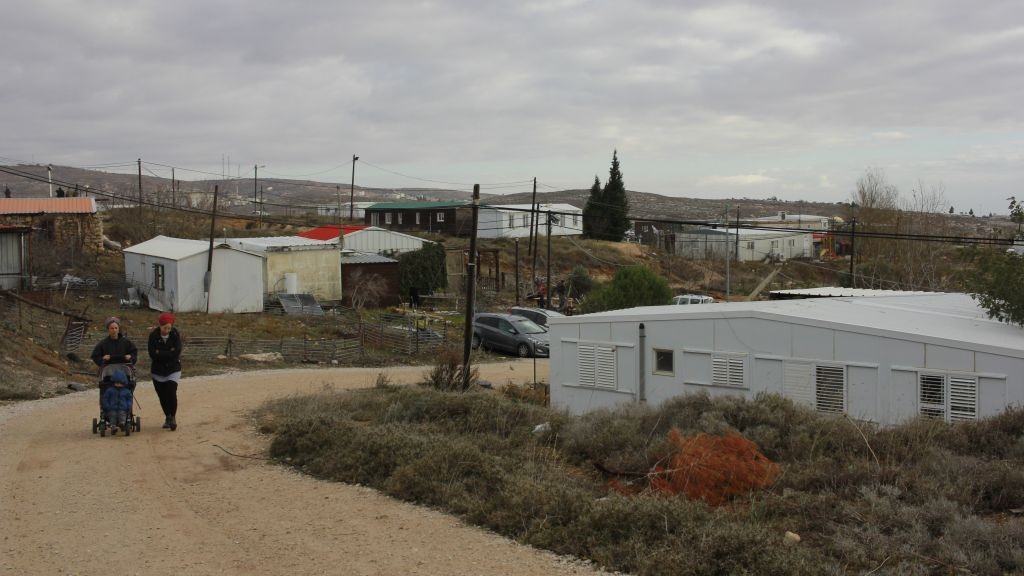
While coalition sources on Sunday said Prime Minister Benjamin Netanyahu had instructed his chief of staff Yoav Horowitz to explore the possibility of including Amona in the final bill, a special committee created to oversee the legislation debated the final the text Monday without mention of the outpost.
In a deal struck last month with the government, the outpost residents agreed to move peacefully to an adjacent plot. But the deal was complicated after a Palestinian claimed ownership of the nearby plot, prompting the High Court to stop all work on the site.
The lack of a clear solution has once again raised the possibility of a forced evacuation of the Amona settlers and fears that violence could result. The residents of Amona last week renewed their protest against the government and vowed to resist the evacuation after the compromise appeared to fall through.
‘The final evacuation’
The final draft of the bill outlines the procedures for legalizing unauthorized construction on private land and compensating the Palestinian landowners. It also immediately freezes administrative proceedings in 16 West Bank settlements for a period of 12 months. As the text stands, it does not apply to buildings that have received final demolition orders from Israeli courts, effectively excluding the outpost of Amona, which is set to be razed by next Wednesday.
The proposed Regulation Bill stipulates that settlement construction in the West Bank that had been carried out in good faith, without knowledge that the land was privately owned, would be recognized by the government, provided the settlers show some kind of state support in establishing themselves at the site — which in some cases could be as minimal as having access to public infrastructure.
Under the bill, the government will be able to appropriate land for its own use if the owners are not known. If the owners are known, they will be eligible for either yearly damages amounting to 125 percent of the value of leasing the land, a larger financial package valued at 20 years’ worth of leasing the plots, or alternate plots.

With or without a clause to save Amona, Attorney General Avichai Mandelblit has warned that the Regulation Bill breaches both local and international law, and indicated that the High Court was likely to strike it down. Some officials, including Netanyahu himself, have also warned that the law could see Israeli officials brought before the International Criminal Court in The Hague.
But for the hundreds of teenagers who turned up to the Jerusalem protest, the details of the bill and its possible legality were not important.
“We are just here to support the people of Amona,” 15-year-old Techelet Greenberg from the West Bank settlement of Eli said. “We hope the bill will pass, and we hope that we can stop the evacuation but for now, we just want to show support so that hopefully this will be the final evacuation.”







The Times of Israel Community.