

Damascus seethes and Saudi Arabia forgives Egypt
“Annan’s plan fails and everyone is scared of plan B,” writes one commentator
 Add ToI as a Preferred Source on Google
Elhanan Miller is the former Arab affairs reporter for The Times of Israel
Reporting on the explosions in Damascus Thursday morning dominate the news in Arab media Friday.
“Damascus wakes to a destructive explosion, and the regime blames Turkey and Libya for the explosion,” reads the headline of Saudi-owned daily A-Sharq Al-Awsat. The daily reports that despite the massive explosions, which are the worst the capital has ever seen, government crackdowns continue in the hinterland of Damascus, Idlib and Homs. The daily also carries the claim of the opposition that the government hides political prisoners in military installations.
A-Sharq Al-Awsat reports that the explosions are galvanizing the popular opposition to the regime of Bashar Assad.
“Dozens of fatalities and hundreds of wounded in the largest two explosions in Damascus,” reads the headline of liberal daily Al-Hayat, based in London.
Al-Hayat columnist Walid Shaqir complains, in an editorial titled “the game of the international monitors,” that the Americans and Russians are too busy with other concerns to deal with the Syrian crisis.
“There is a long road ahead of the international community if one expects a decisive plan to deal with the Syrian crisis based on Russian-American understanding,” writes Shaqir. “The deal which observers expect requires deciding a number of complicated international issues before reaching a decision on the situation in Syria.”
Raghda Dargham, a columnist for Al-Hayat, writes Friday that Annan’s plan is about to fail, but the international community is avoiding dealing with a plan B, “burying their heads in the sand from the ramifications of a civil war that may occur.”
Saudi Arabia gives Egypt 1.5 billion in aid
It was only last week that Saudi Arabia’s ambassador returned to Cairo following a diplomatic crisis between the two states, but on Friday A-Sharq Al-Awsat reports that the conservative kingdom will put $1.5 billion in aid in Egypt’s dwindling coffers.
Saudi ambassador to Egypt and the Arab League Ahmad Qatan tells the daily that the money will be transferred over 8 years, in addition to a memorandum to contribute $500 million to “certain sectors of the economy.”
Unexciting elections in Algeria
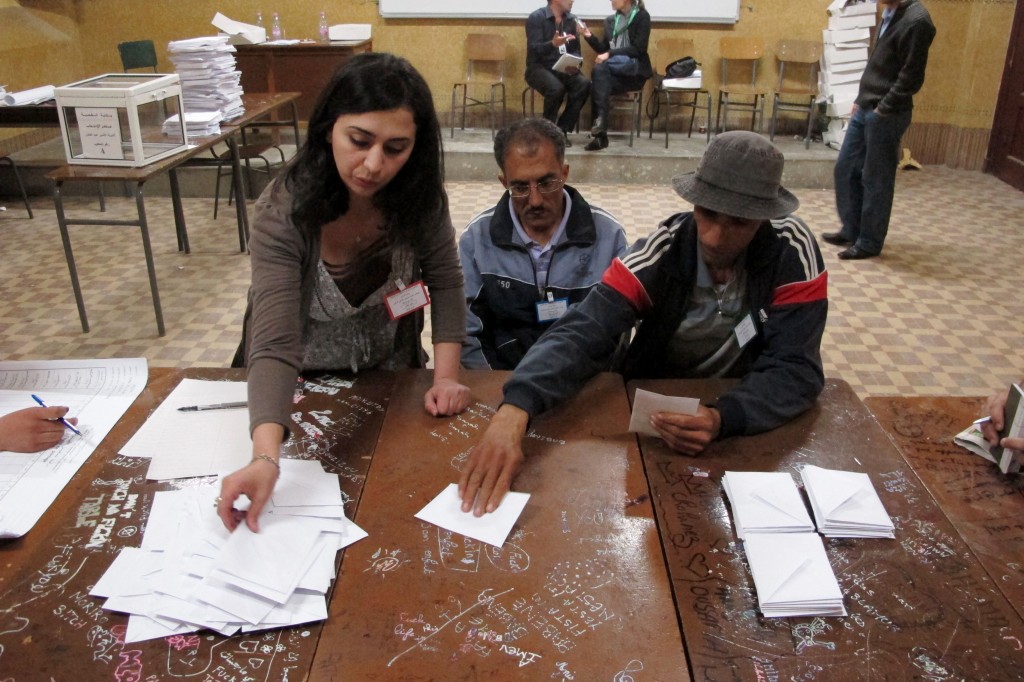
Parliamentary elections in Algeria Thursday saw voters come out in relatively small numbers, with results expected to be announced Friday afternoon.
“Algeria: expectations of modest advances for Islamists, and no excitement in voting,” reports Al-Hayat in its headline. The article’s photo features an older, bearded man casting his ballot in a suburb of Algiers. The daily reports that the Islamist parties are expected to gain a modest advantage over the ruling FLN, the current ruling party which also led Algeria to independence some 50 years ago.
Qatar-based channel Al-Jazeera reports that 43% of the voters cast their ballots in Algeria, a sharp rise compared to the previous elections. In the parliamentary elections of 2007, only 36% of eligible voters came out.
The regime of Abd Al-Aziz Bouteflika is dubbing the elections “cardinal,” following a series of reforms carried out by the government to avoid social unrest influenced by the Arab Spring, reports the channel.
But Al-Quds Al-Arabi, an Arab-nationalist daily published in London, is calling the Algerian elections “controversial.”
“Decision makers in Algeria admit that their country may be subjected to a popular intifada, the kind of which occurred in Libya, Tunisia, Egypt and Yemen and is now occurring in Syria. Therefore, they are racing time to avoid such an intifada in every way. This explains the call to parliamentary elections which began yesterday across the country.”
The editor points the blame at Algeria’s leaders for the countries economic and political woes.
“What Algeria needs is wise governance, capable of leading the country in the right direction and achieving national reconciliation … hopefully, these elections will be a step in this direction – eliminating the need for a popular uprising.”






The Times of Israel Community.