

Disabled protesters shut major Tel Aviv highway
Wheelchair-bound demonstrators press on with battle for higher living stipends, snarling Sunday morning traffic
 Add ToI as a Preferred Source on Google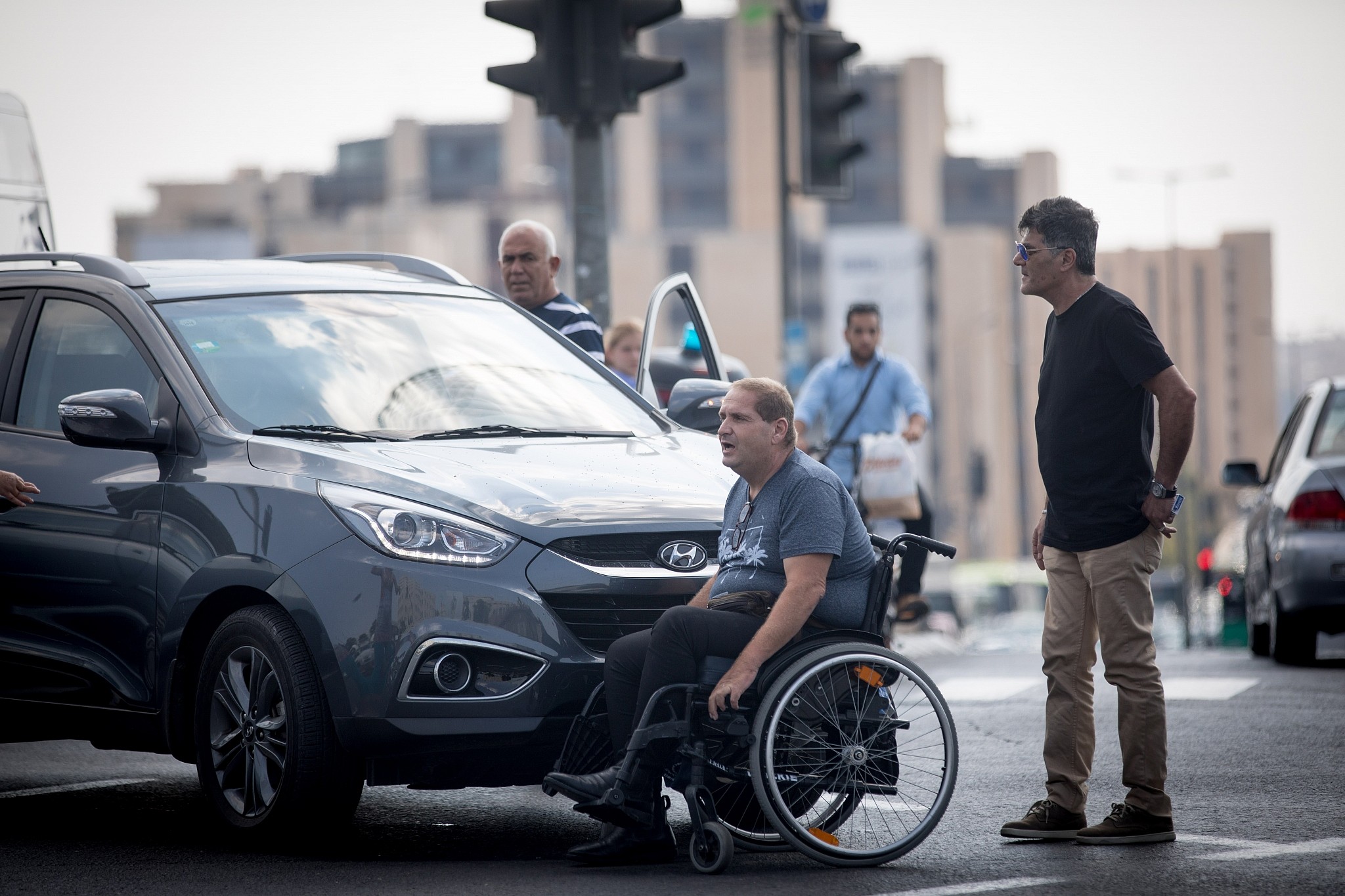
Disabled protesters on Sunday continued their lightning strikes on major highways to campaign for higher disability stipends, blocking an intersection of the Ayalon freeway, the main artery running through Tel Aviv.
Traffic came to a standstill as Israelis, returning to work after the long weekend of the Jewish new year, were blocked by a dozen demonstrators in wheelchairs distributing leaflets at the Keren Kayemeth LeIsrael junction opening onto southbound lanes into Tel Aviv.
[mappress mapid=”6164″]
Police also blocked the Glilot and Seven Stars interchanges north of Tel Aviv to force drivers to use alternative entrances to the city.
“People don’t understand our distress,” one of the protesters told Israel Radio, adding that police were allowing them to protest and were not trying to remove them by force.
“This is the only way we have to protest, we don’t have a lot of power,” she said.
The Knesset on Monday interrupted its summer recess for a special plenum session on stipends for Israelis with disabilities, following weeks of nationwide protests that have seen dozens of roads blocked by disability rights activists demonstrating against the slim government payouts.
עשרות נכים חוסמים את איילוןhttps://t.co/eilnUX2aJL
— ערוץ 7 (@arutz7heb) September 24, 2017
In June, lawmakers from across the political spectrum urged the government to accept a new plan that would raise the monthly stipend from NIS 2,342 ($660) to NIS 4,000 ($1,130).
The new stipend level would be linked to the minimum wage, which is raised periodically through Knesset legislation. The current stipend level is linked to the consumer price index, which rises more slowly than the minimum wage.
The proposal was a compromise between the demands of disability activists, including MK Ilan Gilon of Meretz, to set the stipend at the minimum wage, or NIS 5,000 ($1,400) per month, and those of a committee appointed by Prime Minister Benjamin Netanyahu that recommended a more modest increase to NIS 3,200 ($900) and would limit the increase to those with very severe disabilities and no family.
Opposition lawmakers who had sought to match the disability payments to minimum wage slammed Netanyahu for opposing such a plan. Gilon, himself disabled, told the plenum that all the lawmakers across the political spectrum favored an increase in the disability payments — except for the prime minister.





The Times of Israel Community.