

Dodgy draft committee
Members quit the Plesner Committee, Fischer v. Netanyahu, and white and black nights in Tel Aviv
 Add ToI as a Preferred Source on Google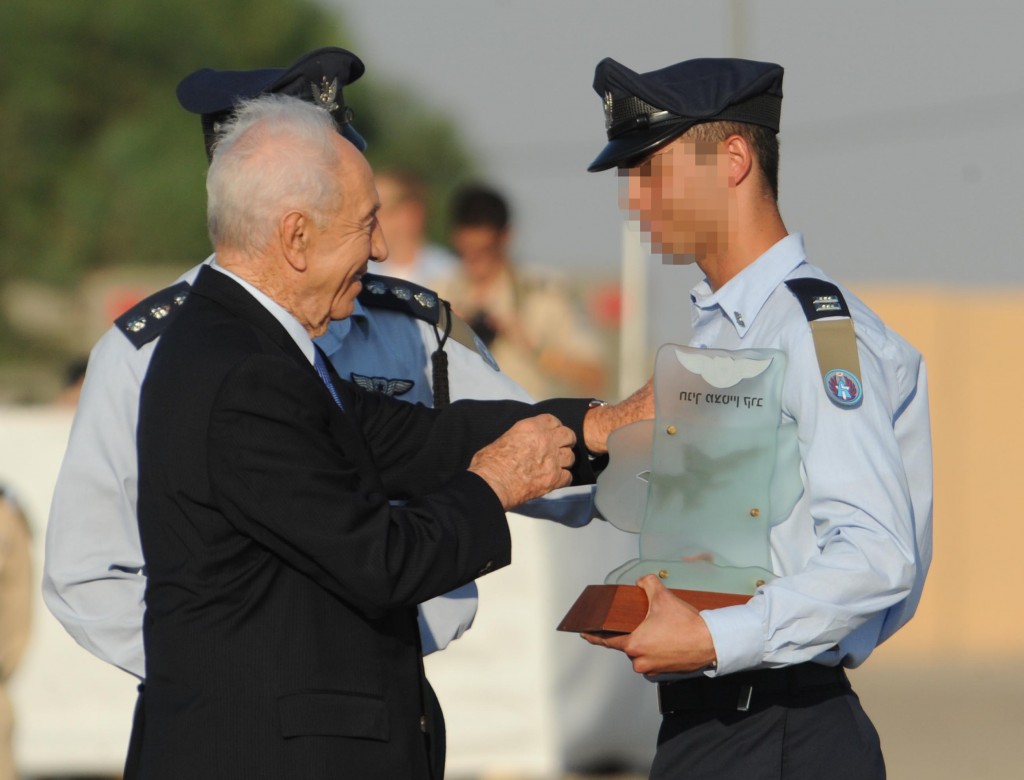
Finding a replacement for the defunct Tal Law became more difficult on Thursday, after Foreign Minister Avigdor Liberman effectively shut down the committee charged with recommending alternative legislation. Liberman’s move came after the Plesner committee acquiesced to a demand not to prosecute individual Israeli-Arabs who refuse to do national service.
Maariv’s one word headline — “Shakeup” — sums up Liberman’s suprise move and is accompanied by pictures of the foreign minister and Kadima Chairman Shaul Mofaz, who championed the creation of the officially named Committee for the advancement of inclusion in service and equality in sharing the burden. The article describes how the Yisrael Beytenu head pulled his party members out of the committee in protest for the lack of personal punishment for Israeli-Arabs who do not do national service. Kadima responded to Liberman’s move by stating, “He is working for a very specific interest.”
Yedioth Ahronoth quotes Liberman who said the committee was, “Smudging the public.” Yedioth’s coverage includes two very short op-ed pieces from residents of northern Israel: an individual who agrees with Israeli-Arabs serving in the IDF, and an Arab-Israeli who is against military or national service. The latter states that he is against joining the IDF because, as an Israeli-Arab, he feels that he is part of the Palestinian nation and cannot take arms up against his brothers. As for national service he writes, “National service is also not acceptable because the end goal is army service.”
Yisrael Hayom paraphrases Prime Minister Benjamin Netanyahu on its front page, “PM: Everyone needs to serve, including Arabs.” Mati Tochfeld comments on Liberman’s move in his opinion piece, “Liberman flexes his muscles.” Tochfeld writes that Yisrael Beytenu would have voted against the law in any case, but that yesterday the committee headed by Kadima MK Yohanan Plesner gave Liberman “a gift from heaven,” which allowed the FM to show off. “For the last few weeks [Netanyahu has had] many success including evacuating Ulpana and postponing elections, so they are sure he can pull another rabbit out of the hat. The only question now is who will bring the rabbit?”
Haaretz plays the issue straight with the headline, “The government finds it difficult to formulate a draft law.” The article covers the politicking involved in the committee and quotes MK Plesner reaction to Liberman’s move: “This is not the issue and Netanyahu knows that. The disagreement with Yisrael Beytenu is not an issue, it’s political muscle.”
Damascus Assassination
Sharing the space on page two of Yedioth is the news that one of Hamas’ top military operatives was assassinated in Damascus on Thursday. “This is too brutal an assassination for the Mossad,” reads Yedioth’s headline, quoting Hamas operatives in Damascus, who go on to say that the assassination is more characteristic of Syrian President Bashar Assad and not Israel.
Maariv reports that the IDF is bolstering its forces along the Syrian border as security sources worry that a new line of terror could open up along the Golan Heights. Officials fear that the area around the Golan Heights could develop into a terror base as the Assad regime loses its grip on power, much like what happened in Sinai. “There are serious and significant changes along the border which create the potential for terror attacks along the frontier, which has been quiet for years,” Brigadier General Tamar Heiman told Maariv.
While the IDF fortifies the border, there’s another battle brewing in Israel right now: Stanley Fischer versus Netanyahu, at least that’s how all the papers frame it. The two disagree over raising the deficit from 1.5% of Israel’s GDP to 3%, and the issue will come to a head on Sunday when the cabinet is scheduled to vote on the increase. Israel Hayom reports on the debate and quotes Fischer’s warning regarding the increase: “Some are saying that there is no difference between 1.5% and 3%. But this is the exact point in the past where there was enormous inflation.”
White nights, big city
Haaretz prominently displayed on its front page the protest against Tel Aviv’s White Night celebration. “Hundreds of protesters disrupt Tel Aviv’s White Night,” reads the headline, which places the focus on the protesters and not the city festival. The demonstration was in response to the use of excessive force by authorities last week against attempts to restart the social justice protests of last summer.
Three of the four papers covered the graduation of the most recent IDF pilot’s course, in which two female navigators also received their wings. Yedioth reports that the ceremony attracted the military’s top brass, including Air Force Chief Amir Eshel, Defense Minister Ehud Barak, and IDF chief Benny Gantz. President Shimon Peres was also present.
Yedioth reports on just how healthy (or unhealthy) Israel is compared to other OECD countries. According to the article, which ranked the countries on a number of health-related issues, Israel is number one for smoking cigarettes, number 33 for alcohol consumption, and number four for weight issues. The article states that 34% of Israelis are overweight, and that Israel trails only the US, Iceland, and Canada for countries with weight issues.
In the opinion pages, Haaretz revisits the possibility of university status being conferred on an academic institution in the settlement of Ariel. The paper argues against giving the Ariel University Center university status because of the harm it would cause Israel, and how it would perpetuate the conflict with the Palestinians. “There is no place for an Israeli university there in the land of the West Bank, and its establishment would only further entrench the creeping annexation [of the West Bank].” The editors conclude, “An Israeli university in the West Bank would be a university for the occupation sciences.”
“Turkey will not hesitate to take revenge against Assad,” reads the headline of Boaz Bismut’s piece in Israel Hayom regarding the situation between Turkey, Syria, and the rest of the world. Bismut compares the international community’s meetings about Syria, including the upcoming one in Geneva, to those regarding Iran and its nuclear program. Bismut writes, “Even if Geneva, despite its good clocks, does not provide us with the date of Assad’s departure, he will leave eventually. The question is when and at what price.” The downing of a Turkish fighter jet by Syria has pushed Turkey toward war, and Saudi Arabia and Qatar are funding Syrian opposition groups, which makes the West look ineffectual. “69 victims were buried before the chitchat in Geneva, but at least there is good chocolate, so that the delegates didn’t come for nothing,” he writes.







The Times of Israel Community.