

Don’t look a gift headline in the mouth
Papers seems to get ahead of themselves in playing up quotes and figures, with the fine print of stories showing not all that’s on a front page is gold
 Add ToI as a Preferred Source on Google
Joshua Davidovich is The Times of Israel's Deputy Editor

If it were not for the first major rainstorm of the winter season outside, one might get the impression it is the middle of August and news is on vacation: All the front pages of Israel’s major dailies Wednesday morning feature statistics or ranking-based stories that are normally kept in news organizations’ pockets for a sunny day.
But as the next-biggest story in Israel right now is the bizarre case of a Breaking the Silence spokesman trying to prove he beat up a Palestinian, perhaps it’s not surprising that everything is topsy turvy, to the point that even some headlines may not be as they seem.
Case in point is Yedioth Ahronoth, which claims the biggest expose in the Breaking the Silence saga, reporting on its front page that the state prosecution may reopen the case in light of “developments,” even though the other papers report the prosecutor’s official line that there is nothing new in a video showing spokesman Dean Issacharoff escorting a different allegedly beaten Palestinian than the one they based their initial findings on.
The fine print of Yedioth’s story shows it may be reading too much into the quote given by its source, who says only that “if we get new material that proves there’s evidence we didn’t look at, the case will reopen” — not “we got new material and are reopening the case.”
The paper also quotes a Justice Ministry source as saying that the Palestinian’s account of being beat up by a group of soldiers does not match Issacharoff’s telling, according to which he was the only one handing out knee and fist sandwiches.
“There is no connection between the accounts,” the source is quoted as saying.
In the same paper, columnist Yoaz Hendel accuses Breaking the Silence, which collects testimony of alleged wrongdoing in the army from veterans, of waging a political campaign that breaks the boundaries of law and order — hence, he says, the importance of getting whatever happened right.
“You don’t need Issacharoff to know the method, you only have to read the testimonies from Breaking the Silence,” he writes. “They have gone from a group seemingly committed to preserving the ‘purity of the arms,’ to a group dealing with creating a political narrative in the international arena. Anything goes. Not everything is a total lie, but in the political campaign they are waging, the general picture is important.”
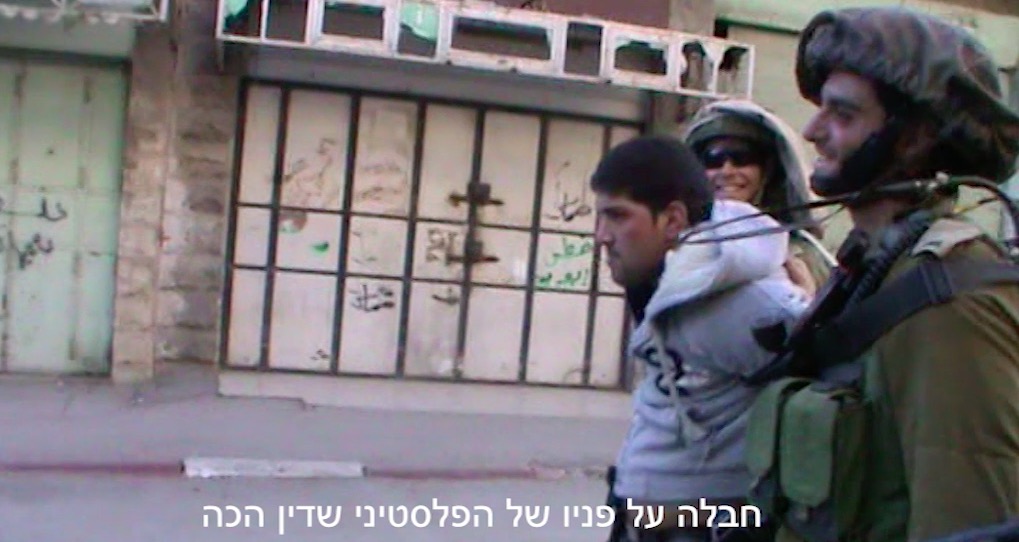
In Haaretz’s op-ed page, though, Chemi Shalev uses a plethora of biblical language to cast Issacharoff as a martyr, being sacrificed not for the cause of ending the occupation, but as a scapegoat that can bear all the occupation’s iniquities on his shoulders and let Israel continue to pretend everything’s okay.
“One person is stained, but the entire community is absolved. One will be condemned, and everyone else can get back to turning a blind eye, as usual,” he writes. “Netanyahu and his ministers have a vested interest in making the occupation disappear, and much of Israeli public opinion is only too happy to play along with the big lie. If there is no occupation, one doesn’t have to contend with the havoc it is wreaking on the impressionable soldiers who serve it, with the lasting damage it has caused in Israeli society as a whole, or with the destruction that it portends for the concept of a Jewish and democratic state.”
Shalev also writes that Deputy Foreign Minister Tzipi Hotovely ordered Issacharoff’s dad, Israeli envoy to Berlin Jeremy Issacharoff, to portray his son as a liar.
That didn’t stop the right-wing Im Tirtzu organization to call for the ambassador’s ouster, though, according to Israel Hayom, which credits its own “expose” for the move. However, the paper reports, the Foreign Ministry has no intention of visiting the sins of the son upon the father.
“Our ambassador in Berlin is an excellent, ethical man, and can manage separating his diplomatic activities from his son’s participation in an organization that’s problematic from the point of view of the State of Israel,” Hotovely is quoted as saying.
As for the stories the papers decided to place at the top, only Haaretz’s has any sort of peg that is of the moment, reporting in its main headline that a whopping 92 percent of sexual harassment cases are closed without charges being brought.
The number, based on a report from the Association of Rape Crisis Centers set to be presented to the Knesset, sounds bad, and it is, but it also involves some massaging of the figures, since it’s based on the fact that 26 indictments were filed in which harassment was the main charge, and 324 cases closed. However, there were 99 more cases in which harassment was an ancillary charge, meaning that it seems closer to 73% of cases are closed without charges.
With the paper also reporting that 84% of cases for all sex crimes were closed last year, though, the situation still seems spectacularly lopsided.
“The report portrays a despairing picture of the way the legal system handles sex offenses in general, and sexual harassment in particular,” the paper quotes Orit Sulitzeanu, the head of the association, as saying.
In Israel Hayom, numbers paint a sunnier picture, though clouds lurk, with the top story reporting on a survey that shows 60% of Israeli Arabs are proud to be Israeli and 73% feel a part of Israeli society. One could also say the fact that over a quarter of a minority don’t feeling proud or part of society is a problem, and lower down the paper does admit that the survey shows everything is not all puppy dogs and rainbows for Arabs in Israel.
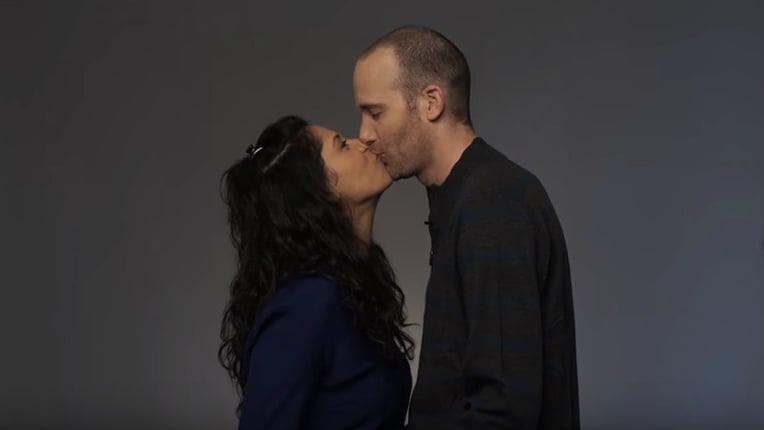
“According to the survey, most Arabs have Jewish friends and are willing for their children to study with Jews. However, most feel that there is incitement against Arabs among Jewish society, and only a few think the Arabs incite against Jews,” the paper writes.
Lastly, the news that Yedioth Ahronoth couldn’t wait to tell its readers is about a ranking of hospital emergency rooms — which it also terms an “exposé.” We’ll spare the bloody details, and just note that if you are going to need to get some emergency care, try to make sure you are around the Petah Tikva-Bnei Brak area, which is where two of the three top emergency rooms are. The third is in Nazareth.
And try to make sure you are nowhere south of Tel Aviv, where Ashkelon’s Barzilay hospital and Holon’s Wolfson Medical Center get the worst ratings.





The Times of Israel Community.