Erdogan vows Damascus will pay ‘heavy price’ for any attack
Referring to Turkey’s claims that it ‘neutralized’ 101 Syrian soldiers in retaliation for the slaying of 5 Turkish servicemen, president says ‘regime got what it deserved’
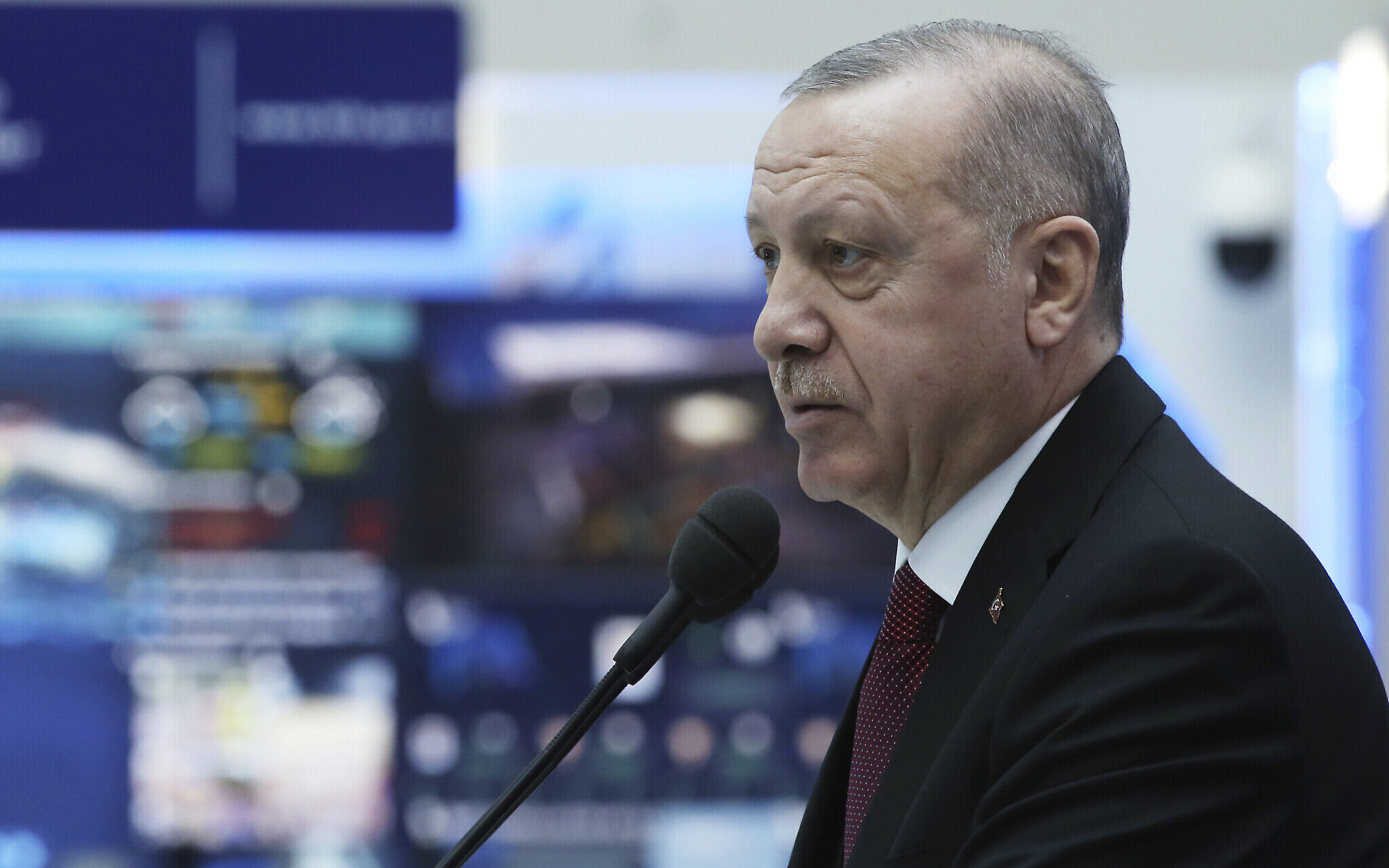
Turkey's President Recep Tayyip Erdogan speaks during a meeting in Ankara, Turkey, February 10, 2020. (Presidential Press Service via AP, Pool)
ANKARA, Turkey — Turkish President Recep Tayyip Erdogan on Tuesday vowed that Syria would pay a “heavy price” for any attack on Turkish troops, a day after five soldiers were killed in regime shelling in the Idlib region.
“The more they attack on our soldiers, they will pay a very, very heavy price,” Erdogan told a televised ceremony in Ankara.
Turkey responded on Monday with artillery fire on Syrian positions and said it had “neutralized” 101 Syrian regime soldiers after the killing of five Turks in Idlib — the last major rebel bastion.
The exchange was the second such clash in a week, after eight Turks were killed in regime fire last week, which again prompted a military response from Turkey.
“The regime … got what it deserved in Idlib,” Erdogan said. “But it is not enough.”
Get The Times of Israel's Daily Editionby email and never miss our top stories
He said he would reveal Wednesday the steps to be taken after the flare up in the northwestern province of Idlib.
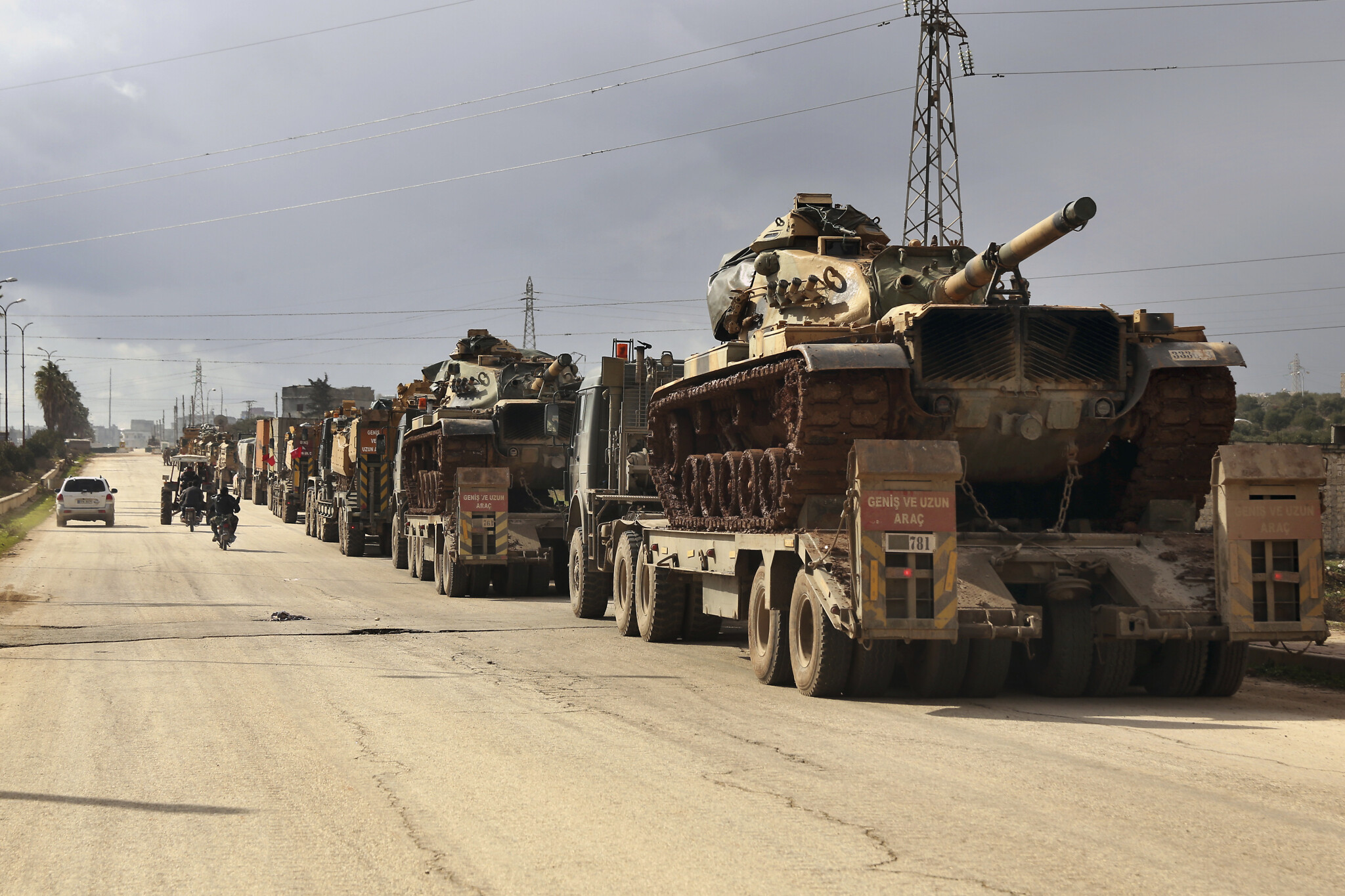
A Turkish military convoy drives through the village of Binnish, in Idlib province, Syria, February 8, 2020. (Ghaith Alsayed/AP)
Turkey has beefed up in recent days its observation posts in Idlib, which were set up under a 2018 deal with Russia — the key backer of President Bashar al-Assad.
The regime supported by Moscow has pursued an assault against Idlib, home to an estimated three million, for more than two months.
Advertisement
Help us report truthfully on social media
As a multimedia journalist, my job is to take the quality, fact-based journalism produced by The Times of Israel newsroom and make it accessible across every platform — from Instagram posts to podcasts to short-form videos.
This is how many, especially young people, consume news these days. But misinformation is rampant on social media. Our team at ToI produces accurate, responsible short-form reporting on Israel and the Jewish world.
If you believe in the importance of factual social media journalism, please consider joining our reader support group, The Times of Israel Community. Your financial support is essential to sustain responsible multimedia reporting.
We’re really pleased that you’ve read X Times of Israel articles in the past month.
That’s why we started the Times of Israel - to provide discerning readers like you with must-read coverage of Israel and the Jewish world.
So now we have a request. Unlike other news outlets, we haven’t put up a paywall. But as the journalism we do is costly, we invite readers for whom The Times of Israel has become important to help support our work by joining The Times of Israel Community.
For as little as $6 a month you can help support our quality journalism while enjoying The Times of Israel AD-FREE, as well as accessing exclusive content available only to Times of Israel Community members.
Thank you, David Horovitz, Founding Editor of The Times of Israel


 Add ToI as a Preferred Source on Google