

Five years after Carmel blaze, Israel adds new fire squadron
Ministry of Defense partners with Elbit to deploy 14 fire-fighting aircraft at airfields nationwide
 Add ToI as a Preferred Source on Google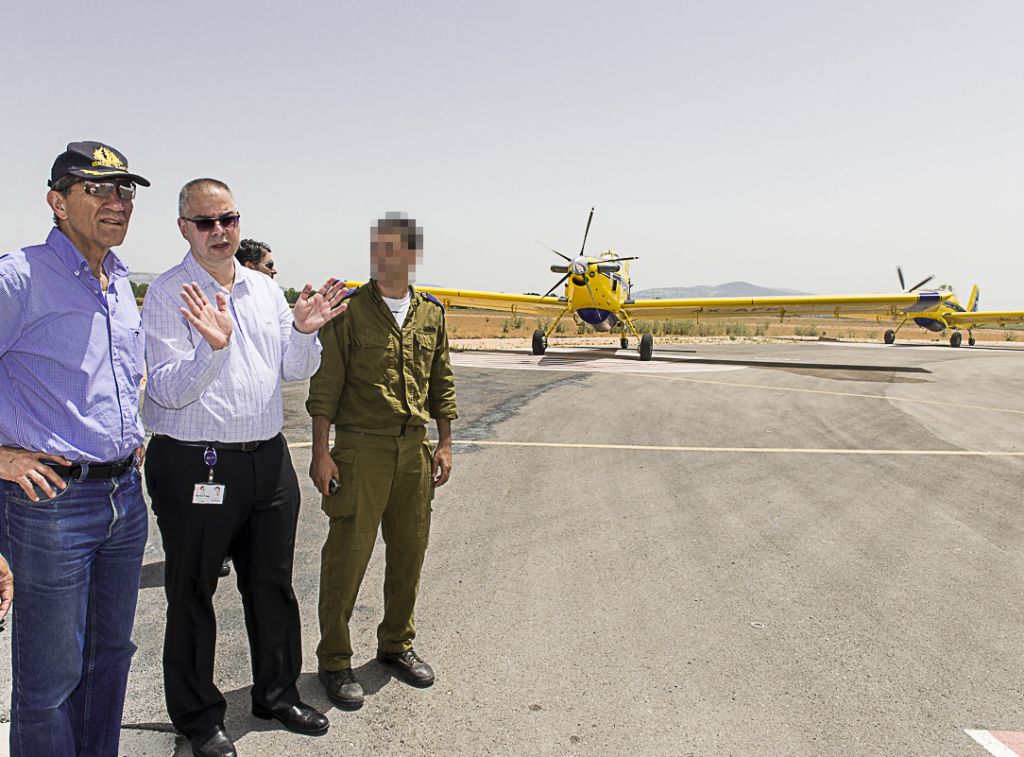
Five years after Israel’s most deadly forest fire, brought under control only with the help of foreign aircrafts, the Ministry of Defense and Elbit Systems joined forces to complete the deployment of a new fire squadron.
The Elad Squadron, named after fire scout Elad Ribben — one of 44 people killed in the Carmel fire — consists of 14 Air Tracker planes, operating from eight airfields across Israel. The aircrafts are capable of flying for three hours without refueling and can carry 3,000 tons of water.
“The aerial firefighting squadron, which was formed following the disaster of the fire in the Carmel, surprises us each day anew with its operational abilities,” said Brig. Gen. Schmuel Zucker, who heads the Defense Ministry’s Acquisition Administration. “The meaningful upgrades of its abilities are … expressions of confidence in the ability of the defense network to carry out national projects for the benefit of the economy and society.”
Israel came in for heavy criticism for its lack of preparation to deal with 2010’s massive forest fire, which raged from December 2-5 in Mount Carmel, just south of Haifa. The deaths of the 44 made it the gravest blaze in the country’s history.
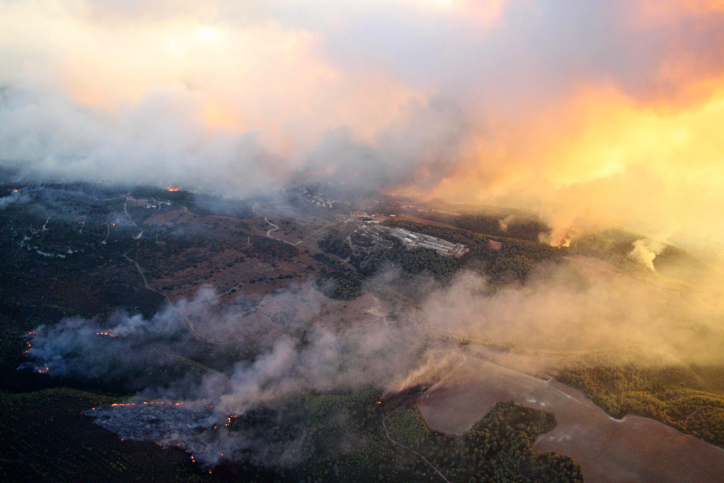
Former State Comptroller Micha Lindenstrauss released a 500-page report in June 2012 citing extensive failures in Israel’s handling of the fire, including having only 20 tons of fire suppressant material on hand —almost 90 percent less than the minimal requirement.
Yoram Shmueli, co-general manager of Elbit’s Aerospace Division, said the new squadron is a necessary step to furthering the nation’s security.
“We are proud to be partners with the head of purchasing for the Defense Ministry in the national effort for firefighting,” he said. “We will continue to develop modern solutions and make every effort to stand up to the important and complex missions that stand before us.”
Following the fire, in January 2011, the Israeli government formed the Aerial Firefighting Network, which operates under orders from the Israel Air Force. While under IAF auspices, however, the squadron is a civilian operation, and will come under the authority of the Internal Security Ministry as of the end of this year.
The contract is an eight-year deal that can be extended for another eight years. It’s valued at approximately NIS 450 million (some $115 million).









The Times of Israel Community.