

For Jewish Brighton Beach, it’s memoir time
The once primarily Jewish area can no longer be called ‘Little Odessa’
 Add ToI as a Preferred Source on Google
Renee Ghert-Zand is the health reporter and a feature writer for The Times of Israel.
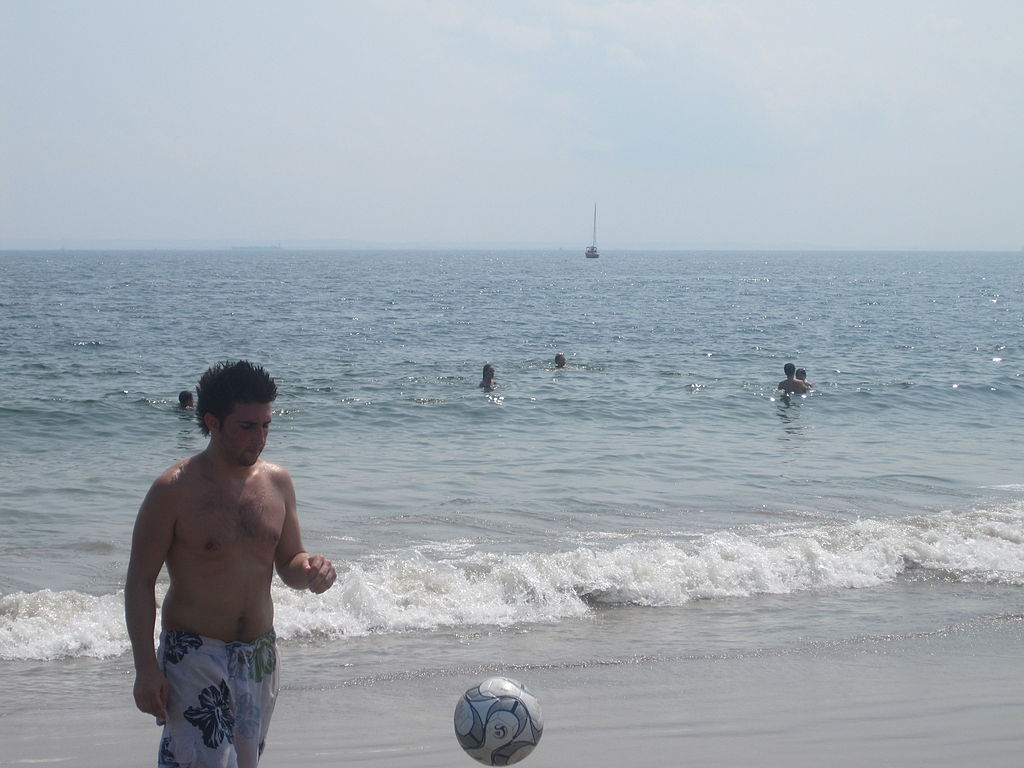
If you’ve seen movies set in Brighton Beach, Brooklyn such as “Little Odessa” and “Two Lovers”, you would think that the neighborhood is inhabited almost exclusively by Jews from the Former Soviet Union.
If today were the 1990s, you’d be right. But a group of Columbia University graduate students has produced a short video, called “The Changing Face of Brighton Beach,” documenting how the population of Brighton Beach has changed dramatically in the past couple of decades. Hint: You’ll still hear a whole lot of Russian in the streets, but you can’t assume its speakers are Jewish.
Anna Kordunsky, Michael Larson, Ariel Stulberg and Bingling Liao delved into the current life and culture of this lively and colorful area in southern Brooklyn just steps from the Atlantic Ocean. “Like its freak cousin Coney Island, the neighborhood known as Little Odessa is as much a state of mind as a location: stuck between two worlds, with its own culture, slang, radio, TV, magazines, and illicit pharmaceutical industry (think less meth and more FDA-unapproved heart drops),” is how New York Magazine described it. “It’s too singular and ornery to be a true tourist trap. Unlike Little Italy, with its defanged Mafia lore, Brighton Beach frowns at suggestions the ‘Russian mob’ has ever even existed; its secrets are still secrets, and its past is never far away.”
It turns out “Little Odessa” is no longer the most accurate nickname for Brighton Beach. Although the neighborhood was greatly populated in the 1970s by an influx of Jews from Odessa, Ukraine who were able to get out of the Soviet Union at the time, recent arrivals are increasingly non-Jews from other parts of the FSU.
As the students portray it in their video, the old-timer Jews are happy to have Russian-speaking Uzbeks, Kyrgyz, Kazakhs and Tajiks join them. “Heck, the population of Central Asian Russian speakers in the area has grown enough in the past few years to support their own 24-hour TV station. Luckily, bound by a common tongue, the newcomers seem to be getting along with the older Jews just fine,” Gothamist wrote in reporting about the short film.
It seems that “Little Odessa” exists more in people’s memories than it does in today’s New York. “Not only people from Odessa live on Brighton Beach anymore,” Ilkhom Kenjabaev, the director of Uz TV said. “Brighton Beach — one could say it’s like a small Soviet Union.”

The Times of Israel Community.