

From a humble Polish hotel, Israel’s unique situation room works to extract citizens
Foreign Ministry staff from Ukraine, Poland and beyond bring blankets, documents, and guidance to those stuck at the border, trying to flee Ukraine
 Add ToI as a Preferred Source on Google
Lazar Berman is The Times of Israel's diplomatic reporter
PRZEMYSL, Poland — From the lobby, it seems like a perfectly average Soviet-era Polish hotel, situated near Przemysl’s old town, first settled in the 8th century.
Normal for this week, anyway. With thousands of refugees coming across the border from Ukraine, the hotel is full of Polish police officers, who sleep and dine there between shifts at the border crossings and the roads leading to them.
Since Russia began its latest invasion of Ukraine last week, the hotel (which Israeli diplomats asked I not identify for security reasons) is also the home of the Foreign Ministry’s situation room on the Ukraine-Poland border.
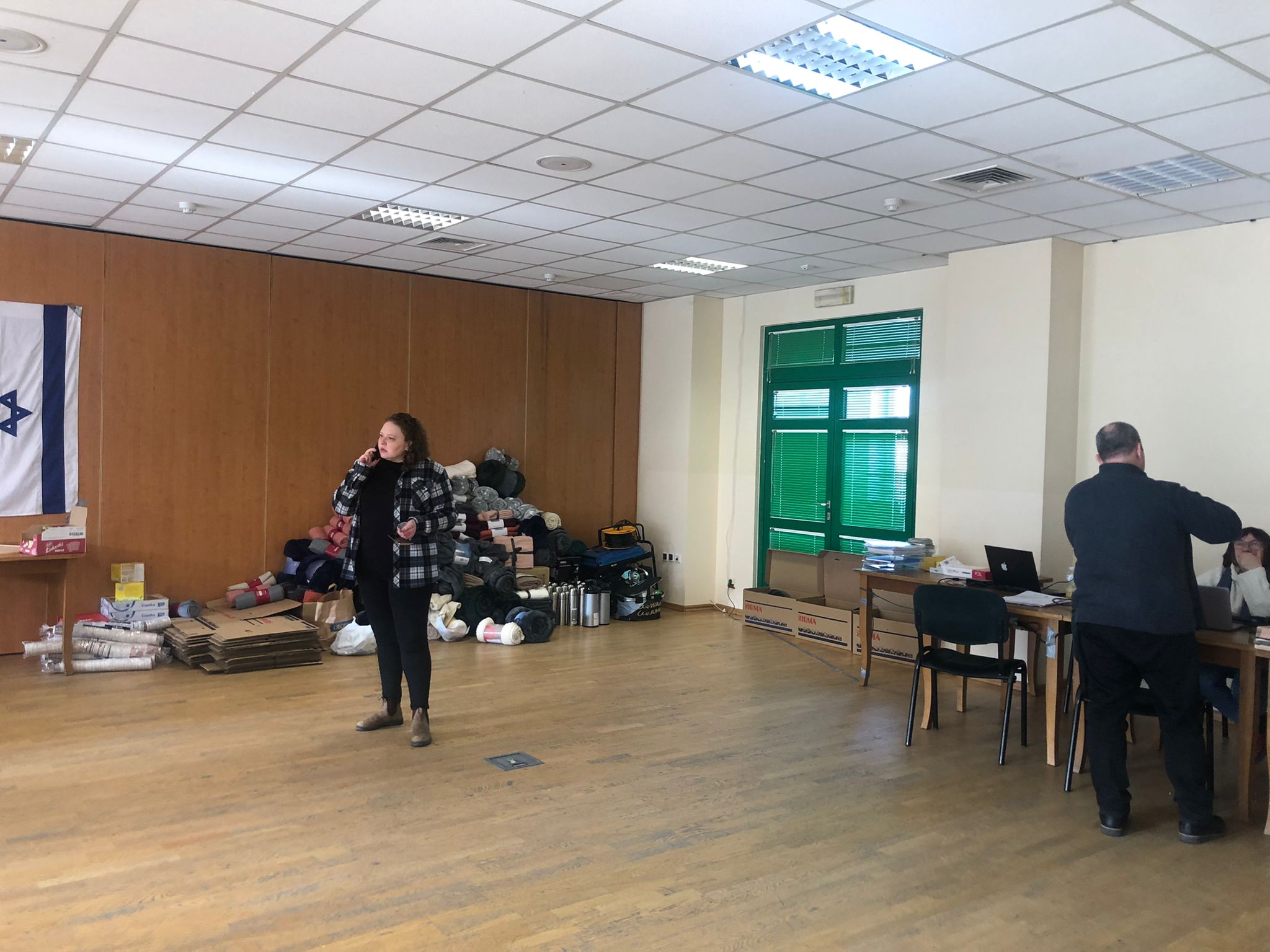
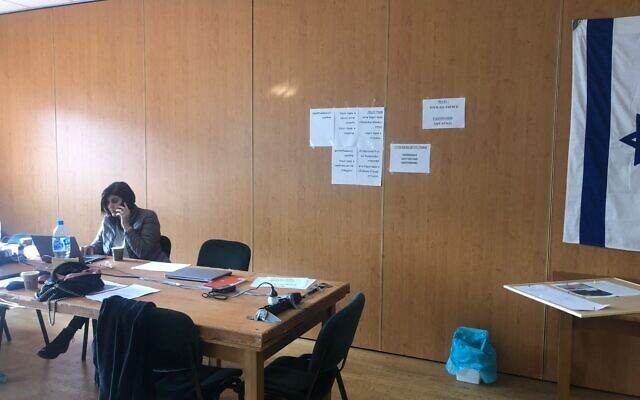
In a large, mostly-empty room on the hotel’s second floor, Israel’s ambassador to Ukraine Michael Brodsky stood speaking on the phone in a corner (Brodsky was lightly injured in a car crash Friday and returned to Israel for medical care). Consul-General Lilach Attias, her voice barely audible after weeks of answering calls, sat at a table in the back, nevertheless still speaking on the phone as well.
Deputy ambassador Yoav Bistritsky, a retired military officer now in his second career as a diplomat, was out in the field, working to find Israelis stuck in the long lines at the Korczowa-Krakovets border crossing.
The entire staff of Israel’s embassy in Ukraine is now situated in Poland after being pulled out of its temporary office in Lviv last Saturday. Israel’s Polish embassy had one diplomat in the situation room, public diplomacy head Irit Yakhnes.
The Foreign Ministry flew in some heavy hitters to support the operation as well. Israel’s former ambassador to neighboring Belarus, Alon Shoham, sat with two security officers, sketching the layout of one of the crossings on a sheet and discussing how to secure their diplomats in the field.
The @IsraelMFA situation room in action in Przemysl, Poland pic.twitter.com/nW3gPD296P
— Lazar Berman (@Lazar_Berman) March 4, 2022
“We have people calling and writing us on the border. Maybe they have problems with their documents, people with babies without documents,” explained embassy spokeswoman Alexandra Ben Ari.
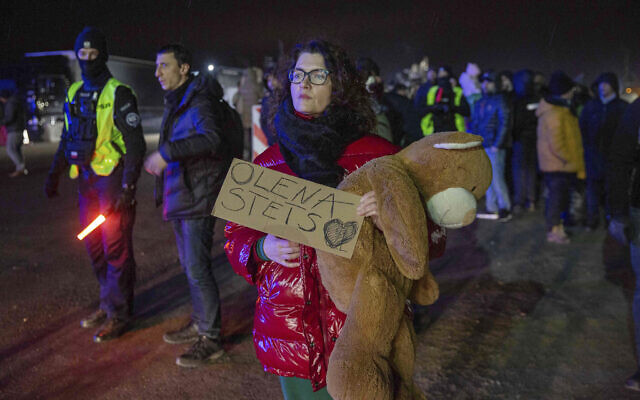
Israelis in line at the two nearby border crossings — Medyka and Korczowa — are able to identify the diplomats searching for them by the fluorescent yellow vests they are wearing with “Foreign Ministry” written across the back.
Israeli officials at the crossings have the ability to issue temporary travel documents on the spot with a special pressure stamp. Travelers then have two weeks to get proper passports issued in Israel itself.
There is a pile of blankets, thermoses, and other cold-weather equipment in one corner of the room.
“You see a line of cars,” said Ben Ari. “You cannot take the car out of line, but you see someone who is cold. You can give them water. You can give them a blanket, even if you cannot pass the line.”
“Some of the people, they don’t know where to go,” she continued. “They don’t know what to do. So we are advising them what to do.”
The lines could turn dangerous on the Ukraine side, said Brodsky.
“Men are standing alone. It’s a very big crowd, a few thousand angry men,” he said. “It’s a very loaded situation. You could feel this pressure in the air. And it could be dangerous.”
Brodsky said that there are no bathrooms, food, or water. “People spend 24, 48 hours in their cars and buses. People are angry, people are tired, sleepless.”
The way to the borders can be perilous as well. On Monday, an Israeli father of two was shot to death outside of Kyiv when a member of a civil defense unit opened fire on his car.
Every day, the embassy sends out updates about the wait time at the various border crossings.
While Israeli diplomats helped citizens move to the head of the line at first, they understand the dangers involved as the number of refugees trying to cross grew, in inverse proportion to their patience.
“We don’t want people to get mad,” explained Ben Ari. “We are doing it in a way that everyone is comfortable. ”
Israelis sometimes get upset that the Foreign Ministry can’t help them get to the front of the line any longer, said Ben Ari, but added that she understands the stress they are feeling.
Israel is the only country in the world with their representatives at all the major border crossings out of Ukraine to the west, according to Ben Ari. Some major Western countries have called Israel’s team in Poland to consult and hear about Israel’s operation at the borders.
Beyond helping citizens stuck at the borders, officials also organize “rescue buses” to spirit Israelis and their relatives out of Ukrainian cities.
Though the Israelis crossing the border do not get free flights to Israel, explained Ben Ari, the goal is to have them get there quickly.
“We can take care of our citizens in our country,” she said.






The Times of Israel Community.