

Getting in gear for Yom Kippur
Police and emergency services are on alert and Israel may have a new hotline to the Kremlin
Ilan Ben Zion is an AFP reporter and a former news editor at The Times of Israel.
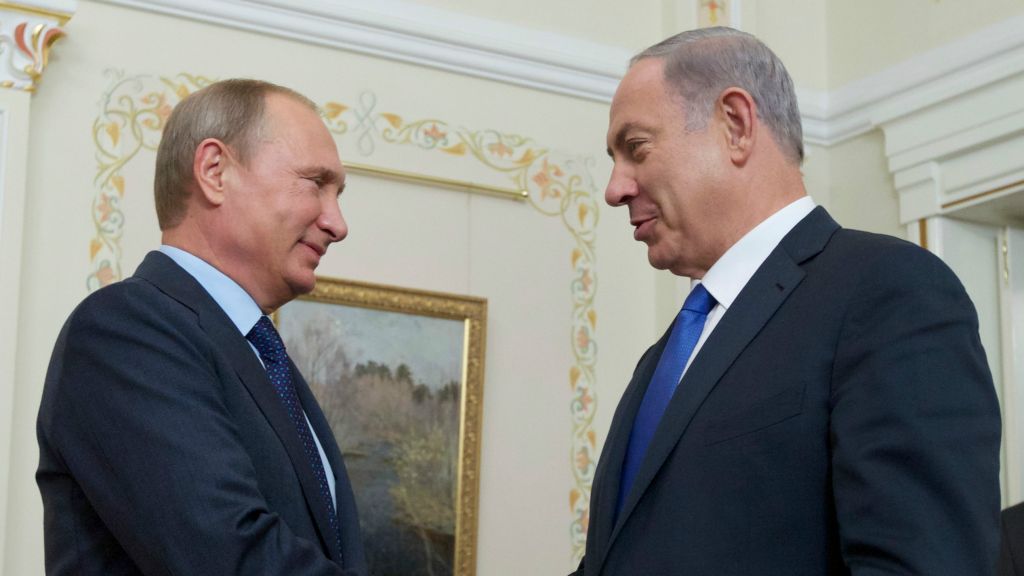
With memories of the 1973 Yom Kippur War, and the Soviet Union’s support for Syria and Egypt still fresh in the minds of some Israelis, news of an Israeli-Russian coordination effort to prevent conflict between their two armies comes as a bit of a surprise in the Hebrew press on the eve of the Day of Atonement.
While that news takes precedence in Haaretz, the upcoming High Holiday, when the country comes to a screeching halt, fasting and repentance take over, and the baking hot streets are hijacked by children on bicycles, is forefront in the tabloids. The fasting, heat and soul-searching take a more prominent role in Israel Hayom and Yedioth Ahronoth.
“Whether or not you’re fasting,” Israel Hayom writes, “you’re expected to suffer this Yom Kippur; if not because of the prohibition on eating and drinking, then because of the severe heat, the likes of which we haven’t seen in 10 years.”
Yedioth strikes a more fatalistic note, writing in the opening paragraph to its pre-Yom Kippur coverage that, according to tradition, “on the 10th day of the month of Tishrei the fate of every person is engraved in the highest heaven, and one’s successes and failures for the coming year are set.” Whether or not you believe in free will, the paper says the holiday will inevitably be a busy time for the country’s paramedics, who will have to treat heatstroke, dehydration and skinned knees.
But for Israel Hayom, the inevitable threat comes not from self-inflicted privation, but from renewed violence in Jerusalem. The paper reports that police have beefed up their presence in the capital “in order to thwart attempted attacks,” and have erected checkpoints “which will prevent vehicle traffic from the east of the city to the west.” The Defense Ministry also ordered a general closure of the West Bank and Gaza Strip.
Haaretz reports that opposition leader Isaac Herzog, during a special Knesset session on Monday, blamed Prime Minister Benjamin Netanyahu for the deterioration in security in Jerusalem. “Mr. Prime Minister, ask yourself — did I do all I could for babies and mothers not to be attacked in the streets of our capital?” the paper quotes him saying. “Jerusalem won’t forgive he who abandons its security and the security of its residents.”
But what of Israel’s security on the northern border? Netanyahu met with Russian President Vladimir Putin in Moscow on Monday and said afterwards that “the first and clearest outcome of this conversation” was a system to coordinate operations in Syria “to prevent misunderstandings between IDF forces and Russian forces.” The meeting came as Russia increased its military presence in Syria, dispatching troops, aircraft and tanks to support its ally President Bashar Assad.
“We have established a mechanism to prevent such misunderstandings,” Netanyahu said. “This is very important for Israel’s security.”
The paper’s pundit Amos Harel says it’s not clear whether the two governments agreed to set up a hotline connecting IDF headquarters and the Kremlin, but they agreed to a joint commission to coordinate “naval, aerial, and electromagnetic operations in the Syrian arena.
“And perhaps more than Israel places its hopes on a hotline, it asked to rely on red lines — setting areas of influence in Syrian and Lebanon where it can continue to operate freely if need be, without danger of unintentional conflict with Russian fighter aircraft,” he writes.
“It would appear as though Israel asked to guarantee its continued freedom of operations” along the border of Lebanon and near Damascus to prevent arms smuggling to Hezbollah, “by delineating areas of control” with the Russians, Harel writes. He notes that Syria and Israel had similar, albeit informal, agreements during their respective invasions of Lebanon during the civil war there.
Israel Hayom’s Boaz Bismuth, all too predictably, lauds the prime minister’s lightning meeting with Putin, and in the process comes across as a fanboy of Israel’s Russian rapprochement.
“Russia can’t allow itself another Afghan campaign,” he says, referring to its disastrous incursion into the central Asian country in the 1980s. “But it must act in Syria as a bargaining chip against the West.” In order to succeed, he says, almost rooting for the Russians, Moscow must fight the Islamic State and al-Qaeda affiliate Nusra Front, thus protecting Assad and gaining world favor.
He even seizes the opportunity to knock the Obama administration, which, he says “continues to navigate in the dark in Syria,” and fails to take real action against Assad or the jihadists. Nonetheless, he acknowledges that Israel and Russia’s interests in Syria are different, but at least now, unlike in Soviet times, we have an open communication with Moscow.



The Times of Israel Community.