

Hezbollah fire doesn’t deter dedicated vets treating animals in war-torn Kiryat Shmona
Two veterinarians in the officially evacuated city keep their clinics open, at times forced to amputate the legs of dogs caught up in the terror group’s rocket attacks
 Add ToI as a Preferred Source on Google
Reporter at The Times of Israel
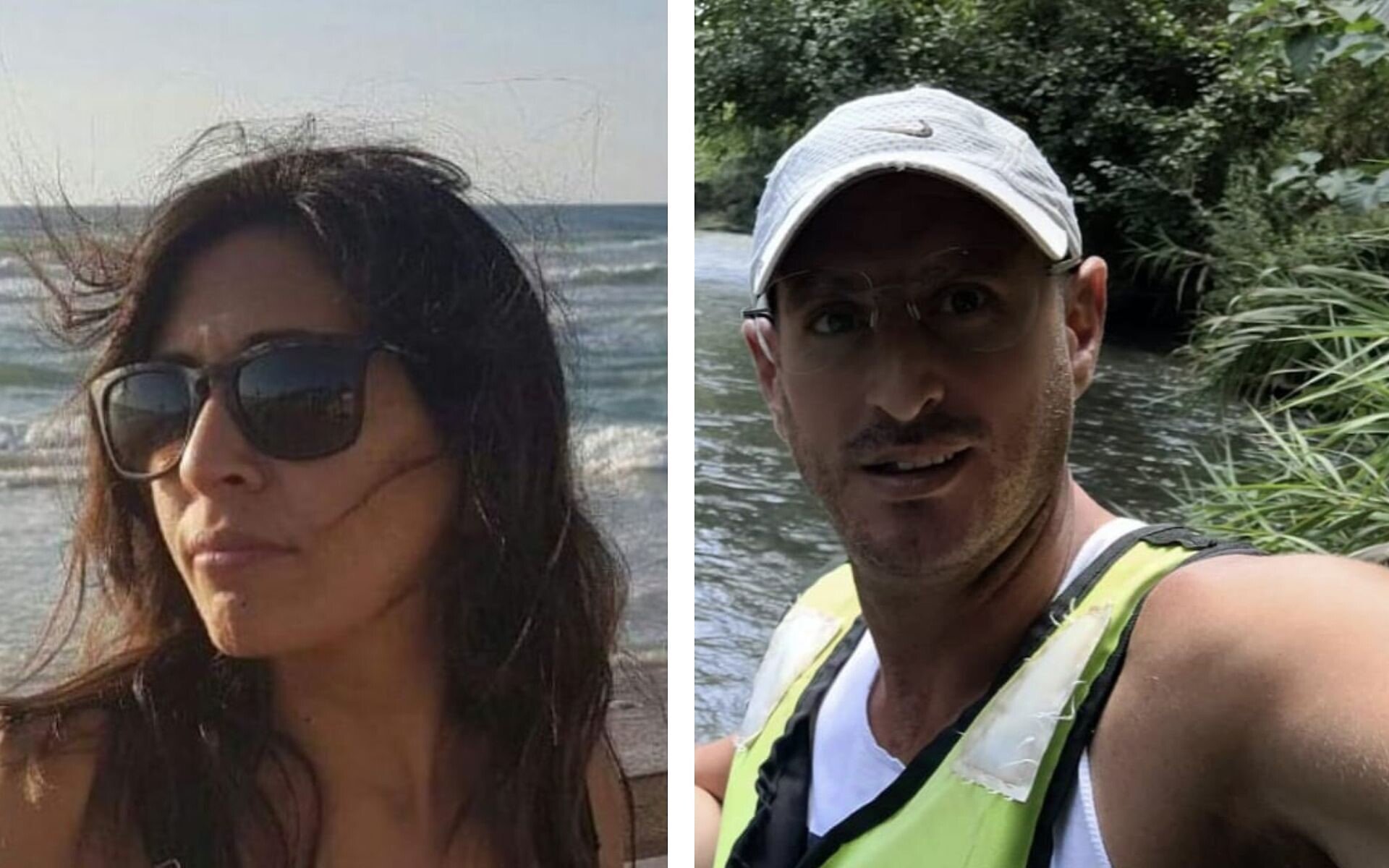
Revital Yehud, 45, and Dvir Sharvit, 43, were walking their three dogs in the northern city of Kiryat Shmona on Wednesday afternoon when dozens of rockets were fired into Israel from Lebanon, killing the couple and their pets.
Hezbollah took responsibility for the strikes, claiming it had targeted “enemy forces” outside Kiryat Shmona, a mile (less than 2 kilometers) from the Lebanon border.
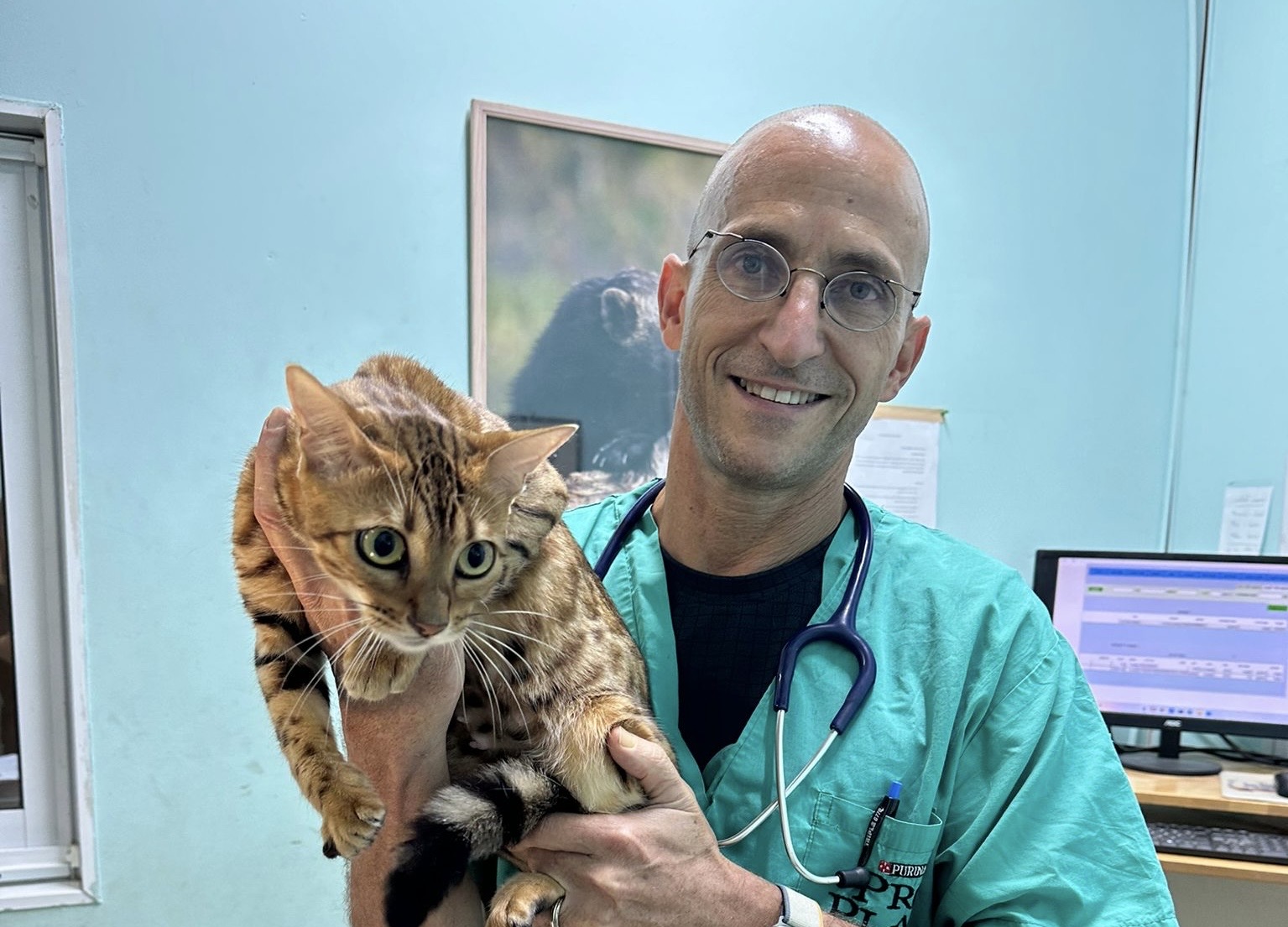
Dr. Raanan Rafaeli, a veterinarian who had taken care of the couple’s dogs, Mika, Jonny, and Orca, for more than a year, said that one dog was killed immediately in the explosion. A MADA rescue worker brought the other two dogs to Rafaeli’s clinic; he tried to save them, but neither survived.
“They were an amazing couple who were out taking a walk with their dogs,” the 55-year-old vet told The Times of Israel in a teleconference chat. “They had no kids, and the dogs were their whole world.”
Yehud and Sharvit were unable to reach a shelter in time. They were the first civilians killed in Hezbollah rocket attacks since early August.
In addition to the thousands of rockets Hezbollah has launched at Israel since October 8, the terror group has lobbed more than 3,000 rockets at Israel’s north — and in some cases beyond — since Israel launched an offensive on September 23 aimed at removing the terrorists from southern Lebanon following a year of near-daily cross-border attacks.
In all, 28 civilians have been killed in attacks from Lebanon since October 8, 2023, when Hezbollah began firing into Israel in support of Hamas.
Rafaeli has kept his clinic open throughout the war despite the near-daily rocket attacks on the city. He takes care of animals wounded from the war, some of them stray dogs who have been abandoned when their owners evacuated the area. He also treats animals that suffer from chronic diseases or anxiety caused by the explosions.
“It’s just so sad,” he said.
Related: Two killed in Kiryat Shmona, several hurt in Haifa as Hezbollah rockets batter north
A ghost town
The IDF issued evacuation orders to Kiryat Shmona’s 23,000 residents a year ago, after the October 7 Hamas massacre in southern Israel and the onset of Hezbollah rocket fire toward northern Israel.
Roughly 4,000 people remain; some are critical workers, others cannot move – or stubbornly refuse to leave their home.
The city has turned into a ghost town; traffic lights still blink on the main road, although there are few cars to heed their signals.
Rafaeli said his clinic has gone from five or six employees to two. Sometimes, he’s the only one there. He said he keeps the clinic open in the morning for people who come in with their pets.
“Earlier today, a man came in whose dog stepped on a porcupine, and I had to take out the quills,” he said, speaking from his home in nearby Kibbutz Shamir. The kibbutz, some nine kilometers (5.5 miles) from the Lebanese border, has not been evacuated.
He said that dogs suffer the most from anxiety due to the war.
“They don’t eat, they shake, they’re always restless,” he said. Many owners now give their dogs pills to calm them down, but he has also seen a few parrots who have lost their feathers from anxiety.
Rafaeli said he has had to amputate the legs of dogs that Hezbollah rocket attacks have wounded.
“I love my profession, but I hate the situation,” he said.
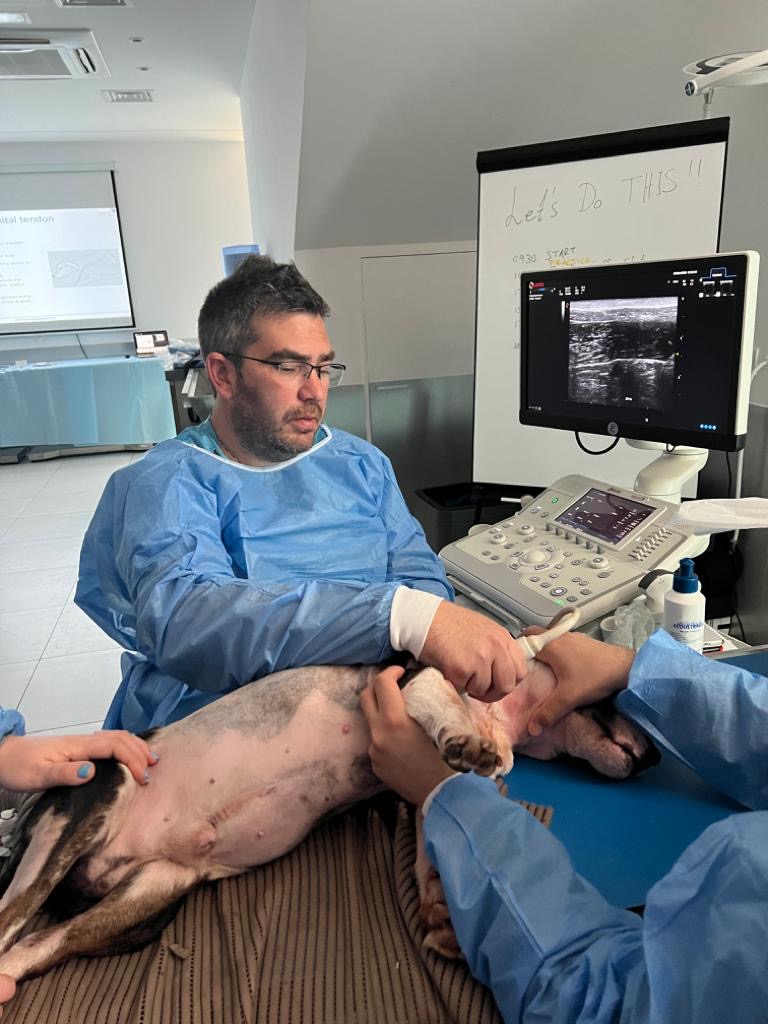
Dr. Ram Perelshtein, 47, is the only other veterinarian still working in Kiryat Shmona. He commutes about 7.4 miles (12 kilometers) to the city from Kibbutz Kfar Szold, a northern kibbutz that hasn’t been evacuated.
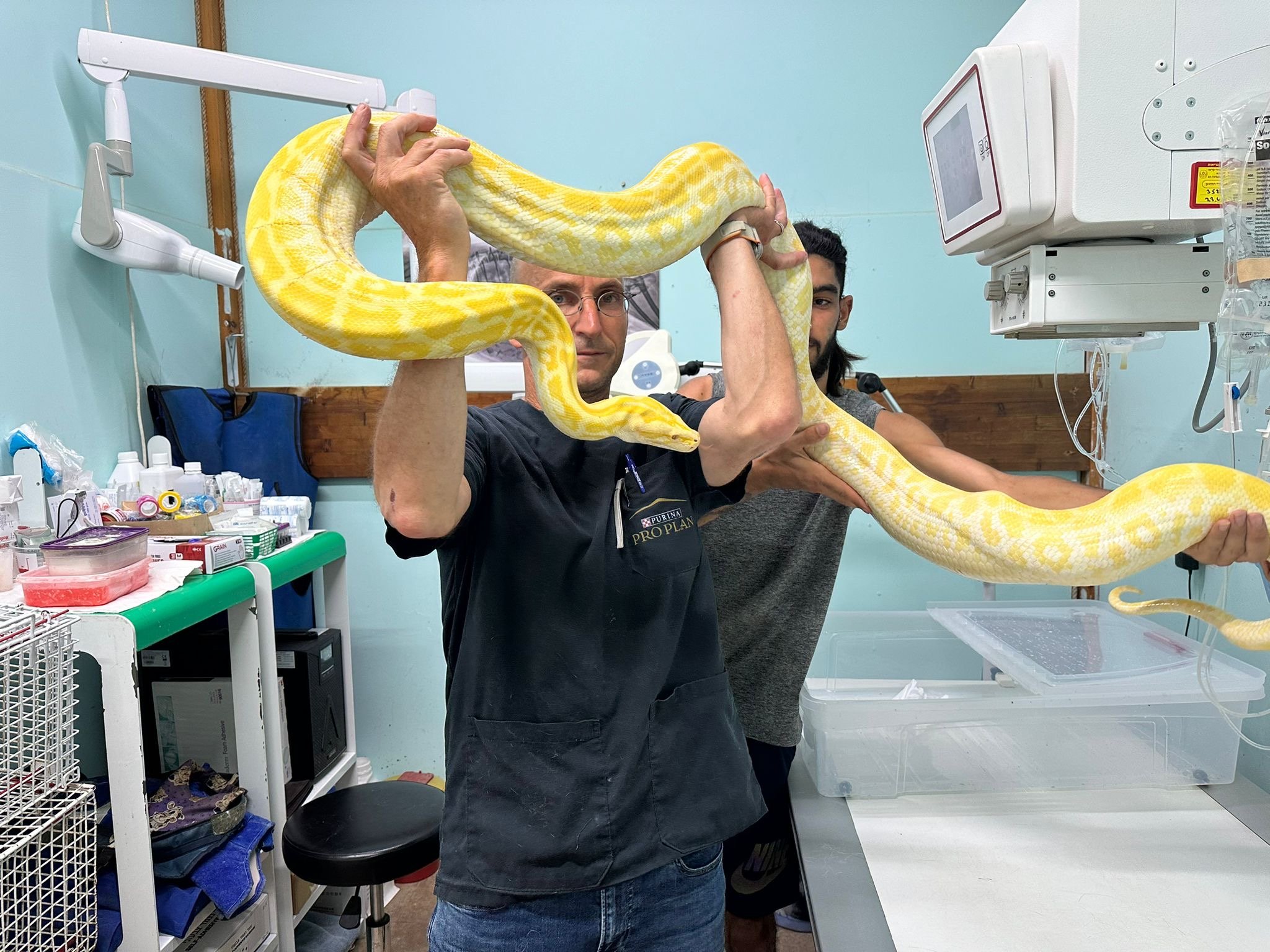
He said he has observed that all animals — from dogs to ferrets and snakes — “suffer from anxiety caused by the war.”
Cats seem “more aggressive,” he observed. Other animals have difficulty because people who have been evacuated are forced to move again — and again.
“The pets go from one room to another to another,” he said. “This war has taken a big toll on everyone.”






The Times of Israel Community.