

Hungary’s Magyar says ICC-wanted leaders will be detained, despite invite to Netanyahu
PM-elect clarifies he intends to reverse predecessor’s move to leave International Criminal Court, affirms that means commitment to arrest those issued warrants
 Add ToI as a Preferred Source on Google
Nava Freiberg is The Times of Israel's deputy diplomatic correspondent.

Hungarian Prime Minister-elect Peter Magyar affirmed Monday that Hungary will detain any leaders wanted by the International Criminal Court, should they visit the country, after pledging during elections that he would cancel outgoing leader Viktor Orban’s withdrawal from the body.
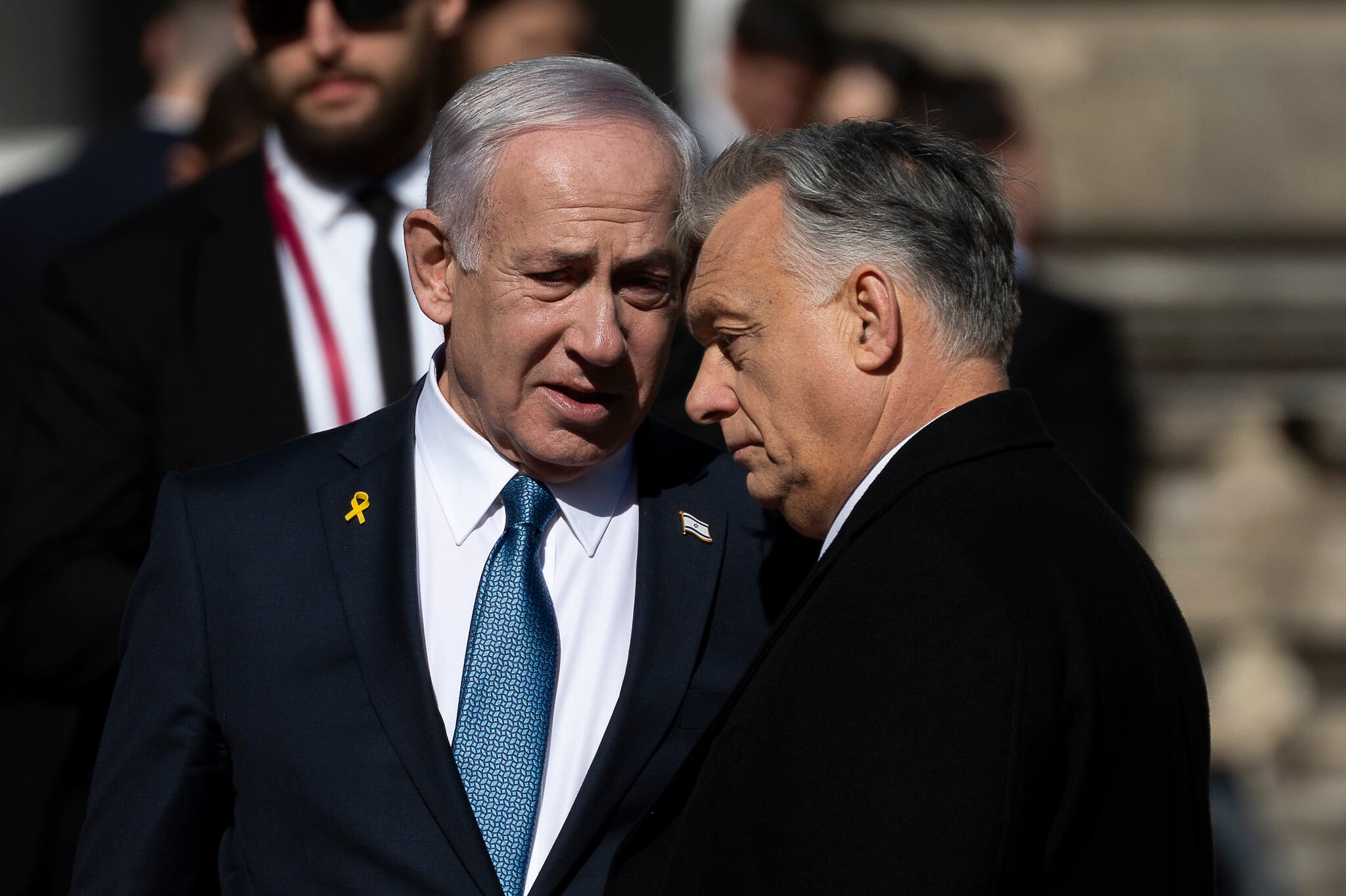
Asked by a reporter to reconcile that stance with his recent invitation to Prime Minister Benjamin Netanyahu – who faces an ICC arrest warrant over allegations of war crimes in Gaza – to visit Hungary for a national ceremony, Magyar said he spoke with many world leaders since being elected and “invited everyone, without exception, to Hungary for the 70th anniversary of the 1956 revolution.”
“I also made clear to the Israeli prime minister that we will not back down [from cancelling the ICC withdrawal] because my colleagues have examined it and we can still stop the withdrawal,” he continued, speaking in Hungarian at a press conference.
“If someone is a member of the ICC and a person who is wanted enters the territory of our country, he or she must be detained… Every state and head of government is aware of these laws,” he said.
Netanyahu spoke with Magyar last week to congratulate him on his election victory, which ousted the Israeli leader’s longtime ally Viktor Orban.
Netanyahu visited Hungary in April 2025 at the invitation of Orban, who had rejected the ICC warrants and announced withdrawal from the court during the Israeli leader’s visit.
JUST IN: PÉTER MAGYAR SAYS HE WOULD ARREST NETANYAHU IF HE COMES TO HUNGARY:
I made it clear that Hungary intends to remain a member of the International Criminal Court.
If someone enters the territory of a country that is a member of the ICC and that person is under an arrest… pic.twitter.com/KgOGKA1OJX
— Quadri (@Jibola1992) April 20, 2026
On November 24, 2024, the ICC issued warrants for Netanyahu and then-defense minister Yoav Gallant on suspicion of ordering war crimes during Israel’s campaign against Hamas in Gaza, following the October 7, 2023, massacre in southern Israel led by the terror group, in which some 1,200 people, mostly civilians, were killed and 251 were taken hostage.
An October 2025 ceasefire halted the war, and all of the hostages, alive or dead, were returned to Israel.
Netanyahu and Gallant both face charges of “criminal responsibility” for alleged war crimes and crimes against humanity during the war.
Israel staunchly rejects the charges filed by the ICC, insisting all its actions are in accordance with international law and pointing to efforts to avoid civilian casualties and facilitate the entry of international aid.
Israel also disputes the court’s jurisdiction over the matter since the country is not a member of the court.
Under the warrants, all nations party to the Rome Statute are required to arrest Netanyahu if he arrives in their countries.
Belgium, Belize, Bolivia, Canada, Denmark, Finland, Ireland, Italy, Latvia, Lithuania, Luxembourg, Namibia, the Netherlands, New Zealand, Norway, Portugal, Slovenia, South Africa, Spain, and Switzerland have all explicitly said they would honor the arrest warrants if Netanyahu traveled to those countries.
Others, including Argentina, the Czech Republic, Romania, and Poland, have said they would not arrest Netanyahu.
Meanwhile, France and Italy said they believed Netanyahu had immunity as a leader of a state not a party to the court. Other countries, like the UK and Sweden, merely indicated that they may make an arrest or said they would make a decision if it became relevant.
On flights to the US, Netanyahu’s plane has made lengthy detours that avoid some European countries, though no official explanation has been offered.
The ICC has no enforcement methods and relies on the cooperation of party nations to carry out the warrant.
The Hamas-run Gaza health ministry says more than 72,000 people in the Strip were killed during the war — including over 600 since the October 2025 ceasefire — though the toll does not differentiate between civilians and combatants.
The Israeli military believes that Hamas’s overall toll is largely accurate, with IDF officials estimating that two to three civilians were killed for every dead terror operative.
Israel has said it seeks to minimize civilian fatalities and stresses that Hamas uses Gaza’s civilians as human shields, fighting from civilian areas, including homes, hospitals, schools, and mosques.








The Times of Israel Community.