

I’m a pediatrician who sees kids with coronavirus daily. It’s changed everything
In New York, health care providers are becoming overwhelmed, not testing children, and not seeing kids who are moderately ill, while staffers increasingly get sick themselves

NEW YORK (JTA) — I am a pediatrician who for 15 years has practiced in a medical office in the heart of Williamsburg, Brooklyn. We serve the local Hasidic community and see a variety of other patients from Brooklyn, Manhattan’s Lower East Side and Queens.
When the coronavirus emerged in New Rochelle, medical providers in New York understood that it would affect our area imminently. For doctors living and/or practicing in religious communities in which large numbers of people congregate, it was clear that our communities would be in particular peril.
Last week I was eager to find ways to contain the impact of the virus in our office. I devoted a lot of time to speaking with the New York City Department of Health, hoping to figure out a way to protect office staff — thereby also protecting patients and their parents. When we secured personal protective equipment for the staff (surgical masks, gowns and gloves), I hoped we were ahead of the curve.
Within days those hopes were dashed.

As the number of cases grew exponentially, schools and synagogues in the community where I live closed preemptively and people understood, reluctantly, the need to isolate socially. Last shabbat, the streets were empty.
In the community in which I practice, change took a few days longer. My patients asked constantly whether there was really something to worry about as everything seemed normal. Schools, synagogues and the streets were filled. Weddings were celebrated in large halls, while people who passed away were mourned at funerals and shiva houses. For those whose lives are completely centered around community and religious observance, the coronavirus has required the entire way they live to completely change immediately.
By now the overwhelming majority of people in Hasidic communities understand the danger of the pandemic and the resulting need for isolation, but just a few extra days resulted in an enormous amount of community spread.
I see the virus repeatedly throughout the day: severe sore throat with dizziness or weakness, coughing, “just not feeling well” and sometimes moderate abdominal pain. As child after child coughs in my face, I can only hope that my mask is in place — and worry about how many people must be incubating the virus in my community. Health care provider friends report similar experiences of offices overwhelmed by the number of sick patients, with doctors and staff increasingly becoming sick, too.
Health providers are now being encouraged not to see children who are only moderately ill, and our office is no longer routinely testing children for the virus. There is a high likelihood that the children who aren’t feeling well have COVID-19, but a low likelihood that they are at medical risk.
By leaving their homes to come into the office, they and their parents are just risking the health care workforce and the adults with whom they may come into contact. Instead, the safest approach for us and our patients seems to be to limit contact, with more of our work done through telephone or telemedicine.
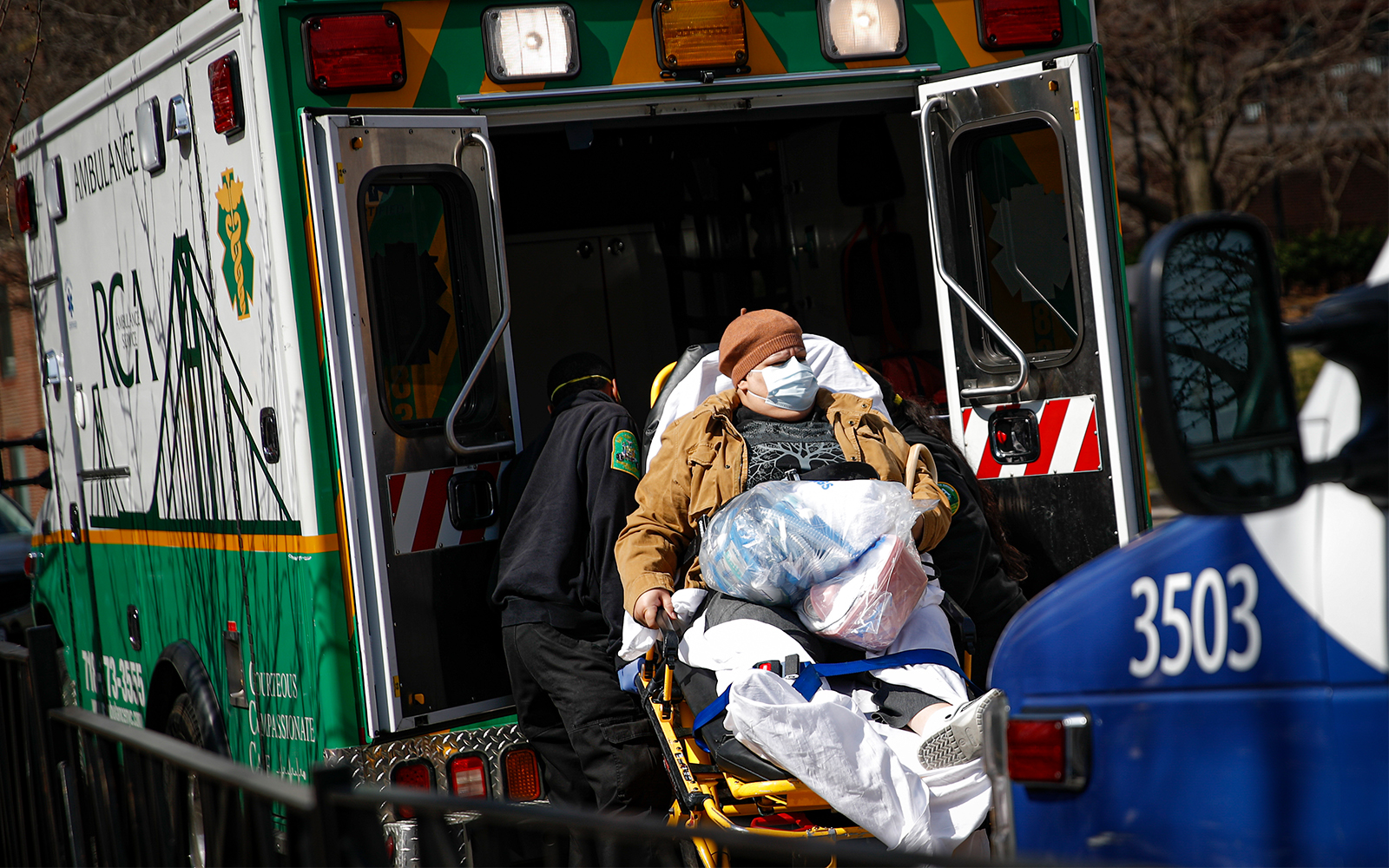
There are parents who have persisted in asking me to please listen to their child’s lungs or check their children for strep throat. After serving as their family’s pediatrician since the birth of their children, it is very hard to say no — to tell them that as long as your child is eating OK, and does not have too much difficulty breathing, please don’t bring her in. Ultimately if a parent feels that their child needs to be seen, I see the child. It is hard to believe that taking care of my patients might now be the wrong thing.
Things have changed in my home. At night I come home from work, throw my clothes in the laundry and head straight for the shower. I sleep alone and no longer put my 8-year-old to bed. We used to read a book and say the Shema before he went to sleep, but now I have no choice but to reduce my physical interaction with him.
I feel guilty about possibly bringing home the virus and jeopardizing the health of my family for the sake of being a medical provider for other families. I know that it will be a while until I can visit my parents, who are in their 70s. For the first time, Passover this year will be celebrated away from our families.
My husband and children have been great about staying home and self-isolating. If they become ill, God forbid, the mode of transmission would be through me. I can’t help but wonder whether I am really a necessary health care provider or if I should be staying home, too.








The Times of Israel Community.