

Iranians at the border
The Hebrew-language dailies consider Syria, the gender wage gap, and what it means to be a leftist Jew
 Add ToI as a Preferred Source on Google
Adiv Sterman is a breaking news editor at The Times of Israel.

The Hebrew-language newspapers, and the Israeli public, have a lot of concerns on their minds theses days. The future in Syria is uncertain, women are reconsidering and reshaping their role in society, and the left is having a hard time deciding which party leader best represents them.
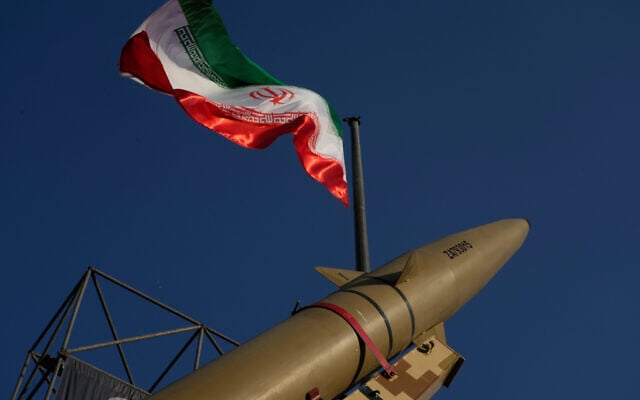
In Israel Hayom, Prof. Eyal Zisser of Tel Aviv University’s Middle Eastern Studies Department delves into the intricacies of the bloody civil war in Syria, specifically in terms of the growing conflict of interests between Russia and Iran on the one hand and the US and Israel on the other, now that the battles in the country are possibly drawing to a close. The piece comes after Russian Foreign Minister Sergey Lavrov said that a recently announced agreement on the terms of a ceasefire in Syria did not include a Russian commitment to ensure Iran-linked militias would be pulled out of the country.
“[Syrian President Bashar] Assad already controls, even if not fully, most of the state’s territories, and at the same there has been a marked decrease in instances of violence and number of deaths,” Zisser writes. “The Russians won’t allow anyone, now that the prey has fallen into their hands [and Assad is once again the major player in Syria], to share the spoils of war, especially not the Americans,” the professor continues.
“President Trump may have promised to make America great again, but by Russian standards the US remains the same punching bag that it used to be,” Zisser says, referring to Washington’s unclear and unsettled policy toward the war in Syria over the past few years. “The Russians will also not allow Israel to harm their strategic alliance with Iran, which is vital to improving Moscow’s status in the region. While [Russia] is attentive of Israel and does not wish it ill, Moscow still views Israel’s apprehension over Iran as exaggerated.”
Zisser seems to concede that at the end of the day, Russia is likely to call the shots with regard to Syria. “One can only hope that in the future Moscow will show greater willingness to take into account Jerusalem’s legitimate concerns about the future of Syria,” he concludes.
Yedioth Ahronoth reports on the state of women in the Israeli workforce, noting that while the worldwide campaign to reveal and combat instances of sexual assault has taken flight, the wage gap in the Jewish state has actually grown larger over the past years. According to the Israeli Central Bureau of Statistics, women on average make only 65% of men’s salary, the biggest gap since 2011. The numbers are especially bad as individuals grow older, and in management positions. The daily’s contributor Telem Yahav offers that the wage gap is created by a cycle that is hard to escape.
“When a woman makes 65% of a man’s salary it becomes a completely logical decision or her to be the one to pick up the kids and assume a second job with her family,” Yahav asserts. “In other words, women make less because they have the burden of taking care of the family, and they take care of the family because they make less.” Yahav argues that Israeli needs to work on assisting women to take on more managerial positions. “It’s true, we are not Norway [where the gender wage gap is 14%], but it’s time for us to reduce gap.”
Haaretz’s US editor and columnist Chemi Shalev, apparently like many other Israeli liberals, takes personal offense over Labor party leader Avi Gabbay’s recent, somewhat strange choice to allude to, and seemingly agree with, a 1997 hot mic comment by Prime Minister Benjamin Netanyahu, according to which the left “forgot what it means to be a Jew.” However, Shalev raises the possibility that Gabbay’s utterance during an event at Ben-Gurion University in Beersheba may simply be part of a calculated effort to appeal to the right and draw in more conservative voters by separating himself from other opposition party leaders.
“The Labor party leader has already shown that he knows how to hand a blow to skeptics, and for that reason one cannot rule out the possibility that one day it will come out that he learned from [US President Donald] Trump how to continuously create provocations, which in turn create noisy headlines, which ultimately lead to victory,” Shalev writes.
Nevertheless, the Haaretz contributor warns that if in fact Gabbay is waddling down a road of deliberate deception, he may end up alienating his voter base. “Gabbay is taking upon himself an extra risk,” Shalev explains. “His voters may jump ship towards Meretz and/or Yair Lapid, and he will end up like an army commander yelling ‘follow me!’ during a battle, only to discover that his subordinates have left him alone, on a path to certain defeat.” But potentially even worse, Shalev concludes, if Gabbay does not mend his ways, Israeli voters may simply “stop taking him seriously.”








The Times of Israel Community.