

Trump: If Iran doesn’t abide by deal, ‘I will do what I have to do’ to prevent nuke
‘We have an open [Strait of Hormuz] and we have a country that will never have a nuclear weapon,’ says US president, as he and aides make extreme claims about volume of shipping
 Add ToI as a Preferred Source on Google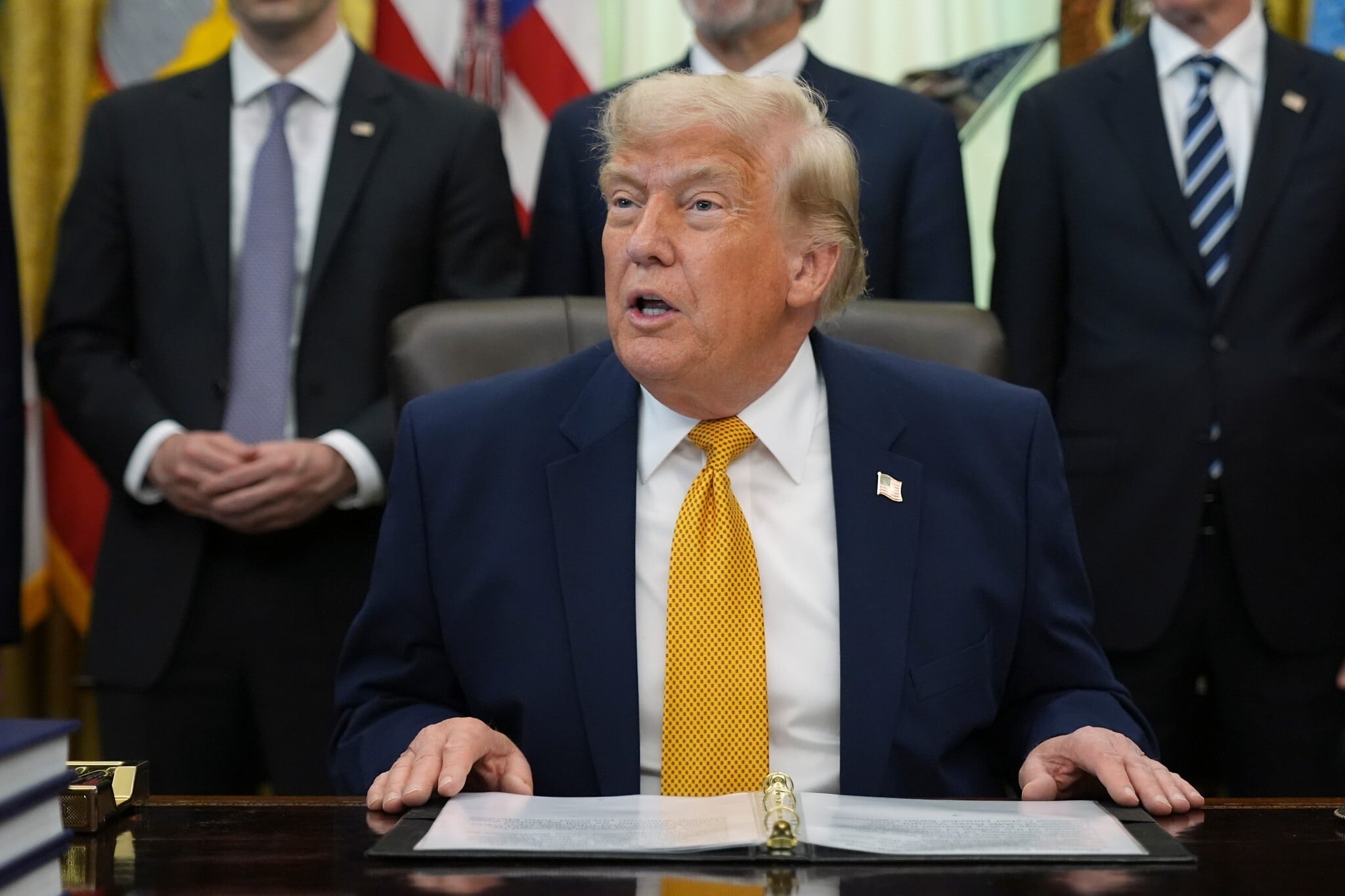
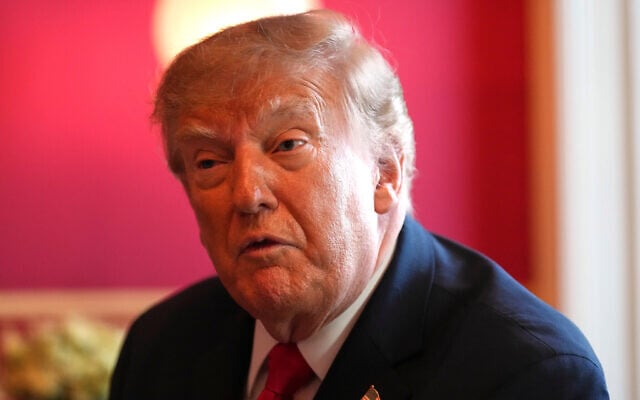
US President Donald Trump said Monday that not even the threat of an economic depression would deter him from striking Iran again to ensure that the regime doesn’t obtain a nuclear weapon, as he touted a reopened Strait of Hormuz.
“Nuclear weapon supersedes depression,” Trump told reporters in the Oval Office. “Depression is real bad. Nuclear weapon will cause depression much more quickly.”
“If Iran doesn’t live up to their agreement, or if they’re not behaving, I will do what I have to do,” the president continued. “As long as Iran respects us, we are not going to have any trouble.”
He asserted: “We’re doing very well with respect to the Hormuz Strait. We took in more oil yesterday than has ever gone through the strait. You probably see that.”
“We have two things: We have an open strait and we have a country that will never have a nuclear weapon,” Trump said.
The president, asked about the waiving of oil sanctions, said any revenues made by Iran as a result of the relief would be spent on food from American farmers.
“Well, they’re not supposed to be doing that, so we’ll see. But they’re supposed to use money to buy food for their people, because right now their people are very hungry and they’re buying it exclusively from us,” he said.
“Should be a lot of money. I hope it’s a lot of money.”
Reporter: Are you willing to risk economic catastrophe and strike Iran again?
Trump: A nuclear weapon supersedes depression. Depression's real bad. Nuclear weapon will cause depression much more quickly.
Reporter: Iran does not abide by the MOU—
Trump: I didn’t say would… pic.twitter.com/r0zyX3L1wI
— Acyn (@Acyn) June 22, 2026
US Vice President JD Vance said earlier, after the first round of US-Iran peace talks in Switzerland, that Iran had agreed to invite International Atomic Energy Agency inspectors back into the country.
The US temporarily suspended sanctions on Iranian oil after Vance’s remarks, in which he called the purported concession “the first step in permanently denuclearizing or permanently ending a nuclear weapons program in Iran.”
Iran denied Vance’s claim, however, with Iranian Foreign Ministry spokesman Esmaeil Baghaei telling the official IRNA news agency that Tehran did not negotiate on its nuclear program and did not accept any new commitments during Sunday’s talks with the US.
The talks are based on a memorandum of understanding reached last week between Washington and Tehran, in which the Islamic Republic agreed to reopen the Strait of Hormuz – a key waterway for oil and gas shipments – and the US agreed to lift its blockade on Iran and waive oil-related sanctions.
The matter of Iran’s nuclear program was set to be taken up during the subsequent 60-day negotiating period, which began on Thursday. The negotiations were expected to devolve into lower-level technical talks throughout the week.
After reopening the strait, Tehran said on Saturday it had closed it again in response to Israeli attacks on the Iran-backed terror group Hezbollah in Lebanon. Since then, Tehran and Washington have agreed to establish a line of communication “to avoid incidents and miscommunication with the aim of safe passage for commercial vessels” through the waterway, according to Qatari and Pakistani mediators.
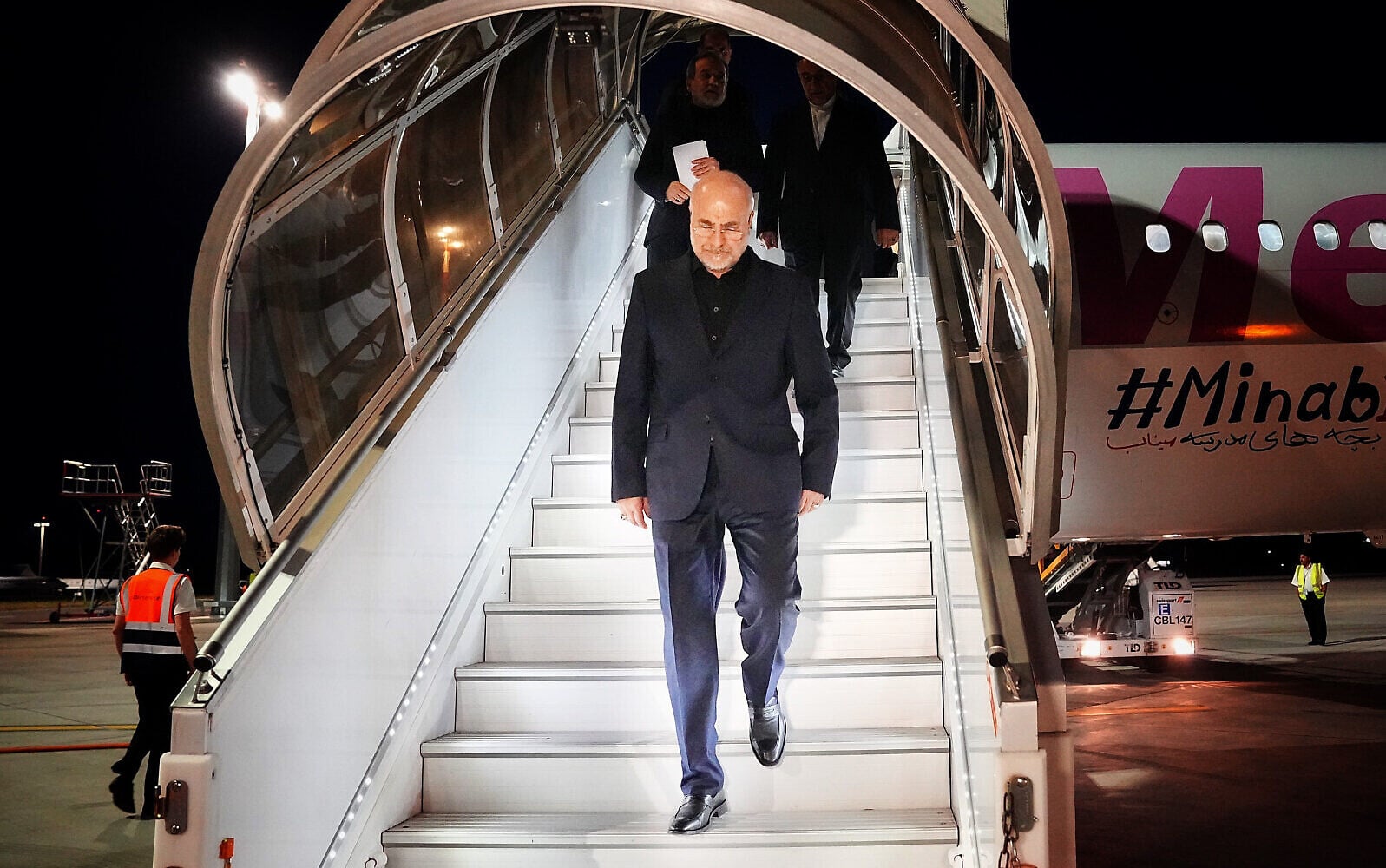
Iran’s chief negotiator Mohammad Bagher Ghalibaf said that the strait will be administered by Tehran, state media reported, following talks.
“The Strait of Hormuz will never return to its prewar conditions and will be administered by the Islamic Republic of Iran, in accordance with international law,” Ghalibaf said on his return from the talks, according to IRNA.
In a video posted to Ghalibaf’s Telegram account, he said the talks at the luxury Swiss resort of Burgenstock produced “good achievements, especially regarding the discussion of the Strait, the Lebanon discussions, the question of oil waiver, and the matter of releasing the frozen funds.”
“Of course, we believe we are still at the beginning of this work and must continue our efforts,” he added in the video.
Iranian state media reported that Ghalibaf made a stop in Oman, which shares the strait.
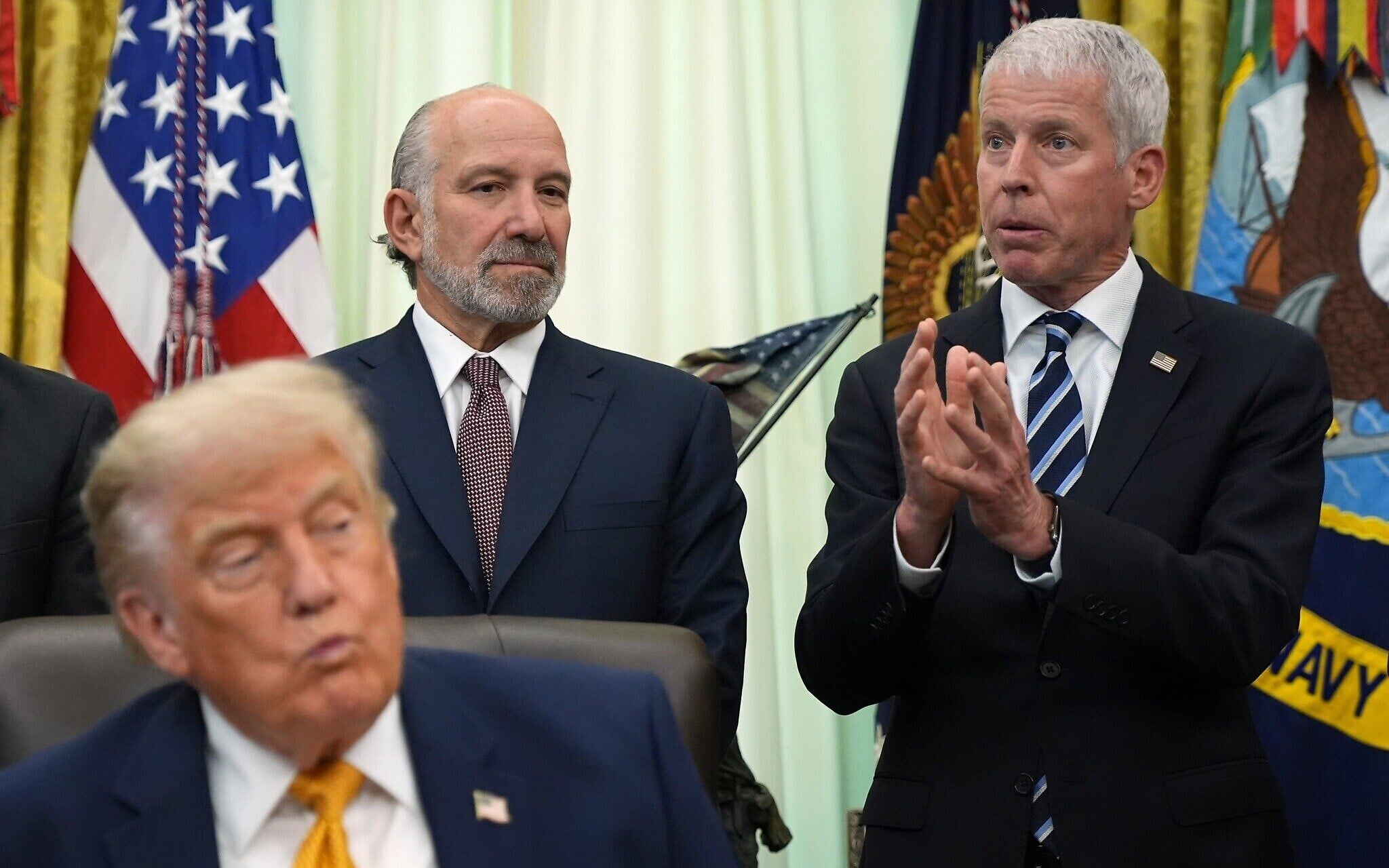
US Energy Secretary Chris Wright claimed that oil and natural gas were flowing through the waterway at “pre-crisis levels.”
“We could get to above that, we will get above that,” Wright added.
Trump also suggested that “two days ago” there had been a record in terms of oil being taken out of the strait.
Neither of those statements were confirmed by the available data.
Analyst Kpler said its tracking confirmed 71 ships traveled through the strait between Friday and Sunday, with a peak of 35 crossings Saturday.
In contrast, about 100 to 130 vessels a day made the journey before the war.
While Iran, whose leaders are sworn to destroy Israel, denies seeking nuclear arms, it has amassed uranium enriched to levels with no peaceful application.
Israel and the US launched a bombing campaign on Iran on February 28 in a bid to destabilize its regime and destroy its ballistic missile and nuclear programs, but the fighting entered a truce on April 8 with none of those goals achieved.
Israel had no part in negotiating the MOU reached last week, and Netanyahu has distanced himself from it. Still, the terms of the opening clause, permanently ending the war and ruling out any resumption, indicate that it is binding on the US, Iran “and their allies.”
Israeli officials are bitterly opposed to the deal’s terms, which resolve none of the war’s key goals — notably, eliminating Iran’s nuclear and ballistic missile programs, and creating the conditions for the fall of the regime.
Separately, the US is mediating talks between Israel and Lebanon, after the Lebanese terror group Hezbollah attacked the Jewish state on March 2 in support of Tehran, sparking a new round of conflict.
After the US and Iran signed their MoU last week, Iran has been insisting that Israel halt its military operation in Lebanon as a precondition for talks.
Times of Israel staff contributed to this report.




The Times of Israel Community.