

Netanyahu is letting extremist ministers dismantle Israel’s global standing
With allies losing patience over incendiary rhetoric from Ben Gvir and Smotrich, the prime minister’s refusal to rein in his radical cabinet partners threatens to completely isolate the nation

 Add ToI as a Preferred Source on Google
Tal Schneider is a Political Correspondent at The Times of Israel

On Friday, National Security Minister Itamar Ben Gvir posted one of his most extreme and inflammatory tweets yet. Demanding that “1,000 Lebanese mothers must weep” for every Israeli soldier or officer killed by Hezbollah fire, he declared: “All of Lebanon must burn.”
IDF soldiers are currently operating deep inside Lebanon to protect the communities of northern Israel. They are on foreign soil because Israel’s government and security cabinet — which includes Ben Gvir — opted for a proactive offensive strategy over a purely defensive posture along the international border. Yet Ben Gvir wrote as if this escalation occurred in a vacuum, calling to “wipe out,” “defeat,” and “cause all of Lebanon to burn.”
More troubling still is the collective indifference. Once again, Ben Gvir fires off outrageous invective, and once again, local analysts dismiss it as domestic political posturing, offer a cynical smirk, and move on.
This nonchalance extends to Prime Minister Benjamin Netanyahu and his senior ministers — notably Foreign Minister Gideon Sa’ar and Defense Minister Israel Katz, neither of whom bothered to distance themselves from the remarks, much less condemn them.
The only one to take up the gauntlet and address the rhetoric was former prime minister Naftali Bennett, in a response to British broadcaster Piers Morgan. Yet Bennett merely argued that Ben Gvir is a clown who shouldn’t be taken seriously — an argument that carries little weight abroad.
In any case, two days later, the damage from the shocking post is already irreversible. Even X (formerly Twitter) announced that Ben Gvir’s remarks violated its platform rules (but failed to remove the tweet nonetheless).
על כל דמעה של אמא ישראלית, אלף אמהות לבנוניות צריכות לבכות. לבנון כולה צריכה לבעור!
עם כל הכבוד לאמריקאים, ישראל חייבת להבהיר לעולם כולו שדם בנינו וביטחון אזרחנו איננו הפקר. לבנון כולה צריכה לבעור. חובתנו העליונה היא להגן על אזרחי ישראל ועל חיילי צה״ל, והמחויבות הזו קודמת לכל…
— איתמר בן גביר (@itamarbengvir) June 19, 2026
The world no longer treats the extremist ministers in Israel’s government with the indulgence it once did. Even the US administration is no longer willing to turn a blind eye. In a series of interviews and speeches over the weekend, US Vice President JD Vance explicitly targeted the government’s radical elements. Those remarks were delivered even before the “All of Lebanon must burn” tweet, yet Ben Gvir felt no need to exercise restraint.
Here’s some of what Vance said: “People in their system, like Itamar Ben Gvir and Bezalel Smotrich, attacked the deal [between the US and Iran]. My response to them would be, what exactly is your proposal? You can’t just kill your way out of every national security problem that you have.”
Ben Gvir’s tweet, though written in Hebrew, racked up over 18 million views. It was picked up by Morgan, who was one of the most prominent international voices supporting Israel after the Hamas massacre on October 7, 2023.
Ben Gvir’s tweet was also weaponized by Republican politicians in the United States, as well as by forces outright hostile to Israel. Yet, no one in Jerusalem bothered to issue a disclaimer.

In the international arena, such remarks are not forgiven. No one overseas buys the line that “it’s just Ben Gvir,” or that “confronting him will only boost his popularity.” Those explanations belong strictly to internal Israeli discourse. Around the world, people simply hear a senior Israeli cabinet minister calling to burn a neighboring country to the ground. When the prime minister remains silent, the world concludes that silence equals consent.
This is part of a pattern. Last month, Ben Gvir tweeted a video clip showing him walking among pro-Palestinian activists detained from the intercepted Gaza-bound Global Sumud aid flotilla. In the footage, a police officer strikes and humiliates a detainee who shouted, “Free Palestine.” The violent clip quickly made headlines on major news sites worldwide.
At the time, Sa’ar, who had hoped to take credit for a clean, orderly deportation operation of the flotilla detainees, found Israel under broad international assault because of Ben Gvir. Sa’ar distanced himself from the incident, prompting a torrent of abuse from Ben Gvir in response.
This time, Sa’ar is silent. Perhaps he, too, has been worn down by the minister’s rogue foreign policy, lacking the energy to confront a cabinet partner in a government Sa’ar deliberately chose to prop up when he rejoined the coalition last year.

Israel’s diplomatic fallout extends far beyond Ben Gvir. As Vance noted, the United States stands virtually alone in its global support for Israel. Does Jerusalem simply fail to grasp this?
Netanyahu’s stated policy was to decouple the war in Lebanon from the broader conflict with Iran. That strategy has failed. Iran now threatens to halt negotiations with the United States every time Israel strikes in Lebanon, successfully driving a wedge between Washington and Jerusalem.
This rift will only widen as the US midterm elections approach. In recent political cycles, congressional and senatorial candidates have won or lost races based heavily on their stance toward Israel.
Yet instead of restoring order at home, Netanyahu continues to bury his head in the sand.
Last week, Finance Minister Bezalel Smotrich unilaterally announced the cancellation of the 1997 Hebron Protocol, claiming he would strip the Palestinian municipality of its zoning authority in the city’s Jewish enclave. He did so with Defense Minister Katz sitting right beside him, applauding the move.

Smotrich’s declaration is backed by no government decision. No cabinet discussion was ever held, and no diplomatic assessment was conducted regarding its impact on Israel’s foreign relations.
Instead, the only pushback was a weak, English-language statement posted to the Foreign Ministry’s official X account, quietly distancing the ministry from the move.
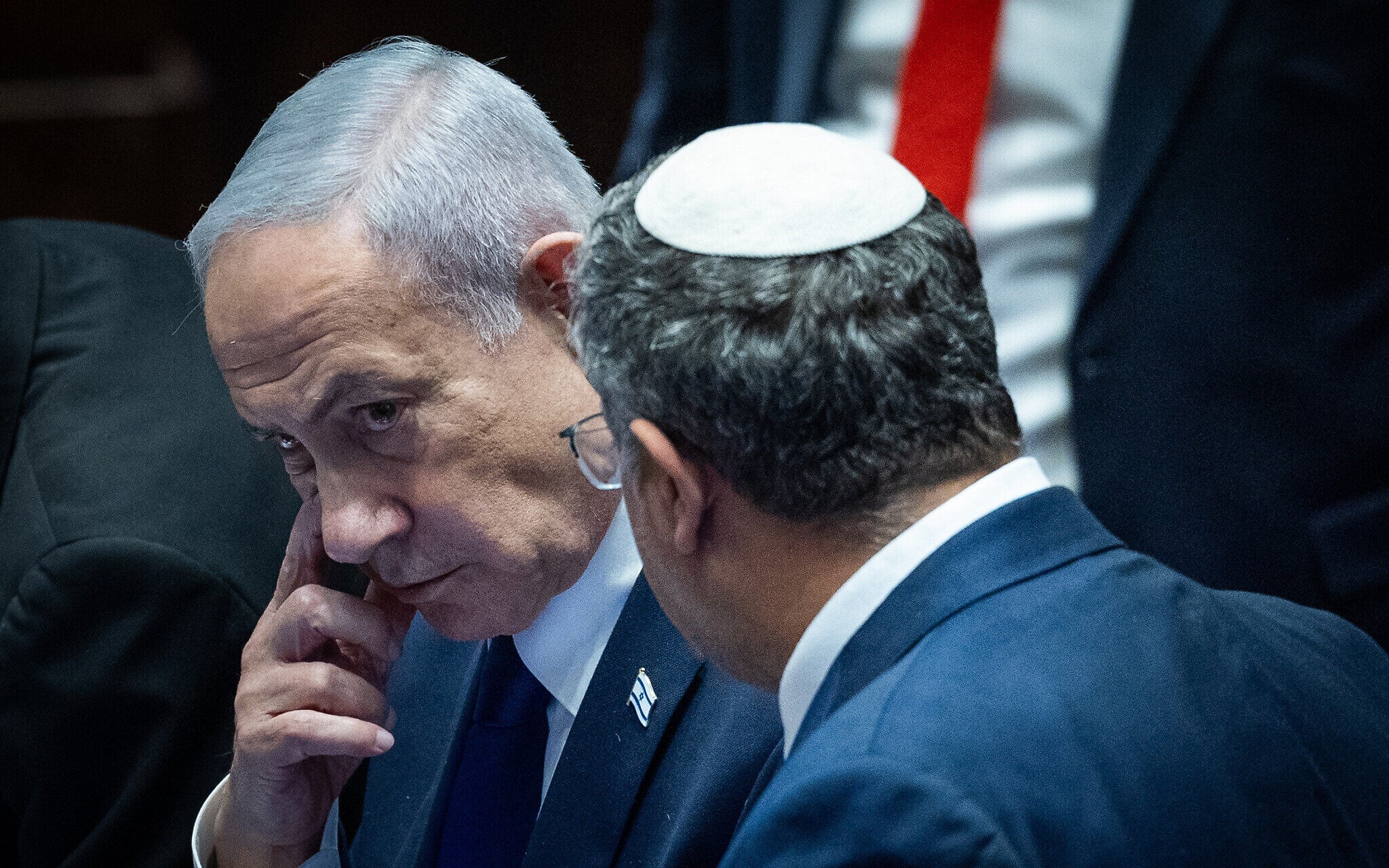
What is happening with the two extremist ministers Netanyahu appointed to the country’s most sensitive posts? They are acting as if their explicit goal is to dismantle Israel’s global standing, layer by layer, exacerbating the nation’s pariah status.
But ultimate accountability does not lie with Smotrich and Ben Gvir. It rests with the man who appointed them, keeps them in office and, as they cause soaring, strategic damage to Israel’s international support and vital interests, remains silent.







The Times of Israel Community.