

Two rockets launched from Gaza, as army warns residents more may come
Iron Dome intercepts one rocket, second impact not identified, amid growing unrest over US recognition of Jerusalem as Israel’s capital
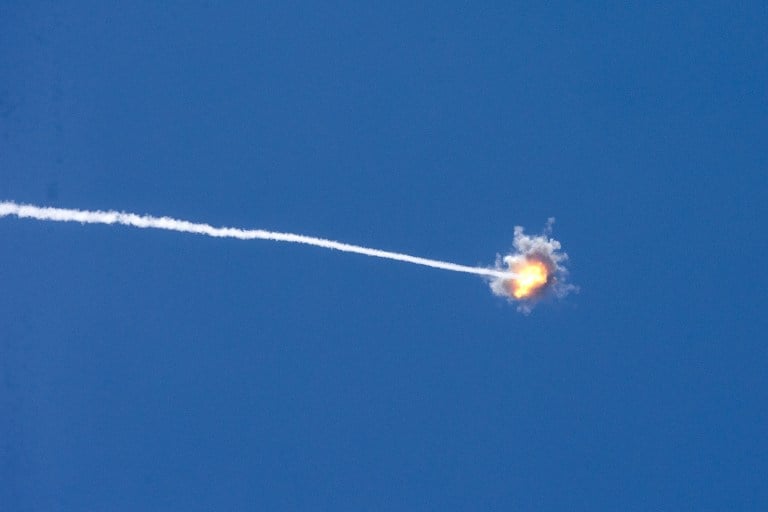
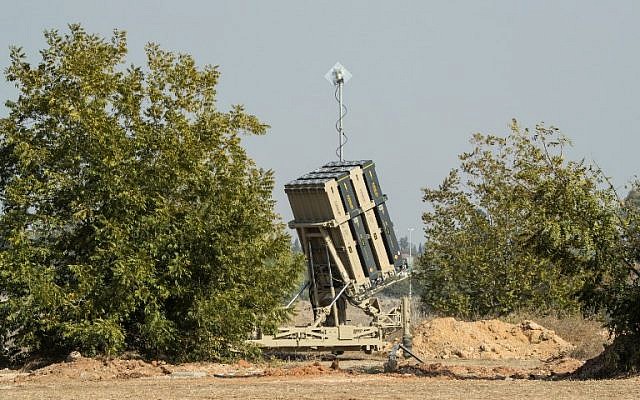
The Israel Defense Forces’s Iron Dome missile defense system intercepted a rocket fired from the Gaza Strip at southern Israel Friday evening, the army said.
Sirens blared in communities near the Gaza border soon afterwards, as a second rocket was fired. The army said it did not identify an impact.
The IDF said there were no injuries or damage from either rocket.
The military said more rockets could follow, and warned residents of the Gaza periphery to remain close to protected spaces and bomb shelters.
Warning sirens were activated in the Sha’ar Hanegev, Sdot Negev, Hof Ashkelon and Eshkol regional councils, as well as the city of Sderot.
A number of rockets were fired at Israel from Gaza on Thursday.
Thursday and Friday’s rocket fire came amid unrest in the Gaza Strip and West Bank, after US President Donald Trump recognized Jerusalem as Israel’s capital earlier this week.
On Thursday, Hamas terror group leader Ismail Haniyeh called for a new Palestinian intifada, or uprising.
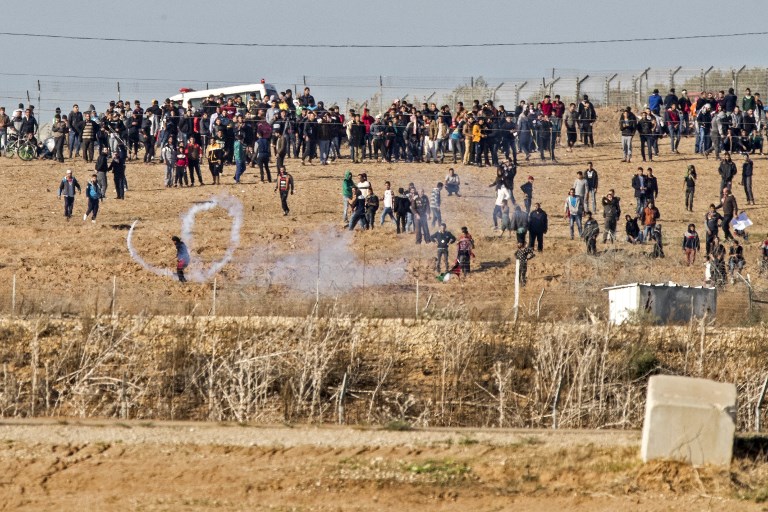
Some 3,000 Palestinians protested and rioted Friday in the West Bank and Gaza, with a Palestinian man killed at the Gaza border fence, Palestinians said. The Israeli army said it fired at two “inciters” there.
An IDF tank and aircraft carried out strikes on two Hamas positions in Gaza in retaliation for the rocket fire on Thursday.
The IDF’s retaliatory strikes targeted Hamas positions even though a different group, the salafist Tawhid al-Jihad, took responsibility for the launches.
“The IDF holds Hamas responsible for the hostile activity perpetrated against Israel from the Gaza Strip,” the army said in a statement.
The IDF sent soldiers to inspect the area for signs of impact, but, finding none, determined that the two rockets had not reached Israeli territory, a spokesperson said.
In the hours afterward, the Tawhid al-Jihad group claimed responsibility for the attack on social media. The small, radical group is affiliated with al-Qaeda.
The launches came five weeks after the Israeli military destroyed an attack tunnel belonging to the Palestinian Islamic Jihad terrorist group, which crossed into Israel from the Gaza Strip. In the blast and its aftermath, 12 members of the terrorist group were killed, along with two Hamas operatives.
Last week, the Islamic Jihad launched a dozen mortar shells at an army post northeast of the Strip, causing no injuries but some damage to army equipment.
The military retaliated with six strikes on terrorist positions in Gaza, four of them belonging to the Islamic Jihad and two to Hamas, which rules the coastal enclave.
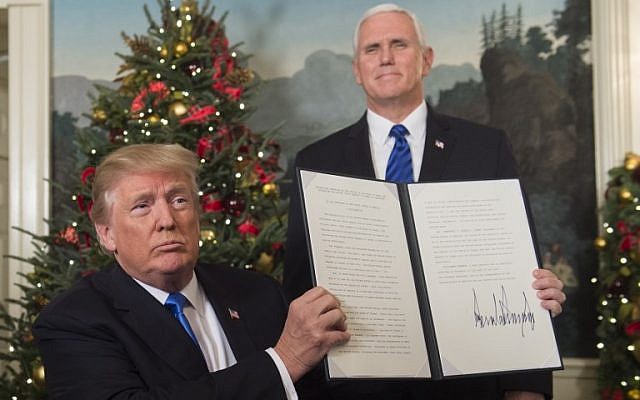
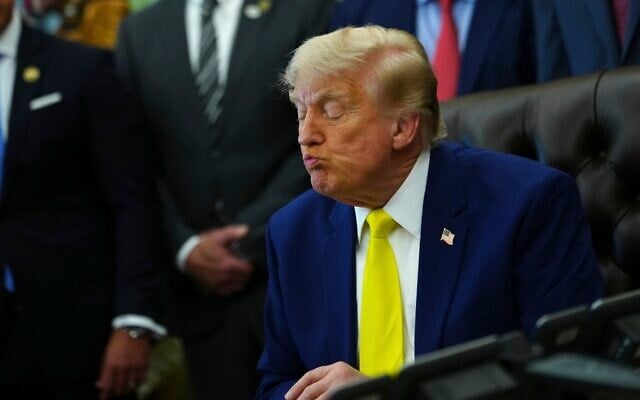
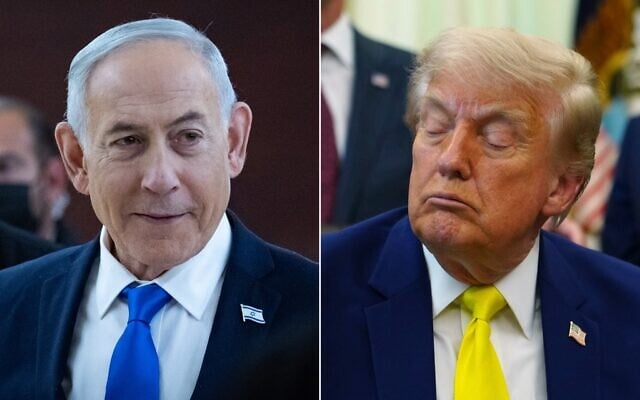
In a Wednesday address from the White House, Trump defied worldwide warnings and insisted that after repeated failures to achieve peace a new approach was long overdue, describing his decision to recognize Jerusalem as the seat of Israel’s government as merely based on reality.
The move was hailed by Israel’s Prime Minister Benjamin Netanyahu and by leaders across much of the Israeli political spectrum. Trump stressed that he was not specifying the boundaries of Israeli sovereignty in the city, and called for no change in the status quo at the city’s holy sites.
Trump also said the United States would move its embassy from Tel Aviv to Jerusalem, though he set no timetable for that.
Jerusalem’s status is among the most difficult issues in the Israeli-Palestinian conflict, and the US traditional position has been that it must be negotiated between the two sides.
While Israel has always considered Jerusalem its capital, with the prime minister’s office and parliament building located there, countries have avoided recognizing it as such to prevent damaging hopes for a two-state solution.
The Palestinians seek the eastern sector of the city as the capital of their future state.
Agencies contributed to this report.




The Times of Israel Community.