

Israeli Arabs call strike over Bedouin home demolitions
Joint List MK says minority community cannot have ‘normal life’ when homes are being razed; larger protest planned for next week in Jerusalem
 Add ToI as a Preferred Source on Google
Tamar Pileggi is a breaking news editor at The Times of Israel.
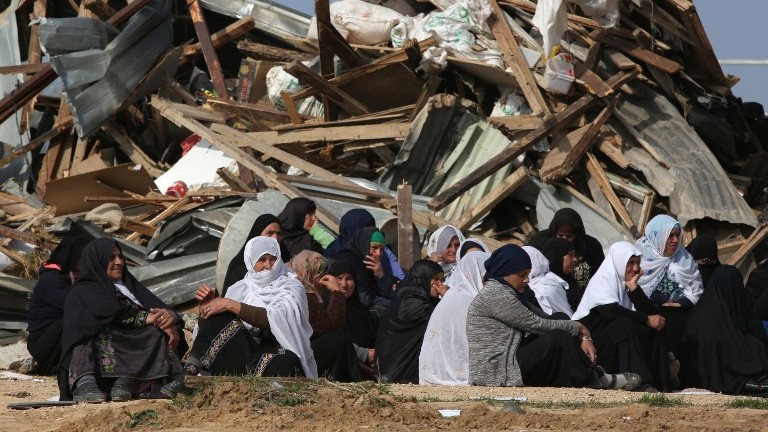
An influential Arab advocacy group called for a nationwide general strike on Thursday to protest the home demolitions in the Bedouin village of Umm al-Hiran on Wednesday.
Joint (Arab) List MK Aida Touma-Sliman said the Arab Higher Committee declared the day-long strike during an emergency meeting in the Negev village Wednesday afternoon.
The decision followed a day of intense clashes and spiking tensions over the demolitions and an alleged car-ramming in which a resident of the town ran his car into policeman Erez Levi, killing him.
The driver, Yaqoub Mousa Abu al-Qia’an, was killed by police fire, with a video appearing to show officers firing at him before his car accelerated into Levi.
“We decided that tomorrow will be a strike day, and will also be a day that we raise a black flags in our homes and in our businesses,” Touma-Sliman told the Times of Israel.
“There is no normal life when our homes are being demolished,” she said.
Arab businesses and municipalities will close across the country, but children will go to school for three hours to learn about the demolitions, Touma-Sliman said.
She said Arab Israelis were planning a larger protest in Jerusalem next week, with large convoys from Arab cities and towns from across Israel convening in front of the Knesset Monday morning.
Earlier on Wednesday, the home demolitions in Umm al-Hiran were disrupted when a car driven by Abu al-Qia’an, a local schoolteacher, slammed into police, killing an officer and moderately wounding another.

The predawn incident took place amid protests at the site as police were carrying out demolitions of several illegally built homes in the unrecognized Bedouin village.
Israeli officials were quick to call the incident a terror attack and pointed to evidence that Abu al-Qia’an had Islamist ties.
Videos from the scene did not definitively resolve questions over whether Abu al-Qia’an was in control of the vehicle when he ran into Levi.
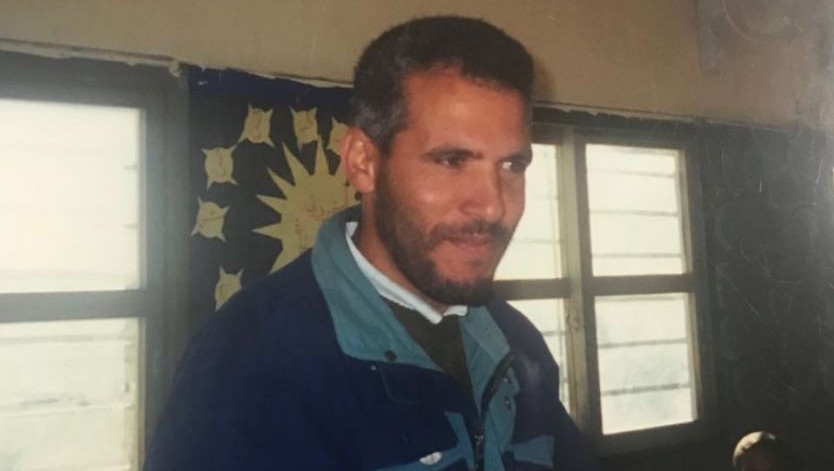
Local residents and activists insisted that Abu al-Qia’an was shot by police before the ramming and was not in control of the vehicle when it hit the officers.
Drone footage of the incident released later in the day appeared to show at least one policeman opening fire on the vehicle before it accelerates into a group of police officers.
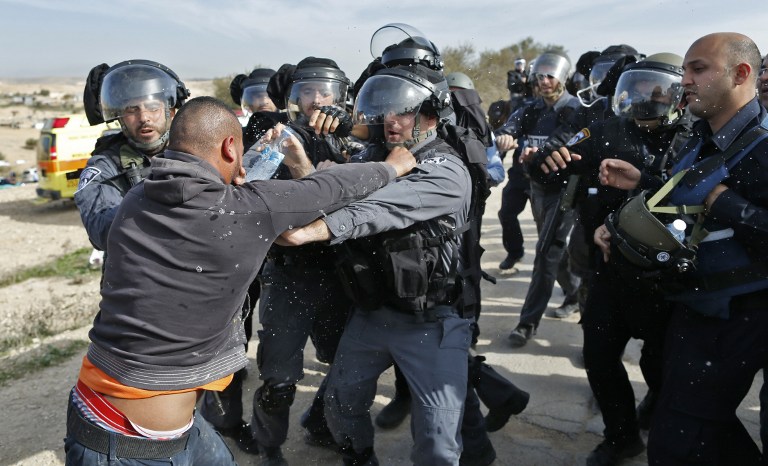
Joint List head MK Ayman Odeh, who was lightly wounded in the clashes, said police and the government were responsible for the morning of deadly violence.
He said some 100 police officers “attacked the residents of Umm al-Hiran. They just fell on them, they hit me and shot at me with brutality.”
Odeh says he was hit by a sponge-tipped bullet, while police reportedly maintain that he was hit by a rock thrown by a protester.
Israel’s Arab minority has long maintained that state-sponsored discrimination makes it impossible for them to obtain planning permission to expand their communities. The result is that many families resort to building homes without permission, leaving them liable to demolition.
There has been a string of demolitions of Arab homes in northern and central Israel, most recently in the town of Qalansawe in central Israel.
After 11 illegal structures were demolished last week, the Joint List branded the demolitions “an unprecedented crime and a declaration of war against the residents of Qalansawe and the Arab public.”
The Knesset faction further claimed the demolitions came in response to the impending evacuation of the illegal West Bank outpost of Amona, and to divert attention from the ongoing police investigations into alleged misdeeds by Prime Minister Benjamin Netanyahu.
“There is no doubt that the home demolitions in the Arab community are due to the theft of land in Amona,” the Joint List statement said, “and because of the crisis of the prime minister and the right wing. As the investigation [into Netanyahu] grows so the number of demolitions grows.”
The demolitions in Qalansawe and Umm al-Hiran followed Netanyahu’s instructions in December to Public Security Minister Gilad Erdan to step up enforcement measures against illegal construction among Israeli Arabs.
The prime minister’s call to crack down on illegal construction followed the planned demolition of Amona, an illegal West Bank outpost that had been slated to be evacuated on December 25, but after a court-approved extension must now be cleared by February 8.
In a Facebook video in Hebrew addressed to Amona’s residents, Netanyahu vowed that home demolitions “must be egalitarian. The same law that necessitates the evacuation of Amona, necessitates the evacuation of illegal construction elsewhere in our country,” he said.
Netanyahu emphasized he would enforce laws on illegal construction “in the Negev, in Wadi Ara, in the Galilee, in the center – all over the country.” He was apparently primarily referring to Israel’s Arabs and Bedouin, in whose communities construction laws aren’t consistently enforced.








The Times of Israel Community.