

Israeli startups join firms making lab-grown ‘clean meat’
Future Meat Technologies, SuperMeat and Aleph Farms are among those seeking environmental- and animal-friendly alternatives to current ‘inefficient’ industry
 Add ToI as a Preferred Source on Google
Ilan Ben Zion is an AFP reporter and a former news editor at The Times of Israel.
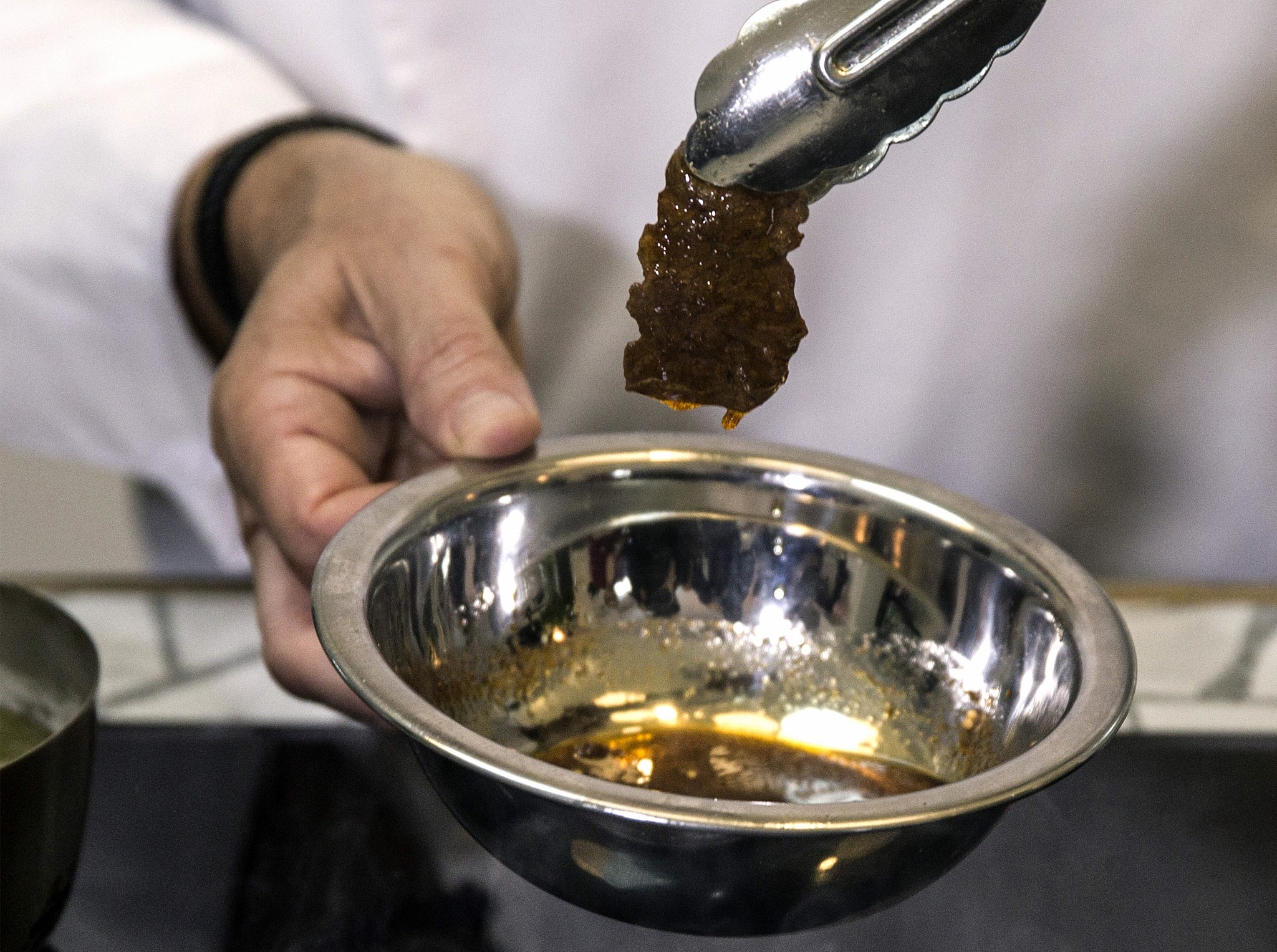
AP — Several Israeli startups have joined a handful of companies around the globe trying to develop lab-grown meat, something they see as a solution to the needs of the world’s ever-growing population and burgeoning demand for food.
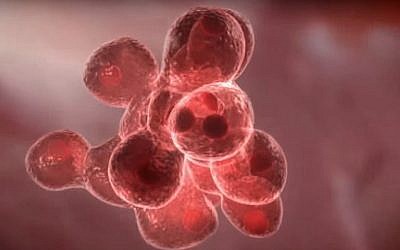
The product has been known under different names, including cultured meat, in-vitro or artificial and “clean meat” — a term advocates say underscores its environment-friendly nature. It’s basically made of animal muscle cells grown in a culture in a lab, a technology similar to stem cells.
And while “synthetic steaks” are perhaps not a candidate for everyone’s favorite dish, they could someday compete with conventional chicken or beef, an affordable price tag permitting.
“Producing meat is very inefficient,” said Yaakov Nahmias, a bio-engineering professor at the Hebrew University and founder of Future Meat Technologies. Cultured meat, by comparison, consumes “10 times less water, less land, less energy than the current meat production.”
Advocates say lab-grown meat is flavorful and better for the environment than conventional meat. They say it consumes less water, energy and land, produces less greenhouse gases and reduces animal suffering.
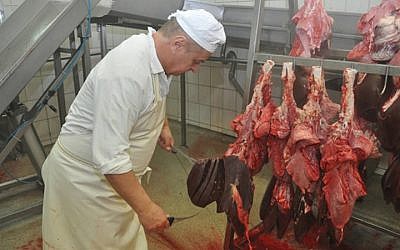
Agriculture is estimated to generate around 13 percent of global greenhouse gas emissions, with livestock alone responsible for two-thirds of those emissions, according to the United Nations’ Food and Agriculture Organization.
For Israel, the advances are a far cry from the country’s early decades, when meat was rationed.
In fact, Israel is quickly becoming “the leader in the space, or (is) side-by-side with Silicon Valley” in cultured meat technologies, said Alex Shirazi, co-founder of the Cultured Meat and Future Food podcast and a founder of the Cultured Meat Symposium, an industry gathering in San Francisco in November.
Israel has a thriving high-tech scene, so the pursuit of lab-grown meat was a natural avenue for its entrepreneurs, experts say. The government’s Innovation Authority has also sought to stimulate food-technology companies through grants and the financing of a $25 million food-tech incubator.
Israel currently imports much of its meat and the government is invested in creating food security.
For observant Jews, several prominent Orthodox rabbis have already expressed approval for lab-grown meat being kosher. Because it doesn’t come from a slaughtered animal, some rabbis have even said cultured meat could be consumed as a cheeseburger — a combination of meat and milk otherwise forbidden in Jewish tradition.
In February, the Good Food Institute, a Washington-based non-profit promoting the development of meat alternatives, announced a series of research grants “for the benefit of the entire scientific community and good food industry.”
One of the six $250,000 grants for “clean meat” researchers went to Israel, and a second Israeli researcher received funds for “plant-based” meat alternatives.
“Israel is a fertile ground for tech in general and specifically for what we call alternative protein,” said Beni Nofech, a board member at the institute. “Israel is such an innovation-driven economy and infrastructure, both governmental and private, is already in place to actually catalyze innovation and research.”
The industry still faces some significant hurdles, including astronomical cost, developmental challenges, regulatory issues and questions about whether people are ready to eat lab-grown meat.
Until now, most companies involved in the effort have only managed to produce fleshy granules.

Future Meat Technologies, a company based out of Jerusalem’s Hebrew University, and SuperMeat are among those combining animal cells and plant proteins as a potential alternative to processed meats.
Aleph Farms, an Israeli startup launched in 2017, announced in December it succeeded in producing a lab-grown “minute steak” made from bovine cells that closely resembles the texture and flavor of its cow-borne counterpart.
For now, the tiny steaks are just 3 millimeters (a tenth of an inch) wide — roughly the size of a very thin strip of roast beef.
Each Israeli player has raised several million dollars in early investment, including from major food manufactures such as US giant Tyson Foods, Germany’s PHW Group, and Israel’s Strauss Group.

The first lab-grown burger was made by a Dutch company in 2013 at a cost of over $300,000. Production costs have fallen in the years since. Last year, US-based Memphis Meats’ ground beef alternative was reported to cost about $2,400 per pound. Each slice of Aleph Farms’ “steak” costs about $50 to produce.
Before it can hit the shelves, lab-grown meat will face regulatory obstacles. The US government’s FDA and USDA announced in November they would “jointly oversee the production of cell-cultured food products derived from livestock and poultry.”
Cultured meat has already faced resistance from the US meat industry and will probably face a label battle once it comes on the market.
Even if the industry can overcome these obstacles, the technology necessary to make these synthetic sirloins commercially viable remains years away.
Max Elder, a food researcher at the San Francisco-based Institute for the Future, says the biggest challenge may be convincing consumers to eat a steak essentially grown in a petri dish.
Nonetheless, researchers and environmentalists agree the need for sustainable, lab-grown alternatives to industrial farming is essential.
“If we want to make sure that our kids eat the same thing that we eat today, then we need to dramatically change the way we manufacture it,” said Nahmias, the Hebrew University professor.









The Times of Israel Community.