Kremlin denies claim Putin being ‘misled’ on Ukraine by scared advisers
Moscow says the notion that aides aren’t honest with Russian president about his military’s progress and the Ukrainian resistance shows that US agencies just ‘don’t understand’
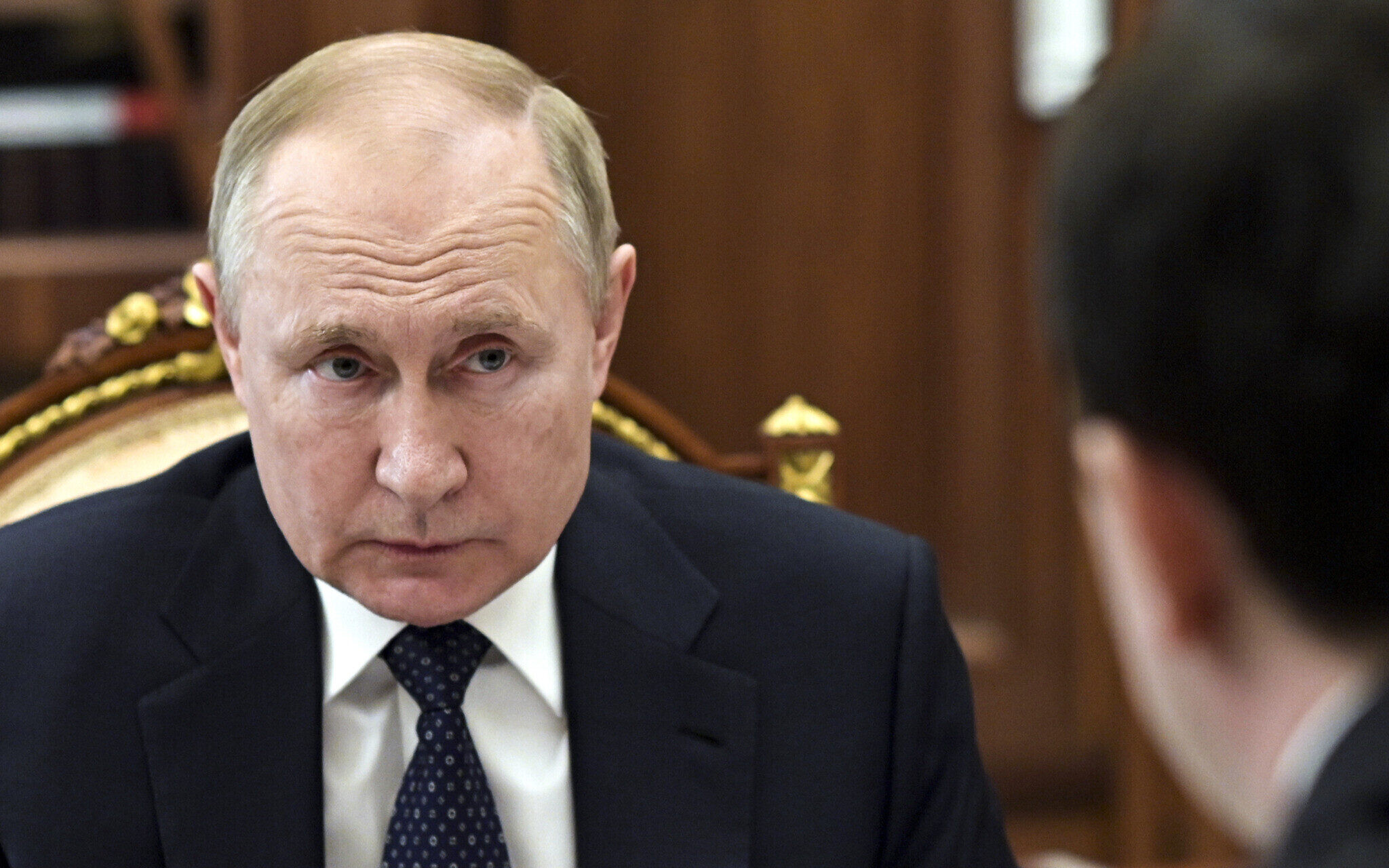
Russian President Vladimir Putin attends a meeting in Moscow, Russia, March 29, 2022. (Mikhail Klimentyev, Sputnik, Kremlin Pool Photo via AP)
MOSCOW, Russia — The Kremlin on Thursday denied US and British claims that President Vladimir Putin’s advisers are scared of giving him a true picture of Moscow’s military operation in Ukraine.
Putin launched the military operation in Ukraine on February 24 citing “genocide” of Russian speakers there and accusing the pro-Western country of close ties with NATO.
“This shows that neither the Department of State nor the Pentagon have real information about what is happening in the Kremlin,” Putin’s spokesman Dmitry Peskov told journalists.
“They don’t understand President Putin, they don’t understand the mechanism for taking decisions and they don’t understand the style of our work,” he added.
Britain’s GCHQ spy agency chief, Jeremy Fleming, said Thursday that “Putin’s advisers are afraid to tell him the truth” about the Russian military’s progress and the degree of Ukrainian resistance.
Get The Times of Israel's Daily Editionby email and never miss our top stories
The White House earlier gave a briefing on declassified intelligence that found that Putin’s relations with his staff had deteriorated.
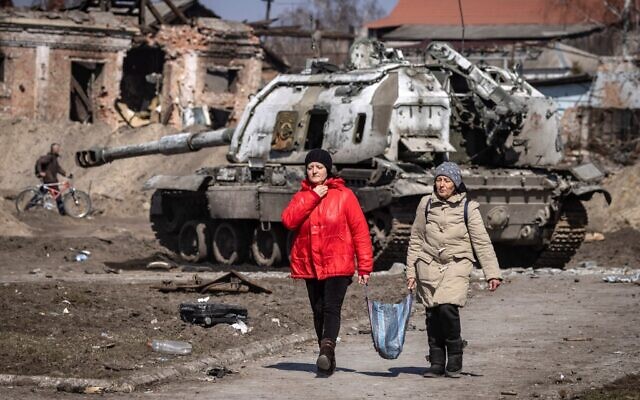
Residents walk past a damaged Russian tank in the northeastern city of Trostyanets, on March 29, 2022. (FADEL SENNA / AFP)
White House communications director Kate Bedingfield said Putin “felt misled by the Russian military.”
The reports could not be independently confirmed.
Advertisement
Peskov said that “it was not just a pity” that such claims were made, but “it causes concern, because such complete non-understanding is what leads to mistaken decisions, to hasty decisions that have very bad consequences.”

We can't do this work alone.
The war with Iran has been draining for all of us in Israel. But when I heard about a high casualty incident – ballistic missile impacts in Arad and Dimona that left nearly 200 people wounded – I drank a cup of coffee, packed a bag, and headed south.
There, I spoke with Shilgit, the head of an after-school program for underprivileged youth. Standing outside her destroyed center, Shilgit said it was a miracle that no children were hurt and spoke about the community coming together in the hours since.
As a Times of Israel reporter, I’m committed to telling stories of resilience like Shilgit’s. But my colleagues and I can't do this alone. If you value work like this,please consider joining our reader support group, The Times of Israel Community. Your financial support is essential to keep real human reporting like this going.
We’re really pleased that you’ve read X Times of Israel articles in the past month.
That’s why we started the Times of Israel - to provide discerning readers like you with must-read coverage of Israel and the Jewish world.
So now we have a request. Unlike other news outlets, we haven’t put up a paywall. But as the journalism we do is costly, we invite readers for whom The Times of Israel has become important to help support our work by joining The Times of Israel Community.
For as little as $6 a month you can help support our quality journalism while enjoying The Times of Israel AD-FREE, as well as accessing exclusive content available only to Times of Israel Community members.
Thank you, David Horovitz, Founding Editor of The Times of Israel